

Bývalý jezuitský seminář v Jindřichově Hradci Jesuit seminar
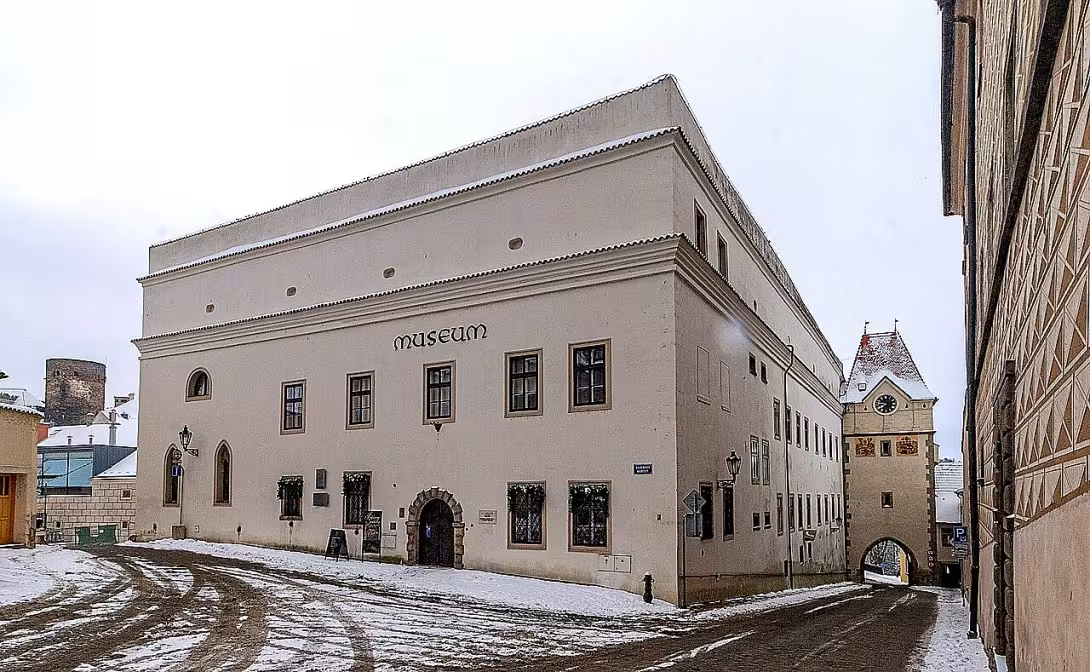
The former Jesuit Seminary in Jindřichův Hradec is a culturally significant monument located at Balbínovo náměstí. It has housed the Muzeum Jindřichohradecka since 1928. Constructed between 1606 and 1608 as part of a Jesuit college complex, it showcases late Renaissance architecture with subsequent Baroque influences. The seminary played an important role in education until its closure in 1778 following the suppression of the Jesuits.
Initiated by Kateřina z Montfortu and funded by her husband, Adam II. z Hradce, the construction took place between 1606 and 1608. It formed part of a larger Jesuit college complex near the Church of Saint Mary Magdalene in Jindřichův Hradec. The seminary's construction led to significant changes in the area, including the demolition of twenty houses, an old parish building, and a hospital with a chapel. This period was marked by religious conflicts and Counter-Reformation efforts spearheaded by the Jesuits within the Holy Roman Empire under Habsburg rule.
Architecturally, the seminary features a square layout with four wings enclosing an inner courtyard, originally constructed between 1606 and 1608. After a fire in 1615 destroyed the original structure, it was rebuilt from 1625 to 1636 in a late Renaissance style. A notable addition is the Baroque chapel dedicated to St. Vitus, completed in 1642 within the eastern wing of the building.
Ownership and administration of the seminary have seen dramatic changes over time. Initially owned by the Society of Jesus, its educational activities ceased following the suppression of the Jesuits in 1773. Subsequently, the building served various functions, including military barracks and a secondary school, before becoming a museum in 1928.
Key events associated with the seminary include its initial construction, destruction by fire in 1615, and subsequent reconstruction between 1626 and 1636. The chapel dedicated to St. Vitus was added in 1642. Notably, František II. Rákóczi, a significant historical figure, studied at the Jesuit gymnasium housed within this building during his time as a student.
Today, the former Jesuit Seminary stands as a protected cultural monument and houses the Muzeum Jindřichohradecka. Its rich history and architectural significance make it an important site for visitors interested in exploring the educational and religious heritage of the region. The seminary's location on Balbínovo náměstí places it amidst other cultural and historical sites within Jindřichův Hradec, enhancing its appeal as a destination worth visiting.
The former Jesuit Seminary offers a unique glimpse into the past, reflecting both architectural evolution and significant historical events. Its transformation from an educational institution to a museum underscores its enduring legacy. Visitors are invited to explore this remarkable site, where history and culture converge in Jindřichův Hradec.
Then and now
Drag the slider to compare how the landmark may have looked when it was built with the view today.
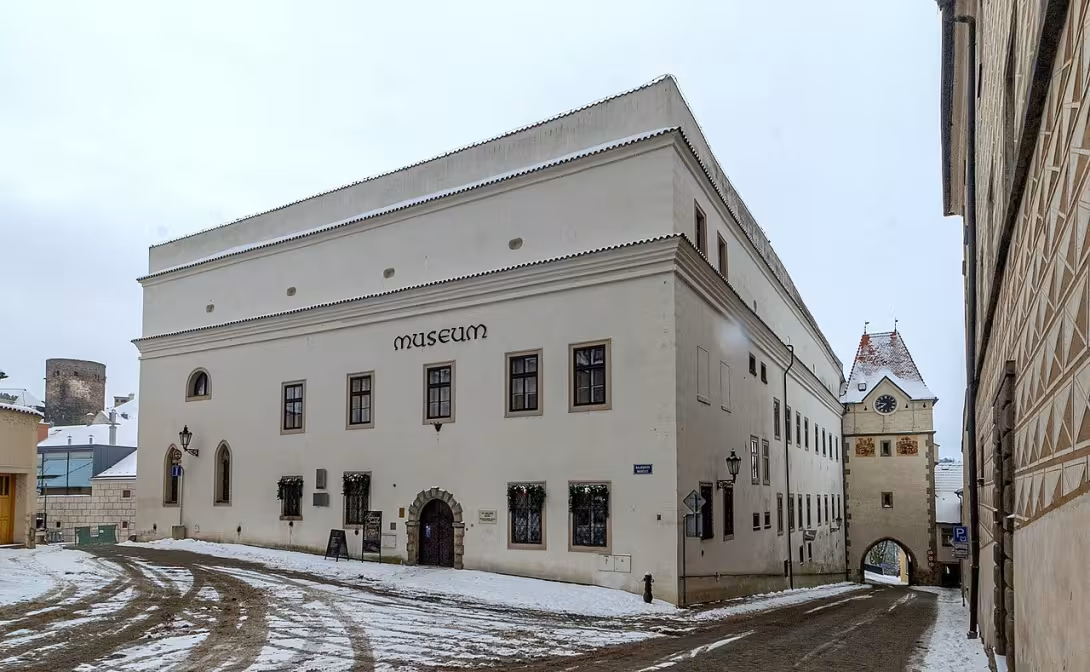
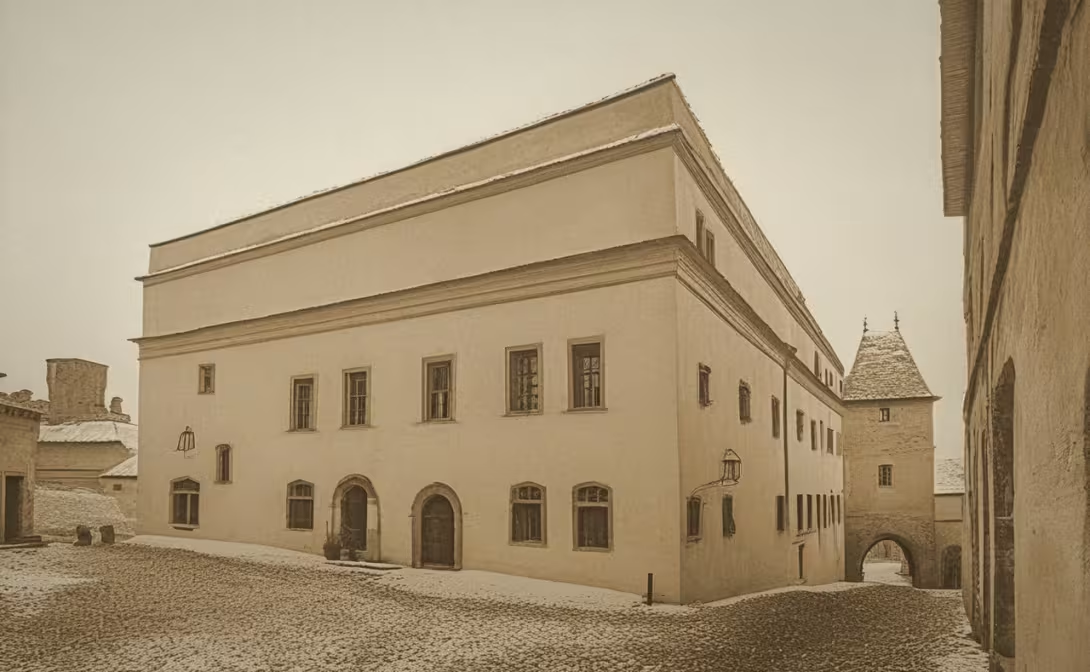
The historical appearance on the left is an AI-generated visualisation and serves as inspiration only.
Historical milestones
- 1608
- Completion of the original Jesuit seminary construction.
- 1615
- The seminary burned down.
- 1626
- Reconstruction began in late Renaissance style.
- 1642
- Construction of the baroque chapel dedicated to St. Vitus.
Architectural development
The building was initially constructed between 1606 and 1608, featuring a square layout with four wings enclosing an inner courtyard. After a fire in 1615, it was rebuilt from 1625 to 1636 in a late Renaissance style. A baroque chapel dedicated to St. Vitus was added in 1642.
Historical events
1606-1608: Construction of the seminary as part of the Jesuit college complex.
1615: The original seminary burned down.
1625-1636: Reconstruction in late Renaissance style.
1773: Suppression of the Jesuits leading to cessation of educational activities.
Owners
Initially owned by the Society of Jesus, the building later served various functions including military barracks and a secondary school before becoming a museum.
Points of interest
- The seminary's construction led to the demolition of twenty houses and an old parish building, highlighting the significant urban changes during its establishment in 1606-1608.
- A fire in 1615 destroyed the original structure of the seminary, necessitating a complete rebuild between 1625 and 1636 in late Renaissance style, reflecting resilience amidst adversity.
- The chapel dedicated to St. Vitus, completed in 1642 within the eastern wing, showcases Baroque influences that were added after the initial construction period.
- František II. Rákóczi, a notable historical figure who later became Prince of Transylvania, studied at the Jesuit gymnasium housed within this building, linking it to broader European political history.
- After serving various roles including military barracks and a secondary school, the seminary was transformed into a museum in 1928, preserving its rich educational legacy for future generations.
Guide
This guide is narrated by a synthetic voice generated by artificial intelligence.
Show guide text
This text was created by artificial intelligence and has not been editorially reviewed. It may contain inaccuracies.
The former Jesuit seminary in Jindřichův Hradec is a single-storey late Renaissance building on Balbínovo náměstí. It belonged to the nearby Jesuit college at the Church of Saint Mary Magdalene. Since nineteen twenty-eight, the Museum of Jindřichohradecka has been housed here, and the building is protected as a cultural monument.
The seminary was built between sixteen oh-six and sixteen oh-eight. Catherine of Montfort gave the impetus for its construction, and her husband Adam the Second of Hradec bore the costs. The construction of the Jesuit college required major changes in the surrounding area. Twenty houses were demolished, the old rectory building, and also the hospital of the German knights with the chapel of Saint Mary Magdalene.
However, the new building did not last long. In sixteen fifteen, seven years after completion, the seminary burned down. It was rebuilt between sixteen twenty-five and sixteen thirty-six, this time in late Renaissance style. The building has a square ground plan and its four wings enclose an inner courtyard with a fountain. Three of these wings have arcades open to the courtyard. In the eastern wing, an early Baroque chapel of Saint Vitus was created in sixteen forty-two.
A Jesuit gymnasium was housed in the building. Between sixteen eighty-eight and sixteen ninety, Francis the Second Rákóczi attended it.
After the Jesuit order was dissolved in seventeen seventy-three, teaching continued here for several more years. Classes ended in seventeen seventy-eight and the college building then served as barracks. From eighteen sixty-two, the gymnasium returned here once more.
Tips for visitors
The best time to visit the former Jesuit Seminary in Jindřichův Hradec is during late spring or early autumn when the weather is pleasant, and the crowds are thinner compared to peak tourist seasons. The mild temperatures make it comfortable for exploring both indoors at the Muzeum Jindřichohradecka and outdoors on Balbínovo náměstí. Additionally, these periods often coincide with local cultural events that can enrich your visit.
When visiting the seminary, consider bringing comfortable walking shoes since you'll likely explore both the museum exhibits and the historic streets of Jindřichův Hradec. A camera is advisable to capture the architectural beauty of the seminary building and its surroundings. Don't forget a light jacket or sweater as indoor temperatures can be cool.
For photography enthusiasts, the best spots include the front facade of the seminary on Balbínovo náměstí during golden hour for optimal lighting. The interior courtyards also offer interesting perspectives with their historic details. Early morning or late afternoon light enhances the textures and colors of the building's architecture.
Nearby, within a 30-minute walk or short drive, you can visit other cultural sites such as the Jindřichův Hradec Castle, which offers panoramic views of the city and surrounding landscape. The castle is an excellent spot for families with children to explore its gardens and enjoy outdoor activities.
For families visiting with children, consider planning your trip around interactive exhibits at the Muzeum Jindřichohradecka that engage younger audiences. The historic center of Jindřichův Hradec has several cafes where you can relax and let the kids enjoy some downtime.
Frequently asked questions
Can the monument be visited?
We have not verified whether this monument is accessible. Please ask the owner or operator, or the local municipal office.
Where is the monument?
Location: Balbínovo nám. 19, Jindřichův Hradec I, Jindřichův Hradec, Jihočeský kraj. The map on this page shows the exact spot.
Why is the monument protected?
It is listed in the Central List of Cultural Monuments of the Czech Republic as a cultural monument (register no. 34084/3-1704).
Businesses nearby
Do you run a restaurant, accommodation, shop, museum, rental, wellness or other visitor service near this monument? Show yourself directly to the people heading to it — this is how they will see you in the app and on the web:
Events nearby
Zdroj akcí: otevřená data měst a obcí ČR (Národní katalog otevřených dat) a kalendář akcí Národního památkového ústavu.
Nearby
🏰 Historic sites (58)
- Muzeum fotografie a moderních obrazových médií 0.1 km
- Dům gobelínů 0.1 km
- Hrad a Zámek Jindřichův Hradec 0.1 km +420 384 321 279 web
- Muzeum Čs. armády 1938 0.1 km
- Památník židovských sousedů 0.2 km
- Sousoší Nejsvětější Trojice 0.2 km
- Mistr Jan Hus 0.2 km
- sv. Jan Nepomucký 0.3 km
- Bedřich Smetana 0.3 km
- Muzeum Jindřichohradecka 0.3 km
- tři odboje 0.4 km
- Boleslav Jablonský 0.5 km
- úzkorozchodná dráha 1.3 km
- Čmelák Z 37 1.4 km
- Obětem 1. světové války 2.4 km
- Pomník obětem 1. a 2. světové války 3.6 km
- Památník Černínskému statku 4.8 km
- pomník dosídlení českým obyvetelstvem 6.3 km
- sv. Jan Nepomucký 6.8 km
- Vítkův hrádek 6.9 km
🍽️ Restaurants and dining (124)
- Cukrářství lavendy 0.1 km web
- Fotocafé 0.1 km
- Smetana 0.1 km web
- Mama's bistro 0.1 km
- Paradise Club 0.1 km
- Bílá paní 0.1 km
- Koktejl bar 0.1 km
- Pod zámkem 0.1 km
- Viet House 0.1 km
- Čínská restaurace 0.2 km
- Kapr pod hradem 0.2 km web
- Udírna 0.2 km web
- Cukrárna - kavárna 0.2 km
- Zámecká maštal 0.2 km
- Tomislav Bar Meridian 15 0.2 km
- Klenba Bar 0.2 km
- Střapatá Bohunka 0.2 km +420 773 125 607 web
- Gateway of India 0.2 km
- Le Petit Gà 0.2 km
- Restaurant U Šmiků 0.2 km
🏨 Accommodation (63)
- U Muzea 0.1 km
- Bílá paní 0.1 km
- Cyklopenzion Kasper 0.1 km
- Penzion Na 15. poledníku 0.2 km +420 775 222 223 web
- MIKA 0.2 km
- Nežárka 59 0.2 km Nežárecká 59 web
- Pension Švejk 0.2 km
- hotel Vajgar 0.2 km
- Concertino 0.2 km
- Penzion Měšťan 0.3 km
- U Tkadlen 0.3 km
- U Papoušků 0.3 km
- IGA 0.4 km
- Florian palace 0.5 km
- Hana 0.5 km
- Marie 0.6 km
- U Hesů 0.8 km
- Penzionek JH 0.8 km Claudiusova 413 +420 724 140 818 web
- Frankův dvůr 2.6 km Jemčinská 125 +420 777 996 666 web
- Stará škola 4.5 km web
🚲 Rentals and sport (10)
- Author 0.1 km
- Sportovní vybavení - Ivan Šot 0.5 km
- Alfa Sport 0.5 km
- Fitko Eden 0.5 km
- TJ Slovan, Jindřichův Hradec 0.6 km
- VK Vajgar 0.7 km
- Cyklo & Ski Galík 1.4 km sídliště Vajgar 920 web
- Sportisimo 1.9 km
- Cycle experts 1.9 km web
- Tělocvnična 11.7 km
🥾 Hiking and nature (116)
- 15. poledník 0.1 km
- Husovy sady 0.2 km
- vyhlídka Karlov 0.4 km
- Mertovy sady 0.5 km
- SportPark R&F 2.5 km web
- Vyhlídka Karla Zvěřiny 2.5 km
- Borek 3.5 km
- Obludiště 3.8 km web
- Kalcův kopec 3.9 km
- Lamy 4.5 km
- Kozy, ovce, lamy 4.5 km
- Pumy severoamerické 4.5 km
- Sovy 4.5 km
- Velbloud dvouhrbý 4.5 km
- Mývalové 4.5 km
- Oslové 4.6 km
- Skunk 4.6 km
- Pštrosi 4.6 km
- Surikaty 4.6 km
- Dikobrazi 4.6 km
Accommodation nearby
Themed route
Thematic Walking Tour: Jesuit Legacy in Jindřichův Hradec
1. Jesuit Seminary (Jezuitský seminář) - Type: Historical Building - Why Visit: Begin your journey at the heart of Jesuit history, the former Jesuit Seminary on Balbínovo náměstí. This architectural gem offers a glimpse into the educational and cultural influence of the Jesuits in Jindřichův Hradec. Explore its richly decorated interiors and learn about its role in shaping local education.
2. Balbínovo Náměstí - Type: Square - Why Visit: Stroll through Balbínovo náměstí, where the seminary stands as a central landmark. This square is named after Bohuslav Balbín, a prominent Jesuit scholar and historian. The area exudes historical charm with its surrounding buildings that reflect the architectural styles of different eras.
3. Church of Our Lady of the Snows (Kostel Panny Marie Sněžné) - Type: Church - Why Visit: A short walk from Balbínovo náměstí, this church is a testament to Jesuit architectural influence in the city. Known for its stunning Baroque style and intricate interior design, it offers visitors a serene space to appreciate the artistic legacy of the Jesuits.
4. Jindřichův Hradec City Museum (Museum Jindřichohradeckého kraje) - Type: Museum - Why Visit: Located nearby, this museum provides deeper insights into the history and culture of Jindřichův Hradec. It features exhibits on local heritage, including artifacts related to the Jesuit presence in the region, allowing visitors to connect with the historical narrative that began at the seminary.
This tour offers a comprehensive exploration of Jesuit influence in Jindřichův Hradec, blending architectural beauty with rich cultural history.
Seasonal recommendations
Spring: Visiting the former Jesuit Seminary in Jiříkov Hradec during spring offers a unique experience as nature begins to awaken. The surrounding gardens and grounds are adorned with vibrant blossoms, creating a picturesque backdrop for exploring this historic site. The gentle warmth of the season encourages visitors to stroll through the seminary's expansive lawns, where fresh greenery and blooming flowers enhance the serene atmosphere. Spring is generally less crowded than summer, allowing for a more leisurely visit. It’s advisable to wear comfortable layers as temperatures can vary throughout the day, with cooler mornings transitioning into warmer afternoons.
Summer: The Jesuit Seminary shines in the summer months when longer daylight hours and warm weather invite visitors to fully immerse themselves in its historical charm. The lush gardens are at their peak, providing a perfect setting for outdoor exploration or relaxation. Summer is the busiest season, so arriving early can help avoid larger crowds and ensure a more enjoyable experience. Comfortable walking shoes and light, breathable clothing are recommended due to the heat, along with sun protection such as hats and sunscreen.
Autumn: Autumn brings a magical transformation to the former Jesuit Seminary in Jiříkov Hradec, with its vibrant foliage creating a stunning contrast against the historic architecture. The cooler temperatures make for pleasant walking conditions as visitors explore the grounds, which are often quieter than during peak summer months. This is an ideal time to appreciate the changing colors and enjoy outdoor activities without the summer crowds. Layered clothing is essential to accommodate fluctuating temperatures, and carrying a light jacket can be beneficial as evenings tend to cool down.
Winter: The winter season offers a unique charm at the former Jesuit Seminary in Jiříkov Hradec, with its historic structures standing out against the crisp, snowy landscape. While some areas may be less accessible due to snow or ice, the serene and quiet atmosphere provides an intimate experience of this cultural landmark. Winter visits typically see fewer tourists, allowing for a more peaceful exploration. Warm clothing is essential, including coats, hats, gloves, and boots, as temperatures can drop significantly.
Visualizations and artistic views


The visualisations are generated by artificial intelligence and serve as inspiration.
Photos from the area
Real photos taken near the monument


Zdroj a licence jsou uvedeny u každého snímku.
Tips from visitors
No tips yet. Be the first!
Log in and add your tip.
Sources and literature
Photos: VitVit / CC BY-SA 4.0 — Wikimedia Commons. The author and licence also appear when you hover over the image.
Faktickým podkladem tohoto textu byl článek na Wikipedii, jehož autory jsou přispěvatelé Wikipedie. Článek je dostupný pod licencí CC BY-SA 4.0.
Location on the map
More monuments – Jindřichův Hradec I
Show all in the municipality

Příběhy a pověsti
Legendy, pověsti a příběhy spjaté s touto památkou

Fotografie návštěvníků
Přidat fotografiiZatím žádné fotografie. Buďte první, kdo přidá fotografii z návštěvy!
Máte k místu vzpomínku nebo zajímavý příběh?
Log in a přidejte svou fotografii nebo hodnoťte.
Za ověřenou návštěvu v aplikaci získáte víc bodů — poznáme podle GPS, že jste na místě.
Reviews and comments