



Bývalý seminář - později pošta Post office building
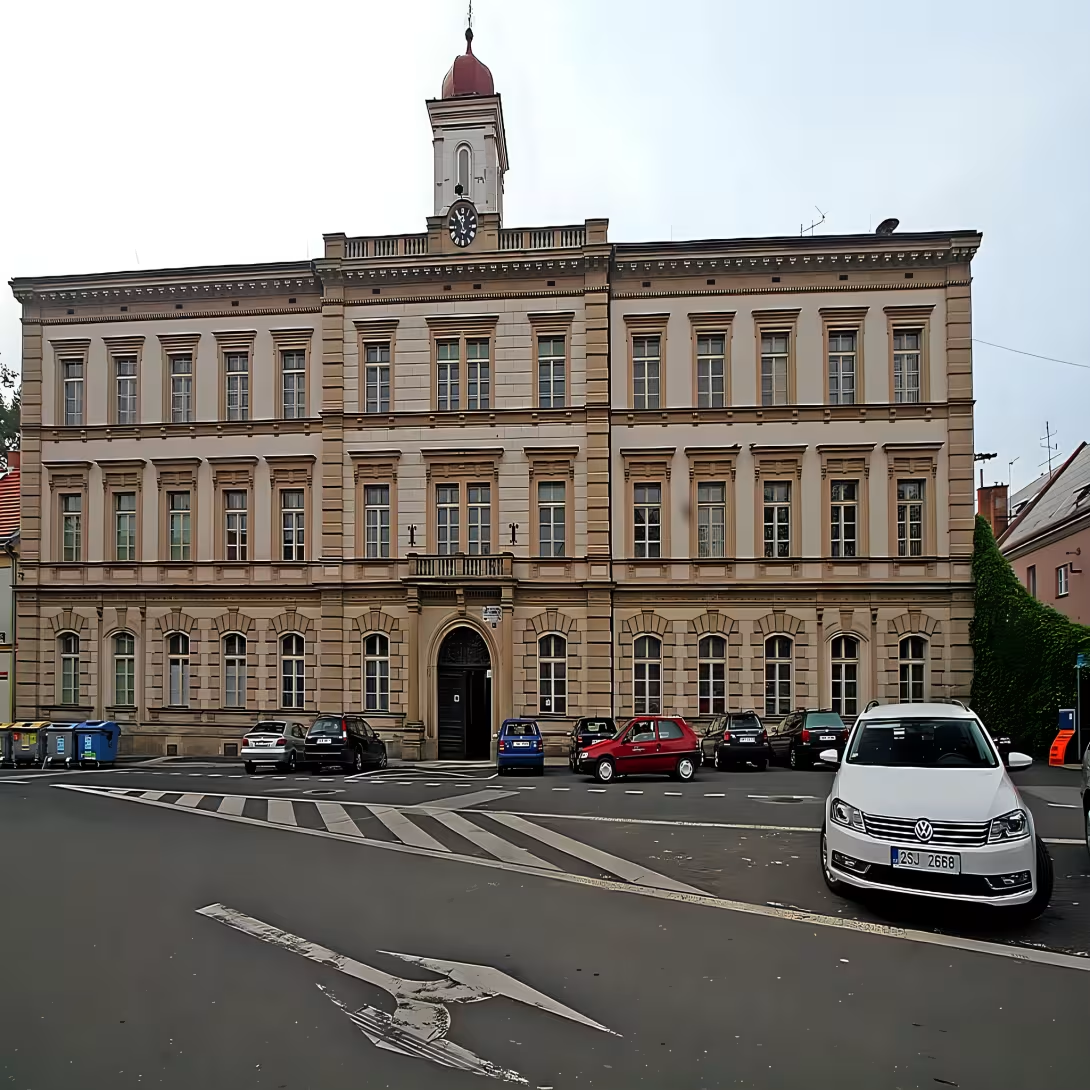
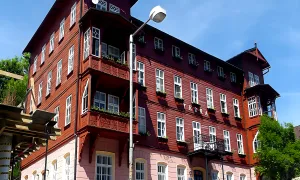
The former seminar at the Comenius Square in Holín Suburb at Jičína is the only preserved economic building from the Waldstein period. Built in 1626 as an early Baroque building according to the design of architect G. Pieroniho, it originally served as a seminar - which was an unusual purpose for the economic object of the time. In the first quarter of the 18th century, the architect A. Quardim expanded it and increased it by the floor, after the fire in 1778 she lost the original Baroque facade. Today it is protected as a cultural monument of the Czech Republic and represents a rare document of architecture and administration of the Waldstein estate.
The building was created when Jičín was one of the important houses of Czech nobility. The early Baroque style corresponded to the efforts made at the time to be representative and functional of economic and administrative buildings. The original purpose as a seminar was unusual, suggesting possible additional, previously unknown functions, such as education or administration of the estate. The preserved records do not provide details of the seminar, but its existence is an interesting testimony about Waldstein property.
It is an early Baroque building for designs by Italian architect G. Pieroni, known for work for the Waldštejns. The original form was simple and representative with elements typical of the economic buildings of the aristocratic settlements of that time. In the first quarter of the 18th century, the architect A. Quardim expanded it and increased it by the floor, which corresponded to the needs and fashion trends at the time. After the fire in 1778, there was a change in the baroque facade, which had already borne the original features. The preserved form reflects later construction modifications, while maintaining the original functional character.
The ownership of the building was linked from the beginning to the Waldstein estate. After the abolition of the patrimonial administration in the 19th century, it became part of the public infrastructure when it was converted into post office. This transition from a private economic object to a public establishment reflects changes in society and the needs of the region.
Key events include its construction in 1626, reconstruction in the first quarter of the 18th century and the fire from 1778. The only preserved Waldstein economic object in this location is a rare example of architecture and management of the estate. The original purpose as a seminar adds another layer of mystery.
Today, the building is protected as a cultural monument of the Czech Republic on the Komenské square in Holínské Suburstí, near the historical centre Jičína. It is freely accessible and offers the opportunity to see architectural elements reflecting its long history. It is interesting for visitors not only as an example of Baroque architecture, but also as a witness to the region's transformation from the Middle Ages to the present. There are other historical monuments such as Jičín Castle and St. James Church.
This building represents not only a valuable architectural document, but also a reminder of changes in the functions of buildings over the centuries. Its preservation allows economic governance of the Waldstein estate and the transformation of the role of buildings into society. For anyone interested in the history of the region or architecture, the visit to this monument is both educational and inspiring.
Historical milestones
- 1626
- Building position according to design G. Pieroniho.
- first quarter of the 18th century
- Increase to floor and expansion A. Quardim.
- 1778
- A change of baroque facade after the fire.
Architectural development
The building was created as an early Baroque building in 1626. In the first quarter of the 18th century it underwent a significant reconstruction, when it was increased by a floor and expanded. After the fire in 1778, the facade was modified, which had already borne the original baroque features. The preserved form reflects the effects of subsequent construction modifications while maintaining the original functional character of the economic building from the Waldstein period.
Historical events
- 1626
- The position of the building as an early Baroque seminar according to the design of G. Pieroni.
- first quarter of the 18th century
- Increase the building by floor and expansion by architect A. Quardim.
- 1778
- The fire that caused the baroque facade to change.
Points of interest
It is the only preserved Waldstein economic object in this location, which is rare for the region.
The building served as a seminar, which was an unusual purpose for the economic construction of that time.
Guide
Show guide text
This text was created by artificial intelligence and has not been editorially reviewed. It may contain inaccuracies.
Welcome to a unique monument that is now telling you the story of the time when this building was at the very beginning of its long life. You are standing in the Komenské plaza in Holín Suburb near Jičína, where the last preserved economic building from the days of the Waldstein estate in this area stands before you. Its walls, which are silent today, once witnessed daily life, education and administration. Let's go together and see what this building can tell us.
There is a building in front of you that began its life as a seminar - a place where teachers and clerics were preparing. This was in 1626 when the architect Giovanni Pieroni, who worked for the Valdstejn family, built it. At the time, they controlled the vast manor and built such places to ensure not only the economic but also the cultural and educational needs of their subjects. The seminar was at that time an unusual purpose for the economic building - usually served by warehouses, stables or offices of administrators. The fact that there was a seminar shows how much Valdstein wanted to strengthen education and influence in the region.
Now pay attention to the facade of the building. You see how fragmented it is and how it manifests the Baroque style that was fashionable at the time. Originally, the building was one storey, but in the first quarter of the eighteenth century it was expanded and increased by another architect, Antonio Quardim. This was at a time when the Baroque style developed and the buildings gained monuments. After the fire in 1778, the baroque facade had to be modified - as exactly as we now know, but you will notice that the facade has some simplicity which refers to later modifications.
Who lived or worked here? Unfortunately, the names of those who came here to study or who managed the building were not preserved. It was people whose work was often invisible, but it was because of them that this building could serve its purpose for centuries. After the seminar, post office - another important institution that joined people and ensured that the messages and shipments would arrive where they were supposed to. The fact that this building survived until today is rare. Most of the similar economic structures from that time have died or been rebuilt, which is why this object is so valuable.
And now notice something interesting: this building is the only preserved Waldstein economic object in this part of the region. That means when you see it, you're looking at the last clue after the Valdstejns controlled this country. It was a time when castles, churches and schools were built here to maintain power and influence. And right here, in front of you, is proof that education and administration went hand in hand.
Check her walls again before leaving. Every stone, every window opening, and every line of facade has a story. This building can remind you of how the world changed - from baroque times to postal cars to today. If you are interested in learning more about the history of Holín Suburb or about the Waldstejns, you can visit the local museum or see other sights nearby. Whatever you decide, thank you for taking the time to stop by. We look forward to meeting again at the next story this landscape tells you.
Tips for visitors
This historical monument is suitable for visiting between May and September, when the weather is pleasant and the possibility to visit the Jičína surroundings is most advantageous. In winter there are fewer tourists, but the possibility of photography in forests and fields can be interesting for nature lovers. It is also recommended to visit in the morning when light is pleasant for photography and there are fewer people.
The building is located in Holín Suburb, which is part of the city Jičína. The location is available by car from main roads, for example from a road from Hradec Králové. The current connections and routes can be found in the transport information or on the carrier's official website.
To visit the sights and surroundings it is advisable to take high-quality shoes on fixed heels, because the terrain around it is mostly flat, but in the woods can be the easiest paths. It is also recommended to take a water drink, light refreshments and a small suit for any change of weather. It is useful for families with children to carry toys or books if children want to rest.
For the best photographic results it is advisable to use the morning or afternoon light when the light is softer and fewer shadows. The best places for photography are the building itself, which has interesting architecture, and surrounding woods with fields. Also interesting are the surroundings of Komenský Square, where the building is located. Make sure that your photos do not violate the rules for the protection of monuments. '} {' what to visit in the vicinity (within 30 minutes drive) ':' In the vicinity of the monument in Holín Suburb you can visit Jičín Castle, which is one of the most important historical monuments in the region. Another interesting monument is the church of St. James, which is older and has an interesting architecture. For natural experiences it is advisable to visit nearby forests and fields that offer the possibility of walking and observing nature.
Frequently asked questions
Can the monument be visited?
The building is in use (offices, a school, shops and the like). The interior is generally accessible only during operating hours and tours are not usually offered; we have not verified the details. You can see the exterior from the street.
Where is the monument?
Location: Komenského náměstí 46, Holínské Předměstí, Jičín, Královéhradecký kraj. The map on this page shows the exact spot.
Why is the monument protected?
It is listed in the Central List of Cultural Monuments of the Czech Republic as a cultural monument (register no. 36745/6-1096).
Businesses nearby
Do you run a restaurant, accommodation, shop, museum, rental, wellness or other visitor service near this monument? Show yourself directly to the people heading to it — this is how they will see you in the app and on the web:
Nearby
V blízkosti se nachází historické centrum Jičína s dalšími památkami, jako je Jičínský hrad a kostel sv. Jakuba.
Okolí je charakteristické rovinatou krajinou s polnostmi a menšími lesními porosty.
Accommodation nearby
Themed route
Daily cruise route around the former seminar in Holín Suburb * * * *
1. Beginning: Former Seminar - Today Post Reason: An interesting historical object with a rich past that hides memories of education and life in the last century. The interior offers great photographic themes and is an important part of local history.
2. Jičín Castle (about 5 km, 15 min drive from Holín Suburb) Reason: One of the most important monuments of the Royal Hradec Region, a symbol of the city. It includes beautiful views, archaeological findings and a rich history that combines the Middle Ages and the Renaissance.
3. St. James Church (in the centre of Jičína, about 3 km from the castle) * * Reason: Medieval sacral building with rich decoration and historical significance. It is an important part of the urban cultural heritage and offers a quiet environment for walking.
4. Ambient: Oily and Forest Reason: Plane landscape with pleasant nature, ideal for a short walk or picnic. The forest area offers relaxation and the possibility of observing local fauna.
Conclusion: The route ends back in Holín Suburb where visitors can relax and enjoy the experience of visiting historical monuments.
Seasonal recommendations
Spring In spring months, the former seminar and later post office in Holín Suburb offers a quiet atmosphere where nature awakens to life. The surrounding trees begin to bloom, the sun shines for a long time and the soft light illuminates historical spaces. The air is fresh but still cold, so the visit requires light but warm clothing - ideal is layering, because temperatures can vary significantly during the day. It is recommended to come early in the morning when the surroundings are almost desolate and the monument has not yet begun to be disturbed. The opening times are also longer than in winter, so you can enjoy the tour without rush.
Summer The main summer season is dominated by sunlight, which depicts the details of the building and creates pleasant shadows on its walls. The surrounding area is green and lively, but temperatures may be high, so it is advisable to wear light, breathable clothes and a sun hat. The best time to visit is early morning or late afternoon when there are fewer tourists and heat still tolerable. In the summer months the monument is often visited by families with children, so expect a lively atmosphere, but also the possibility of meeting with other people interested in history. Drinking water is always good to have together.
Autumn Autumn brings to Holinsky The suburb of golden shades of leaves and a calm, almost meditative mood. The sun shines below, creating dramatic light effects on historical facades, while the cool air gives a visit a special charm. Clothes should be warm but not too massive - ideal are sweaters, jackets with hood and comfortable shoes because the weather can be variable. The best time is in the afternoon, when the crowds are shrinking and the landmark becomes mysterious. Small exhibitions or concerts that are worth paying attention may also take place in advent time.
Winter The winter visit to the former seminar offers a unique atmosphere where snow cover and grey sky create contrast with historical architecture. The sun shines weak, but long shadows give space a dramatic impression. The temperatures are usually low, therefore it is necessary to warm but not too bulky clothes - thermal linens, warm jackets and gloves are the basis. The best time is the afternoon when light changes and the monument gets a mysterious, almost fairy-tale atmosphere. Quiet streets and freezing air make a visit an experience that visitors have long remembered.
Visualizations and artistic views


The visualisations are generated by artificial intelligence and serve as inspiration.
Photos from the area
Real photos taken near the monument


Zdroj a licence jsou uvedeny u každého snímku.
Tips from visitors
No tips yet. Be the first!
Log in and add your tip.
Sources and literature
Photos: Petr1888 / CC BY-SA 3.0, rozlišení zvýšeno umělou inteligencí — Wikimedia Commons. The author and licence also appear when you hover over the image.
Location on the map

Příběhy a pověsti
Legendy, pověsti a příběhy spjaté s touto památkou
Fotografie návštěvníků
Zatím žádné fotografie. Buďte první, kdo přidá fotografii z návštěvy!
Log in a přidejte svou fotografii nebo hodnoťte.
Za ověřenou návštěvu v aplikaci získáte víc bodů — poznáme podle GPS, že jste na místě.
Reviews and comments