



Dlouhá 7 House
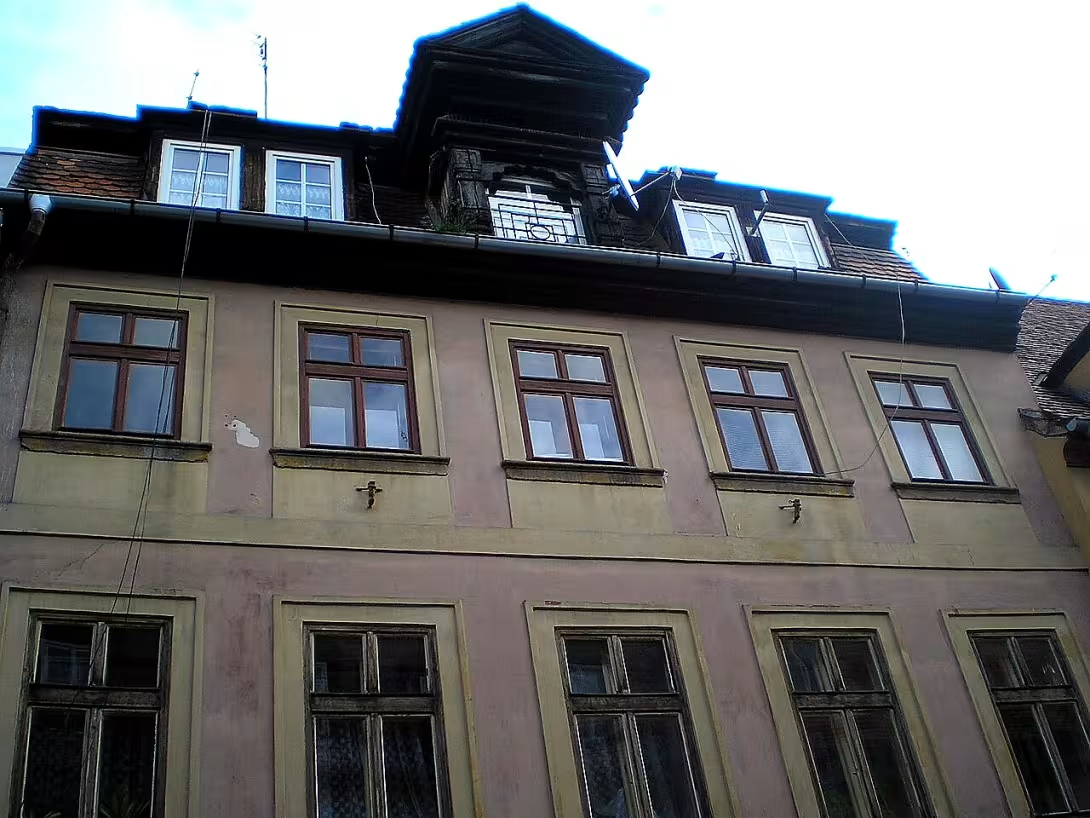
The House at Dlouhá 418 / 7 in Cheb is a historic town building with a Renaissance core from the 16th century. Later it was rebuilt. It is located in the centre of the city and is registered as a cultural monument of the Czech Republic.
This building in the Karlovy Vary Region represents a typical example of urban construction. It is part of the monument reservation, which confirms its importance for the historical character of the site.
From the point of view of architecture the house stands on the foundations of the 16th century. However, the current form is the result of modifications from the second half of the 18th century, which defined today's appearance of the construction.
There are no reports on specific owners or dramatic destinies of the house. The building is officially registered in the register of cultural monuments under number 15834 / 4-3676.
Today the house is part of the historical tissue of Long Street. For visitors it is valuable as an authentic element of the building, which combines elements of two different centuries.
The building is proof of the continuity of urban development in Cheb. When walking through the centre, it is worth paying attention as a representative of local architecture.
Historical milestones
- 16th century
- The birth of the Renaissance core of the building.
- second half of the 18th century
- Rebuilding the house and defining its present appearance.
- 20th century
- Registration of the building in the register of cultural monuments of the Czech Republic.
Points of interest
The building has a Renaissance core and foundations from the 16th century. - The current appearance of the construction is the result of modifications from the second half of the eighteenth century. - The house is registered as a cultural monument of the Czech Republic and is part of the monument reservation. - The object represents a typical example of urban construction in Cheb. The building connects elements of two different centuries.
Guide
Show guide text
This text was created by artificial intelligence and has not been editorially reviewed. It may contain inaccuracies.
Welcome to Cheb, the beautiful city of Karlovy Vary. Right now, you're facing one of the silent witnesses to the history of this place. In front of you is a city historical house, which is part of a townhouse on Long Street. If you look at it, you'll see a building that completes the character of this street with its presence and reminds us of what urban housing looked like in recent times. It is an object that has been recognized as a cultural monument of the Czech Republic, which means that the state recognises its value for our common history and identity.
Stop for a moment and just feel the atmosphere of this place. You're standing in a street that tells your name about its length and importance to the city. This house is embedded in a series of other buildings, which creates a typical picture of the old urban core, where the houses stand close to each other, share walls and together form a continuous line that goes deeper into Cheb history.
If we now think about when this house was created and who was its creator, we will find ourselves in the unknown. Unfortunately, history did not bring us the exact names of the architects who designed this project or the specific date when the first brick was laid. It is in this silence that a certain kind of secret arises. Who lived here? Who suggested room layout? Why was the house built in this form? Although these questions remain without a clear answer, the very existence of the house in the townhouse tells us the story of urban development and of the people who have made up the history of the region here with their daily work and life.
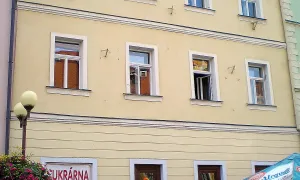
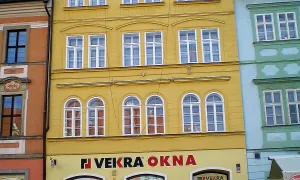
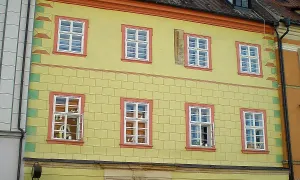
Now pay attention to the appearance of the building itself. Look at his facade and see how the house is inscribed in the overall rhythm of Long Street. Notice how the front of the house has adapted to the space at its disposal. It is in the details of the series of buildings that can be read as the space in city centres has been optimized in the past. Look at the roof line and the way the house connects to the neighboring buildings. It is a harmony that has been created gradually over time, and which is now a unique whole.
When we look at these walls, we can imagine generations of people walking through here. Even if we don't know the specific names of the personalities that would be connected to this house, we know that every stone and every window has seen thousands of stories. Imagine the morning rush in the street, the sound of cars on the road and the voices of people who lived here centuries ago. This house was not just a building, it was a home, a haven, and perhaps a place of business. He's a quiet observer of everything that's been going on in Cheb, from the time of old craftsmen to modern times.
Perhaps the fact that we don't know many details of this house will interest you. Today, when everything is written in digital archives, it is fascinating to stand before an object that keeps its secrets. It's a little historical mystery right in the middle of town. Why did the names of the creators remain forgotten? What events took place behind these walls that no one can remember? It is these empty places in history that allow us to engage our own imagination and try to figure out what life has been like here at different times.
This house is proof that the monument does not necessarily have to be a monumental palace with large sculptures or complex decorated towers to have a price. Its value lies in authenticity, that it is a real part of urban tissue and that it has survived for centuries to tell us its story today, even if it speaks only in whispers.
Let us now slowly close this chapter of our guide. I hope you enjoyed a moment of peace in front of this cultural monument and that you felt a connection with the past of the city Cheb. This house is just one of many pieces of the puzzle that makes up the history of this region.
Now I invite you to continue to explore the Long Street and surrounding buildings. Follow the details, feel the rhythm of the city and look for more clues of the past that are hiding in every corner. Let yourself be guided by curiosity and discover the beauty of the Karlovy Vary Region further.
Thank you for your attention and I wish you a pleasant journey along Cheb. Goodbye.
Tips for visitors
The best time to visit is in the morning or late afternoon, when the sun hits the facade of the house in Long Street at a pleasant angle. Since it is a building in a series of buildings, we recommend to follow the details of architecture from the pavement.
We recommend comfortable shoes for a walk through the historical centre.
For the best pictures we recommend shooting from the opposite side of the street to capture the whole look of the house. The most distinctive light to capture the facade details is based on street orientation during the day.
Families with children can use a visit to play in search of old architectural elements on the facade, which teaches children to perceive the beauty of historic buildings in the urban environment.
Frequently asked questions
Can the monument be visited?
This is a residential or farm building, not a museum with opening hours. Please view it from public space and respect the owners' privacy. We have no information about access to the interior.
Where is the monument?
Location: Dlouhá 418/7, Cheb, Karlovarský kraj. The map on this page shows the exact spot.
Why is the monument protected?
It is listed in the Central List of Cultural Monuments of the Czech Republic as a cultural monument (register no. 15834/4-3676).
Businesses nearby
Do you run a restaurant, accommodation, shop, museum, rental, wellness or other visitor service near this monument? Show yourself directly to the people heading to it — this is how they will see you in the app and on the web:
Nearby
➜ Zobrazit interaktivní přehled okolí – restaurace, ubytování, půjčovny a další místa v okruhu 15 km.
Data: OpenStreetMap contributors, okruh 15 km.
🏰 Historické památky
- Galerie 4 (0.1 km – Františkánské náměstí 30/1)
- Chebské muzeum (0.2 km – náměstí Krále Jiřího z Poděbrad 3)
- Chebský hrad (0.3 km)
- Památník obětem železné opony (4.2 km)
- Pomník Johanna Wolfganga Goetha (4.5 km)
- Městské muzeum (5.0 km)
- Künstlerhaus (9.9 km – Egerstraße 3)
- hrad Hohenberg (10.5 km)
🍽️ Restaurace a stravování
- U Kata (0.0 km – Židovská 17)
- Dejavu (0.4 km – Svobody 543/7)
- Stop Cafe (0.7 km)
- Kamenný Dvůr (6.7 km)
- Restaurace Seeberg (8.4 km – Ostroh 2)
- Bronzový dukát (10.5 km)
- Gasthaus Egertal (11.1 km)
- Pizzeria da Nunzia (12.2 km – Turmstraße 1)
🏨 Ubytování
- Modrý Věžák (1.3 km – Dyleňská 1205/24)
- Resort Stein (2.5 km – 10)
- Tršnice (4.4 km)
- Otava (4.6 km)
- Retro-Camp Tršnice (5.2 km)
- Penzion Selský dvůr (6.9 km)
- Penzion Seeberg (8.4 km – Ostroh 2)
- Hrad Vildštejn (10.1 km)
🚲 Půjčovny a sport
- Better Fitness (0.4 km – Komenského 7)
- Sport Flori (0.4 km – Valdštejnova 8)
- Hervis (0.7 km)
- plavecký bazén Chetes (0.8 km)
- Sportisimo (0.8 km)
- Jízdní kola (1.1 km)
- TJ lokomotiva (1.3 km)
- Hard Core Gym (5.4 km)
🥾 Turistika a příroda
- Komorní hůrka (3.3 km)
- Skalní útvar (3.3 km)
- Hranice / Die Grenze (5.6 km)
- Starý Hrozňatov (6.4 km)
- Císařský pramen (8.1 km)
- Kapplblick (9.4 km)
- Wanderwege um Hohenberg (9.8 km)
- Grenzwandlerweg (9.8 km)
Accommodation nearby
Themed route
Dlouhá 7 (building) - The main destination of the trip, where one can admire the unique architecture and history of this place. Area Long 7 (space) - Walk in the immediate surroundings of the building and its courtyard for better perception of the overall context of the monument.
Seasonal recommendations
In spring, the surrounding area of the building wakes up in green and fresh air gives new energy to the place. The sun gently illuminates the facade in the morning, which is ideal for observing details from the outside. We recommend light but laminated clothing and a visit in the morning when the air is the cleanest.
The summer season brings intense light and rich colors of surrounding nature. The atmosphere is warm and relaxed, typical of the main holiday. It is advisable to choose breathable fabrics and sun protection cap. The best time for arrival is the late afternoon, when the heat retreats and the shadows extend.
In autumn, the landscape around the monument is colored in golden and brown tones, creating a melancholy mood. The air is fresh and visibility is very good due to lower humidity. Practical shoes are suitable for wet lawn and warm sweater. We recommend a visit in October when the colours of the leaves are the most distinctive.
In winter, the construction works more closely, often in contrast to the white snow surrounding its walls. The quiet and quiet environment underlines the historical character of the place. Hot clothes, gloves and tight shoes with anti-slip soles are essential. The best thing is to come in time around noon to maximum daylight.
Visualizations and artistic views


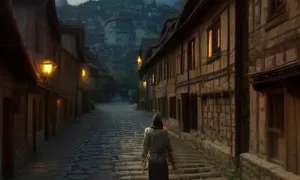
The visualisations are generated by artificial intelligence and serve as inspiration.
Photos from the area
Real photos taken near the monument


Zdroj a licence jsou uvedeny u každého snímku.
Tips from visitors
No tips yet. Be the first!
Log in and add your tip.
Sources and literature
Photos: Novojaro / CC BY-SA 3.0 — Wikimedia Commons. The author and licence also appear when you hover over the image.
Location on the map
Příběhy a pověsti
Legendy, pověsti a příběhy spjaté s touto památkou
Fotografie návštěvníků
Zatím žádné fotografie. Buďte první, kdo přidá fotografii z návštěvy!
Log in a přidejte svou fotografii nebo hodnoťte.
Za ověřenou návštěvu v aplikaci získáte víc bodů — poznáme podle GPS, že jste na místě.
Reviews and comments