



Dominikánský klášter v Chebu Monastery
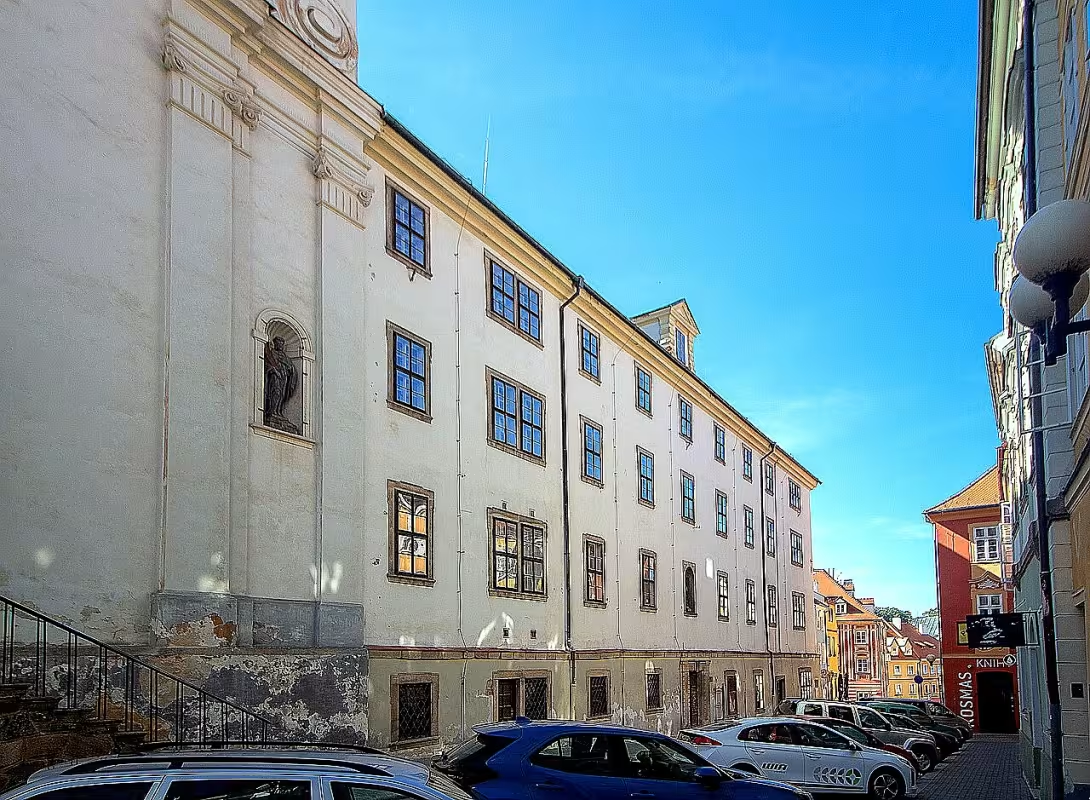
Dominikánský klášter v Chebu with the church of St. Wenceslas is one of the oldest monasteries in the city. This house of the order of brothers of preachers (Dominicans) was founded at the end of the 13th century and its oldest part, namely the monastery church of St. Wenceslas, dates from 1294- 1296.
The history of this complex is linked to the dramatic events of Central Europe. During the Thirty Years' War, the monastery and the church were severely damaged and gradually decayed. In 1642 part of the monastery building collapsed.
The recovery came with significant delay. In the early 1970s, city officials initiated a public collection to repair the church. The decisive turn came in 1673, when Emperor Leopold I himself generously decided to contribute to the restoration of the monastery. On 30 August the following year, the cornerstone of the new Dominican church was laid. The architect Abraham Leutner became the builder. The construction progressed systematically - a complete temple including the restoration of monastery buildings was decorated in the period 1674- 1688. In 1689 the temple was solo consecrated by Bishop Albrecht of the Earl of Wartenberg.
During the reconstruction of the monastery there was a significant reconstruction of its spatial layout. The original entrance to the church was located on the west side of the Dominican Street, which connects the Janská Square with the Stone Street. The new monastery was reoriented - the entrance was now opened on the east side of Kamenná Street, where the monastery originally had a priesthood. Above the decorative portal to which the double-sided staircase leads, the embossed relief of the imperial eagle - a permanent thank you for Leopold's generous support.
The restoration of the monastery buildings began at the same time as the building of the church. The construction was entrusted to builder Andreas Burgler. The solution to the property issues required the purchase and demolition of several neighboring houses on Kamenná Street, which greatly delayed the process. The last parts of the monastery buildings, including a large refectory intended to feed brothers, were completed only in 1720. During the wars of Austrian heritage and later Napoleonic wars, the refectory served as a military Lazaret.
The monastery was an important cultural and scientific centre - it had a comprehensive library and archive. Following the abolition of the Dominican Convention in 1936, these valuable collections were transferred to the Dominican monastery in Pilsen, where they later formed the core of the Study and Scientific Library of the Pilsen Region.
Then and now
Drag the slider to compare how the landmark may have looked when it was built with the view today.
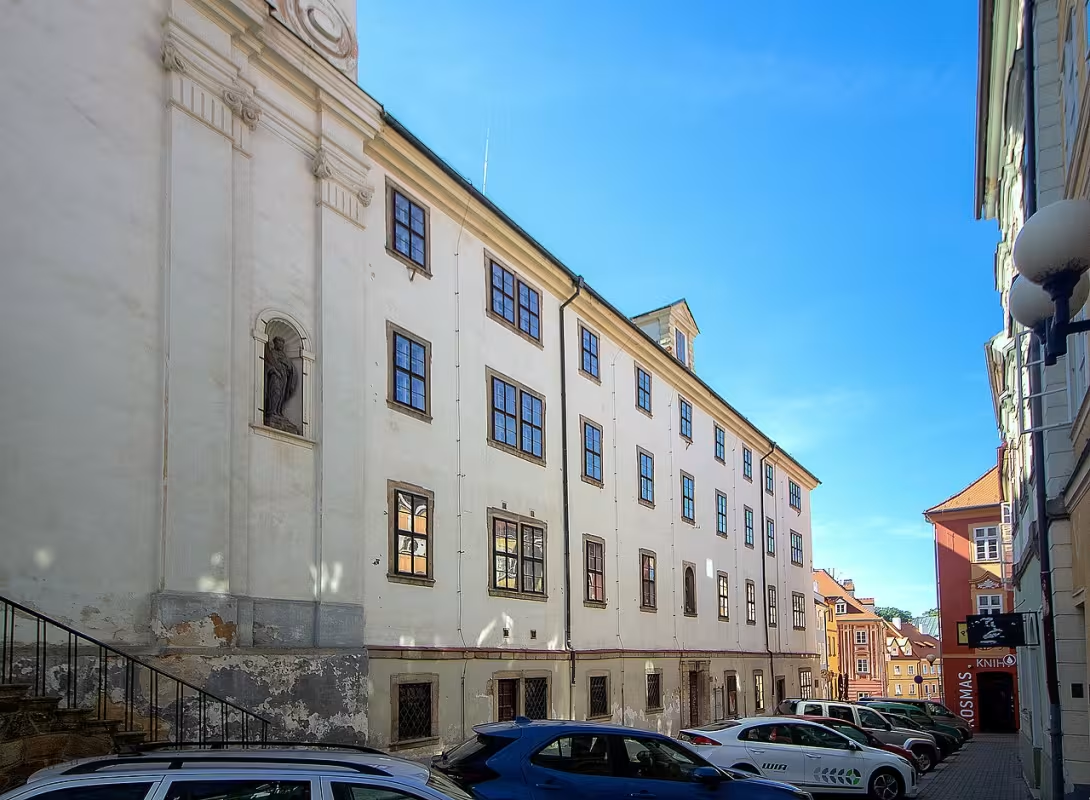
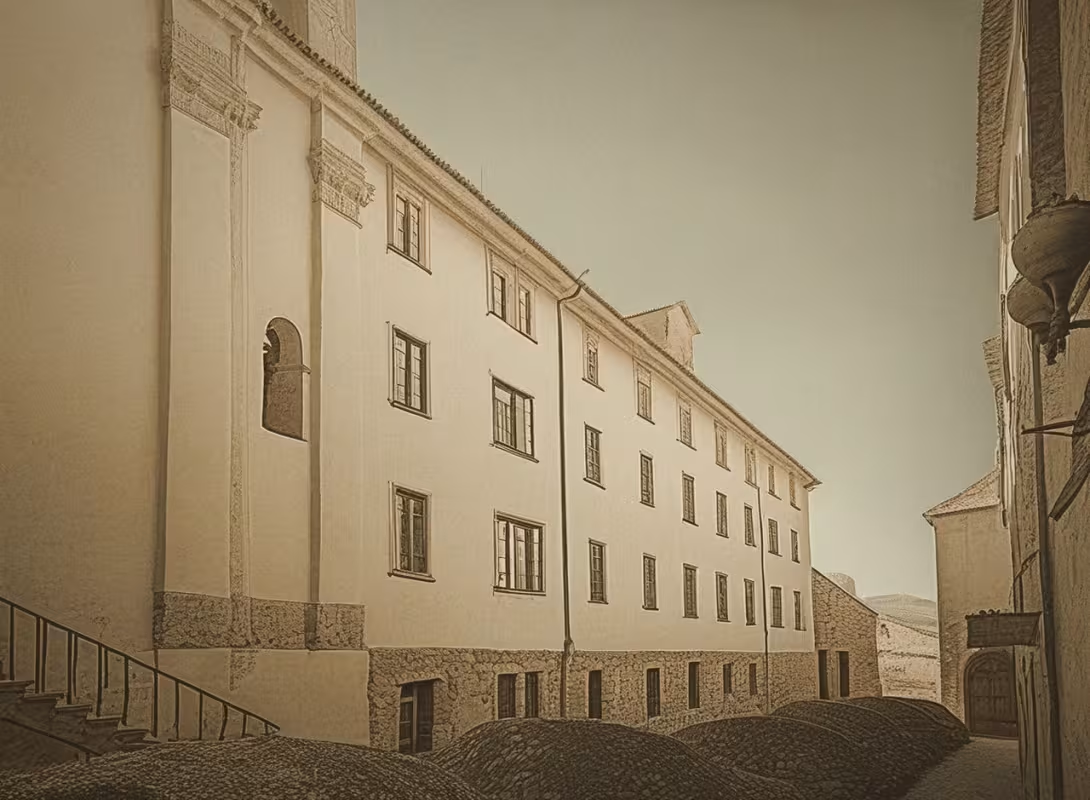
The historical appearance on the left is an AI-generated visualisation and serves as inspiration only.
Historical milestones
- 1296
- Completion of the original medieval church
- 1689
- The consecration of the Baroque Church by Bishop Albrecht by the Count of Wartenberg
Architectural development
The original medieval church was built in 1294-1296. After damage during the Thirty Years War, the Baroque reconstruction took place in 1674- 1688 under the leadership of architects Abraham Leutner and Andreas Burgler, which included the overall reorientation of the church's sides.
Historical events
- 1294
- Status of the original medieval church
- 1642
- Part of the monastery collapsed during the Thirty Years' War
- 1673
- Opening of restoration of the church and monastery with the support of Emperor Leopold I.
Points of interest
- Dominikánský klášter v Chebu with the church of St. Wenceslas is one of the oldest monasteries in the city.
- During the Thirty Years' War, the monastery and church were severely damaged and gradually decayed. In 1642 part of the monastery building collapsed.
- Emperor Leopold I., who laid the cornerstone of the new Dominican church on 30 August 1674, made a generous contribution to the restoration of the monastery.
- During the reconstruction of the monastery there was a significant reconstruction of its spatial layout, the new entrance was now opened on the east side of Kamenná Street.
- After the abolition of the Dominican Convention in 1936, the valuable library and archive were transferred to Pilsen, where they became the core of the Study and Scientific Library of the Pilsen Region.
Guide
This guide is narrated by a synthetic voice generated by artificial intelligence.
Show guide text
This text was created by artificial intelligence and has not been editorially reviewed. It may contain inaccuracies.
Welcome to Cheb, a place full of history and beauty, where you stand before one of the most famous symbols of the city - the Dominican monastery with the Church of St. Wenceslas. When you look around, you perceive the grandeur and spirit of the past that this historical complex carries. It's a place full of stories that deserve to be heard.
The Dominican monastery with its Church of St. Wenceslas is one of the oldest monastery institutions in Cheb. His original construction work was completed at the end of the 13th century, more precisely in 1296. This church, once proud of its architectural purity and spiritual zeal, has undergone many changes over the years. During the Thirty Years' War, the key and the church were severely damaged, leading to its gradual decline. In 1642, part of the monastery structure collapsed, which was another fracture in its history.
However, the monastery and the church did not leave without help. Emperor Leopold I., who laid the foundations for the Baroque revival of this spiritual centre, made a generous contribution to the restoration of the monastery. Between 1674 and 1688 the monastery buildings were restored under the leadership of architect Andreas Burgler, while the new Baroque church was built by Abraham Leutner. This process enriched the monastery with new beauty and spiritual strength.
Look up at the facade of St. Wenceslas's church, which presents its baroque characteristics. Even if you can't see details like statues or paintings now, you can see elegant lines and balances that are the basis of baroque architecture. This church was consecrated by Bishop Albrecht by the Earl of Wartenberg in 1689, which represents an important milestone in the history of the monastery.
Among the personalities associated with this place, we must not forget Emperor Leopold I., whose financial support was crucial for the restoration of the church and monastery. His contribution was not only material, but also symbolized the connection between the church and the empire.
The interesting thing about this place is that Dominikánský klášter v Chebu and St. Wenceslas Church are among the oldest monasteries in the city. It is a monument that has endured a storm of time and change over the centuries to preserve its spiritual and historical value.
Allow me to invite you to explore this fascinating place again. Every stone here has a story to tell, every window a light to project into the soul. Let you immerse yourself in the atmosphere of peace and history that Dominikánský klášter v Chebu offers. Thank you for your visit and I hope this guide was illuminating for you.
Tips for visitors
The best time to visit the Dominican monastery in Cheb is autumn or spring, when the town is usually mildly visited and surrounding nature offers beautiful green regions. The calm atmosphere of these periods allows you to appreciate the historical architecture and calm of the monastery environment better.
Parking is located near the centre of Cheb, where parking is available for both cars and visitors arriving by public transport. For those travelling by bus or tram, the monastery is easily accessible from the city centre. We recommend checking the current connection before the expedition.
When visiting the Dominican monastery, we recommend to bring comfortable shoes, because exploring the historical places and the church of St. Wenceslas may include walking on stone floors. Don't forget the protective sunglasses and plenty of water, especially if you visit the monastery during warmer months.
Photography of the Dominican monastery offers various possibilities. The best light for photos is usually in the early morning or late afternoon when the sun is not too hot and shading provides interesting effects on architectural elements. Also remember to view the interior of St. Wenceslas's Church, where some parts can be illuminated specifically for photography.
For families with children, Dominikánský klášter v Chebu is an interesting place, which offers not only historical valuables, but also learning and entertainment opportunities. Children can look forward to exploring the monastery space and the church, where an interactive exhibition or a children-oriented course can be offered. In the vicinity of the monastery there are also parks and green spaces suitable for short relaxation.
Frequently asked questions
Can the monument be visited?
Yes. We verified the opening hours or admission on the official website (10. 10. 2026); you will find them in the visitor information on this page. Please double-check with the operator before you travel.
What are the opening hours and admission?
Details verified on the official website (10. 10. 2026) are listed in the visitor information on this page. Official website: https://muzeumcheb.cz/
Where is the monument?
Location: Kamenná 219/5, Cheb, Karlovarský kraj. The map on this page shows the exact spot.
Why is the monument protected?
It is listed in the Central List of Cultural Monuments of the Czech Republic as a cultural monument (register no. 30126/4-3712).
For kids
Imagine going back 736 years until Cheb was still a small town. The city was full of life, shops and crafts. And between all these buildings, there was a house that had a special role. It was a Dominican monastery.
How did it look here? Who lived here? What happened here? The monastery was home to brothers of preachers who took care of the soul of men. They were intelligent people who tried to help others and teach them about God. The room was filled with books and scripts that the brothers studied and expanded.
Businesses nearby
Do you run a restaurant, accommodation, shop, museum, rental, wellness or other visitor service near this monument? Show yourself directly to the people heading to it — this is how they will see you in the app and on the web:
Nearby
ITEX Show interactive overview of the surroundings - restaurants, accommodation, rentals and other places within a 15 km radius.
Data: OpenStreetMap contributors, 15 km radius.
‡ Historical monuments
- Cheb Museum (0.1 km - King Jiří Square of Poděbrad 3)
- Cheb Hrad (0.2 km)
- Gallery 4 (0.3 km - Franciscan Square 30 / 1)
- Monument Johanna Wolfgang Goetha (4.3 km)
- Memorial to victims of iron opony (4.5 km)
- Municipal Museum (4.8 km)
- Künstlerhaus (9.9 km - Egerstraße 3)
- hrad Hohenberg (10.5 km)
Restaurant and catering
- U Kata (0.2 km - Jewish 17)
- Stop Caffe (0.4 km)
- Dejavu (0.5 km - Liberties 543 / 7)
- Stone (6.5 km)
- Restaurant Seeberg (8.3 km - Island 2)
- Bronze ducat (10.3 km)
- Gasthaus Egertal (11.1 km)
- Restaurant & Cafe Schloss (12.2 km - Schloßplatz 1)
Accommodation
- Blue Towers (1.5 km - Dylenská 1205 / 24)
- Resort Stein (2.5 km - 10)
- Tršnice (4.2 km)
- Otava (4.4 km)
- Retro-Camp Tršnice (5.0 km)
- Pension Selské dvovor (6.7 km)
- Guesthouse Seeberg (8.3 km - Island 2)
- Castle Vildstejn (9.9 km)
› Rental and sports
- Better Fitness (0.4 km - Comenius 7)
- Sport Flori (0.6 km - Valdštejnova 8)
- Sportisimo (0.7 km)
- Hervis (1.0 km)
- Swimming pool Chetes (1.0 km)
- R (1.3 km)
- TJ locomotive (1.5 km)
- Hard Core Gym (5.2 km)
© Tourism and nature
- Chamber high (3.2 km)
- Rock body (3.2 km)
- Boundary / Die Grenze (5.9 km)
- Old Grapes (6.6 km)
- Imperial spring (7.9 km)
- Kapplblick (9.6 km)
- Wanderweg um Hohenberg (9.8 km)
- Grenzwandlerweg (9.8 km)
Accommodation nearby
Themed route
Thematic cruise route: Dominikánský klášter v Chebu
1. Dominikánský klášter v Chebu (monastery) Start your trip at the monastery itself, which is not only an architectural pearl, but also an important cultural and historical centre of Cheb. The monastery with a rich history dating back to the 13th century offers visitors a view of Gothic and Baroque elements to be explored and appreciated.
2. Church of St. James (Temple) About 5 minutes' walk from the Dominican monastery is the Church of St. James, which is not only the spiritual centre of the city, but also the architectural splendor. Its gothic interior and history associated with the monastery complex make a visit almost necessary for anyone who wants to understand the spiritual traditions of Cheb.
3. Old Town Square (Square) After a short walk through the city you can reach the Old Town Square, which is the heart of Cheb. This place offers a view of historical architecture and is an ideal place to relax and explore other attractions of the surrounding district. The square with its city hall and old houses will bring you back to the past if you look at the details of the buildings and local monuments.
4. Autumn Markets (market) If you visit Cheb in winter, remember to explore autumn markets near Old Town Square. This market is full of local products and food, which allows you to enrich your experiences not only by historical but also by the cultural side of Cheb. Here you can see traditional Czech dishes and products that are part of the daily life of the population.
This route offers you a comprehensive view of the history and culture of Cheb, from the deep roots of the monastery tradition to modern local customs.
Seasonal recommendations
Spring: In the spring season, Dominikánský klášter v Chebu is transformed into a living background of blooming nature, where green meadows and flowering shrubs provide new shine to the monastery buildings. Sunshine days with mild temperatures create ideal conditions for visiting when the atmosphere is calm and friendly. We strongly recommend visiting the monastery early in the morning or later in the afternoon to avoid a possible increase in attendance during the middle hours. Enough warm clothes are suitable for colder spring morning and evening.
Summer: For years, Dominikánský klášter v Chebu can become a center of attention when sunlight illuminates historical architectural elements in the best colours. The warm summer days bring a lively atmosphere full of tourists and locals who enjoy the outdoor area of the monastery. To ensure a comfortable visit it is advisable to come early in the morning or late in the afternoon to avoid the main doses of crowds. Don't forget the protective sun clothes and enough drinking, especially during warm summer days.
Autumn: In autumn Dominikánský klášter v Chebu becomes magical atmosphere when tree leaves begin to change colour and fall on the paths leading to the monastery. Sunshine autumn days are an ideal time to visit, because the temperature is welcoming and the crowd is less than in summer. The atmosphere of calm coloured leaves gives the monastery a unique view. We recommend wearing warm clothes, especially in the shade and cooler afternoons.
Winter: A winter visit to the Dominican monastery in Cheb offers unique views of historical architecture, illuminated by ice lights and perhaps even snow covered. The peaceful winter atmosphere of the monastery is ideal for relaxation and reflection, especially in cold afternoons with shorter opening times. It is important to prepare for a visit to warm clothes and suitable shoes, especially if you plan to explore the outside parts of the monastery during cold days.
Visualizations and artistic views


The visualisations are generated by artificial intelligence and serve as inspiration.
Photos from the area
Real photos taken near the monument


Zdroj a licence jsou uvedeny u každého snímku.
Atmosphere of the place
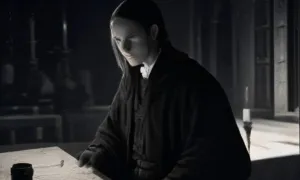
This atmospheric visualisation of the place and period was generated by artificial intelligence. It is not real footage of the location.
Tips from visitors
No tips yet. Be the first!
Log in and add your tip.
Sources and literature
Photos: VitVit / CC BY-SA 4.0 — Wikimedia Commons. The author and licence also appear when you hover over the image.
Faktickým podkladem tohoto textu byl článek na Wikipedii, jehož autory jsou přispěvatelé Wikipedie. Článek je dostupný pod licencí CC BY-SA 4.0.
Location on the map

Příběhy a pověsti
Legendy, pověsti a příběhy spjaté s touto památkou
Fotografie návštěvníků
Zatím žádné fotografie. Buďte první, kdo přidá fotografii z návštěvy!
Log in a přidejte svou fotografii nebo hodnoťte.
Za ověřenou návštěvu v aplikaci získáte víc bodů — poznáme podle GPS, že jste na místě.
Reviews and comments