



Dům čp. 1 (Chmelovice) House
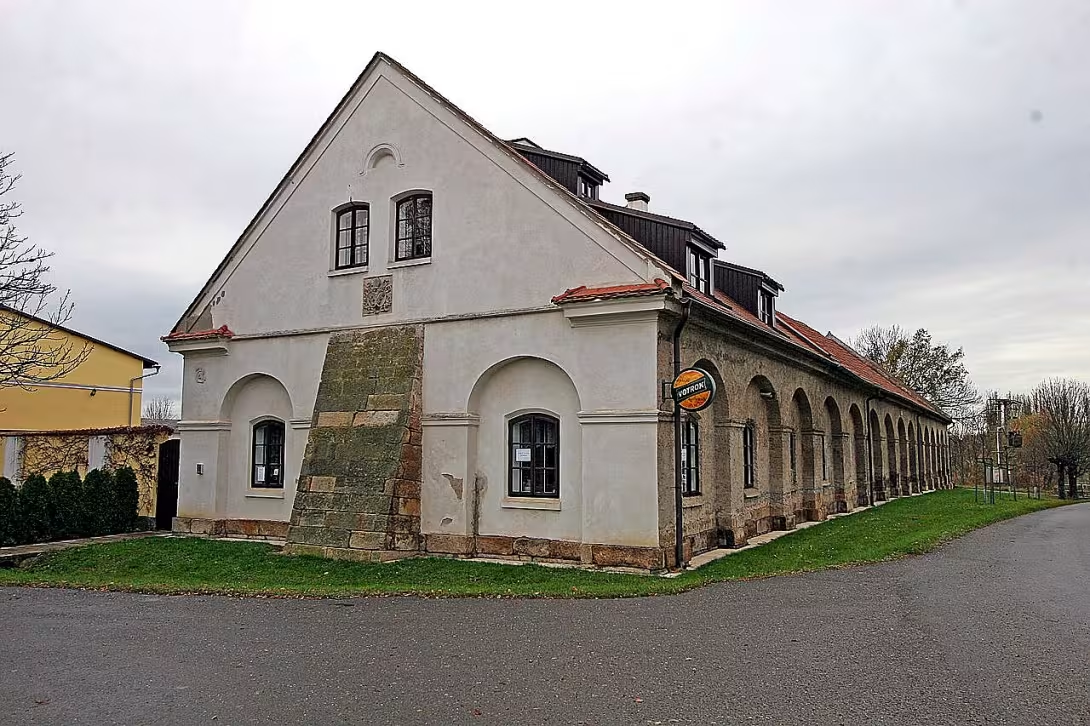
House No. 1 in Chmelovice in Hradec Králové district is the former economic court of the Breum Benefitins. They serve as proof of their business in the region. The residential building was preserved from the original Empire complex without major reconstruction. It has been protected as a cultural monument of the Czech Republic since 13 May 2002.
The history of the building dates back to 1686, when the court became property of the Broum benedictines. According to oral tradition, he was supposed to serve as a sheep at the time. The original area on roughly square land consisted of three separate buildings. North and east were used for living and as stables, while the south building was a barn. In 1786 the court was abolished as part of the rabbi and became the centre of the newly created village of Chmelovice. Between 1841 and 1872 the reconstruction followed a map of a stable cadastral. The eastern residential building with empirical divided facades was best preserved.
This high ground structure with a rectangular, elongated plan is walled mainly from bricks. They are made of circumferential masonry and arches. The stone is partly used, specifically in the pillars at the heels of vaults in stables. The building is plastered and covered with a saddle roof with bobbies. The southern part of the four axes is residential, while the northern part, the larger part consists of former stables. At present, soil buildings are built in the residential area.
The south facade was originally three-axis and divided by blind arcades. In the middle axis, a massive, oblique supporting pillar from sandstone blocks, which stretches up to the level of the ledge, was adhered through the brick arcade. In the area of the shield above the pillar there is a stone Abbot character with dating 1862. The shield is lined by a double-spaced plaster belt. In its peak is a semi-circular niche with a profiled stucco shampoo. The court facade is also broken down by blind arcades with semi-circular enchantments on pillars with Roman heads, a plinth and a profiled crown ledge.
In the residential part of the courtyard facade, there are two segmental six-table windows in the blind arcades with the acceding brick parapet. The entrance door is wooden, double-wing with segmental above-light, period forging and handle with lion head. In the adjacent arcade on the left is preserved the stone lining of the entrance with the segment upper, into which the window was later placed. Three entrances with modern doors are now leading into the sty. A total of 13 blind arcades can be seen from the side of the road, while the windows in part of the stables are locked. The details are supplemented by the ends of the croquettes with a decorative carving end and high counter freight skylights in the roof above the barn.
Currently the building serves as a guesthouse. The building is an important witness to the economic transformation in Czech countries and the influence of the Broum monastery on the development of the surroundings. For visitors, the monument is a valuable example of empirical architecture with preserved details, such as the Abbot emblem or period fittings.
Historical milestones
- 1686
- Property of Broum Benefitins
- 1786
- Cancellation of the original court in the framework of the rabbi
- 1841
- Start of reconstruction according to a map of a stable cadastral
- 1862
- Date on the stone character
- 2002
- Declaration of the building for the cultural monument of the Czech Republic
Architectural development
Originally, the Empire Economic Court was rebuilt in the mid-19th century according to a map of a stable cadastral. The building is walled from bricks and stone with a saddle roof. The facades are broken down by blind arcades.
Historical events
In 1686, the court became the property of the Benedict. In 1786 the original court was abolished as part of the rabbi. The building was rebuilt between 1841 and 1872. In 2002 the building was declared a cultural monument of the Czech Republic.
Owners
Broum Benedict (since 1686)
Points of interest
- The building was formerly the economic court of the Broum benedictors and, according to tradition, served as a sheepskin. - In 1786 the court was abolished and became the centre of the village of Hmelovice. - There is a stone Abbot emblem on the south facade from 1862. - Wooden entrance doors have period fittings and a handle with a lion's head. - Currently, the building serves as a guesthouse.
Guide
Show guide text
This text was created by artificial intelligence and has not been editorially reviewed. It may contain inaccuracies.
Welcome to Chmelovice. You're standing in front of the house with number one, welcoming you with your period appearance and calm. If you look at him, you'll see a building that's been carrying traces of centuries and tells the story of the people who worked here and lived. In front of you is a building that today serves as a guest house, but its history goes much deeper into the past than you might think at first glance. Feel the atmosphere of this place, where practical management of aesthetic care for the appearance of buildings is encountered.
Let us now look together at how this space was created and what its original meaning was. This building has not always been a place of rest for travelers. In the year of six-city eighty-six, property became part of the ownership of the Broum benedictors. These monks in the region were known not only for their spiritual activities, but above all for their clever economic business. It is this house that is living proof of how the monastery in Broum managed its land and how effectively it managed to use resources in the surrounding villages. The former Economic Court was a key point for the administration of monastic matters in this area.
An interesting break in the history of this place was a year of seven hundred and eighty-six. At that time, the original government court was abolished as part of the land distribution process and changes in ownership. At this very moment, the building that served as the administrative and economic centre became the centre of the village of Chmelovice itself. So the building gradually changed its role and began to adapt to the new needs of the time.
Now pay attention to the architecture itself, which is right in front of you. If you look at the facades, notice their elegant style. The main residential area you see is from a large rebuilding that began in the year eight hundred forty-one. The whole appearance of the building is characteristic elements of style, which at that time affected the whole of Europe and brought to architecture some rigour but also nobility. Pay particular attention to the blind arcades that give the facade depth and rhythm. They're decorative arches that aren't passable, but they're used to decorate the wall.
Now take a closer look at the details that you might miss on a quick pass. Focus your attention on the south facade of the building. Here you will find a very valuable detail, which is a stone Abbot character. If you look at it carefully, you'll see the date of eight hundred sixty-two. This character is a silent witness to the presence of the abbot and reminds us of the link of this place to the monastery hierarchy and administration. It's a small piece of history carved into stone that has survived for decades and has become part of the identity of this house.
If you move one step closer to the entrance, I suggest you pay attention to the wooden entrance door. Notice their period fittings, which are indicative of the craftsmanship of people from that time. But the push-ups deserve the most attention. If you look very closely, you'll see they're decorated with lion heads. The lion is a symbol of strength and protection, and its presence on the door gives the building a certain fall and dignity. It's fascinating how even such a small detail can tell about the ambition and taste of the people who modified the building in the nineteenth century.
The key personalities we associate with this place are broumovští benediktini. Think of them as organizers who were able to combine faith with practical life. This yard was not just a building, it was a machine for the production and management of raw materials. According to tradition, a sheepdog served here. So imagine the sound of the bells of sheep, the smell of wool and the hustle and bustle that must have been here when the herds from the surrounding pastures packed in. It was a place of hard work where every hour of the day was used to prosper.
This building thus hides a certain mystery of transformation. The practical sheepdog and the economic centre became a centerfold village and eventually turned into a place for guests. It's a journey from utility to aesthetics and work to rest. It is this level of history that makes house number one unique. In the year two thousand and two, the building was officially declared a cultural monument of the Czech Republic, confirming its irreplaceable value for our history and architecture.
Today, when you look at these walls, think of them as a book where every layer of plaster and every detail of enamelling is one word. From the year six to the present day, there has been a constant dialogue between functionality and beauty. It's fascinating to think how many generations of people have gone through these doors with lion heads and how many stories remain hidden in these spaces.
Now all you have to do is leave room for your own perception. Take a look around the building slowly, look again at the stone emblem from a thousand eight hundred sixty-two, and try to imagine what the Chmelovice looked like when this court was the main point of farming in the area.
Thank you for walking together through the history of this house. I hope you enjoyed this brief dive into the past and that the lion's heads on the door and the blind arcades on the facade caught your attention. Now invited to further explore the beauty of this region. I wish you a pleasant rest of the day and pleasant experiences in discovering other hidden treasures of our landscape. Goodbye.
Tips for visitors
The best time to visit is late spring or autumn, when the surrounding landscape looks best and trees do not interfere in the view of the architecture of the former court. The building serves for living, so it is recommended to be considerate of the privacy of the people.
The village can be reached by car or public transport; Check the specific connection and stop options in the current search engines. Since this is a rural area, we recommend comfortable shoes suitable for the field.
For the best photos we recommend to come in the morning or late afternoon light, which highlights the details of the facade and the historical character of the construction. The most interesting views offer the surroundings of the house, from where you can see the scope of the former economic complex.
During the visit, you will definitely air the surrounding area of the village of Chmelovice and visit the Broumov monastery, which is nearby and closely connected with the history of this house.
It is ideal for families with children to combine an outdoor tour with a nature walk around, allowing children to explore the rural environment and learn about how the monastery's economy used to work.
Frequently asked questions
Can the monument be visited?
This is a residential or farm building, not a museum with opening hours. Please view it from public space and respect the owners' privacy. We have no information about access to the interior.
Why is the monument protected?
It is listed in the Central List of Cultural Monuments of the Czech Republic as a cultural monument (register no. 1000471981).
Businesses nearby
Do you run a restaurant, accommodation, shop, museum, rental, wellness or other visitor service near this monument? Show yourself directly to the people heading to it — this is how they will see you in the app and on the web:
Events nearby

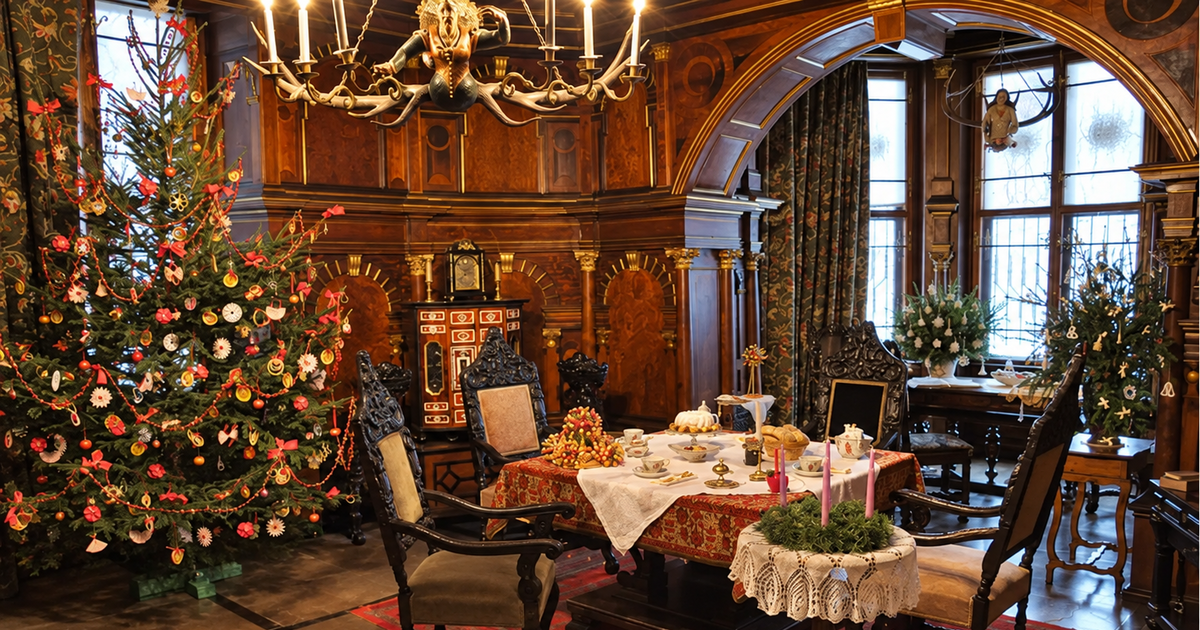
Zdroj akcí: otevřená data měst a obcí ČR (Národní katalog otevřených dat) a kalendář akcí Národního památkového ústavu.
Nearby
V okolí se nachází vesnice Chmelovice a Broumovský klášter.
Accommodation nearby
Themed route
Here is the design of the thematic route:
1. Broum Monastery (monument) - A magnificent building complex that serves as the ideal beginning of the journey thanks to its architecture and history. 2. Chmelovice (village) - Walk through this village will allow you to feel the atmosphere of the local countryside. 3. Dům čp. 1 (Chmelovice) (building) - The main objective of the visit, where you can admire a specific historical object within the village.
Seasonal recommendations
In the spring, the surroundings of the house awaken in fresh green and the first flowers bloom to complement the appearance of the building. We recommend a visit in the morning when the light is fine and pleasant. Due to the variable weather, it is advisable to choose layered clothes and moisture resistant shoes.
In the summer months the landscape is dominated by green and bright sun, which emphasizes the details of the facade. It's best to come early in the morning or at dusk to avoid heat. Don't forget the headgear and light, breathable substances to protect you from heat.
Autumn brings colour shades of leaves and specific fog to the surroundings, which gives the place a mysterious atmosphere. Use the golden hour before sunset for the best images from the outside. At this time, it is advisable to carry a lighter jacket or raincoat.
In winter, the building operates in quiet and quiet, with a possible layer of snow highlighting its historical shapes. We recommend a visit at noon when there is the most daylight. Hot clothes, high-quality shoes and gloves are essential to make a short stay in the exterior pleasant.
Visualizations and artistic views

The visualisations are generated by artificial intelligence and serve as inspiration.
Photos from the area
Real photos taken near the monument


Zdroj a licence jsou uvedeny u každého snímku.
Tips from visitors
No tips yet. Be the first!
Log in and add your tip.
Sources and literature
Photos: Petr1888 / CC BY-SA 3.0 — Wikimedia Commons. The author and licence also appear when you hover over the image.
Faktickým podkladem tohoto textu byl článek na Wikipedii, jehož autory jsou přispěvatelé Wikipedie. Článek je dostupný pod licencí CC BY-SA 4.0.
Location on the map
Příběhy a pověsti
Legendy, pověsti a příběhy spjaté s touto památkou
Fotografie návštěvníků
Zatím žádné fotografie. Buďte první, kdo přidá fotografii z návštěvy!
Log in a přidejte svou fotografii nebo hodnoťte.
Za ověřenou návštěvu v aplikaci získáte víc bodů — poznáme podle GPS, že jste na místě.
Reviews and comments