






Dům čp. 36 House
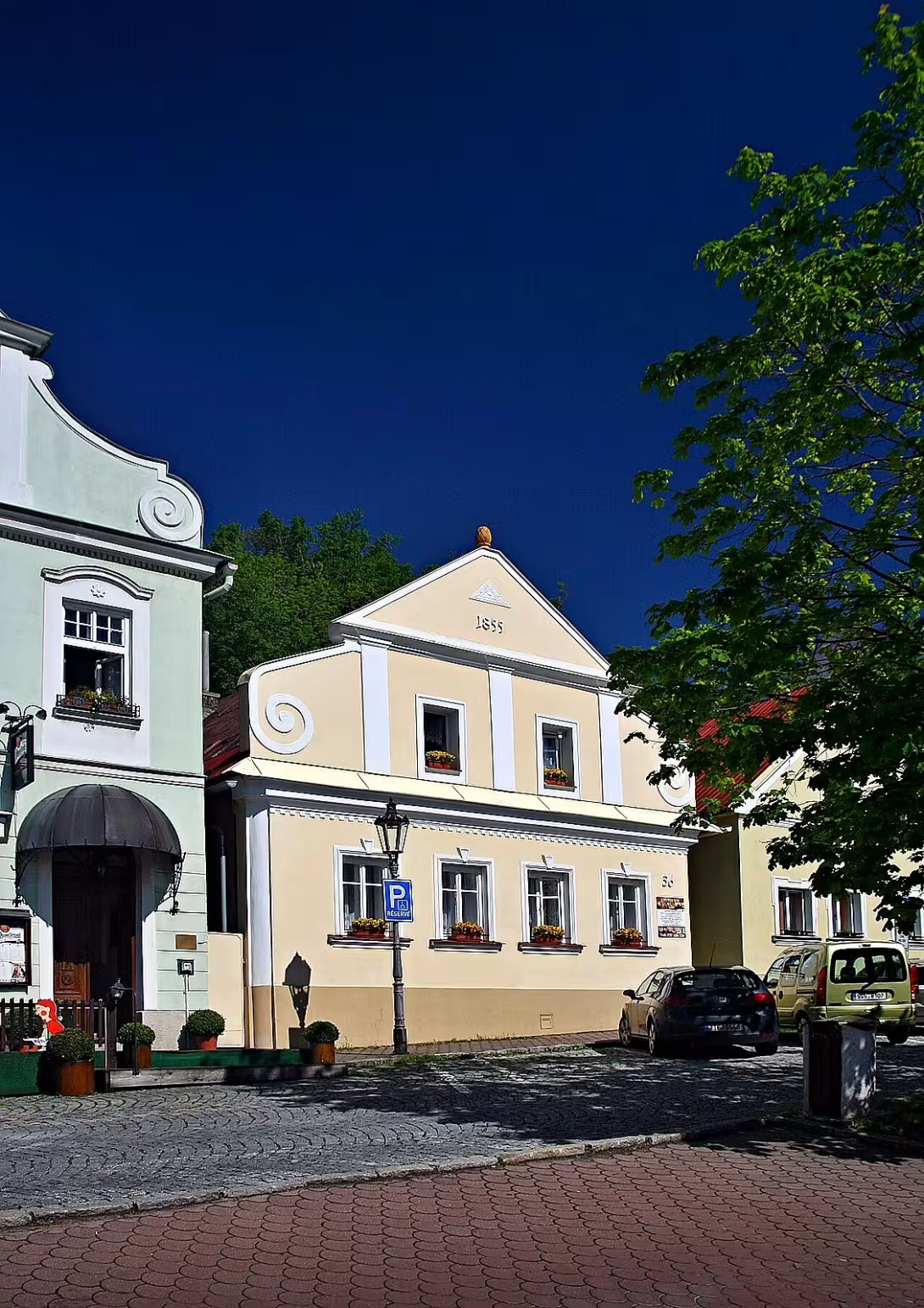
Dům čp. 36 on the square in Štramberk is a historical monument that boasts Baroque architecture and rich past. It is located in the district of Nová Jicin and is part of the town conservation. The building was entered in the Central List of Cultural Monuments of the Czech Republic before 1988, which shows its importance and protection.
The history of the house dates back to the end of the 18th century; a brick building was built at the beginning of the 19th century. Originally the square was hosted by 22 wooden houses with an archway, which had a shellfish law. In 1799 the first brick house was built and in the following years further reconstruction with baroque shields took place. An important event for Štramberk was the fire in 1855, which destroyed 40 houses and two barns. In 1771 house no. 36 belonged to the family of Juráks.
The architecture of the house is characterized by a baroque shield facing the square, which extends high. The building has a rectangular plan with a saddle roof and is divided by a parapet and a main ledge with a tooth cut. The house stands on a stone suspect that equalizes the slope inequality of the terrain. The ground floor is four-axis with rectangular windows in the shambles and post-date moldings. In the shield there are two windows with parapets that are divided by a horizontal profiled ledge and vertical pilasters with Roman heads. There is an entrance on the right side with two-wing doors and two windows. The ceiling of the rooms is flat, while the bathroom has a rolling vault.
Dům čp. 36 was created on the site of an old wooden townhouse whose original layout was partially rebuilt over the years. The architectural appearance is defined by a baroque shield with volutes, a tympanone with a stucco divine eye and a pinecone peak. The building is separated from the neighbouring buildings by a reef.
Today the house No. 36 is accessible to visitors and belongs to important historical monuments of Štramberk. Rich history, architecture and location on the square make it an interesting destination for interested people interested in local cultural heritage.
Dům čp. 36 is an example of an object that retains the memory of the past and attracts the attention of not only local but also tourists from around the world. His visit offers a view of the rich history of Štramberka and its architectural development.
Historical milestones
- 1771
- Dům čp. 36 belonged to the Iraqi family
- 1799
- The position of the first brick house in the square
- End of the 18th Century
- The history of the house dates back to this period
- beginning of the 19th century
- Position of the walled building on the site of the original grafted construction
- 1855
- Fire in Štramberk, which destroyed 40 houses and two barns
- before 1988
- Registration of the building into the Central List of Cultural Monuments of the Czech Republic
Architectural development
On the site of the old wooden townhouse was built a brick ground construction. The architecture is defined by a baroque shield with volutes and the Divine Eye. The original layout of the building was partially rebuilt over time.
Historical events
1771 the house was owned by rodina Juráků; the beginning of the 19th century the creation of the current masonry of the house
Owners
1771 rodina Juráků
Points of interest
- Dům čp. 36 is a historical monument with Baroque architecture and is located in Štramberk. - The building was entered in the Central List of Cultural Monuments of the Czech Republic before 1988. - The history of the house dates back to the end of the 18th century, originally a grafted building that was converted into a brick building at the beginning of the 19th century. - An important event for Štramberk was a fire in 1855 that destroyed 40 houses and two barns. - The architecture of the house is characterized by a baroque shield turned into a square with volutes, a tympanone with a stucco divine eye and a pinecone peak.
Guide
Show guide text
This text was created by artificial intelligence and has not been editorially reviewed. It may contain inaccuracies.
Welcome to Štramberk. You are standing right in the heart of this historic city, in its square, where you touch the past every step. Before you go any further, stop for a moment and feel the atmosphere of the place. In front of your eyes is a building with a descriptive number of 36, which is an essential part of our city conservation. It's a house that carries a mast of many generations, and it immediately catches your attention in its appearance. It may seem to you that the house you see has always worked like this, but its story is much deeper and more dynamic than it may seem at first glance.
Let's go back together to when this space was formed. The history of this particular place dates back to the late 18th century. If we want to look at the first possible clues, we have to go back to seven hundred seventy-one. At that time house number 36 already existed and belonged to the family of the Juras. It's interesting to imagine what this place looked like back then. At that time there was not a brick building, as you know it today, but a traditional grafted house. Imagine the smell of wood, the warmth of these old walls and the simple but functional architecture that was typical for the time being. Being in a gagged house was closely linked to nature and craft tradition, which was strongly active in the region.
But over time, not only people's lives change, but also the way we build. At the end of the eighteenth century, and especially at the beginning of the nineteenth century, there was a fundamental change. The old grafted house was replaced by a new, more ambitious brick building. This change was not only a matter of material, but above all a symbol of growing stability, prosperity and the desire for endurance. The place that once defined wood has now begun to define stone and brick. This transition from wooden structures to masonry objects was at that time a sign of modernization and an effort to create more durable structures that would better withstand elements and time.
But now pay attention to the architecture of the building itself, which is right in front of you. Look up at her most distinctive element. See that tall, baroque-lined shield? It is this detail that gives the house its unmistakable character and elegance. The Baroque style is reflected here in those interesting curves and decorative lines that stretch out to heaven. Above your eyes is also a tympanone, the characteristic triangular or semi-circular space that completes the face of the shield and gives it nobility. Although today we do not know the names of the particular architects who born this design, their visions and art are evident in every detail of this facade. They can fascinate you with those shapes that try to push the thickness of the lines and bring motion and dynamics into the urban environment.
However, if you look below, you will notice another very important technical detail. The whole building is not built directly at the level of the sidewalk, but stands on a stone suspect. Notice how this stone base equalizes the terrain inequality. Štramberk is a city that adapts to slopes, and this house is a great example of that. This suspect is not only a functional element that ensures the stability of the building on a inclined surface, but also creates a visual base that gives the house a sense of firmness and firmness. It's a fascinating connection of human engineering with the difficult geometry of the place itself.
Looking at this house, it is impossible to forget the dramatic events our city had to experience. The history of Štramberk is not only a history of growth and flourishing, but also a history of overcoming disasters. In a thousand and eight hundred and fifty five, our city was struck by a devastating fire. It was a moment of great tragic break when the flames swallowed up 40 houses and two large barns. At this point, it was decided what was left of our inheritance. The house number 36, however, endured this test of fate. His walled-up structure and solid base helped him survive the period when the city was changing around him and sometimes disappeared in the fire. It is precisely because this object has resisted, that today we can watch its beauty and enjoy its presence.
There's one more thing that might interest you. Although this house may seem like a normal part of the square, its importance is very high for the state and for history. Already a year ago a thousand nine hundred eighty-eight this building was entered into the Central List of Cultural Monuments of the Czech Republic. It means that it is not just an ordinary house but a protected treasure of our national heritage. This is proof that his baroque face and historical value are extremely valuable to all of us and that we must preserve them for future generations.
While you're looking at these decorative lines of the shield, you can think about how many faces and how many lives these walls have seen. From the Iraqi family, who lived here at a time when everything was still made of wood, to today's visitors who are stopping to see this house. Every era left its mark, every change from wood to stove brought a new dimension to this architecture.
I hope this brief insight into the past of the house number 36 has enriched you and helped you better understand the beauty and complexity of our city. Štramberk still has many other secrets and beautiful details waiting for you. Don't leave us too fast. Continue to walk through the square, see every building, every alley and every historical trail you can find here. Every stone here has a story to tell, just to stop and listen. I wish you a beautiful and inspiring tour of our city. Goodbye.
Tips for visitors
For the best experience of the visit we recommend to arrive on quiet days when there are fewer people in the square and you can enjoy the architecture. The ideal time for observing the details of the building is during the day when there is enough natural light.
You can easily reach the monument by car and public transport. Due to the location in the historical centre, we recommend to use parking in the wider area and walk to the house. You can best verify the current traffic connections in internet search engines.
During the tour we recommend to wear comfortable shoes, which is suitable for moving on the historical surface of the square. It is best to use soft light during morning or afternoon hours to photograph the details of the building and atmosphere of the city monument reservation.
For families with children, walking around the house is interesting due to the historical character of the place. Children can observe differences between different types of buildings within the urban conservation, which can be an interesting lesson in history right in the field.
Businesses nearby
Do you run a restaurant, accommodation, shop, museum, rental, wellness or other visitor service near this monument? Show yourself directly to the people heading to it — this is how they will see you in the app and on the web:
Nearby
Square in Štramberk, city conservation.
Accommodation nearby
Themed route
1. Square in Štramberku, city square. This place represents an ideal start for the atmosphere of the village. 2. City landmark reservation , historical territory. This area will guide you between well-preserved buildings and offer a view of the historical development. 3. Dům čp. 36, historical object. The main objective of your route, which represents an interesting example of local architecture.
Seasonal recommendations
Spring: In spring Štramberk comes to life under the inscription of flowering flowers in windows and fresh green in the surrounding area. Light is soft in this period and very convenient to capture details of historical architecture without sharp shadows. We recommend wearing layered clothes because the morning cold can still be tight, while the afternoon will be pleasantly warm. It's the perfect time for a quieter tour, avoiding the biggest crowds.
Summer: The summer months bring to the town the greatest life and intense sunlight that highlight the colors of historical facades. The atmosphere is lively and full of energy, but due to the increased number of visitors in the main summer season we recommend a visit in the early morning hours. Dress lightly, carry water and prepare for warmer air in narrow alleys.
Autumn: Autumn season offers a nostalgic atmosphere accompanied by golden colours of leaves and morning fog that cover the surrounding hills. The lighting is very warm in the afternoon and creates magical tones ideal for photography. To move on historic tiles, choose fixed shoes and warmer layers of clothing because the air is usually moist and cooling.
Winter: In winter, the city turns into a quiet and quiet scenery, often under the snow cover, which gives the monument a fabulous touch. Days are short and light is weak, so it is best to plan your visit in clear morning hours. The need is very warm and waterproof clothing and careful step on possibly slippery paths, and it is advisable to check in advance the shorter operating hours.
Visualizations and artistic views

The visualisations are generated by artificial intelligence and serve as inspiration.
Photos from the area
Real photos taken near the monument


Zdroj a licence jsou uvedeny u každého snímku.
Tips from visitors
No tips yet. Be the first!
Log in and add your tip.
Sources and literature
Fotografie: Kankovaa / CC BY-SA 4.0 — Wikimedia Commons. The author and licence also appear when you hover over the image.
Faktickým podkladem tohoto textu byl článek na Wikipedii, jehož autory jsou přispěvatelé Wikipedie. Článek je dostupný pod licencí CC BY-SA 4.0.
Location on the map
More monuments – Štramberk
Show all in the municipality
Příběhy a pověsti
Legendy, pověsti a příběhy spjaté s touto památkou
Fotografie návštěvníků
Zatím žádné fotografie. Buďte první, kdo přidá fotografii z návštěvy!
Přihlaste se a přidejte svou fotografii nebo hodnoťte.
Za ověřenou návštěvu v aplikaci získáte víc bodů — poznáme podle GPS, že jste na místě.
Reviews and comments