



Dvojdům čp. 242 House
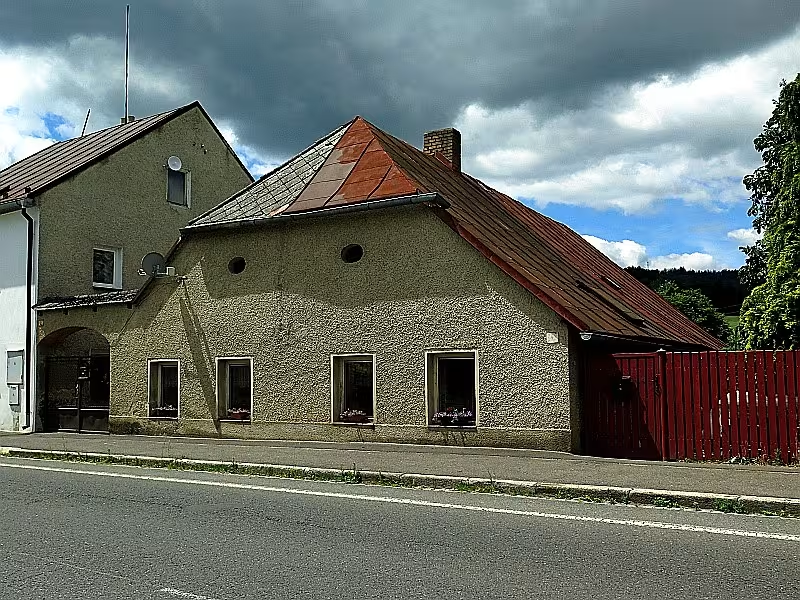
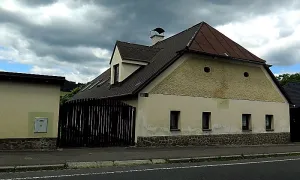
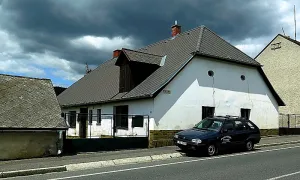
Dvojdům čp. 242, located in the municipality of Dlouhá Ves in the district of Klatovy, Plzeňský kraj, is a cultural monument of the Czech Republic under the protection of historical care. This object is part of a wood colony from the beginning of the 19th century and represents a typical ground floor house with a halibut roof, facing the road through the shield facade.
The creation of a double house in Long The village is connected with the establishment of wood colonies in the early 19th century when these areas were populated for wood processing and extraction. This monument represents a typical example of the architecture of the time that served the needs of working families within the timber industry.
Architecturally, the twin is characterized by its halibut roof and shield facade, which are typical elements for such objects from this period. These elements not only contribute to the aesthetics of the house, but also reflect the practical needs and technology of the time.
The history of ownership and management of double houses is not fully documented, but it is known that it belonged to working families from the wood colony. This object represents not only architectural value, but also the social and historical context of working class life in the 19th century.
Today it is available for visiting as a cultural monument. Its protection under the auspices of monument care ensures that future generations can recognize and appreciate the historical value of this object. The visit offers a unique view of the past and recalls the importance of industrial development for the local community.
Dvojdům čp. 242 is more than just an architectural monument; It's a witness to history that allows us to understand the life and work of people in the past. It is important to protect and maintain the cultural heritage of our region. Visiting this place is an opportunity not only to discover history, but also to think about the importance and value of monuments as part of our common identity.
Historical milestones
- around 1800
- The establishment of wood colonies in the Long Village.
- beginning of the 19th century
- The creation of two houses as part of a wood colony for the needs of working families.
Points of interest
- Dvojdům čp. 242 is a cultural monument of the Czech Republic under the protection of historical care. - This object is part of a wood colony from the beginning of the 19th century and represents a typical ground floor house with a half-bed roof, facing the road through the shield facade. - Twins are characterized by their halibut roof and shield facade, which are typical elements for such objects from this period. - This object represents not only architectural value, but also the social and historical context of working class life in the 19th century. - Dvojdům čp. 242 is available for visiting as a cultural monument and its protection ensures that future generations can recognize and appreciate the historical value of this object.
Guide
Show guide text
This text was created by artificial intelligence and has not been editorially reviewed. It may contain inaccuracies.
Welcome to the village Dlouhá Ves. You have just stopped in front of a place that carries a quiet reflection of ancient times and which is now an important part of our landscape and culture. You're standing right in front of a building that shows up in our records under two hundred and forty-two. It's a twin, which is a special kind of building that connects two separate housing units into one whole. Feel the atmosphere now, the peaceful presence this building radiates. Look at her around. Although at first glance it may seem like a simple part of the village environment, its importance is much deeper.
This object is not just an ordinary house. It is a cultural monument of the Czech Republic. It means that his existence is protected by the law and we care for him as a precious treasure he carried us
Now let's think together about what you see before you. This twin is a fascinating example of how people have tried in the past to address the needs of living and living together. The construction is designed to provide space for two families or two different purposes, yet it remains seen as one solid and unified whole. Pay attention to how this building floats in the area of the village. Follow its shapes and how it is divided into two parts, which is typical of this kind of construction. Even if I don't tell you every specific word about the materials you see here, I suggest you let your own eyes guide you. Look at the facade, feel the rhythm of the holes in the plaster and watch as the roof lines drink into the sky above the village Dlouhá Ves. Every edge, every shadow that is now thrown on the walls, tells a story about durability and an attempt to create something that will last generations.
Now you may ask who built this house and when it first became home to the first people. But here we come to one of the most interesting things history can offer us. The exact date of origin of this double house remains hidden in the fog of time. We don't know the name of the builder, we don't know the name of the architect who planned these shapes in his head, nor do we know the names of the famous personalities who might be here. It may sound like a lack of information, but it's actually the greatest force in this place. This silence makes us feel deeper. This house was not built for famous generals or kings, but for the people who lived here, worked and built their everyday reality. It is a monument to human labor that has refused to erase itself from memory, even though the names of those who performed it have long since died.
This anonymity creates a special bond between you and this building. You don't have to try to connect this place to a particular history of great heroes, but you can connect with a general human experience. Imagine those who came here decades or hundreds of years ago through the threshold, looking for shelter from rain or sun, and who experienced their greatest joy and sadness. This twin is a silent witness to thousands of such moments.
Let us now move on to the wider context in which we find ourselves. This area, the Klatovy district in the Pilsen Region, is a country that is deeply connected with tradition and solid anchoring in the landscape. Dlouhá Ves is not just a point on the map, it is part of a living chain of settlements that makes up our identity. This house, number two hundred forty-two, is one of those pillars that holds this identity together. It is part of the cultural heritage that teaches us that even what looks like a common rural architecture can be of enormous value if it is protected and if we pay attention to it.
But there is also a mystery that might interest you. Why these two? Why was this very form of construction chosen in this particular place? Perhaps the answer was in the economic situation of the families at the time, perhaps in the need for proximity to the neighbors, or simply in an effort to make effective use of space in the village. This question remains open, and that is precisely what its magic is. Every detail you're looking at right now is the answer to a question that people have asked themselves long before us.
Now that you've looked at this house and perceived its presence, I suggest you move on. Dlouhá Ves has many other corners that are worth exploring. Let yourself be drifted by the atmosphere of this place, look at the surrounding landscape, and try to find the traces of history left by your ancestors in every step. This road is not just about browsing buildings, it's about finding connections between the past and the present.
Thank you for your time and for stopping by this very double house. We hope this brief moment has helped you better understand the importance of the places surrounding us. Let your next steps in this beautiful landscape bring many other interesting experiences and discoveries. We'll say goodbye, but the memory remains.
Tips for visitors
The best time to visit doubles no. 242 is in the spring or autumn months, when the weather is pleasant and the sunlight illuminates the architectural details of the house. This period also offers beautiful colors in the surroundings.
What to take with you: It is recommended to carry sun protection and plenty of drinking water. The camera is ideal for capturing the beauty of the monument, especially when the light falls favourably on the facade.
Photography: The best places for photos are from the outside where the house can be lit by sunlight. Morning and evening hours offer best captured paintings with long shadows.
What to visit in the area: Close to the twins there are several historical places that can be explored during a five-hour afternoon. Visit other sights in the village Dlouhá Ves and surrounding natural beauty.
Frequently asked questions
Can the monument be visited?
This is a residential or farm building, not a museum with opening hours. Please view it from public space and respect the owners' privacy. We have no information about access to the interior.
Where is the monument?
Location: č.p. 242, Dlouhá Ves, Plzeňský kraj. The map on this page shows the exact spot.
Why is the monument protected?
It is listed in the Central List of Cultural Monuments of the Czech Republic as a cultural monument (register no. 26251/4-2847).
Businesses nearby
Do you run a restaurant, accommodation, shop, museum, rental, wellness or other visitor service near this monument? Show yourself directly to the people heading to it — this is how they will see you in the app and on the web:
Events nearby
Zdroj akcí: otevřená data měst a obcí ČR (Národní katalog otevřených dat) a kalendář akcí Národního památkového ústavu.
Nearby
➜ Zobrazit interaktivní přehled okolí – restaurace, ubytování, půjčovny a další místa v okruhu 15 km.
Data: OpenStreetMap contributors, okruh 15 km.
🏰 Historické památky
- H-40/16/A-120 (2.0 km)
- Žižkův pomník (3.7 km)
- sv. Jan Nepomucký (6.6 km)
- Karel Klostermann (6.6 km)
- Muzeum historických motocyklů (6.6 km)
- Bystrá (6.8 km)
- Vrcholová mohyla (8.6 km)
- býv. kaple (10.8 km)
🍽️ Restaurace a stravování
- Šumavská chalupa (2.2 km)
- Hradní Grill (5.3 km)
- U Luhanů (5.3 km)
- Resturace zámek Kněžice (5.6 km)
- U Štěpána (5.7 km)
- Rychta Na Račánku (6.6 km)
- Na solné stezce (6.7 km)
- Chata Rovina (6.9 km)
🏨 Ubytování
- Autokempink Nové Městečko (1.2 km)
- U Luhanů (5.3 km)
- Jitka Rudová - autokemp - Biofarma Vojetice (5.7 km)
- Turistická ubytovna MěKH (6.6 km)
- Kemp Sušice (6.9 km)
- Zámek Hrádek, s. r. o. (7.8 km – 1)
- Pavlova Louka (7.8 km)
- Penzion Pepino (8.0 km)
🚲 Půjčovny a sport
- Čápovna (1.8 km)
- Koupaliště (3.9 km)
- OP kola (4.5 km)
- JB Strength and Condition (4.5 km – Lerchova 926)
- Sport Zdeněk Schwarzkopf (4.6 km)
- koupaliště (4.7 km)
- CYKLO A SKI SERVIS Vlastimil Míčka (4.8 km)
- Highpoint.cz - Sport Schwarzkopf (4.9 km)
🥾 Turistika a příroda
- Sušice - první dáma Šumavy (4.7 km)
- Sedlo (4.9 km)
- Údolí Otavy (7.0 km)
- Vápeňák (9.0 km)
- Hadi vrch (11.9 km)
- Turnerova chata (12.1 km)
- Zhůří (12.1 km)
- Zhůřský potok (12.3 km)
Accommodation nearby
Themed route
Thematic cruise route: Dvojdům čp. 242 and surroundings
1.Dvojdům čp. 242 (house) - Type: Historical House - Why is it worth visiting: This historical object is a representative of the architectural wealth of the village Dlouhá Ves. Visit to see its unique structure and understand the history of the local community.
2. St. Martin's Church - Type: Church - Why is it worth visiting: This church is an important cultural and spiritual centre of the village Dlouhá Ves. Its interior offers beautiful artistic elements that represent the history of local religious life.
3. Built-in area around the church - Type: Urban area - Why it is worth a visit: This area is ideal for relaxation and sightseeing. Here you can enjoy a quiet moment while looking at historical buildings around the church.
4. Local Market - Type: Market - Why is it worth a visit: Visit the local market for trial purchases and meetings with the inhabitants of Long Vsi. Here you will find many local products and insights about life in this part of Pilsen region.
5. Park by the church - Type: Park - Why is it worth a visit: This park offers an opportunity for comfort and relaxation in nature. It is an ideal place for a short walk after a tour of historical monuments.
This route allows you to discover the cultural and natural wealth of the village Dlouhá Ves and its surroundings.
Seasonal recommendations
Spring: During the spring season, Dvojdům čp. 242 is characterized by sunlight, which shines on roofs and facades, with the landscape growing around. This time of year is ideal for visiting the reason for mild temperatures and varied nature. It is recommended to visit in the early afternoon to avoid possible crowds of tourists enjoying the beauty of spring. It is advisable to carry clothes for mild weather and some sun protection.
Summer: For years Dvojdům čp. 242 is the most visited, which means it can become very busy. Sunshine creates ideal conditions for photography and visiting outside. It is best to come earlier in the morning to avoid the highest temperatures and crowds. The important thing is to carry sunglasses, UV protection and light clothing suitable for heat.
Autumn: In autumn, the historical monument offers a charming atmosphere with colorful tree leaves surrounding the area. The temperature is mild and often brings beautiful sun days, which increases the attractiveness of the visit. It is recommended to visit at noon when temperature is the hottest. It is advisable to carry clothes for mild cooling and perhaps an umbrella because autumn can sometimes be wet.
Winter: Winter brings a quieter atmosphere around Dvody no. 242 thanks to a smaller number of tourists and colder temperatures, creating a unique view of the historic monument planted in the snow carpet. Best to visit them in the morning, when the sun lights up false light and temperatures are milder. It is necessary to carry warm clothes, protective snow boots and perhaps an umbrella for dust storms.
Visualizations and artistic views


The visualisations are generated by artificial intelligence and serve as inspiration.
Photos from the area
Real photos taken near the monument


Zdroj a licence jsou uvedeny u každého snímku.
Tips from visitors
No tips yet. Be the first!
Log in and add your tip.
Sources and literature
Photos: Sovicka169 / CC BY-SA 4.0 — Wikimedia Commons. The author and licence also appear when you hover over the image.
Location on the map



Příběhy a pověsti
Legendy, pověsti a příběhy spjaté s touto památkou
Fotografie návštěvníků
Zatím žádné fotografie. Buďte první, kdo přidá fotografii z návštěvy!
Log in a přidejte svou fotografii nebo hodnoťte.
Za ověřenou návštěvu v aplikaci získáte víc bodů — poznáme podle GPS, že jste na místě.
Reviews and comments