






Hluk Fortress
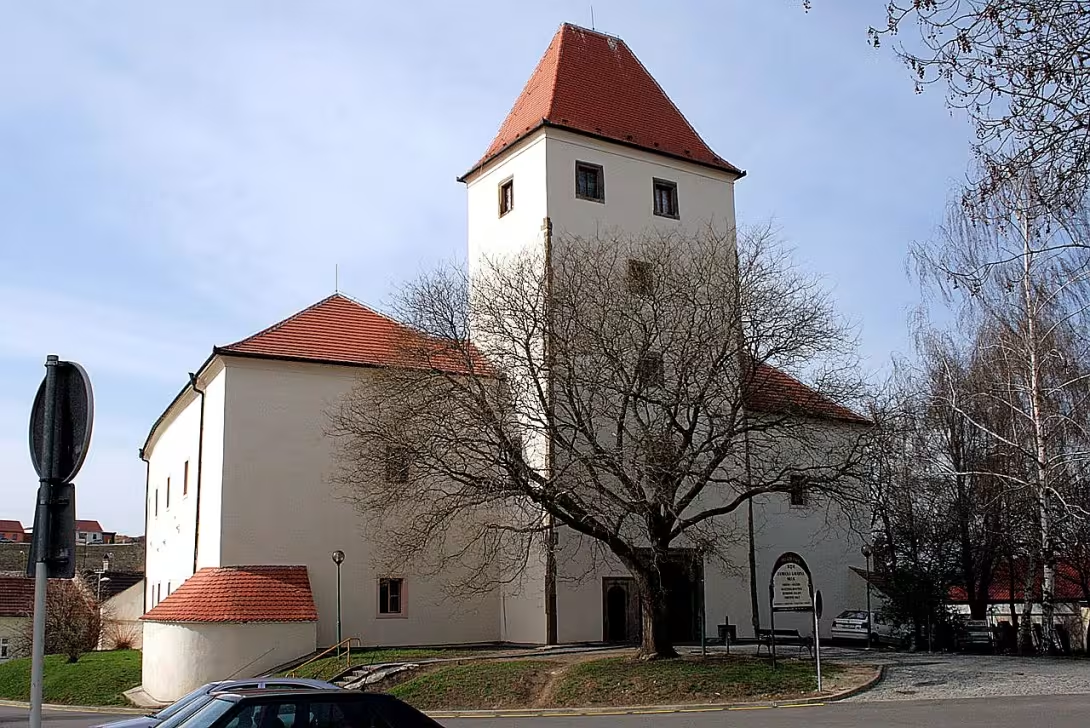
Noise fortress is a medieval building in Hluk, whose first mention dates back to 1303. Originally a wooden object was gradually converted into stone and today it serves as a centre of cultural and social life. This monument represents the historical core of the city and has served for centuries as a seat of noble families.
Historical sources show the first written record of the building by 1303. At that time the construction was wooden and was located on the right bank of the Ochy stream. The creation of the building is related to the beginning of the 14th century. In the then Czech countries and wider Europe, a network of smaller harbours was expanding in this period, which served as local defence and administrative centres of nobility.
The wooden structure was gradually replaced by a stone. The whole building underwent a complex reconstruction in the 1960s, which took its present form. Contemporary layout includes a tower, first floor with halls, courtyard and extensive cellar.
Since 1460, the fortress has been held by the noblemen of the Zášřízlové family. Later she went to the property of the gentlemen of Kunovice and since 1625 she was owned by the House of Liechtenstein. This family held it until the 1920s when the devastated building became the property of the city of Hluk.
The reconstruction in the 1960s was a key moment to save the monument. Thanks to it, the fort opened up to the public and began to serve cultural purposes. Almost all of its premises are being used today. From the courtyard there is access to the library, ceremonial hall and chateau cafe. The tower serves as a museum and the peasant scar is used by events with fewer participants. On the first floor there are two halls for social or private opportunities.
Underground is a wine cellar with seating for social gatherings and separate archive space. The fortress is now a fully functional center that links history to the modern life of the city.
Noise fortress is a valuable testament to medieval architecture and noble administration in the region. Her visit offers insight into the history of the place and the opportunity to use unique spaces.
Then and now
Drag the slider to compare how the landmark may have looked when it was built with the view today.
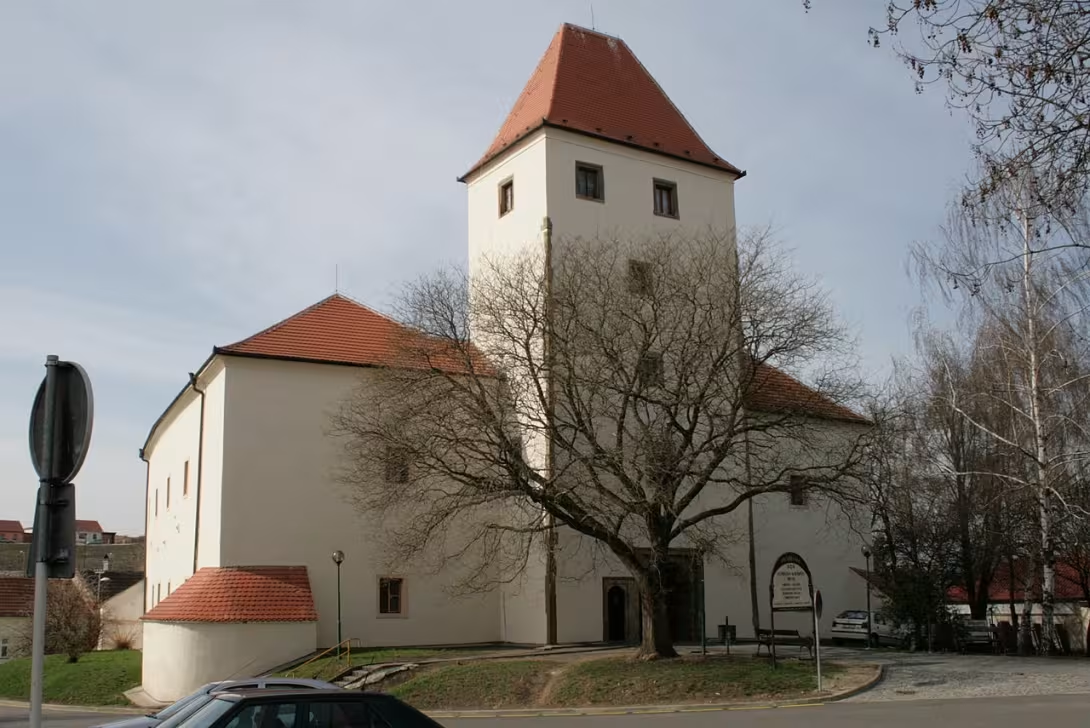
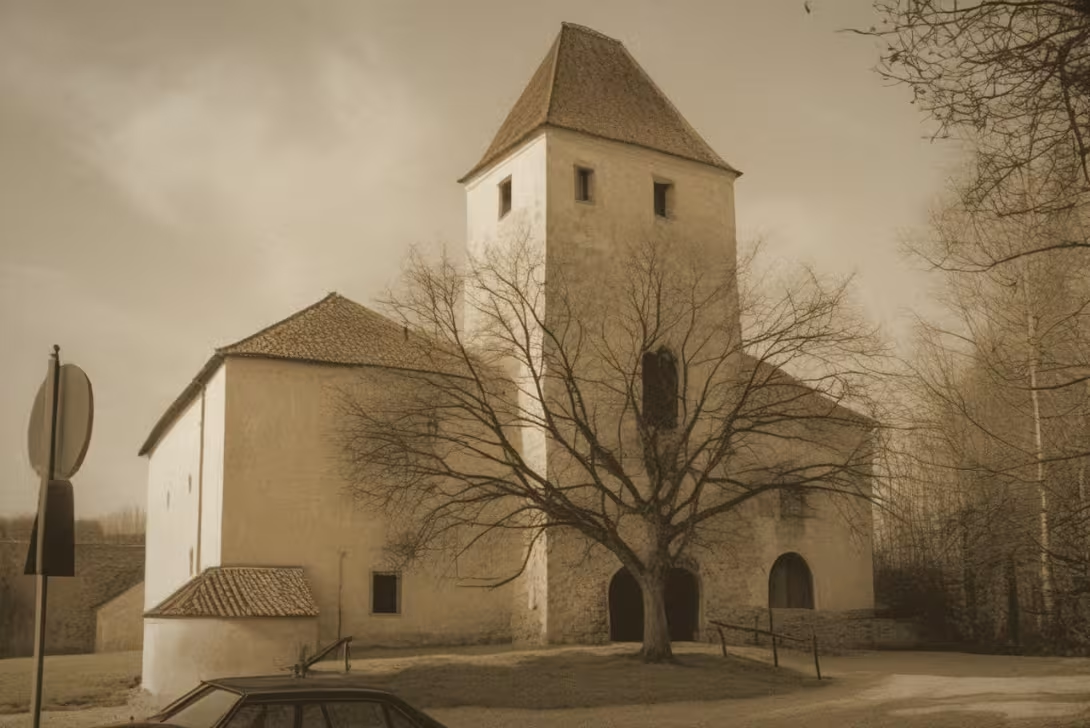
The historical appearance on the left is an AI-generated visualisation and serves as inspiration only.
Historical milestones
- 1303
- First mention of Noise Fortress as a wooden construction.
- 1460
- The fortress begins to hold a small nobleman family.
- 1625
- The fortress goes into the family of the Liechtenstein.
- 1960
- Reconstruction of the whole building by the city Hluk.
Architectural development
Originally it was a wooden fortress which was gradually rebuilt into a stone building. In the 1960s the whole building underwent extensive reconstruction.
Historical events
1303: first mention of the wooden fort; 1460: transition to the holding of the genus Stitch; 1625: acquisition by the family of Liechtenstein; 1960s: comprehensive reconstruction by the city of Hluk.
Owners
Spherical (from 1460), gentlemen from Kunovice, Liechtenstein (1625-20th century), city Hluk (from 20th century)
Points of interest
- The first written mention of the Noise Fortress dates back to 1303, when it was wooden and found on the right bank of the Ochy stream. - In the 1960s she underwent a comprehensive reconstruction, which gave her the present stone form and opened it to the public. - From 1460 she was in possession of the Zášízlové family, later she went to the masters of Kunovice and from 1625 until the 20th century she was owned by the Liechtenstein family. - The tower of the fort serves as a museum, from the courtyard there is access to the library, ceremonial hall and chateau café; There are two halls on the first floor for social events. - Underground is a wine cellar with seating area and separate archive space.
Guide
Show guide text
This text was created by artificial intelligence and has not been editorially reviewed. It may contain inaccuracies.
Welcome to Hluk. Stop for a moment, take a breath and look around you. You are standing in front of a building that is a silent but proud witness to many centuries of our history. Before you stands the Noise Fortress, a place where the fates of noble generations, the ambitions of mighty masters and the care of the locals have intertwined. Feel the atmosphere of this place and try to imagine how the landscape around you has been changing for more than 700 years, while this building has remained here consistently.
Let's go back in time together, deep into the Middle Ages. Imagine the year is three hundred and three. It is this year that the first written mention of the Noise Fortress appears. If you were standing here at the time, you wouldn't see the stone walls surrounding today's object. Instead, you would see a wooden structure that was strategically located on the right bank of the Ochy stream. At the time, wooden architecture was common but fragile. The Ochy stream was not only a source of water, but it served primarily as a natural defense to protect the people of the fort from possible attacks. This first phase of the existence of the fortress was a period of foundation where the seat was formed here, which was intended to serve both administration and protection of the surrounding territory.
As time moved forward, both population needs and safety requirements grew. Wood, although easily available, was prone to rot and especially fire. That is why there has been a fundamental change. The original wooden structure was replaced by a stone. This change of material was not only practical, but also symbolic. The stone building radiated stability, endurance and much higher social status of its owners. Now, when you look at the building, feel this layered history. Even though you see a stone object today, underneath it and around it still lies a memory of the original wooden estate by the creek.
Now pay attention to what you see right in front of you. Take a look at the overall facade and feel the mass of the building. Even if we don't know the names of the particular architects who designed and built this fort, their work makes us feel safe and persistent. Notice how the building integrates into space. It is a typical example of a noble residence, which should be functional and representative at the same time. At this point, think about how many generations of people have gone through the same gates as you have today. Every stone you see tells its own story about the craftsmen who brought it here and the people who lived in these walls worked and dreamed.
The history of this fortress is closely linked to the family names that left a mark in our books. Let's stop at a thousand four hundred sixty. At this time, the fort came into the hands of a small nobleman's family. Imagine life at that time. The trimmers were not the most powerful masters in the empire, but such small noble families formed the backbone of the then society. For them, this fortress was home, the center of their power and the place where they managed their manor. It was an era of local stability, when life revolved around agriculture, the administration of subjects and maintaining family honor.
However, the carousel of history is constantly spinning, and in the seventeenth century, there was a major breakthrough. In the year one thousand six hundred twenty-five, the Noise Fortress passes into the house of the Liechtenstein. This was the moment when the fate of this place merged with one of the most important and richest families in Europe. The transition to Liechtenstein administration meant a change in priorities and probably how the fort was used. The local estate became part of a vast property empire. Even though Liechtenstein no longer had to spend every day here, their influence was felt in the landscape and the fortress remained part of the wider network of their reign.
If you look at the construction today, you see the result of a long process of care and recovery. The 1960s were a very important point in more recent history. At this time, the city of Hluk decided that this valuable monument must not be lost or lost. Comprehensive reconstruction of the whole building took place. It was this fundamental repair of the 1960s that gave the fortress its present form and, above all, opened it to the public. Thanks to this vision and the efforts of the locals, you are not today faced with a ruin, but with a living building that breathes history while serving the present.
Here comes one interesting thing that will help you better understand the uniqueness of this place. Think about the contrast between a thousand and three hundred and sixty years of the twentieth century. More than 600 years have passed between the first mention of wooden construction and its modern reconstruction. It is fascinating to realize that a place that once served as a closed, defensive noble fortress has turned into an open centre of cultural and social events. What was once a symbol of the separation of the nobles from the others is now a meeting place for all residents and visitors. This transformation from a defensive object to the cultural heart of the village is perhaps the most beautiful story of the Noise Fortress.
Now that you know the main lines of her development, I suggest you take a look around. Feel the silence that exists here and try to hear the echoes of the past. Imagine the noise of the Ohoy stream that once surrounded the wooden walls, and imagine the noise of the hooves of horses that brought news from the surrounding estates. Noise fortress is not just a pile of stones and plaster, it's the memory of this region, a materialized time that reminds us where we come from.
The building you're facing is now fulfilling its new role. It serves as a space for culture, art and shared experiences. It's proof that history doesn't just have to be in books, it can be part of our everyday life. When you continue your tour, note the details, see the texture of the walls, and think about the trail that was left at this point by the cut-outs, Liechtenstein and anonymous builders from the early 14th century.
For today's short journey to the Noise Fortress, we are done. I hope that this interpretation helped you see more than just the building and that you felt a connection with the people who lived here centuries ago. Now the space is fully entrusted to you. Walk around, get your own impressions and be inspired by the calm of this historic place. We wish you a pleasant rest of the day and a pleasant exploration of the other beauties of our region. Goodbye.
Tips for visitors
The best time to visit the Noise Fortress is in the spring or autumn season when there are mild temperatures and beautiful sunny days. This time of year offers ideal conditions for walking around the surrounding countryside and exploring historical buildings without overheating.
Parking can be found near the sights, but we recommend verifying the actual availability of the car parks online or upon arrival. For those who want to use public transport, the place is well accessible by bus and train; a specific connection can be checked in an online search engine.
When visiting, take a quality camera or mobile phone with you for a photo, shoes suitable for walking along the track and protective clothing against uncomfortable weather conditions. Also remember the water and sunscreen if you plan to spend the whole day outside.
The best place for photography is right at the fort, where you can look forward to impressive views of the stone structure and surrounding landscape. The best light for photography is in the early morning or late afternoon when the sun is not too bright.
In the vicinity of the Noise Fortress there are several interesting places for holidays. Distance 30 minutes allows you to visit other historical monuments and nature reserves that offer beautiful walks and the possibility of learning about local history. These places are ideal for families with children where they can pass through time in nature.
Businesses nearby
Do you run a restaurant, accommodation, shop, museum, rental, wellness or other visitor service near this monument? Show yourself directly to the people heading to it — this is how they will see you in the app and on the web:
Nearby
XXXHistorical monuments (178)
- sv Jan Nepomucký 0.1 km
- memorial to the victims of the First World War 4.2 km
- Thanks to liberators 1945 4.2 km
- Municipal Museum Ostrožská Lhotax 4.5 km web
- Sv Florian 4.6 km
- Rolnik House No. 57 4.7 km
- Bunkr Jitulka 4.8 km
- Muzeum na Mlýný 4.9 km Fish 105
- Battle on Lucka poli 5.7 km
- XZ0 From the victims of the First World War 6.1 km
- Basin Pepchin 6.2 km
- memorial plate to victims of the Second World War 6.3 km
- Museum Blatnice 6.4 km
- memorial to the victims of the First World War 6.5 km
- victims of the Second World War 6.6 km
- Jan Hruby Memorial bench 6.8 km
- XD guerrillas 7.0 km
- XZ0 From the victims of the First World War 7.1 km
- Tupolev TU - 154 M "Nagan Express" 7.2 km
- hull L-610 7.2 km
Restaurant and catering (268)
- Restaurant ON HALE 0.2 km Boršická 1313 + 420 777 581 961 web
- Pizzeria Bowling Hluk 0.3 km Main 33
- Na mill 4.4 km
- Na General 4.5 km
- Devil Music Bar 4.5 km
- Restaurant Rozkter 4.5 km
- Horní Kola 4.6 km
- Pizzeria Vlčnov 4.7 km
- Pub U Rabbit 4.7 km
- Muzeum 4.9 km
- Chill zone at St. Antonín 5.0 km
- Lower management 5.0 km
- U Cmoll 5.1 km Nivnická 177
- The Pub on Pepino 5.4 km
- Heda 6.1 km
- Motorest 6.2 km
- Municipal restaurants and cultural houses 6.3 km
- restaurant Adriana 6.4 km
- Restaurant Roháč 6.5 km
- Slovakian Court 6.8 km
Accommodation (72)
- Babi Hora 4.1 km web
- Guesthouse Rozkter 4.5 km Noise 107 web
- Guesthouse Miculka 5.6 km + 420 608 782 228 web
- Evřislav Minařík 5.8 km
- Pension Wine Hruška 5.8 km + 420 775 239 684 web
- Guesthouse On the mill 6.8 km
- Penzion Slovakian dvovor 6.8 km
- Sirné spas Ostrožská Nová Ves 6.8 km
- Kemp Slovakian Court 6.8 km web
- Na Sunný - staying in private 7.0 km
- Private accommodation 7.1 km
- Accommodation resort Ostrožská 7.2 km
- Guesthouse on Bakery 7.4 km
- Hostel Fialka 7.5 km
- Himarex spol.s R.o. 7.5 km
- Guesthouse U HolubaxZ6ZX 7.8 km + 420 777 615 057 web
- Penzion Na Záhotech 7.8 km
- Hostel Salt Trasta 7.9 km
- Guesthouse For the Rotor brewery 8.0 km
- Pepchin 8.1 km
▶ Rental and Sport (54)
- swimming pool Hluk 0.3 km web
- Swimming pool Vlčnov 4.1 km
- Sport hall Ostrožská Nová Ves 7.0 km
- Daniel Vícena - Sale and service kol 7.1 km
- Golf club UH 7.2 km
- Kamen 7.3 km
- lanová centrum 8.2 km
- Sport Hala 8.6 km Podohradí 888
- Polyfunctional house 8.6 km
- Hope Sport 9.0 km
- LHSPORT 9.0 km Komenské 702 + 420 603 980 183 web
- AZUB 9.2 km + 420774298232 web
- Sport hall TJ Spartak 9.4 km U Stadium 2295
- Yoga Fénix 9.4 km + 420 724 412 042 web
- Dushan Mihel - TK Sport 9.5 km Nerudova 187 774 001 180 web
- Fun Pool 9.6 km
- Jumppool 9.6 km
- Training Pool 9.6 km
- Experience Pool 9.6 km
- Swimming pool 9.6 km
© Tourism and Nature (105)
- Park u Tráze 0.0 km
- Park over plays 0.3 km
- Pod Husí horou 1.0 km
- Release from Vlčnova 3.1 km
- Kobylev hlav 3.2 km
- Deep 3.4 km
- Tovarich well 3.7 km
- Study at Saint Anny 3.9 km
- Stone 4.0 km
- Park in Hajku 4.1 km
- Pavliš well 4.4 km
- Babi hora 4.4 km
- Headings 4.5 km
- Stopec 4.5 km
- Park u Cemetery 4.5 km
- Park at the churches 4.6 km
- Stará Hora 4.6 km
- Antonín kopec 4.9 km
- Mlynář's well 5.0 km
- Sv. Antonín 5.1 km
Accommodation nearby
Themed route
1. Hluk (fortress), historical object, tour begins at the main entrance to the complex. 2. Tanks, indoor space, offers a view of the architecture and atmosphere of the former residence. 3. Exposition, cultural part, represents history and life in this place. 4. The tower, the view, allows to observe the entire building from a height.
Seasonal recommendations
In spring the surroundings of the fortress Hluk awaken into life and the colors of the fresh green create a pleasant contrast to the historical image. The light is fine and scattered during this period, which is ideal for lovers of photography. For a visit I recommend choosing layered clothes because the morning temperatures may still be low, even if it gets warmer during the day.
Summer months bring the greatest burden of visitors and a more lively atmosphere to the sights. The sun highlights the texture of the stone and the surrounding vegetation is in full bloom. In order to avoid the biggest crowds, I suggest you arrive immediately after opening. Don't forget the light clothes, the sun's headgear and enough drinking water.
Autumn visit offers a melancholy and magical atmosphere, mainly thanks to morning fog and golden leaves. The lighting is very dramatic in this period, which gives the fort a special depth. It is advisable to wear firmer and waterproof shoes for wet terrain and warmer clothing to protect you from sudden cooling.
During the winter, the fortress is crude and majestic, especially if the surrounding area is covered with snow or frost. The atmosphere is quiet and calm, which allows a deeper perception of history without disturbing influences. Due to shorter daily time and more limited opening time, plan a visit in the morning and do not forget very warm clothes and quality accessories.
Visualizations and artistic views


The visualisations are generated by artificial intelligence and serve as inspiration.
Photos from the area
Real photos taken near the monument


Zdroj a licence jsou uvedeny u každého snímku.
Tips from visitors
No tips yet. Be the first!
Log in and add your tip.
Sources and literature
Fotografie: Rios / CC BY-SA 4.0 — Wikimedia Commons. The author and licence also appear when you hover over the image.
Faktickým podkladem tohoto textu byl článek na Wikipedii, jehož autory jsou přispěvatelé Wikipedie. Článek je dostupný pod licencí CC BY-SA 4.0.
Location on the map
Příběhy a pověsti
Legendy, pověsti a příběhy spjaté s touto památkou
Fotografie návštěvníků
Zatím žádné fotografie. Buďte první, kdo přidá fotografii z návštěvy!
Přihlaste se a přidejte svou fotografii nebo hodnoťte.
Za ověřenou návštěvu v aplikaci získáte víc bodů — poznáme podle GPS, že jste na místě.
Reviews and comments