






Hospic Other
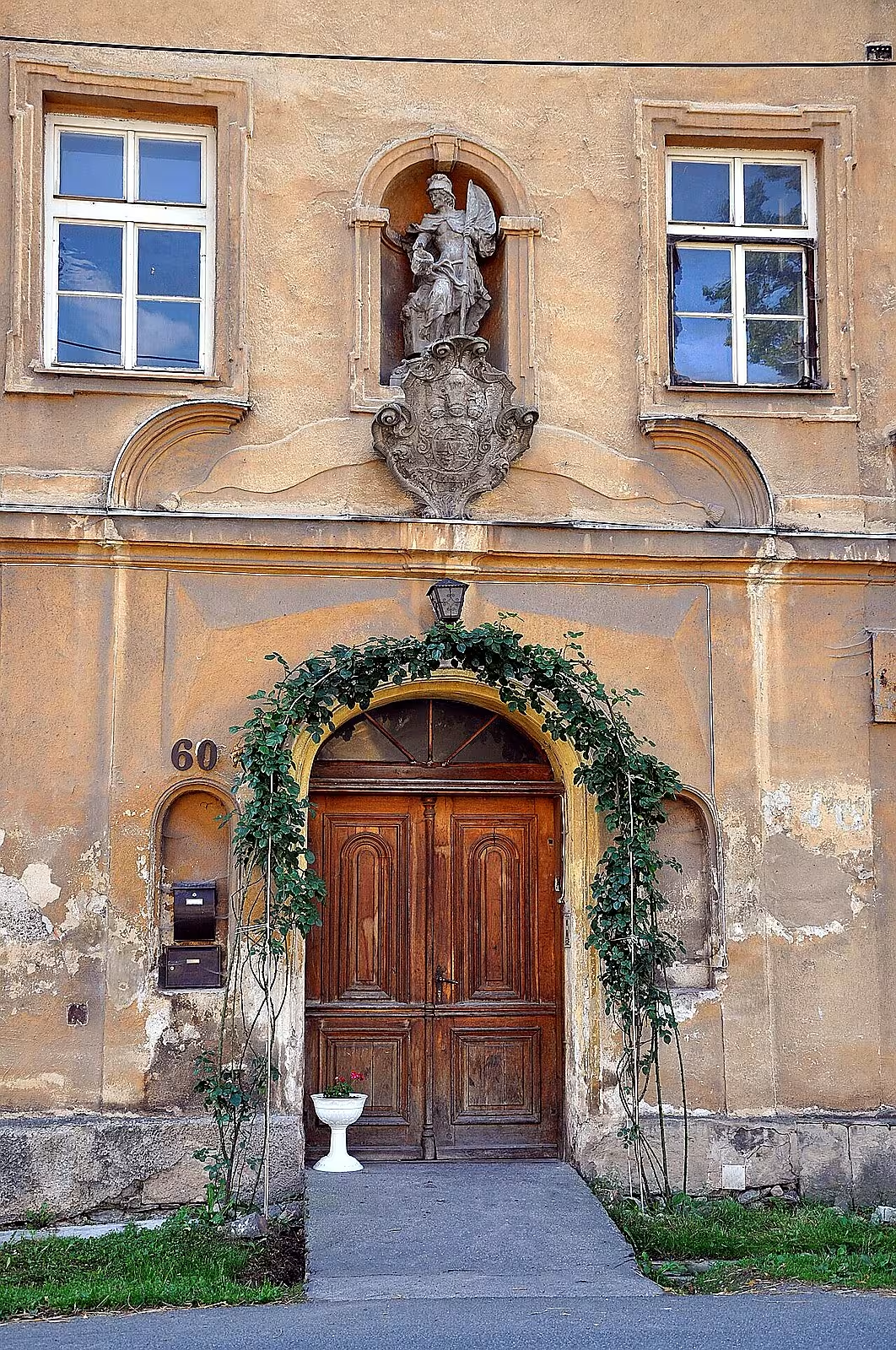
Hospic in White Water, house No. 60, is a historical monument located in the town of White Water in the district of Jeseník. This Baroque building was part of the complex of an 18th century piarist monastery and is today protected as a cultural monument of the Czech Republic. Hospic is a rich history ranging from its position as a temporary accommodation for pilgrims to various social and school purposes.
The emergence of hospice is connected to the establishment of a piarist monastery in White Water. The monastery was founded in 1724 on the initiative of James Arnošt, Count of Liechtenstein-Castelkorn, who was Olomouc Canon and later Bishop. The Piarists came to White Water in 1724 and immediately started building a monastery complex which included a college and seminar. Hospic was built as a temporary structure for workers and pilgrims before the completion of the first building phase of the monastery in 1727.
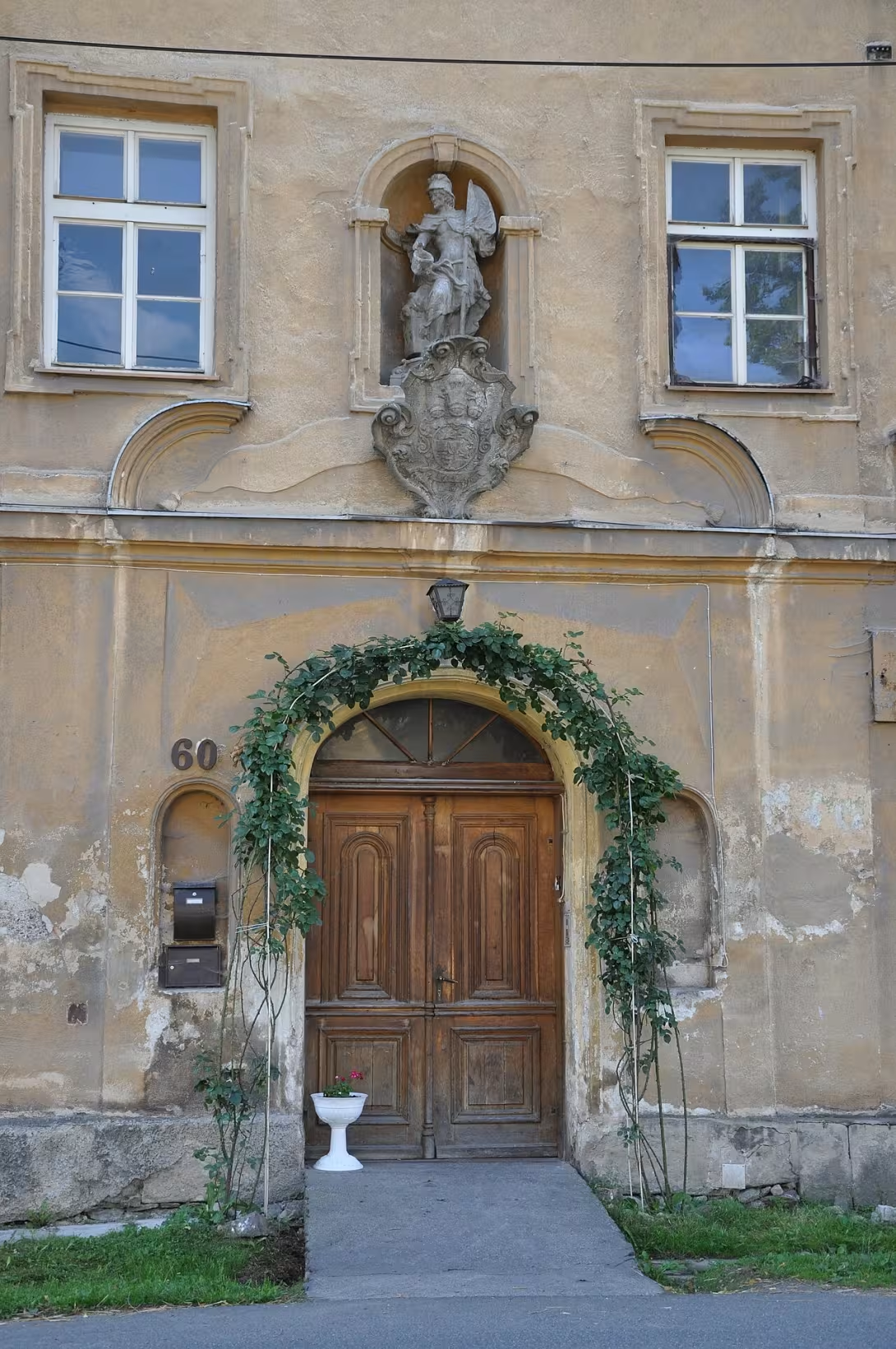
Architecturally, the hospice is a corner two-story brick house with baroque elements. His five-axis facade is divided by the belt ledge and there's a crown ledge on the floor. The windows are in stucco frames, while on the second floor they have smooth frames with a parapet ledge. The hospice portal is placed asymmetrically and has a stucco shaped lining ended with a compressed arch. Above the portal is a cartouche dated 1723 and a statue of St. Florian, which highlights the historical importance of the building.
Over the years the hospice has undergone several changes in ownership and purpose. From 1786 to 1896 the monastery was the seat of the poor school sisters of our Lady, who performed social and educational activities here. After 1940 the hospice served as a shelter for immigrants and refugees, and in 1948 there was a hospital for mentally ill men. In 1950, after the abolition of the women's monasteries, hospice was moved to the order of nurses of various orders and congregations which remained here until 2005.
The key event in the history of the hospice was its status as a provisional structure before the completion of the first building phase of the monastery. Another important moment was the arrival of our Lady's poor school sisters in 1786, who performed various social and educational activities here. In 1950 hospice began to serve as a sanctuary for the order nurses after the abolition of the women's monasteries.
Today the hospice in White Water is a cultural monument that attracts visitors with its rich historical background and architectural features. Its proximity to the Piarist monastery with the Church of the Visitation of the Virgin Mary, which is only 100 metres away, adds another historical depth to the complex. Hospic is worth visiting not only for those who are interested in history and architecture, but also for those who want to understand the transformation of society over the centuries.
Hospic in White Water is a reminder of the region's rich history and its existence illustrates how ancient buildings can not only be monuments of the past, but also live parts of today's social fabric. His visit offers a unique view of the history and culture of the Czech Republic, making him an essential destination for every traveler.
Then and now
Drag the slider to compare how the landmark may have looked when it was built with the view today.
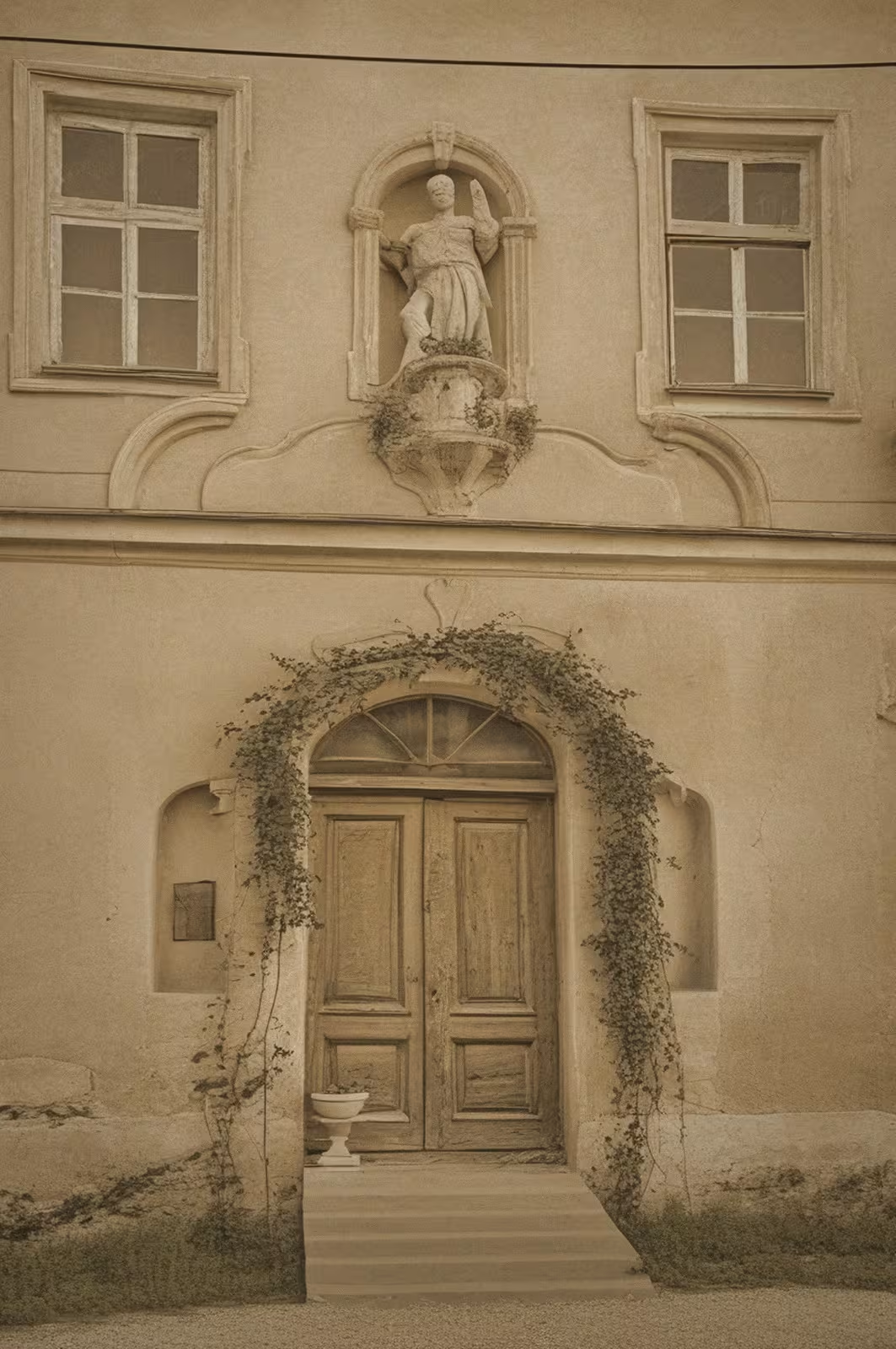
The historical appearance on the left is an AI-generated visualisation and serves as inspiration only.
Historical milestones
- 1723
- The status of a temporary hospice for pilgrims.
Architectural development
Hospic was built as a temporary structure in the first phase of the monastery construction. Later it was raised by a floor and rebuilt for various purposes, including social and school activities. Architecturally, it is a corner two-story brick house with baroque elements.
Historical events
- 1724
- The arrival of the first piarists in White Water.
- 1786
- The setting up of our Lady's poor school sisters at the convent.
- 1950
- The abolition of women's monasteries and the relocation of nurses to White Water.
Owners
- 1723
- 1786-1896
- 1940
- 1950-2005
Points of interest
- It was built as a temporary accommodation for workers and pilgrims before 1727. - There is a statue of St. Florian and cartouche dating back to 1723. - From 1786 to 1896 our Lady's poor school sisters worked here. - After 1940, the facility served as a shelter for immigrants and refugees. - Between 1950 and 2005, there were nurses of various orders and congressions.
Guide
Show guide text
This text was created by artificial intelligence and has not been editorially reviewed. It may contain inaccuracies.
Welcome to White Water and welcome to this unique historical monument, which is now under the name hospice, House No. 60. You are standing right in front of a building that at first sight acts as part of an old townhouse, but its history dates back to the eighteenth century and is inseparably linked to the creation of the local piarist monastery. This building is not just an ordinary house, but a living witness to the history that took place in this region. Now, when you put on your headphones and let me take you in my voice, let's try to reveal together the layers of time that have settled in this place. Look at the facade, its texture and the way the building is being placed in the surrounding environment. Although at first sight it may seem to be a quiet and subtlety construction, important life stories of many people took place in its walls, from workers to pilgrims to teachers and social workers.
Let's go back over 300 years to 1723. At that time, there was a magnificent construction of a piarist monastery that required huge amounts of work and money. The founder of this monastery was Prince Jakub Arnešt of Liechtenstein-Castelkorn, who wanted to create a centre of education and spiritual life in White Water. However, the construction of such monumental work was not quick and required that workers, craftsmen and pilgrims who travelled here to pray or support the work were constantly present at the construction. It was therefore necessary to create a temporary accommodation that would serve these people as a temporary home. This hospice was built for this very purpose. It was not a luxury residence, but a practical and functional place where people working at a monastery or travelling here could find a roof over their heads. So this building was created as a servant of a great idea that would change the shape of this city.
Now pay attention to the architectural details that are still visible on the facade. Although the budoba has changed and rebuilt over the centuries, some elements have been preserved and told about its original purpose. Look up above the main entrance portals. There you will find a statue of St. Florian, patron saint of fire-fighters and protector, which was very important in earlier times to protect wooden buildings and wooden roofs. Next to the statue is a cartouche dated 1723, which shows exactly the year when this part of the building was completed or consecrated. This detail is crucial for historians and history lovers because it confirms the chronology of the creation of this complex. The Statue of Saint Florian is not a coincidence, but a reflection of the fears and believers at the time to protect the divine from the dangers of fire.
In addition to the statue and the data, notice the overall shape of the building. Hospic was built as part of a larger complex, which means that its architecture corresponded to the needs of mass accommodation. He probably had a simple but solid wall and roof that protected the inner spaces from rain and snow. Even if we can't see inside today, we can imagine what the rooms looked like. They were probably simple rooms with beds where the workers rested after a difficult day. The atmosphere here was certainly full of life, noise and conversations in different languages, because pilgrims and workers came from different corners of the country.
The historical context of this place is closely linked to the person of Prince James Arnošt of Liechtenstein-Castelkorn. His vision was ambitious and required not only financial resources, but also organisation and logistics. Hospic was one of the elements of this logistics which allowed the building of the monastery to continue without interruption. Without such accommodation it would be impossible to maintain a steady flow of construction workers. In this way, this house became an integral part of the process that brought education, culture and spiritual development to White Water. The piarists who later worked here brought with them new methods of teaching and education that had an impact on the whole area.
After completing the main monastery, the role of this hospice gradually changed. The original provisional purpose was replaced by more permanent functions. From 1786 to 1896 the poor school sisters of our Lady worked here. These rules focused on raising poor children and providing social care. The presence of nurses in this house means that there were not only beds for pilgrims, but also classes where children learned to read, write and pray. This transition from accommodation for pilgrims to an education and social care institution shows the adaptability of this place. The building adapted to the needs of the company that developed around it. The sisters here created an environment that was filled with love, discipline and education. Their work has had a profound impact on the lives of many children from White Water and the surroundings.
Another important chapter in the history of this hospice is the period after 1940. At that time, the world changed, and with it, people's needs. The facility served as a shelter for immigrants and refugees. This function indicates the humanitarian dimension of this building. Even in difficult times when people had to leave their homes and seek refuge elsewhere, this house offered a roof and security. It was a place where people could recover from suffering and start a new life. This role of the shelter is an important part of the identity of this place because it shows that there were not only historical and religious activities but also real help to people in need.
The interesting thing that can impress a visitor is that this hospice was built before 1727, which means it was one of the first buildings in the complex of the piarist monastery. This suggests that the founders knew that they would need accommodation for a large number of people and that this accommodation would be needed in the long term. The statue of Saint Florian and Cartouche dated 1723 are now some of the few preserved elements that remind us of this early stage of development. It is interesting how the function of the building changed from accommodation for pilgrims, to school and welfare, to shelter for refugees. Each of these features contributed to the rich history of this place.
When you search this place, you can imagine how different scenes took place here. You can imagine workers leaving the building and entering the hospice to rest. You can imagine sisters teaching children to read and write. You can imagine how refugees seek refuge in these walls. Each of these scenes is part of the history of this place and contributes to its unique atmosphere. Even though the building may seem quiet and quiet today, the voices of the people who lived and worked here remain in its walls.
In conclusion, I'd like to invite you to take a closer look at this place. Take your time and look
Tips for visitors
Best time to visit Hospic in White The water is during spring or autumn when the weather is pleasant and fewer people. This period offers a quiet atmosphere to explore the historical complex without the noise of summer classes.
Parking in the vicinity of Hospic is limited, therefore we recommend to use public transport. The nearest is a bus and tram stop that allows you to easily connect to the city centre. The current connection can be verified in the search engine online.
When visiting Hospic we recommend taking with you comfortable shoes, because exploring historical buildings may include walking on stone corridors. Also remember the umbrella and protective eye, especially in summer.
Photography Hospic offers the best possibilities of the afternoon when the light is soft and pleasant. The most prominent places for the photograph include the facade of the building and surrounding green areas, which provide a beautiful perspective on the historical complex.
In the vicinity of Hospic you can visit the Piarist monastery with the Church of the Visitation of the Virgin Mary. This religious and architectural monument offers rich history and beautifully decorated interiors that are particularly interesting for families with children. The monastery also has parks and gardens suitable for relaxation.
Businesses nearby
Do you run a restaurant, accommodation, shop, museum, rental, wellness or other visitor service near this monument? Show yourself directly to the people heading to it — this is how they will see you in the app and on the web:
Nearby
🏰 Historic sites (115)
- Muzeum izolace, internace a integrace 0.1 km + 420725142241 web
- Rdzenie po wierceniach geologicznych 2.1 km
- Pozůstatky po kopání uranu 2.1 km
- Kościół parafialny pw. św. Jerzego 2.5 km
- Głaz narzutowy 2.5 km
- Wapienniki 2.5 km
- Szubienica 2.8 km
- Studnia 2.8 km
- Pomnik mieszkańców Lasek, którzy zginęli w 1. Wojnie Światowej 2.9 km
- 100 lat niepodległości 3.0 km
- Adama Mickiewicza 3.0 km
- Izba Górnictwa i Historii Złotego Stoku 3.1 km
- Kopalnia Złota w Złotym Stoku 3.1 km web
- Ruiny fabryki Güttlerów 3.1 km
- Gasthaus zum Tannzapfen 3.1 km
- Pomnik poległych w I WŚ 3.1 km web
- Muzeum Przestróg, Uwag i Apeli 3.1 km Złota 12
- Pomnik Papieża Jana Pawła II 3.5 km
- Średniowieczna Kopalnia Złota w Złotym Stoku 3.6 km
- Grodzisko? 3.8 km
🍽️ Restaurants and dining (71)
- Zajazd Darz Bór 1.8 km +48 660 331 096 web
- Zajazd Darz Bór 1.8 km
- Bar Chochoł 2.5 km
- Leśna Dolina 2.7 km +48885019340 web
- Pizzeria Palermo 2.9 km +48 74 81 75 447 web
- Banderoza 2.9 km
- Stara Kruszarnia 3.1 km
- Kuźnia Smaków 3.1 km web
- Bar Apetit 3.1 km
- Diabli Nadali 3.2 km Rynek 21
- Złoty Potok 3.3 km
- Stodoła. Pijalnia piwa 5.9 km web
- Bistro Pizzeria „U Niemca” 6.5 km Henryka Sienkiewicza 1a +48 534 957 047
- Obiady domowe 6.5 km Gabriela Narutowicza 17
- Czarna Kawka 6.7 km
- Kawiarnia Palona Kawa 6.7 km +48 504 537 004 web
- Pizzeria Kamienica 6.8 km
- Restauracja Paczkowska 7.3 km Wojska Polskiego 40
- Celnice 7.5 km
- Restaurace U Oravců 7.7 km
🏨 Accommodation (62)
- ROD Radość 2.9 km 3 Maja 33
- Na poddaszu 2.9 km 3 Maja 10
- Złotek 3.0 km Bolesława Prusa 3
- Sport-kompleks 3.1 km Chemików 8
- Au Room 3.1 km Złota 7 web
- Gold Stok 3.3 km web
- Pensjonat Złoty Jar 3.6 km Złota 24 +48 74 817 51 78 web
- Złota Rybka 5.0 km
- Agroturystyka Pod Wiatrakami 7.0 km +48 606 258 873 web
- Pokoje Gościnne Na Skraju Wsi 7.1 km +48 607937182
- Kemp a koupaliště Červenka 7.1 km +420 604 261 942 web
- Apartamenty Biznesowe 7.2 km web
- Dzikość 7.6 km web
- Zacisze 8.0 km web
- Wellness Rychleby 8.2 km +420 736 100 007 web
- Apartmány Javorník 8.2 km +420722810054
- Ubytován í Eliška Stavrovská 8.2 km
- Hotel Pod Zámkem 8.2 km +420 584 440 154 web
- Penzion Stodola 8.4 km +420 723 128 085 web
- Eltan 8.4 km web
🚲 Rentals and sport (12)
- Wypożyczalnia Rowerów Gold Bike Robert Krajewski 2.9 km +48604113057
- Motokáry Javorník 5.8 km +420 588 886 644 web
- Kompleks sportowo-rekreacyjny "Orlik" 6.8 km web
- Koupaliště 7.1 km
- Gminne Centrum Sportu i Rekreacji w Paczkowie 7.2 km Wojska Polskiego 45a +48 77 435 13 61 web
- Strzelnica Berdysz 7.9 km
- Sportovní a chovatelské potřeby 8.1 km
- Krytý bazén Javorník 8.3 km
- Lezecká stěna Javorník 8.3 km
- Stacja Narciarska Lądek Zdrój 10.6 km Aleja Marzeń
- Zaułek 2 Kółek 11.2 km +48 609 972 453
- Strzelnica Myśliwska Biernacice 13.8 km
🥾 Hiking and nature (245)
- Na střelnici 1.1 km
- Pěnkava vrch 1.5 km
- Lipový kopec 1.8 km
- Ziębówka 1.9 km
- Maliník 2.5 km
- Nad Bajcerówką 2.6 km
- Sztolnia Ochrowa 2.8 km
- Źródło arsenowo-żelazowe 2.8 km
- Balista 2.9 km
- Pasionek 2.9 km
- Park osiedlowy Chemików 3.0 km
- K.Ł. Jeleń 3.0 km
- Pohraničí 3.0 km
- Płukanie złota 3.1 km
- Paseka 3.1 km
- Sztolnia Gertruda 3.1 km
- Jelen 3.2 km
- Paseka 3.2 km
- Sztolnia Czarna Górna 3.3 km
- Nad kamieniołomem 3.4 km
Accommodation nearby
Themed route
Thematic tour around the Piarist monastery with the Church of Visiting the Virgin Mary
1. Piarist monastery with church Visitation of the Virgin Mary - Type: Historical monastery complex - Why it is worth a visit: This monastery is an important architectural monument that shows a rich history and spiritual tradition. The Church of the Visitation of the Virgin Mary is famous for its beautiful Baroque architecture and artistic elements.
2. Cave of the monastery - Type: Historical courtyard - Why is it worth a visit: The tank is an ideal place to relax and observe a quiet environment. Here you can enjoy a beautiful garden and architectural elements that complement the general impression of the monastery complex.
3. Tower of the monastery - Type: Historical tower - Why is it worth visiting: The tower offers a unique perspective on the surrounding city and monastery area. It is also a place where you can enjoy the quiet and beautiful sunset.
4. Chapel of the monastery - Type: Monastic Chapel - Why is it worth visiting: Chapel is a place for meditation and spiritual rest. Its intense atmosphere allows deeper immersion in calm and reflection.
This route offers visitors the opportunity to explore the history and spiritual importance of the Piarist monastery while enjoying beautiful architectural elements and a calm atmosphere.
Seasonal recommendations
Spring: In spring, the hospice is revived by the vivid colours of flowering bushes and trees, creating an attractive background for visiting. Sun rays illuminate architectural details of the monument, which may seem darker in other seasons. During this period, the presence of people is lower than during the summer period, allowing for a more peaceful examination. It is recommended to wear clothes suitable for mild weather and visiting in the morning or evening may be ideal to enjoy the spring atmosphere without overheated sun.
Summer: In summer, the hospice is in full bloom of flowers and trees, which increases its beauty. The sunlight illuminates architecture so that every detail is visible. This period brings the greatest attendance, especially in the main summer season, when people gather on outdoor tours. It is important to visit the memory of an earlier afternoon to avoid long fronts and overheated sun. Hot clothes suitable for spring weather is ideal.
Autumn: In autumn, hospice offers a breathtaking atmosphere when tree leaves pass into vivid colors. The sun's rays illuminate the memory in a special light, highlighting its historical elements. Visiting is usually lower than in summer, so the tour can be quieter and more intimate. It is recommended to wear clothes suitable for colder weather and visiting the evening can be ideal to enjoy a calm atmosphere.
Winter: In winter, the hospice is covered with snow, creating a romantic and quiet space. The sunlight illuminates the memory in a different way than in other seasons, giving the shadows special meaning. Visiting is usually lower and opening hours may be shorter due to colder weather. It is necessary to wear warm clothes, including hat and gloves, and it is recommended to visit the memory early in the morning to enjoy a calm winter atmosphere.
Visualizations and artistic views


The visualisations are generated by artificial intelligence and serve as inspiration.
Photos from the area
Real photos taken near the monument


Zdroj a licence jsou uvedeny u každého snímku.
Tips from visitors
No tips yet. Be the first!
Log in and add your tip.
Sources and literature
Photos: Ben Skála, Benfoto / CC BY-SA 3.0 — Wikimedia Commons. The author and licence also appear when you hover over the image.
Faktickým podkladem tohoto textu byl článek na Wikipedii, jehož autory jsou přispěvatelé Wikipedie. Článek je dostupný pod licencí CC BY-SA 4.0.
Location on the map
Příběhy a pověsti
Legendy, pověsti a příběhy spjaté s touto památkou
Fotografie návštěvníků
Zatím žádné fotografie. Buďte první, kdo přidá fotografii z návštěvy!
Log in a přidejte svou fotografii nebo hodnoťte.
Za ověřenou návštěvu v aplikaci získáte víc bodů — poznáme podle GPS, že jste na místě.
Reviews and comments