






Hradiště (1000134646) Hillfort
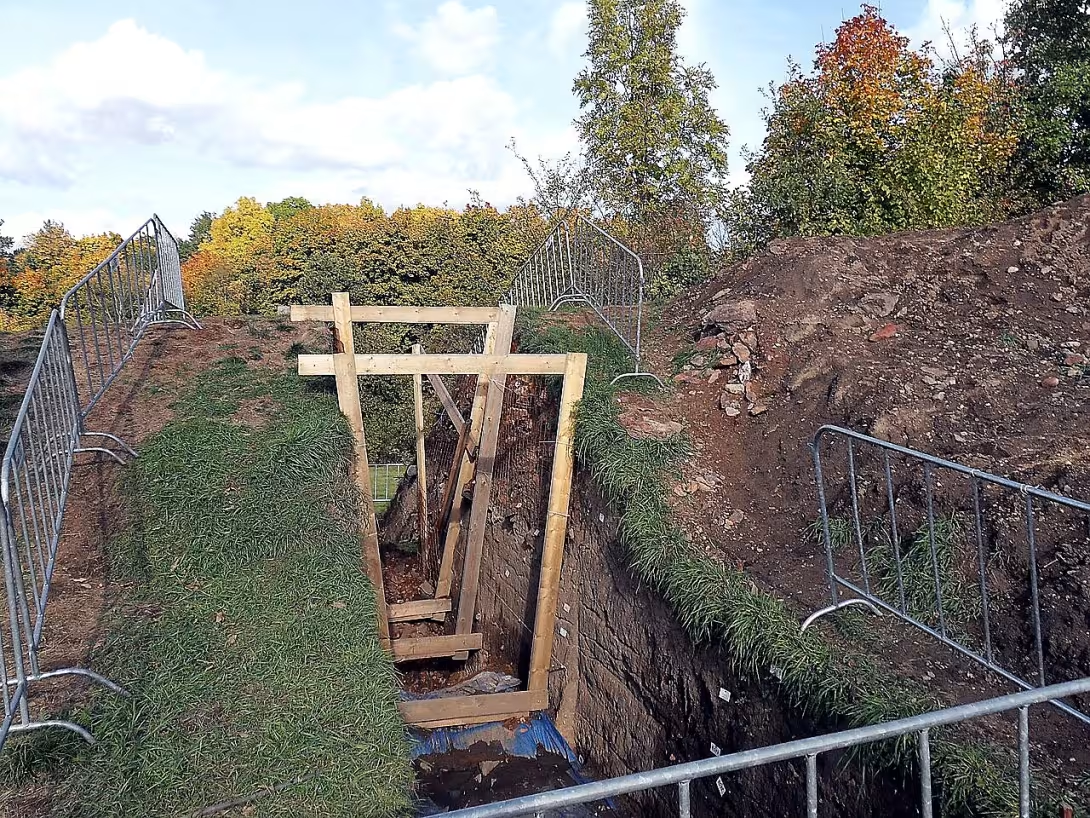
Hradiště near Doudlebec, also known as Pod Homolka, is a prehistoric archaeological site in Pilsen city area Hradiště. It is located on the narrow neck of the Meandru river Úhluj and is protected as a cultural monument of the Czech Republic. This site is significant in its long time range of settlements ranging from bronze to early Middle Ages.
The researchers have known since 1862. The archaeological findings of 1947 enabled dating the oldest settlement to the turning point of the older and middle bronze era. Later research from 2012 confirmed the presence of the Nymnics group at the time of bronze and subsequent use of the site in the early Middle Ages, namely in the ninth to tenth centuries. Hradiště served as a defence structure during the period when complex companies with advanced trading networks developed in the Czech Republic.
Archaeological sites consist of an irregularly oval fortified area of 200 × 100 metres and a total area of approximately 1.55 hectares. With the exception of the south side, the wall was preserved from the fortifications, reaching a height of up to eight metres in the northeast part. In addition, the access side was reinforced by a moat and a transverse wave. The 2012 research revealed two construction phases, with the younger wall being built on the body of an older wall and its forehead being fortified by the palisade and wall of dry laid stones.
The remains of a wooden structure with traces of fire and heat-filled stones were found in the wall. The inner area of the castle was damaged in later periods by sand mining, which affected its original structure.
Significant archaeological research took place in 1911-1912, when collections of ceramic shards from the late Bronze period and the late Hallatin era were stored in the Pilsen Museum. Another shift in the history of the site came in 1947 thanks to the discovery of artifacts in the waste pit.
The monument is now recognised as a cultural monument of the Czech Republic and is an important testimony about prehistoric strategic construction and settlement processes in the surroundings of Pilsen.
Hradiště Pod Homolka presents a valuable archive of human settlement in the meadow of the Hole. Visiting this place makes it possible to see traces of ancient defense systems in the field.
Then and now
Drag the slider to compare how the landmark may have looked when it was built with the view today.
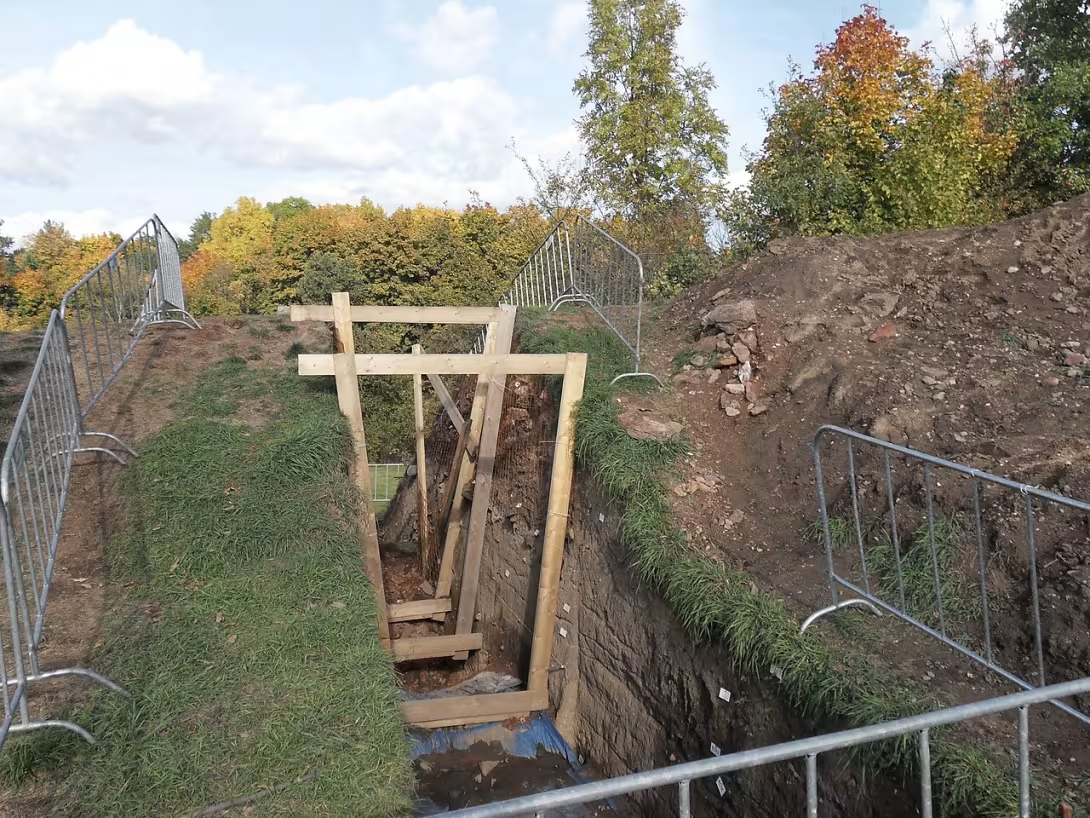
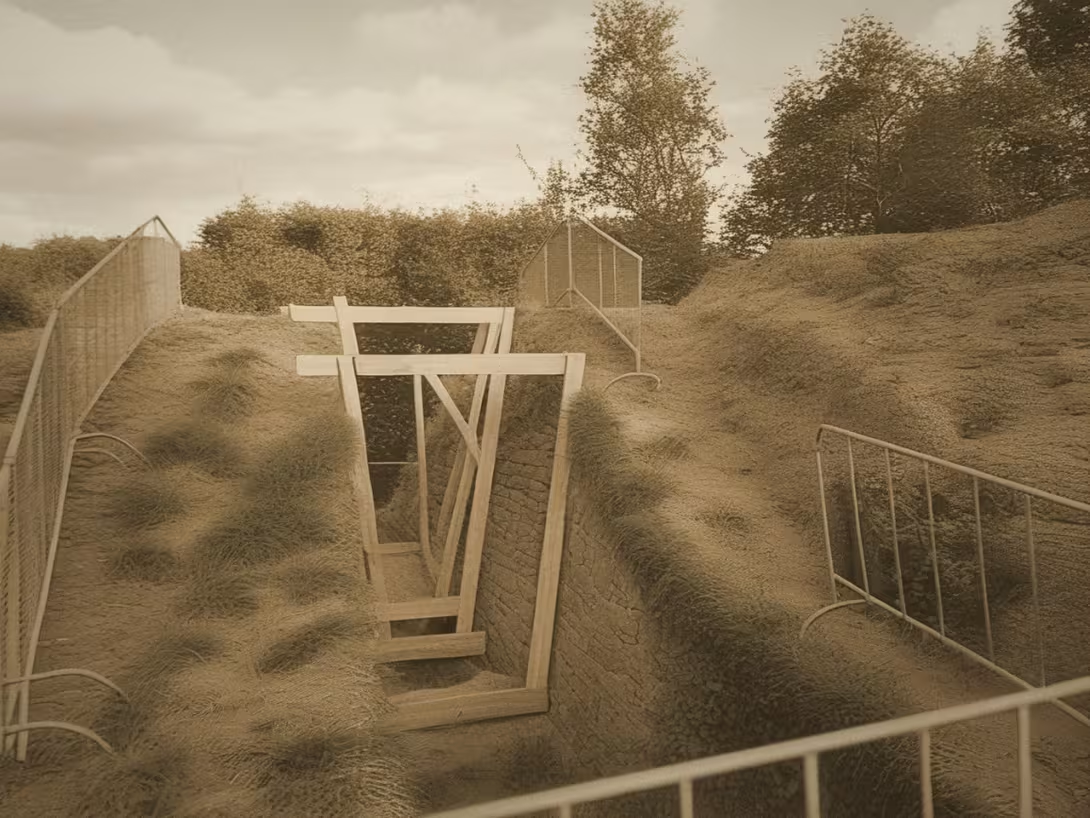
The historical appearance on the left is an AI-generated visualisation and serves as inspiration only.
Historical milestones
- 1862
- The discovery of the castle to the explorer.
- 1911-1912
- Archaeological research revealed pottery from the late Bronze and Hallatin era.
- 1947
- Artefacts have been found to date the oldest settlement at the turn of the older and middle bronze era.
- 2012
- The research confirmed the settlement by a nynicky group during the Bronze period and during the ninth to tenth centuries.
Architectural development
Hradiště has fortifications with walls that reach up to eight meters of height in the northeast. The inner surface was damaged by sand mining. During archaeological excavations, two construction phases were found, where the younger wall used an older wall and its forehead was reinforced by a wall of dry laid stones and palisade.
Historical events
- 1862
- Hradiště has been discovered by researchers.
- 1911-1912
- Archaeological research was carried out, which revealed the ceramics from the late Bronze and Halštat times.
- 1947
- Artefacts have been found to date the oldest settlement at the turn of the older and middle bronze era.
- 2012
- The research confirmed the settlement by a nynicky group during the Bronze period and during the ninth to tenth centuries.
Points of interest
- The locality is located on the narrow neck of the Meandru River Úhluj and is protected as a cultural monument of the Czech Republic. - The settlement dates from the Bronze to the Early Middle Ages, specifically to the 9th to 10th century. - The fortified area is 200 × 100 metres and the total area is approximately 1,55 hectares. - In the wall body were found remains of wooden structure with traces of fire and heat-filled stones. - In 1911-1912, the Pilsen Museum stored collections of ceramic shards from the late Bronze period and the late Hallatin era.
Guide
Show guide text
This text was created by artificial intelligence and has not been editorially reviewed. It may contain inaccuracies.
Welcome to the place where time seems to be stopped and where the country begins to tell its oldest and deepest stories. You're standing outside the castle near Doudlebec, a place that lives in the local memory under the name Pod Homolka. Before we go into the deep investigation of history, allow me to stop for a moment and simply perceive the surrounding landscape. Look at the flow of the Hole River, which is wrapped around in a wide, elegant bow. Notice how the narrow neck of the ground you're standing on is naturally protected by a water meander. This river is not only a beautiful element of the countryside, but it has been the main guardian of this place for thousands of years, a natural wall that has provided safety to all who have chosen their home here. Feel the atmosphere of peace, but it carries a constant touch of secrets and ancient events.
This space is not just an ordinary piece of land or a hill in the landscape. It is a protected cultural monument of the Czech Republic, a place that carries the traces of human efforts dating back over millennia. The path to understanding this place began only in 1862, when researchers first discovered that there was something far more significant under the layers of the country than seemed at first glance. Since then, decades of intense exploration have taken place, which gradually, layer by layer, revealed the fascinating history of settlement. What you see today as a quiet location was once the heart of a community that had to deal with the challenges of the time in which it lived.
Now pay attention to the very structure of this castle. Even if you don't see tall stone walls or monumental gates today, try to draw the fortified area that once existed here. This area has an irregular oval shape and is spread over an area of approximately one and a half hectares. It is a space of approximately 200 to 200 meters, which has been strategically selected to use every meter of natural protection offered by a narrow belt of the earth between the meanders of the river. Feel the geometry of space - as people tried to use the shape of the terrain to create a safe zone. This architecture was not built of stone and mortar as we know it from later medieval castles, but it was an architecture using the power of land and water, the integration of man into the very rhythm of nature.
Now let's go deeper into time and look at the people who left their trail. The history of this place is like a book with many chapters. The first significant traces that archeological research revealed bring us to the late Bronze Age. In 1911 and 1912, scientists here found pottery that allowed us to understand what the everyday existence of people in the Halloween era looked like. The subsequent discoveries in 1947 were absolutely crucial, as the artifacts found in these layers enabled dating the oldest settlements to the turning point of the older and middle bronze era. Imagine the people who built their homes thousands of years ago, making tools and watching the river move while the world was changing around them.
The ages passed and the fort never disappeared from the map of human existence. Research carried out in 2012 confirmed that at the time of the Bronze, there was a nynik group, which gives this place a specific human dimension. But that's not all. Hradiště has not been abandoned; In the early Middle Ages, specifically in the ninth to tenth centuries, the heart of human life was beating again. This continuity of settlement is fascinating. A place that was important to people in the Bronze Age remained strategically valuable even thousands of years later. It's a testament to how much people believed in the power of this particular place, in its protection and in its advantages.
Here, however, there is also one of the biggest mysteries you can realize during your walk. How did it happen that this place could survive such a long time and still remain such a powerful symbol of the human presence? How did their faith, their ways of fighting change and their relationship to this river that surrounds them? The transition from the Bronze Age to the Hallatian era to the early Middle Ages represents huge changes in human society, in technology and in how people perceived the world. And yet, the fort at Doudlebec remains, as a silent witness to these changes. It's a fascinating idea that just below your steps are fragments of ceramics, tools and objects that once belonged to specific people who had their joys and fears, similar to ours.
Now I want to invite you to continue your walk around this castle. Let yourself be carried away by looking for the Meandra of the Head River and try to complete in your mind the missing parts of history. Look at the surrounding terrain and see how nature has merged with this historic place in one whole. Every piece of this land has a story waiting to be rediscovered through your own imagination. Thank you for choosing to visit this important place and devote your time to its secrets. We will brighten you a pleasant journey and other experiences in discovering the beauty of our country.
Tips for visitors
The best time to visit Hradiště near Doudlebec is in the spring or autumn season when nature is in full beauty and the weather is usually quieter. This time of year also offers ideal lighting conditions for photography, especially in the morning or evening sun, when beautiful shadows and colors can appear.
Parking is possible to find near the place. It is recommended to use public transport to access the castle, which may be a more comfortable and environmentally friendly way of travelling. We recommend checking the current connection in the search engine.
When visiting, take with you suitable shoes because the terrain can be irregular and part of the fort is covered with thorns. Fill your inventory with protective sunglasses, umbrella (depending on weather) and plenty of drinking water.
Photography of the castle offers several interesting perspectives. The best light for photos can be found in the morning or evening, when the sun is lower in the sky and shadows are given the opportunity to tell about the history of the place. Finding a suitable angle can be a fun activity for the whole family.
In the vicinity of the castle you can visit Doudleby nad Orlicí, a small and quiet settlement with historical water mill. This place is ideal for a short walk or relaxation on the natural environment. For families with children it can be interesting to explore the surrounding forests and streams where you can perform various outdoor activities.
Businesses nearby
Do you run a restaurant, accommodation, shop, museum, rental, wellness or other visitor service near this monument? Show yourself directly to the people heading to it — this is how they will see you in the app and on the web:
Events nearby


Zdroj akcí: otevřená data měst a obcí ČR (Národní katalog otevřených dat) a kalendář akcí Národního památkového ústavu.
Nearby
XXXHistorical monuments (284)
- Monument 0.1 km
- Memorial to victims of gold 1.1 km
- Milada Horakova 1.3 km
- The base stone of the freeway connection 1.4 km
- Czechoslovak Legionaries 1.7 km
- Memorial of fallen heroes 1.9 km
- Memorial of Army General Heliodor Píky 2.3 km
- Bigbeat Memorial in Pilzni 2.4 km
- Memorial to Victims 2.5 km
- Museum Lobzy 2.8 km web
- Gate to Borský park 2.8 km
- Victims of World War I and World War II 2.9 km
- Not forgotten 2.9 km
- Museum of books and book printing 2.9 km web
- Tram track on Borská pole 2.9 km
- Leo Brummel 2.9 km
- Eliška Brummel 2.9 km
- Gertrude Brummel 2.9 km
- memory plate to victims of the 2nd World War 17. 4. 1945 3.0 km
- Museum of Games - Game Station 3.0 km Štefanik Square 2621 / 4 + 420 721 950 832 web
Restaurant and catering (606)
- Floater Hradiště 0.3 km Plzeň route 27 / 101 + 420 777 551 177 web
- Coffee Smetanka 1.1 km web
- Praised da 1.1 km
- U Králové 1.3 km Slavic 199 web
- Café Vresovka 1.5 km web
- Tyjátr 1.6 km Zborová 21 + 420607448144 web
- Jalta 1.7 km
- Bar u Dejva 1.7 km
- Hossovka In the back 1.7 km Zborovská 69 / 13 + 420 608 420 821 web
- U Pechtí 1.8 km
- Hossovka U Pechtí 1.8 km Flower E 414 + 420777095096 web
- U Mataso 1.9 km U Water 29 / 1 + 420 603 958 273 web
- Restaurant Gargano 1.9 km Selské nav 20 / 1 + 420 377 963 772 web
- Frikulinek 1.9 km
- U Bones 1.9 km
- Purkmist 1.9 km + 420 377 994 312 web
- Family brewery Radodočice 1.9 km Radodočické nav 318 + 420 776 555 753 web
- Dining room at Koni 2.0 km Šstkova 2107 / 8 + 420377242090 web
- Auschwitz U Kobyzka 2.0 km web
- Guesthouse Sokolovna Radobčice 2.0 km Light 133 / 10
Accommodation (46)
- Primavera 0.9 km
- U Gigantu 1.5 km Chivokov 71 + 420 606 652 427
- Hotel Purkmistr Beer & Spa Resort 1.9 km Selské nav 21 / 2 + 420377994311 web
- Hotel Purkmistr Beer & Spa Resort 1.9 km Selské nav 21 / 2 + 420377994311 web
- Hotel Purkmistr Beer & Spa Resort 1.9 km Selské nav 21 / 2 + 420377994311 web
- Lions 2.1 km ZBorovská 85 / 18 + 420377420010
- Parkhotel 2.3 km
- Parkhotel 2.3 km
- Guesthouse Bory 2.9 km web
- Guesthouse Uslavská 22 3.2 km web
- Astor 3.6 km
- Hotel Victoria 3.7 km Borská 1155 / 19
- Vienna House Easy by Wyndham Pilsen 3.7 km U Original Source 6 + 420 378 016 111 web
- Slovan 3.9 km
- Hotel Continental 3.9 km Armory 312 / 8 + 420 377 221 746 web
- enjoy inn 4.0 km
- U Zvolu 4.0 km
- Hotel Green gondola 4.0 km
- Avenue Pallá 4.0 km Pall 2814 / 28
- Hotel Rango 4.1 km + 420377221188
▶ Rental and Sport (111)
- SK Smíchov Plzeň 1.1 km
- Skoda Sport Park 1.3 km
- Sokol Plzeň - Doudvesky 1.7 km
- Ramala 1.9 km + 420723608241 web
- Sokolovna 1.9 km
- Sokol Plzeň V 2.4 km
- TJ Slavia VŠ 2.5 km
- Intersport 2.5 km
- Body unity Slavia 2.7 km
- Scobike sharing 2.7 km web
- Skaut Bullet Plzeň 2.7 km
- Lokomotiva Plzeň 2.8 km
- Stadium Locomotive 2.8 km
- Stadium Locomotive 2.9 km
- SITMP 2.9 km
- Climbing wall Hannah 2.9 km
- UK Slavia Plzen 2.9 km
- Outdoor Market 3.0 km Boettinger 2915 / 2a + 420 778 037 100 web
- Centre Plzeň Lobzy 3.0 km
- Scobike sharing 3.1 km web
© Tourism and Nature (242)
- Great Homolka 1.1 km
- Česal well 1.3 km web
- Homolka 1.4 km
- Outlook Pills 2.3 km
- Borský park 2.3 km
- Swiss quarries 2.4 km
- Floating park 2.4 km
- Czech Valley 2.4 km
- Na Brdci 2.5 km
- Paper park 2.5 km
- Saturn 2.7 km web
- Former tram loop Bory 2.9 km
- View on Horizontu 2.9 km
- Háje 3.0 km
- Jupiter 3.0 km web
- Chlum 3.0 km
- Former tram road station 3.0 km
- Mikuláš Square 3.1 km
- Park at Jeszka 3.1 km
- Lobez park 3.2 km
Accommodation nearby
Trips and activities nearby
Guided tours, tickets and activities nearby from GetYourGuide
Affiliate link: if you buy from the partner, we may receive a commission. The price for you does not change.
Search tours and activities →Themed route
1. Hradiště, archaeological site: The first point of the route represents the very core of historical settlement. Here you can admire the structure of the ancient fortifications. 2. Tadvore, open space: This part allows you to walk in a place where daily life once took place. It's the perfect place to understand the layout of the entire complex. 3. Exposition , thematic exhibition: The final part of the route will guide you to the most valuable finds. In detail, you will recognize life in this location through duplicated artifacts.
Seasonal recommendations
Spring on the archaeological site Hradiště brings a particularly poetic atmosphere when nature wakes up around ruins. Young leaves and flowering shrubs contradict the dark stone remains of the fortifications, creating a fascinating visual impression. Light can be soft and scattered at this time, ideal for shooting details without sharp shadows. Practically a spring visit is suitable for lovers of peace because the main summer tourist wave has not yet occurred. It is recommended to wear layered clothes as spring weather is variable and it may be cold in the morning. The best time to visit is in the morning when visibility is good and the surroundings are still quiet.
Summer is the equivalent of maximum interest in the Hradiště, when sunlight reveals every structure and texture of the remaining walls. Warm days attract long stays in nature, but they also bring more visitors. To avoid crowds, it is necessary to come as early as possible in the morning, ideally right after opening, or late in the afternoon, when temperatures are slightly reduced. Clothes should be light, breathable and with a protective hat, as there is a risk of rapid exhaustion in an open area without shade. On hot days, it is crucial to take with you enough drinking mode and fill the bottle from the nearest source if available.
Autumn in this historic place offers the richest colour palette, where the golden and red leaves surrounding the ruins create a dramatic background for the tour. Short days and low sun cast long shadows that emphasize the relief elements of the old fortification. The atmosphere is often colder and the air fresher, which supports feelings of melancholy and reflection about the past time. From the point of view of practicality, autumn is less crowded than summer, but requires more robust shoes because moisture can moisturize the path to the monument. It is recommended to wear a waterproof jacket and warm layers as evening cold comes quickly. It is best to take a walk in the middle of the morning when the light is brightest.
Winter at the Hradiště is like silence and rest, when snow cover or frost reveals contours of the monument in an unexpected, minimalist nature. Cold air masses and grey skies create a mystical environment that attracts especially photographers and lovers of solitude. Opening hours may be shortened or limited in this season, so it is necessary to check the current operation in advance. Clothes must be extremely warm, including winter hats, gloves and shoes with good anti-slip equipment, as the soil can be slippery. The visit is most appropriate in the afternoon, when the day is warmer and light, although weak, still allows safe field orientation.
Visualizations and artistic views


The visualisations are generated by artificial intelligence and serve as inspiration.
Photos from the area
Real photos taken near the monument


Zdroj a licence jsou uvedeny u každého snímku.
Tips from visitors
No tips yet. Be the first!
Log in and add your tip.
Sources and literature
Fotografie: Jik jik / CC BY-SA 4.0 — Wikimedia Commons. The author and licence also appear when you hover over the image.
Faktickým podkladem tohoto textu byl článek na Wikipedii, jehož autory jsou přispěvatelé Wikipedie. Článek je dostupný pod licencí CC BY-SA 4.0.
Location on the map
Příběhy a pověsti
Legendy, pověsti a příběhy spjaté s touto památkou
Fotografie návštěvníků
Zatím žádné fotografie. Buďte první, kdo přidá fotografii z návštěvy!
Přihlaste se a přidejte svou fotografii nebo hodnoťte.
Za ověřenou návštěvu v aplikaci získáte víc bodů — poznáme podle GPS, že jste na místě.
Reviews and comments