



Hřbitov sovětských válečných zajatců (Adolfovice) Cemetery
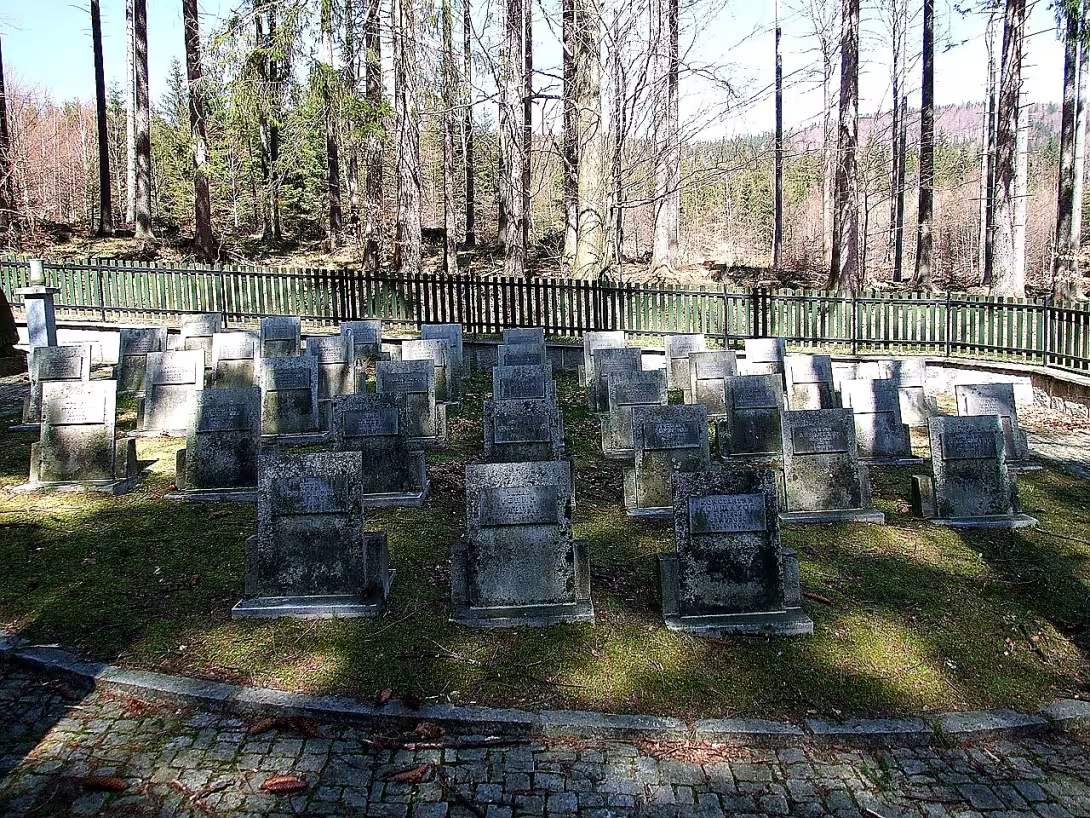
The cemetery of Soviet prisoners of war, also known as Rudohoří Forest Cemetery, is a cultural monument of the Czech Republic. It is located in the valley of the Brook in the village Bělá pod Pradědem. This place of memory worships Soviet prisoners of war from the Second World War who died here as a result of inadequate nutrition and an epidemic of spotted typhus. His history is closely linked to the former Radohoří prison camp. He served as a place of forced labor for Soviet prisoners and later as an internment camp for the German displaced population. The original cemetery was founded in 1960 and was renovated in 2003 to become a place of reconciliation and unification of nations.
The cemetery in Adolfovice was established in 1960. Its creation was triggered by the need to honor thousands of Soviet soldiers who were captured during World War II and placed in Camp Rudohoří. The prisoners were doing heavy work here in the surrounding forests, many of whom died between October 1941 and February 1942 due to hunger and an epidemic of spotted typhus. After the war, the campus was transferred to an internment camp for German displaced persons, reflecting the broader context of the events at the time.
The cemetery was originally conceived as a fenced space with a central monument, which carried the inscription in Russian. In four symmetric rows there were 36 graves whose names were listed in monuments. The 2003 reconstruction brought about a change in the layout of tombstones, reflecting a new approach to commemorating history. On the right of the central monument were placed memoirs of Soviet prisoners, while on the left were moved nine memoirs of German citizens from their original burial ground.
After the reconstruction in 2003, the 1960 memorial site became a symbol of reconciliation of nations. The state enterprise of the Forests of the Czech Republic through the Forest Administration Jeseník has secured the repair. The cost exceeded half a million crowns. Later Russia contributed to the reconstruction. The cemetery is recorded in the central register of war graves under the number CZE- 7102-07161, which confirms its importance.
The key events associated with the site include the death of Soviet prisoners in 1941-1942 due to hunger and typhus, the burial of German citizens from the internment camp in 1945 and the subsequent reconstruction in 2003. These peristiwa bear witness to the tragic history of war captivity.
Today, the cemetery of Soviet prisoners of war in Adolfovice is an accessible place worth visiting. It allows reflection on the tragic history of World War II and its impact on individuals and nations alike. The monument lies in the nature of Jeseníky, which offers beautiful views and possibilities for hiking. Visit this place and honor the thousands of people who have found their last peace here.
The value of the cemetery lies in reminiscent of the tragic events of the past and incitement to reflect the consequences of war. It is a place symbolizing the reconciliation and unification of nations. It is worth visiting to better understand history and its importance for the present.
Then and now
Drag the slider to compare how the landmark may have looked when it was built with the view today.
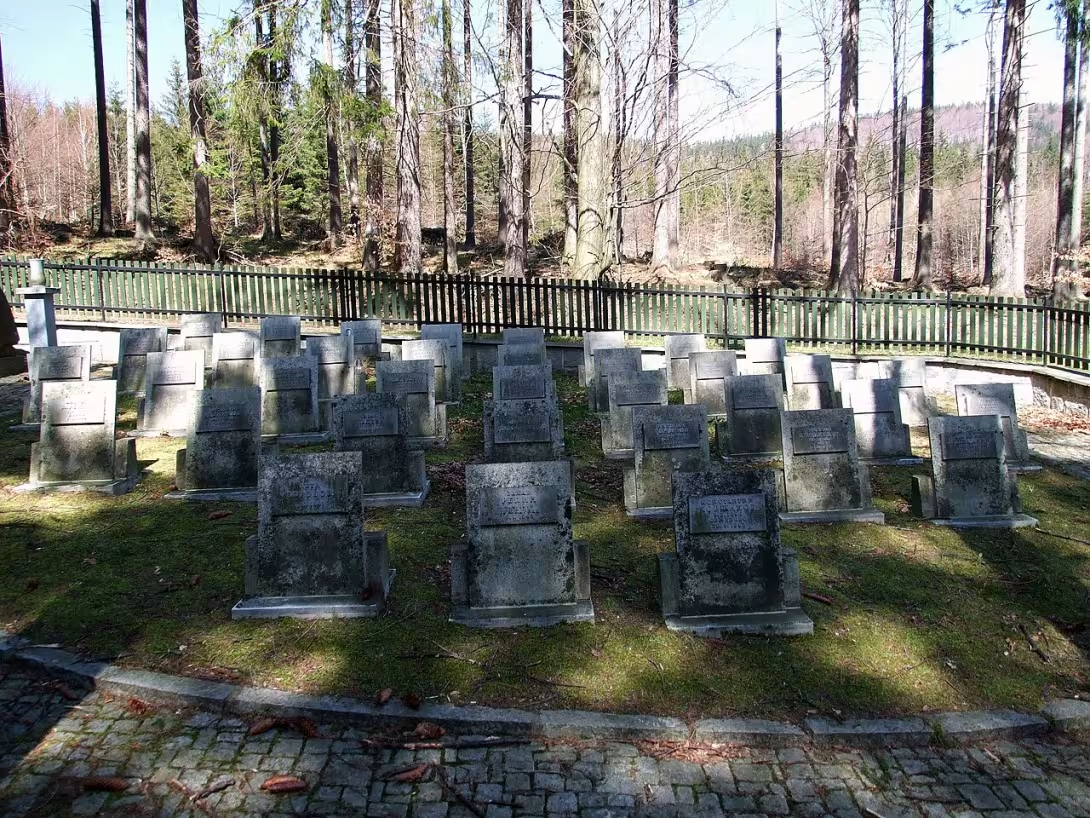
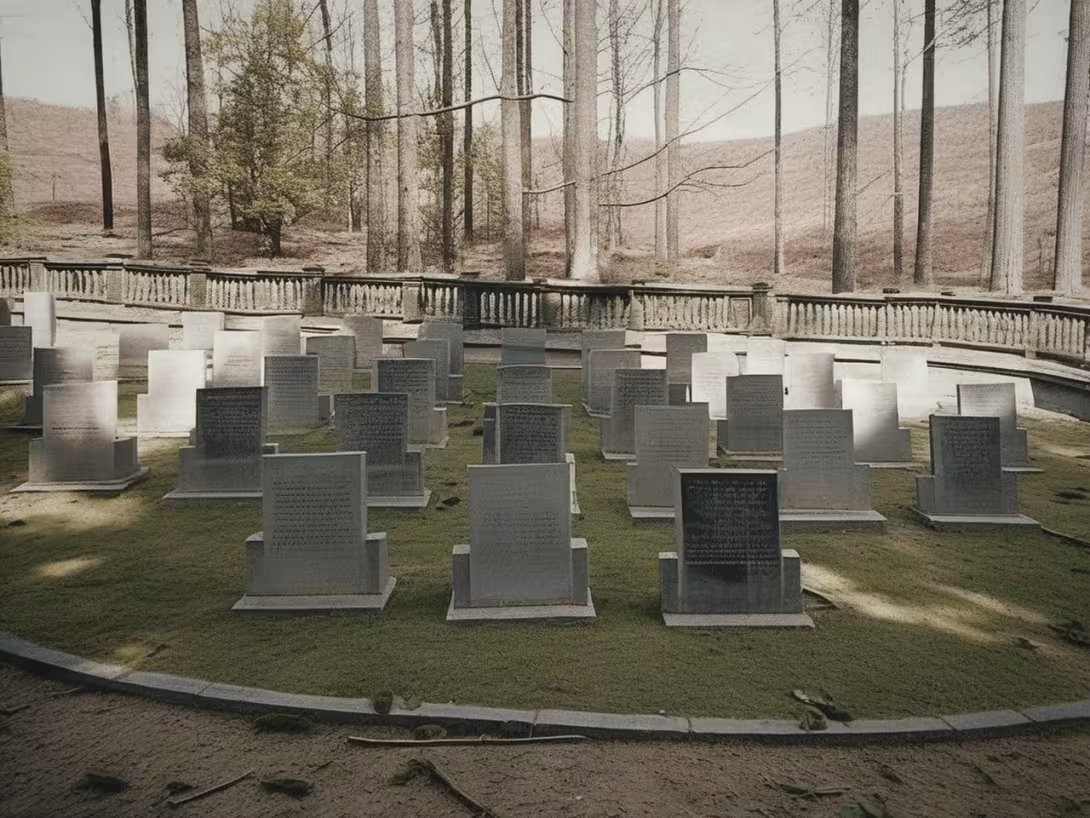
The historical appearance on the left is an AI-generated visualisation and serves as inspiration only.
Historical milestones
- 1941
- The deaths of Soviet prisoners of war.
- 1960
- A cemetery.
- 2003
- Cemetery reconstruction.
Architectural development
The original cemetery was founded in 1960 as a fenced place with a central monument. After the reconstruction in 2003, the monuments were moved and placed, reflecting changes in the thought approach to remembering historical events.
Historical events
- 1941
- The deaths of Soviet prisoners of war as a result of bad food and an epidemic of spotted typhus.
- 1945
- Burying German citizens from an internment camp near the cemetery.
- 1960
- The founding of the cemetery of Soviet prisoners of war.
- 2003
- Reconstruction of the cemetery with adjustment for reconciliation and unification of nations.
Points of interest
- The cemetery is a cultural monument of the Czech Republic. - It is located in the valley of the Smart River in the village of Bělá pod Pradědem and worships Soviet prisoners of war from the Second World War, who died here as a result of inadequate nutrition and epidemic of spotted typhoid. - The cemetery was originally designed as a fenced space with a central monument that carried the inscription in Russian. In four symmetrical rows there were 36 graves. - The 2003 reconstruction brought about a change in the layout of the tombstones, reflecting a new approach to commemorating history. Later Russia contributed to the reconstruction. - The cemetery is entered in the central register of war graves under the number CZE-7102-07161, which confirms its importance.
Guide
Show guide text
This text was created by artificial intelligence and has not been editorially reviewed. It may contain inaccuracies.
Welcome to this quiet and memorable place, where history and present-day cloaked sadness form a unique connection. You are standing outside the cemetery of Soviet prisoners of war in Adolfovice, also known as the Forest Cemetery of the Rudohoří. This place is set in the valley of the stream of the Bright and its quiet environment brings a deep atmosphere of memories.
Let's dive into the history of this place. In 1941, Soviet war prisoners from the Second World War died tragically, who suffered from inadequate nutrition and an epidemic of spotted typhus. In 1960, the cemetery was officially established as a place to worship these war victims. After many years, namely in 2003, it was reconstructed with the idea of a place for reconciliation and unification of nations.
Look at the architecture of the cemetery. It was originally designed as a fenced space, which you can see in its basic structure today. For this space serves not only to worship, but also to commemorate the tragic events of the past and to promote peace between nations.
Although the particular architectural creators of this cemetery are not known, its importance as cultural monuments of the Czech Republic is undeniable. This place bears a mark of historical events and serves as a reminder of humanity, which must always be worshipped.
The interesting thing about this cemetery is its location in the valley of the Smart River. This peaceful and quiet space not only provides an opportunity to reflect, but also to worship the memory of those who died here. It is a place that causes deep feelings and encourages ideas about peace and mutual understanding.
Now that you've been a little immersed in the history and atmosphere of this place, inviting you to explore other parts of the cemetery. Go around the fence, look at the monuments and consider the historical consequences of this tragedy.
Let me leave you with these thoughts. I hope your visit to this place has brought deep knowledge and encouraged the worship of history and humanity. Thank you for your attention and welcome to the other sights that await us.
Tips for visitors
The best time to visit are spring and autumn months, when nature in the Jeseníky surroundings offers the most beautiful colors and a quieter atmosphere. Take comfortable shoes to the valley of the Smart River, because you move in the natural environment. For the best photos we recommend to use the morning or late afternoon light, which lights up the trees around the cemetery. In the vicinity, you can explore the natural landscape of Jeseník and the site of the former Radohoří camp. For families with children, the place is suitable as a quiet space for reflection and a short history lesson associated with walking in nature.
Frequently asked questions
Can the monument be visited?
Cemeteries and graves are usually accessible; please respect the dignity of the place. We have not verified the opening hours of this cemetery.
Where is the monument?
Location: Bělá pod Pradědem. The map on this page shows the exact spot.
Why is the monument protected?
It is listed in the Central List of Cultural Monuments of the Czech Republic as a cultural monument (register no. 1000134292).
Businesses nearby
Do you run a restaurant, accommodation, shop, museum, rental, wellness or other visitor service near this monument? Show yourself directly to the people heading to it — this is how they will see you in the app and on the web:
Nearby
Hřbitov se nachází v údolí potoka Bystrého blízko bývalého vojenského zajateckého tábora Rudohoří.
V okolí je přírodní krajina Jeseník, která nabízí krásné pohledy a možnosti pro turistiku.
Accommodation nearby
Themed route
Thematic cruise route: Hřbitov sovětských válečných zajatců (Adolfovice)
1.Hřbitov sovětských válečných zajatců (Adolfovice) - Type: Historical landmark - Why is it worth a visit: This cemetery is an important monument, reminiscent of the fate of Soviet prisoners of war during World War II. It's a place to meditate and honor the memory of thousands of soldiers.
2. The stream bright - Type: Natural attractions - Why is it worth a visit: The stream is an ideal place for short walks or picnics in nature. Its quiet stripes and green packaging offer a cozy atmosphere.
3. Former Military Prisoner Camp Rudohoří - Type: Historical site - Why is it worth a visit: This former camp is an important part of the history of the area, reminiscent of the time of war captivity. It is suitable for those who are interested in history and its monuments.
4. Overflow terraces - Type: Postcards - Why is it worth a visit: These terraces offer a view of the valley of the stream of bright and surrounding landscape beauty. They are an ideal place to relax and enjoy the views of the natural landscape.
5. Tree alley - Type: Natural element - Why is it worth a visit: The alley provides a beautiful path for walking or cycling, while being a protective environment for local flora and fauna. It's a place to relax and look at nature.
This route offers a combination of historical monuments and natural beauties, making it ideal for the various interests of travelers.
Seasonal recommendations
Spring: In spring, the monument awakens into life. New flowers are growing around the graves, and trees offer fresh green colors. The light is soft and rough in this period, which gives the place a peaceful look. I recommend coming in the morning when the air is the cleanest. Dress well, because morning cold can still smell.
Summer: In the summer months, it is very sunny and vegetation is in the biggest boom. The atmosphere is hot, but the shade of trees offers shelter. It is better to arrive early in the morning because of the higher attendance in the high summer season, so that you enjoy your peace. Don't forget the sun cap and plenty of fluids.
Autumn: Autumn brings melancholic beauty to Adolfo. The leaves change colour to gold and red, creating a strong contrast to the historical nature of the place. There is often a morning mist that deepens the sense of dignity. It is advisable to wear waterproof shoes and coat as the afternoon temperatures fall rapidly.
Winter: Winter here is quiet and rough. If snow falls, the monument looks very clean and monumental, but the colors are minimal. The light is weak and the days are short. It is necessary to prepare for the frost and wear a very warm jacket and shoes with good grip for safe walking on snow. The best time to visit is around noon when the most light is.
Visualizations and artistic views


The visualisations are generated by artificial intelligence and serve as inspiration.
Photos from the area
Real photos taken near the monument


Zdroj a licence jsou uvedeny u každého snímku.
Tips from visitors
No tips yet. Be the first!
Log in and add your tip.
Sources and literature
Photos: Roman Janas / CC BY-SA 4.0 — Wikimedia Commons. The author and licence also appear when you hover over the image.
Faktickým podkladem tohoto textu byl článek na Wikipedii, jehož autory jsou přispěvatelé Wikipedie. Článek je dostupný pod licencí CC BY-SA 4.0.
Location on the map
Příběhy a pověsti
Legendy, pověsti a příběhy spjaté s touto památkou

Fotografie návštěvníků
Zatím žádné fotografie. Buďte první, kdo přidá fotografii z návštěvy!
Log in a přidejte svou fotografii nebo hodnoťte.
Za ověřenou návštěvu v aplikaci získáte víc bodů — poznáme podle GPS, že jste na místě.
Reviews and comments