



Huť na neželezné kovy na Měkké žíle Mine
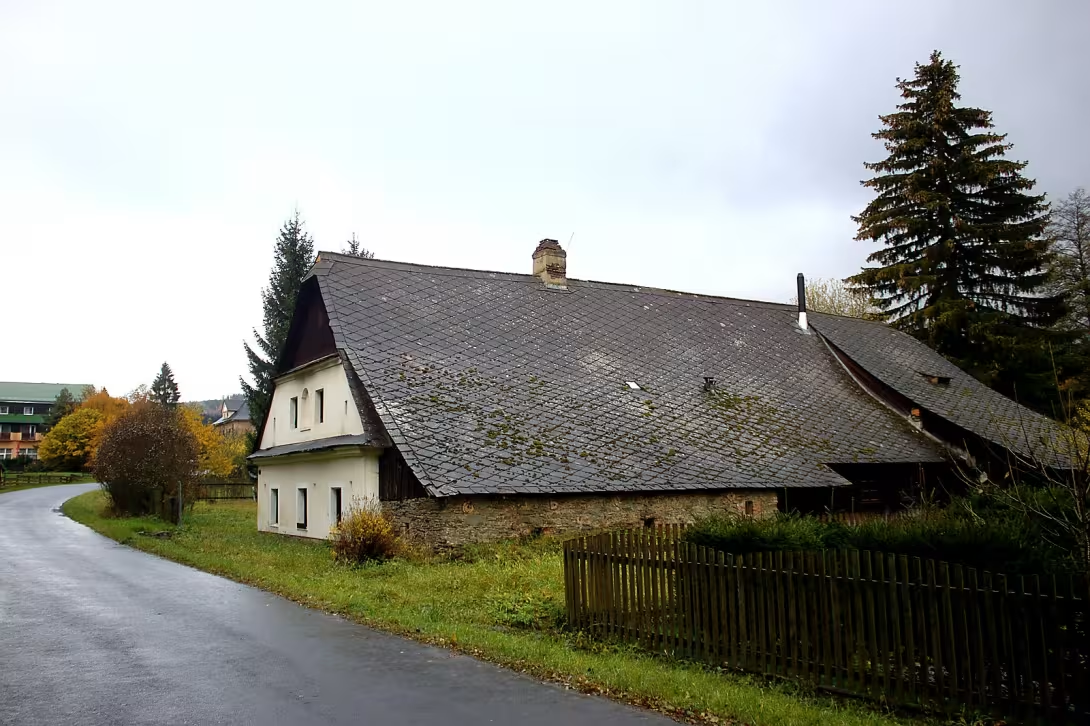
Huť na neželezné kovy na Měkké žíle is located north of the Dry Rudná district of Bruntal. It is an archaeological site with a rich tradition of mining and metallurgical production of gold. This site represents the largest conquest of the Andolenhora region and is protected as a cultural monument of the Czech Republic. Its history dates from prehistoric times to the 17th century.
Mining on the soft vein is one of the oldest documented examples of mining in North Moravia. The first traces date back to 1500 years before Christ was born. Archaeological findings and historical records show that activity has been taking place at different rates for centuries. During the Middle Ages, mining was interrupted and restored repeatedly. Significant phases occurred during the Celtic settlement, in the early Middle Ages and later in the 15th and 16th centuries. Even in the 17th and 18th centuries, attempts were made to restore, suggesting a lasting interest in rich gold beds in this area.
Architecturally, the soft vein is characterised by an artificially formed arc-shaped gorge extending up to 500 metres. The directions of each part of the quarry reflect historical mining techniques. The remains of mining pits are found on the site, which have been flooded over time and are now forming a pond. The northern part also found remains of settlement and metallurgical production, which increases its historical value.
The interesting thing is the embossing of Augustine's hereditary stol in the first half of the 17th century. It reached a length of 1074 metres, but it did not fulfil its purpose (drainage) and was terminated in the past. Dendrochronological dating of wooden structures from this area showed age up to 1220-1230, indicating the possibility of extraction already at the time of bronze.
Today, the soft vein is accessible to visitors and serves as a witness to the region's historical technologies and economy. It is possible to understand not only the methods of mining, but also the social and economic aspects of life in the past.
Huť na neželezné kovy na Měkké žíle is an important cultural heritage that reminds of a long tradition of gold mining and metallurgical production. Visitors can learn about the past of the region and appreciate the efforts of our ancestors. The road to this monument is not only a visit to the historical place, but also an inspiration for the recognition of the heritage that we have been entrusted with.
Historical milestones
- 1500 bc.
- Supported by the oldest mining activity.
- 17th century
- Augustine's diaphragm.
- 1220-1230
- Dating wooden structures to bronze age.
Historical events
- 1500 bc.
- Supported the oldest mining activity in the territory of North Moravia.
- 17th century
- The embossing of Augustine's hereditary diaphragm, which reached 1074 m in length.
- 1220-1230
- Dendrochronological dating of wooden structures showed the possibility of mining during the Bronze Age.
Points of interest
- Huť na neželezné kovy na Měkké žíle is an archaeological site with a rich tradition of gold mining and metallurgical production. - This site represents the largest conquest of the Andolenhora region and is protected as a cultural monument of the Czech Republic. - Her history dates from prehistoric times to the 17th century, with the first traces of mining from 1500 years before the birth of Christ. - There are remnants of mining pits which have been flooded over time and are now forming a pond, as well as remains of settlement and metallurgical production. - The embossing of Augustine's hereditary estuary reached 1074 metres in the first half of the 17th century, but it did not fulfil its purpose.
Guide
Show guide text
This text was created by artificial intelligence and has not been editorially reviewed. It may contain inaccuracies.
Welcome to a place full of secrets and history. You are standing in front of the archaeological site Huť na neželezné kovy na Měkké žíle, which will lead you to ancient times of gold mining. This site, located in Dry Rudna, is witnessing human efforts for wealth more than 1500 years ago.
Let's go into history. This site was used for gold mining and metallurgical processing in prehistoric times, as evidenced by archaeological findings. Non-ferrous metal smelting is part of the Andenehoric ore region, which was an important area for gold mining during the Middle Ages and early modern times. This site represents the largest conquest of the region, which was active from the 12th to the 16th century.
Look up and look around. Even though only the remains of medieval works are visible here, note the penetration into the rocks that were carved for gold mining. These stalls and caves are witnessed by many generations of miners who have worked in the darkness underground.
Even if we don't know the names of the specific personalities associated with this site, their stories are preserved in memories and material discoverers. These places have been thoroughly explored by archaeologists who have discovered rich information about the lives of people working in gold mining.
The interesting feature of this local site is not only its historical context, but also the fact that it is protected as a cultural monument of the Czech Republic. This protection ensures the conservation of these historically important sites for future generations.
Now take a closer look at the findings that were discovered during archaeological excavations. These artifacts show the techniques and methods of mining gold used during the Middle Ages.
Let's look at the other attractions of this location. Research showed that wooden structures dating back to the Bronze Age were used here already in the 12th to 13th century BC. This gives us a look at the long history of human activity in this area.
Let's move on to the next elements you can focus on - the stalls and caves. These structures have been carved to access gold-bearing deposits and are still telling us today about the complexity of the mining industry in the past.
After all, let's look at the most important aspect - honey. This metal material was and is still a symbol of wealth and beauty. In this location, miners could use their skills and technology for the metal processing of gold, allowing them to create containers and decorative objects.
Thank you for your attention to this historic site. We hope you found inspiration in the remains of the past. If you are interested in further exploring this and other archaeological sites in the Czech Republic, feel free to look at our guides and information materials. When we meet history again!
Tips for visitors
For the best experience we recommend a visit during spring or autumn, when the weather is mild and the surrounding landscape offers a pleasant environment for observing historical tracks. At these times, light is very suitable for monitoring field details.
The location is available by car and by public transport; Please check the current connection in the search engine. Given the nature of the archaeological site, it is advisable to count on uneven terrain.
Take your shoes and water with you. If you want to look more closely at traces of ancient mining and metal production, for example, a magnifying glass may be useful.
If you want to focus on photography, the best results will be achieved at low sun, for example early morning or just before sunset. Such light will highlight the texture of old remains and shapes in the landscape.
For families with children, this place represents an interesting opportunity to experience history in nature. Watching traces of prehistoric gold mining can be an exciting experience for young visitors.
Frequently asked questions
Can the monument be visited?
This is a technical monument. Some are open as exhibitions, others are out of use or on private land. We have not verified whether this one is accessible.
What are the opening hours and admission?
We have not verified the opening hours or admission. Current information is published by the operator.
Where is the monument?
Location: Suchá Rudná. The map on this page shows the exact spot.
Why is the monument protected?
It is listed in the Central List of Cultural Monuments of the Czech Republic as a cultural monument (register no. 1000141594).
Businesses nearby
Do you run a restaurant, accommodation, shop, museum, rental, wellness or other visitor service near this monument? Show yourself directly to the people heading to it — this is how they will see you in the app and on the web:
Nearby
🏰 Historic sites (25)
- Eduard Schön-Engelsberg 2.4 km
- Jedle v lázeňském parku 4.0 km
- Freudenštejn 5.5 km
- Soukromé muzeum Kapličkový vrch 6.0 km +420 602 732 056 web
- muzeum Kapličkový vrch 6.1 km web
- Turbína Müllerovy papírny 6.2 km
- Čtrnácterák 6.3 km
- Pomník bývalé školy 6.4 km
- Fürstenwalde 6.4 km
- Kosárna 7.8 km
- zřícenina hradu Weissenstein (Pustý hrad) 8.9 km
- Zbytky radarové základny Luftwaffe 9.0 km
- Zřícenina hradu Rabenštejn 9.0 km
- Dědičná štola 9.9 km
- Pomník padlým v 1. světové válce 10.0 km
- Tvrz Wallhubel 11.0 km
- Muzeum Bruntálska 11.3 km
- Panna Maria 11.4 km
- Quinburk 11.5 km
- Chata Alfrédka 11.5 km
🍽️ Restaurants and dining (60)
- U Supa 2.4 km
- Kdesivlesi? 2.5 km +420 773 566 528
- Kavárna Letní lázně 3.6 km
- BUC 3.6 km
- U Železné Koníka 3.6 km
- Džbán 3.7 km +420 554 772 014 web
- Pod Věží 3.7 km
- Galerie Zahrada 3.7 km web
- Na Hvězdě 3.8 km
- Penzion Grizzly 4.0 km
- Občerstvení u vodopádu 4.2 km
- Pension u Jiřího 4.3 km web
- Bistro Kopřivná 4.9 km
- Ski bar Deštník 5.0 km
- Café & Bar Stodola 5.0 km
- Hotel Singer 5.0 km
- Penzion U Hradilů 5.7 km
- Panorama bar 5.7 km
- Penzion Pod Kapličkou 5.9 km web
- Stop Cafe 6.0 km web
🏨 Accommodation (49)
- Paramon 0.3 km web
- Hotel Holzberg 0.3 km +420 722 175 749 web
- U Tondy 2.3 km
- Anděl 2.4 km +420554737114 web
- Hotel Bezruč 3.6 km
- Penzion U Pelikána 3.7 km
- Hotel Džbán 3.7 km +420 554 772 014 web
- Penzion Stonožka 3.8 km
- Hvezda 3.8 km
- Rekreační středisko Jitřenka 3.9 km
- Slezský dům 3.9 km
- Pension Grizzly 4.0 km
- Chata Amálka 4.2 km web
- Penzion Na Hubertově 4.3 km +420 554 772 053
- Pension u Jiřího 4.3 km
- Hotel Peras 4.4 km
- Penzion Ludvíkov 4.6 km web
- Brans 4.9 km web
- Kopřivná 5.0 km web
- Penzion Růženka 5.1 km
🚲 Rentals and sport (2)
- Dostihové centrum Olehla 3.1 km web
- Koupaliště 10.8 km
🥾 Hiking and nature (246)
- Kyselka 1.4 km
- Dřevina 1.6 km
- Halda 1.7 km
- Anenský pramen 1.7 km
- Anenský vrch 1.8 km
- Ovčí vrch 2.1 km
- Pod Hláskou 2.2 km
- Kopřivník 2.4 km
- Hřeben 2.5 km
- Kopřivový vrch 2.6 km
- Hláska 2.7 km
- Strážný vrch 2.9 km
- Vodárka 2.9 km
- Stříbrný kopec 3.1 km
- Nad Podlesím 3.1 km
- U Podlesí 3.1 km
- Prostřední skála 3.3 km
- Šindelná 3.5 km
- Hvězda 3.6 km
- Vysoká hora 3.6 km
Accommodation nearby
Themed route
Thematic cruise route: Archaeological site Hunting for non-ferrous metals
1. Non-ferrous metal smelters (archaeological sites) Type: archaeological site Why is worth a visit: This historic location in the village Suchá Rudná is an important place to understand the industrial past of the region. Here is an archaeological site that shows the period of technology and lifestyle of people who have long worked here to extract non-ferrous metals.
2.Suchá Rudná (village) Type: Municipal residence Why is it worth a visit: After exploring the archaeological site you go to the village Suchá Rudná where you can learn the current life and traditions of the inhabitants. The village offers quiet moments to walk and the opportunity to meet with local people.
3. Surrounded forests Dry Red Type: natural environment Why is it worth a visit: After exploring the village, relax in the quiet surrounding forests. This nature offers beautiful landscapes and is an ideal place to relax, picnic or explore wild flora and fauna.
4. Historical Industrial Complex Dry Rudná Type: historical location Why is it worth a visit: In the vicinity we will find remnants of old industrial buildings that testify to the former economy of the village. These structures are a fascinating reminder of the past and technological progress of that time.
5. Old Way from Dry Red Type: historical route Why is it worth a visit: This antique road used once by metal carriers is an ideal place for short walks. It offers views of historical remains and allows itself to relax after an intensive visit to archaeological sites.
This route offers a combination of history, nature and local culture that will immerse you in the rich heritage of the village Suchá Rudná.
Seasonal recommendations
Spring: In the spring season, the Non-Iron Metal Hunting is lit with mild sunlight, which is projected through a foggy atmosphere, creating a romantic and mysterious mood. Flowers begin to bloom around the rockery, add colors to the landscape and celebrate the revival of nature. For the visit it is advisable to equip yourself with clothes for mild weather because temperatures can be variable. The best time to visit is usually the afternoon when the sun provides the best lighting while maintaining a comfortable temperature regime.
Summer: For years, the Non-Iron Metal Hunting is surrounded by dense vegetation, which provides natural sun shades. Long days allow a long time to explore and plan visits in the early morning or late afternoon to avoid the hottest times. It is recommended to wear light clothes and a sun helmet as well as enough drinking water for a full day's stay.
Autumn: In autumn, the surrounding area of the characteristic colours of the golden and red leaves of the trees grows, adding unique beauty to the visit. Sunlight is sweeter and longer evening times offer opportunities to observe the metal in softer lighting. It is advisable to equip yourself with clothes that protect against cool winds and possible moisture. The best time to visit is usually afternoon or early evening when the temperature mode is comfortable.
Winter: Winter visit Non-Iron Metal Hunting offers a unique atmosphere covered with snow and freezing air. The light is colder, creating dramatic shadows and silhouettes on the landscape. When visiting, it is important to equip yourself with warm clothes, a protective helmet against cold and suitable shoes for dry surfaces. The best time to visit is during the brightest days when sunlight provides enough lighting and the temperature is maintained at an acceptable level.
Visualizations and artistic views

The visualisations are generated by artificial intelligence and serve as inspiration.
Photos from the area
Real photos taken near the monument


Zdroj a licence jsou uvedeny u každého snímku.
Tips from visitors
No tips yet. Be the first!
Log in and add your tip.
Sources and literature
Faktickým podkladem tohoto textu byl článek na Wikipedii, jehož autory jsou přispěvatelé Wikipedie. Článek je dostupný pod licencí CC BY-SA 4.0.
Location on the map
Příběhy a pověsti
Legendy, pověsti a příběhy spjaté s touto památkou
Fotografie návštěvníků
Zatím žádné fotografie. Buďte první, kdo přidá fotografii z návštěvy!
Log in a přidejte svou fotografii nebo hodnoťte.
Za ověřenou návštěvu v aplikaci získáte víc bodů — poznáme podle GPS, že jste na místě.
Reviews and comments