



Institut postgraduálního vzdělávání ve zdravotnictví Educational institution
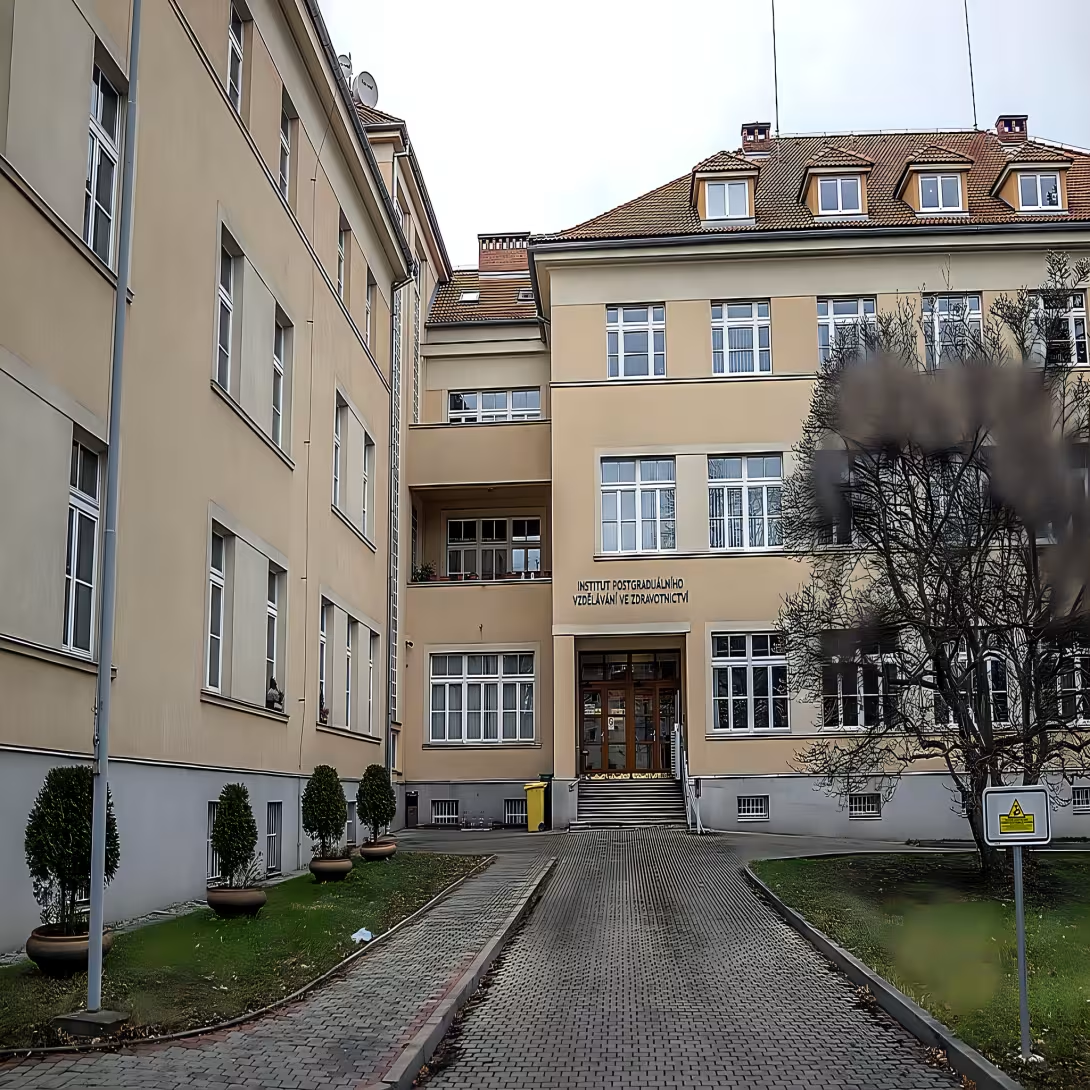
The Institut postgraduálního vzdělávání ve zdravotnictví (IPVZ) is a key educational institution in Prague 10, established in 1953. It serves as a cornerstone for continuous medical education in the Czech Republic and operates under the Ministry of Health. The institute plays an essential role in implementing state healthcare policies and providing comprehensive training across all medical specialties.
Founded shortly after World War II, IPVZ emerged during significant political and social changes in Czechoslovakia. Its establishment reflects the country's focus on rebuilding its healthcare system and advancing medical education to meet contemporary needs. Over the decades, it has grown into the largest provider of continuous medical education in the nation, maintaining educational capacities across 96 medical fields.
The institute is located on Ruské ulice in Prague 10, where it has been based since its inception. This location serves as the hub for administrative and pedagogical activities, while various pedagogical workplaces are distributed throughout the Czech Republic to facilitate widespread educational outreach. The urban setting of Prague 10 provides access to a blend of historical and modern architecture, enhancing the institute's integration into the city’s vibrant environment.
Throughout its history, IPVZ has been instrumental in shaping medical education. In 2022 alone, it conducted ongoing and advanced training for over 21,000 participants, with nearly 11,000 completing lifelong learning programs. The institute also plays a crucial role in the assessment process, conducting final exams for doctors, dentists, pharmacists, and other healthcare professionals across various fields.
The institute's influence extends beyond education through its collaboration with the Ministry of Health of the Czech Republic, medical faculties, and professional organizations both domestically and internationally. It engages in conceptual, methodological, scientific research, and consultancy activities, working closely with entities such as the Česká lékařská společnost J. E. Purkyně and various professional chambers.
Today, IPVZ continues to be a vital institution for healthcare professionals in the Czech Republic. Its commitment to lifelong learning and maintaining high educational standards ensures that it remains at the forefront of medical education. Visitors interested in the evolution of medical training or those seeking insights into contemporary healthcare practices will find the institute's rich history and ongoing contributions both enlightening and inspiring.
Then and now
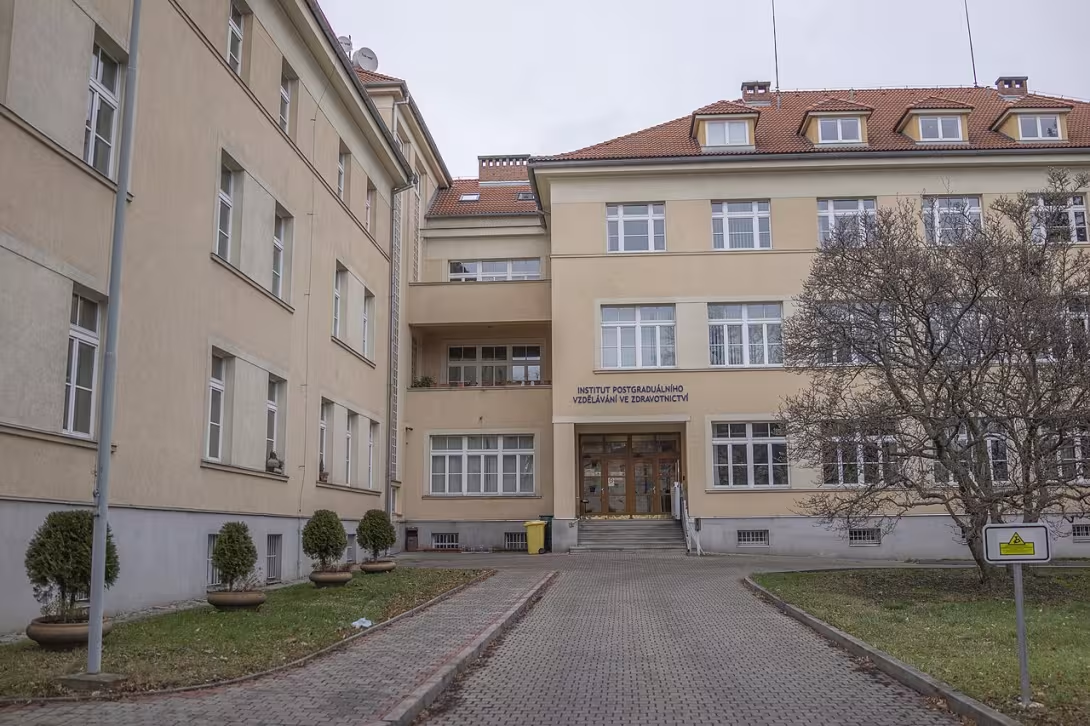
Drag the slider to compare how the landmark may have looked when it was built with the view today.

The historical appearance on the left is an AI-generated visualisation and serves as inspiration only.
Historical milestones
- 1953
- Založení Institutu postgraduálního vzdělávání ve zdravotnictví (IPVZ)
- 2022
- Odborné a pokročilé školení pro více než 21,000 účastníků
Architectural development
The Institut postgraduálního vzdělávání ve zdravotnictví has been located in its current building on Ruské ulice in Prague 10 since its establishment. The institute's pedagogical activities are distributed across various locations throughout the Czech Republic, reflecting its expansive educational reach.
Historical events
Founded in 1953 as a key provider of continuous medical education in the Czech Republic.
In 2022, the institute conducted ongoing and advanced training for over 21,000 participants.
Owners
Ministry of Health of the Czech Republic
Points of interest
– Despite its establishment shortly after World War II, the Institut postgraduálního vzdělávání ve zdravotnictví has been a pioneer in integrating modern educational technologies into medical training since the 1980s. This forward-thinking approach was ahead of many Western institutions at the time.
– The institute's location on Ruské ulice is not only strategic for accessibility but also holds historical significance as it was once part of a larger estate that included medicinal herb gardens used by local healers in the early 20th century, reflecting Prague’s rich tradition in natural medicine.
– In the 1970s, IPVZ played a crucial role during a public health crisis when it rapidly developed and disseminated training programs for emerging infectious diseases. This initiative was one of the first coordinated responses to such threats within Central Europe.
– The institute has an unusual tradition where each graduating class contributes to a collaborative mural depicting advancements in medicine over the years, which adorns the walls of its main lecture hall. This living artwork serves as both inspiration and historical record for students and faculty alike.
– Anecdotal legends among staff suggest that the original building on Ruské ulice was once rumored to be haunted by a benevolent ghost of a former medical practitioner who is said to inspire breakthroughs in research and teaching, adding an intriguing layer to its storied history.
Guide
This guide is narrated by a synthetic voice generated by artificial intelligence.
Show guide text
This text was created by artificial intelligence and has not been editorially reviewed. It may contain inaccuracies.
The Institute of Postgraduate Education in Healthcare is a directly managed organization of the Ministry of Health of the Czech Republic. It guarantees and continuously implements state policy in the healthcare sector. For a long time, it has been the largest provider of continuing healthcare education in the country, in part because it maintains educational capacity in all ninety-six medical specialties.
The Institute was established in nineteen fifty-three. Since then, it has organized specialist and lifelong education for physicians, dentists, pharmacists, and selected non-medical healthcare professionals. It also ensures attestation or final examinations in forty-four supplementary specialties and in seven basic specialties, which include general medicine and pharmaceutical specialties. Additionally, there are fifteen non-medical specialties. Lifelong education is offered in the form of courses, seminars, practical workshops, and professional placements.
In two thousand twenty-two, over twenty-one thousand participants went through continuing and advanced education. Professional qualification examinations that same year were passed by seven hundred and seven physicians, dentists, and pharmacists.
In addition to attestations, the institute runs a number of comprehensive educational programs, which conclude with a verification of knowledge. Teaching is based mainly on events published in the Overview of Educational Activities. This is released every half-year and contains courses, internships, and seminars for specialist and lifelong education.
The Institute is also devoted to conceptual, methodological, scientific, and advisory activities. It works closely with the ministry, with medical faculties, and with the National Centre for Nursing and Non-Medical Healthcare Professions in Brno. Its partners also include professional societies, for example the Czech Medical Society of Jan Evangelista Purkyně. It collaborates with professional chambers, that is with the Czech Medical Chamber, the Czech Pharmaceutical Chamber, and the Czech Dental Chamber, and with other organizations both at home and abroad.
Since its founding, the institute has been located in the same building on Ruská Street in Prague ten. Here, among other things, are the management and study department. However, individual teaching facilities are located throughout the Czech Republic. Since two thousand twenty-two, the director of the institute is physician Irena Maříková.
Frequently asked questions
Can the monument be visited?
We have not verified whether this monument is accessible. Please ask the owner or operator, or the local municipal office.
Businesses nearby
Do you run a restaurant, accommodation, shop, museum, rental, wellness or other visitor service near this monument? Show yourself directly to the people heading to it — this is how they will see you in the app and on the web:
Nearby
Located in Prague 10, the Institut postgraduálního vzdělávání ve zdravotnictví is situated in an urban environment with access to various healthcare and educational facilities. The area offers a blend of historical and modern architecture.
Accommodation nearby
Themed route
Thematic Walking Tour: Institut postgraduálního vzdělávání ve zdravotnictví and Surroundings
1. Institut postgraduálního vzdělávání ve zdravotnictví - Type: Educational Institution - Why Visit: Begin your tour at the heart of Prague 10, where this institute serves as a beacon for advanced healthcare education and research. Explore its modern facilities that blend seamlessly with the historical architecture of the area, offering insights into the evolution of medical education in Prague.
2. Prague 10 City Center - Type: Urban Area - Why Visit: Just a short walk from the institute, Prague 10's city center offers a vibrant mix of cafes, shops, and local eateries. This area is perfect for experiencing the daily life of Prague’s residents while enjoying the architectural diversity that characterizes the neighborhood.
3. Local Healthcare Facilities - Type: Medical Centers - Why Visit: Nearby healthcare facilities provide an opportunity to observe the practical application of medical education in a real-world setting. These centers are integral to the community, offering services and showcasing advancements in patient care and health technology.
4. Educational Institutions - Type: Schools/Colleges - Why Visit: Explore other educational institutions within walking distance that contribute to the intellectual landscape of Prague 10. These places often host public lectures or exhibitions, providing further learning opportunities beyond traditional classroom settings.
5. Historical and Modern Architecture Blend - Type: Architectural Sites - Why Visit: As you walk through the area, take in the unique blend of historical and modern architecture that defines Prague 10. This juxtaposition offers a visual narrative of the city’s development over time, reflecting both its rich history and contemporary progress.
This tour provides an immersive experience into the educational and healthcare heartbeat of Prague 10 while appreciating its architectural charm.
Seasonal recommendations
Spring: Visiting the Institute of Postgraduate Medical Education during spring offers a refreshing experience as nature awakens around this historic site. The blooming flowers and budding trees create a picturesque backdrop, enhancing the serene atmosphere that complements the institute's educational heritage. Spring light is soft and warm, casting gentle shadows that highlight architectural details. Visitors should consider bringing a light jacket for cooler mornings or evenings, as temperatures can be variable. Early morning visits are ideal to enjoy the tranquility before larger crowds arrive later in the day.
Summer: Summer at the Institute of Postgraduate Medical Education is vibrant with long daylight hours and lush greenery surrounding the site. The warm weather encourages outdoor exploration, making it a perfect time for those who appreciate historical architecture amidst natural beauty. However, summer can also bring large numbers of visitors, so arriving early in the day helps avoid crowds and ensures a more relaxed experience. Lightweight clothing is recommended to stay comfortable during warmer afternoons, along with sunscreen and hydration.
Autumn: Autumn provides a stunning backdrop for visiting this historic educational institution, as the foliage transforms into vibrant shades of red, orange, and yellow. The cooler temperatures make it an ideal season for leisurely strolls around the grounds, allowing visitors to fully appreciate the site's natural and architectural beauty without the summer heat. Layered clothing is advisable due to fluctuating weather conditions, which can range from crisp mornings to milder afternoons. This time of year often sees fewer visitors, offering a more peaceful experience.
Winter: The winter season at the Institute of Postgraduate Medical Education offers a unique charm with its quiet and introspective atmosphere. Snow may blanket the grounds, creating a serene and picturesque setting that highlights the historic architecture in a new light. Visitors should dress warmly, as temperatures can be quite cold, especially during early mornings or late afternoons. Despite potential closures of some facilities, winter offers a tranquil and less crowded opportunity for reflection amidst history.
Visualizations and artistic views


The visualisations are generated by artificial intelligence and serve as inspiration.
Tips from visitors
No tips yet. Be the first!
Log in and add your tip.
Sources and literature
Photos: The photonaut / CC BY-SA 4.0, rozlišení zvýšeno umělou inteligencí — Wikimedia Commons. The author and licence also appear when you hover over the image.
Faktickým podkladem tohoto textu byl článek na Wikipedii, jehož autory jsou přispěvatelé Wikipedie. Článek je dostupný pod licencí CC BY-SA 4.0.
Příběhy a pověsti
Legendy, pověsti a příběhy spjaté s touto památkou
Fotografie návštěvníků
Zatím žádné fotografie. Buďte první, kdo přidá fotografii z návštěvy!
Log in a přidejte svou fotografii nebo hodnoťte.
Za ověřenou návštěvu v aplikaci získáte víc bodů — poznáme podle GPS, že jste na místě.
Reviews and comments