






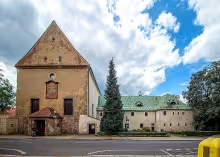
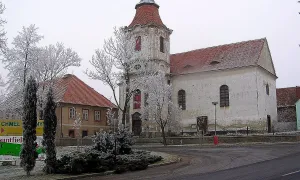
The Kapucínský Klášter Rumburk is a historical Baroque monastery located in Rumburk, Czech Republic. It serves as both an architectural and cultural landmark, reflecting its rich history from inception to its current role as a public library and concert venue. The complex includes a church dedicated to Saint Lawrence and a Loreto Chapel, integral parts of its heritage.
The origin of the Kapucínský Klášter Rumburk dates back to František Eusebius z Pöttingu, who initiated its establishment. As an imperial diplomat and owner of the Ruberské panství, he envisioned the monastery as part of his legacy. His will in 1662 mandated completion for twelve monks under threat of forfeiting his estate if unfulfilled. Antonín Florián z Lichtenštejna completed the project between 1683 and 1690, financing it himself while serving as an imperial envoy at the papal court. This period coincided with Bohemia's Baroque cultural development under the Habsburg Monarchy, influencing its architectural style.
Architecturally, the monastery features a Baroque design with a four-winged layout surrounding a rectangular courtyard. It includes both a church and a Loreto Chapel, reflecting the era's religious significance. Notably, the Loreto Chapel houses a replica of the Holy House from Loretto, Italy, adding to its historical allure.
Throughout history, the monastery has seen various owners and administrators. After František Eusebius z Pöttingu's death, Antonín Florián z Lichtenštejna took over as the new owner of the panství and completed construction. The complex was managed by the řád kapucínů from the late 17th century until their expulsion in 1950 during the communist regime in Czechoslovakia. It then served different religious communities before being repurposed as a library.
Key events include the consecration of the Church of Saint Lawrence on April 9, 1690, by Jaroslav Ignác hrabě ze Šternberka. In the 20th century, its status as a pilgrimage site was overshadowed by the nearby Basilica in Filipov. Despite these changes, it remained an important cultural and religious site until becoming a library.
Today, the Kapucínský Klášter Rumburk is accessible to the public, serving as both a repository of knowledge and a concert venue held in the chapel. Its historical significance, combined with ongoing restoration efforts, makes it an intriguing destination for visitors interested in Baroque architecture and Czech history.
The Kapucínský Klášter Rumburk stands as a testament to its rich past while embracing modern uses that continue to engage the community. Visitors are invited to explore this remarkable site where history and culture converge uniquely.
Historical milestones
- 1662
- František Eusebius z Pöttingu's will mandates monastery completion.
- 1683
- Construction of the Kapucínský Klášter Rumburk begins.
- 1690
- Consecration of the Church of Saint Lawrence.
- 1950
- Expulsion of the řád kapucínů during communist regime.
Architectural development
Constructed between 1683 and 1690, the monastery features a Baroque architectural style with a four-winged layout around a rectangular courtyard. The complex includes a church and Loreto Chapel, reflecting the religious significance of its era.
Historical events
- 1662
- František Eusebius z Pöttingu's will mandated the completion of the monastery.
- 1690
- The Church of Saint Lawrence was consecrated by Jaroslav Ignác hrabě ze Šternberka.
Points of interest
- The monastery's completion was contingent on a peculiar stipulation in František Eusebius z Pöttingu’s will: if not finished for twelve monks, his estate would be forfeited, highlighting the lengths he went to secure its establishment.
- Antonín Florián z Lichtenštejna financed the monastery's completion out of his own pocket while serving as an imperial envoy at the papal court—a unique intersection of personal investment and diplomatic duty that influenced its Baroque design.
Guide
Show guide text
Welcome to the Kapucínský klášter Rumburk, a remarkable testament to Baroque architecture nestled in the heart of Rumburk, Czech Republic. As you stand here, imagine yourself stepping back into a time when this complex was not just a building but a vibrant center of spiritual life and community.
The story of this monastery begins with an intriguing will from 1662 by František Eusebius z Pöttingu, who envisioned its completion for twelve monks. The construction commenced in 1683 under his directive, laying the foundation stone of what would become a significant religious site. By 1690, the Church of Saint Lawrence within this complex was consecrated, marking an important milestone in its history.
As you look around, take in the architectural splendor that speaks volumes about the era it represents. The church dedicated to Saint Lawrence and the Loreto Chapel are central features, inviting you to explore their historical significance further. These structures stand as a testament to the artistic and spiritual aspirations of those who built them.
The monastery owes much to two key figures: František Eusebius z Pöttingu, whose will set its creation in motion, and Antonín Florián z Lichtenštejna, who played a crucial role in financing and completing the project. Their vision and commitment have left us with this enduring piece of history.
One particularly fascinating aspect is the peculiar stipulation in František Eusebius's will: if the monastery wasn't completed for twelve monks, his estate would be forfeited. This highlights not only the lengths he went to secure its establishment but also the deep personal and spiritual commitment behind this monumental project.
As you continue your visit, reflect on how this site transitioned from a religious haven to serving as a library in the 20th century, adapting through time while retaining its historical essence. The expulsion of the řád kapucínů during the communist regime marks another significant chapter in its story, demonstrating resilience and transformation.
We invite you to delve deeper into this fascinating site, exploring every corner and imagining the lives that once filled these spaces with purpose and devotion. As we conclude our tour, thank you for joining us on this journey through time at Kapucínský klášter Rumburk. May it inspire you to discover more about its rich history and the stories embedded within its walls.
Tips for visitors
The best time to visit the Kapucínský klášter Rumburk is during late spring or early autumn when the weather is pleasant, allowing you to fully enjoy the Baroque architecture and surrounding gardens without the summer crowds. These seasons offer mild temperatures that are perfect for exploring both indoors and outdoors. Additionally, visiting outside of peak tourist season can provide a more serene experience, ideal for appreciating the historical significance of the monastery.
Parking is available near the monastery, but it's advisable to check local resources or signage upon arrival as spaces may be limited during busy times. For those preferring public transport, Rumburk has bus services that connect to various parts of the town and nearby areas. While specific bus numbers are not provided here, using a transportation app or website can help you find the most current routes and schedules to plan your visit efficiently.
When visiting the Kapucínský klášter Rumburk, it's recommended to bring comfortable walking shoes as there may be some walking involved, especially if exploring nearby areas. A hat and sunscreen are advisable for protection against the sun during outdoor visits. Additionally, carrying a water bottle can help stay hydrated throughout your exploration of the monastery and its surroundings.
For photography enthusiasts, capturing the intricate Baroque details of the Kapucínský klášter Rumburk is best done in the early morning or late afternoon when the light is softer. These times provide a warm glow that enhances the architectural features without harsh shadows. The gardens and main facade offer excellent spots for photographs, showcasing the monastery's beauty against the backdrop of Rumburk.
Nearby within 30 minutes, you can visit the Basilica in Filipov, which, despite its overshadowing effect on the monastery as a pilgrimage site in the early 20th century, remains an important religious and historical landmark. Exploring this basilica offers insight into the region's rich spiritual heritage and provides an opportunity to compare architectural styles.
Families with children will find the Kapucínský klášter Rumburk a fascinating visit due to its expansive gardens and peaceful atmosphere, which are great for leisurely walks. The monastery's history can be introduced to children in an engaging way through storytelling about its founders and significance. Additionally, bringing along a small picnic could make the visit more enjoyable for younger visitors.
Businesses nearby
Do you run a restaurant, accommodation, shop, museum, rental, wellness or other visitor service near this monument? Show yourself directly to the people heading to it — this is how they will see you in the app and on the web:
Nearby
Located in the western part of Rumburk's center, near a crossroads leading to Jiříkov. The nearby Basilica in Filipov overshadowed its status as a pilgrimage site in the early 20th century.
Accommodation nearby
Themed route
Tematická výletní trasa: Kapucínský klášter Rumburk a okolí
1. Kapucínský klášter Rumburk (klášter) Začněte svou cestu u samotného kapucínského kláštera, který je umístěn v západní části centra města. Tento klášter je nejen historickou památkou, ale také poskytuje pohled na architektonickou krásu a duchovní atmosféru oblasti. Je to ideální místo pro ty, kteří chtějí zažít klid a uklidnit duši.
2. Basilika v Filipově Přibližně 5 minut chůze od kapucínského kláštěr je Basilika v Filipově, která kdysi sloužila jako hlavní místo poutníctví. Navzdory tomu, že její status byl později převzat jiným místem, stále zůstává důležitým náboženským a historickým centrem v regionu. Je to skvělé místo pro ty, kteří mají zájem o architekturu a historii církevních stavb.
3. Křižovatka vedoucí do Jiříkova Odtud se podíváme na křižovatku, která vede směrem k Jiříkovu. Toto místo je nejen zásadním dopravním uzlem, ale také symbolizuje propojení Rumburka s okolními oblastmi. Prozkoumejte toto místo pro lepší pochopení městského plánování a historie regionu.
Tato trasa nabízí kombinaci duchovního klidu, architektonických krás a historických poznatků. Je to ideální způsob, jak prozkoumat Rumburk a jeho okolí bez nutnosti vzdálenějších cest.
Seasonal recommendations
Spring: Visiting the Kapucínský klášter Rumburk during spring offers a vibrant experience as nature awakens with blossoming flowers and fresh greenery enveloping the historic site. The soft, warm light of longer days enhances the intricate details of the monastery's architecture. This season is ideal for enjoying outdoor spaces without large crowds, making it perfect for leisurely exploration. Visitors should dress in layers to accommodate fluctuating temperatures and consider bringing a hat or sunglasses to protect against sunny spells.
Summer: In summer, the Kapucínský klášter Rumburk comes alive with lush landscapes and extended daylight hours, providing ample time to explore both indoor and outdoor areas. The warm weather invites visitors to stroll through the monastery's gardens, where vibrant flowers are in full bloom. However, this is also the peak tourist season, so it’s advisable to arrive early to avoid crowds. Comfortable walking shoes and light clothing are recommended, along with sunscreen for protection against the sun.
Autumn: Autumn at Kapucínský klášter Rumburk offers a picturesque setting as the foliage transforms into brilliant shades of red, orange, and gold. The cooler temperatures create a serene atmosphere perfect for reflection and photography. This season is less crowded than summer, allowing for a more intimate experience. Visitors should dress warmly in layers to adapt to the changing weather and consider bringing an umbrella or raincoat, as autumn rains can be frequent.
Winter: Winter transforms Kapucínský klášter Rumburk into a tranquil retreat with snow-covered grounds that add a magical touch to its historic architecture. The shorter days mean visiting hours are more limited, but the early morning light provides a unique opportunity for peaceful exploration. During this time, it’s essential to wear warm clothing and sturdy boots to navigate icy paths comfortably. Winter is an ideal season for those seeking a quiet visit away from the summer crowds.
Visualizations and artistic views


Vizualizace jsou generovány umělou inteligencí a slouží jako inspirace.

Tips from visitors
No tips yet. Be the first!
Log in and add your tip.


Reviews and comments