






Klášter boromejek Monastery
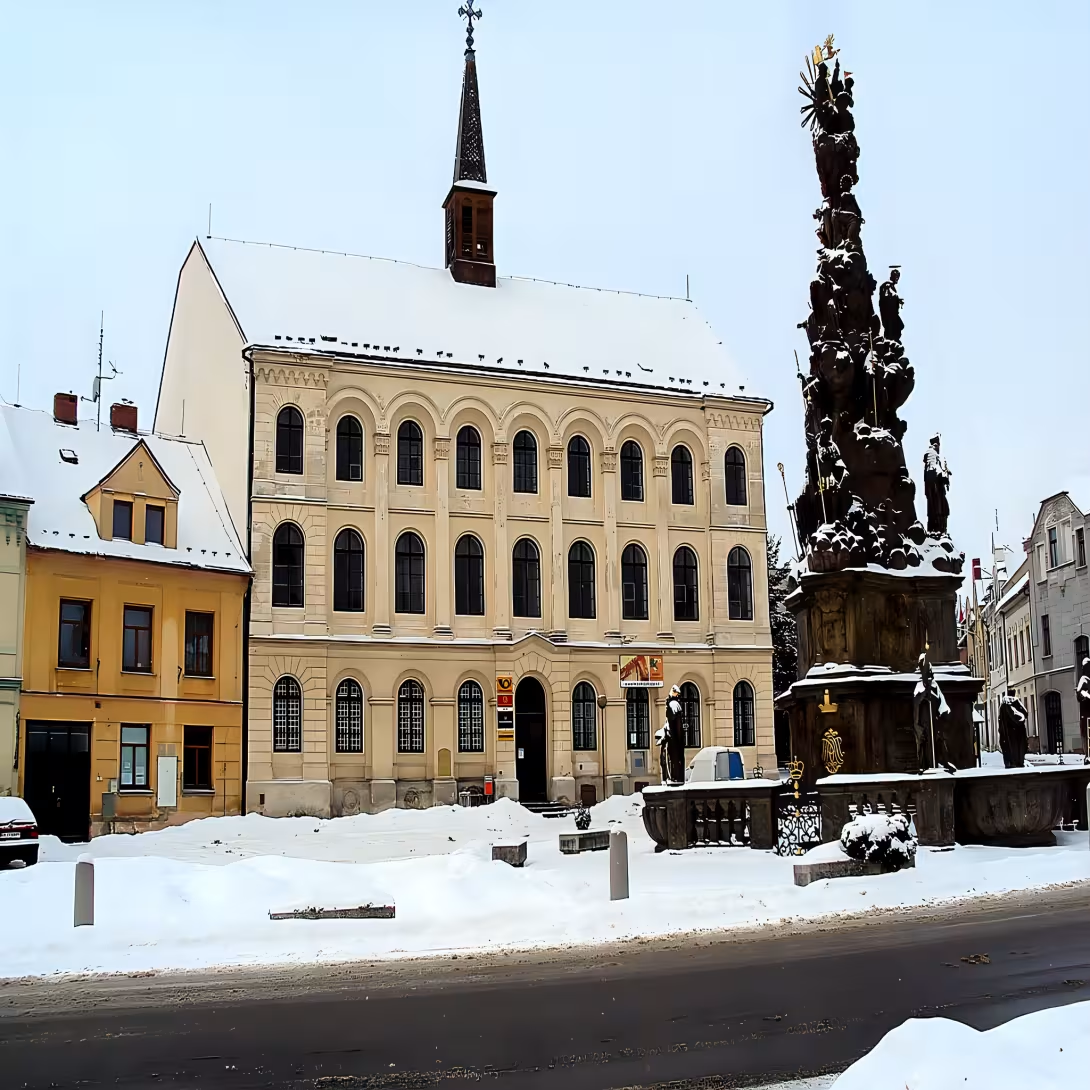
The Boromejský Monastery in Zákupy is a historically significant site, originally established as a girls' school and boarding house in 1865. Located at Náměstí Svobody 250, this monument is notable for its architectural style and educational legacy under Emperor Ferdinand V's foundation. Today, it serves as a post office, remaining an integral part of the community.
Established by Emperor Ferdinand V Habsburg and his wife Maria Anna Pia of Savoy in 1865, the Boromejský Monastery was built on land where the couple had used Zákupy Castle as a summer residence since 1850. Their efforts significantly contributed to the town's development. The foundation funded this building on Náměstí Svobody (then known simply as náměstí), serving both educational and religious purposes. This initiative was part of a broader cultural flourishing in Bohemia during Austrian rule, emphasizing education and infrastructure.
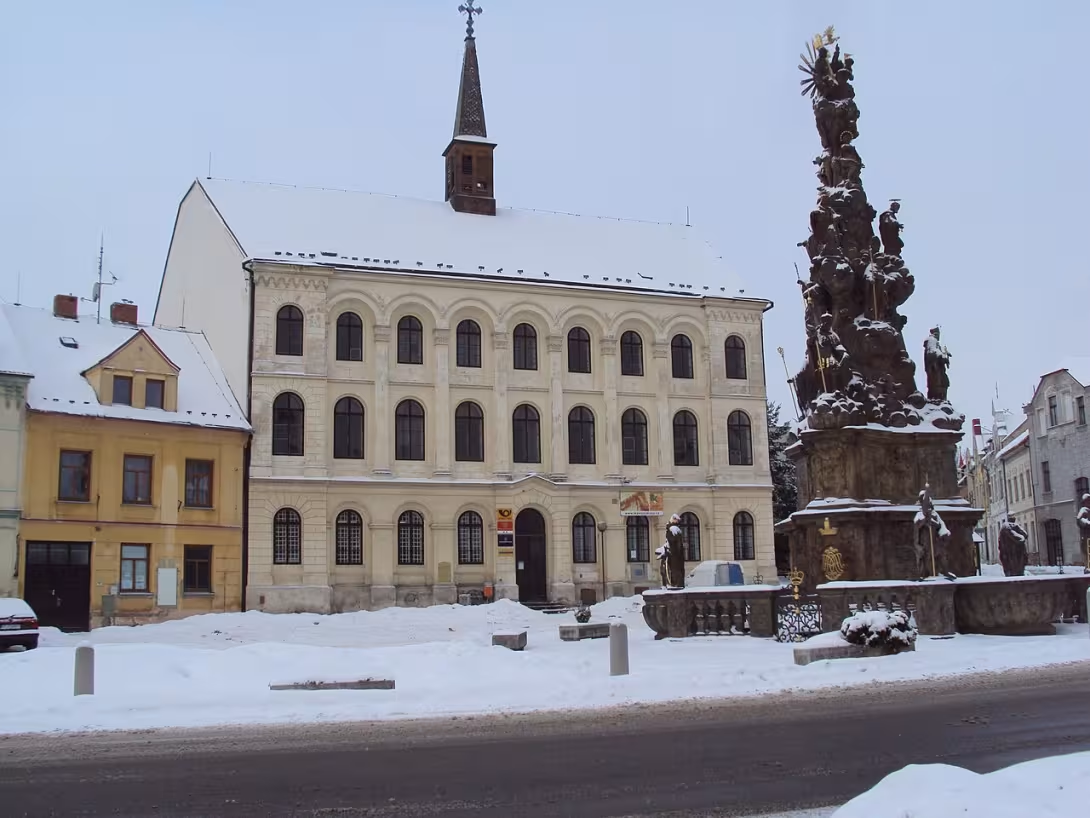
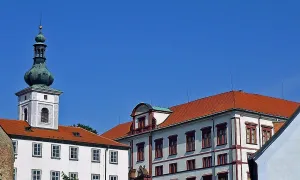
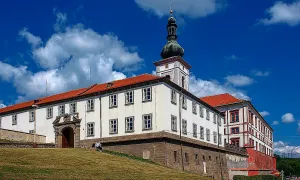
Architecturally, the Boromejský Monastery features a robust two-story brick structure with neo-Romanesque elements. It includes arch windows and high pilasters spanning both floors, creating an imposing yet elegant façade. A distinctive bell tower adorns the gable roof, while an internal chapel adds to its architectural richness. This design reflects the mid-19th-century European trend towards romanticized historical styles.
Ownership of the Boromejský Monastery has changed over time. Initially established by Ferdinand V's foundation in 1865, it later became part of Czechoslovakia’s unified schooling system after World War II. In 1951, the monastery was closed as a religious institution and repurposed for secular use. Today, it is owned by the Czech Post Office, which has adapted its facilities to serve modern needs while preserving historical elements.
The Boromejský Monastery's history includes several key events that highlight its evolving role in the community. It opened officially on November 22, 1865, as a girls' school and boarding house, offering education primarily in German. Over time, it became known locally through postcards as "Nonnenkloster" (nuns' monastery) or "Klosterschule" (monastic school). After World War II, the building was used for educational purposes until its closure in 1951. Subsequently, a new school was constructed nearby, and the former monastery buildings were gradually vacated by students.
Today, visitors to Zákupy can explore the Boromejský Monastery as it functions primarily as a post office. Its historical significance and architectural beauty make it an intriguing site for those interested in 19th-century educational institutions and religious architecture. The surrounding area of Zákupy offers picturesque landscapes with rolling hills and forests, enhancing its appeal to tourists.
The Boromejský Monastery stands as a testament to the cultural and educational advancements of its time. Its transformation from a religious institution to a public service building reflects broader historical changes in Europe. Visitors are invited to appreciate this monument's rich history and architectural elegance while exploring the charming town of Zákupy.
Then and now
Drag the slider to compare how the landmark may have looked when it was built with the view today.
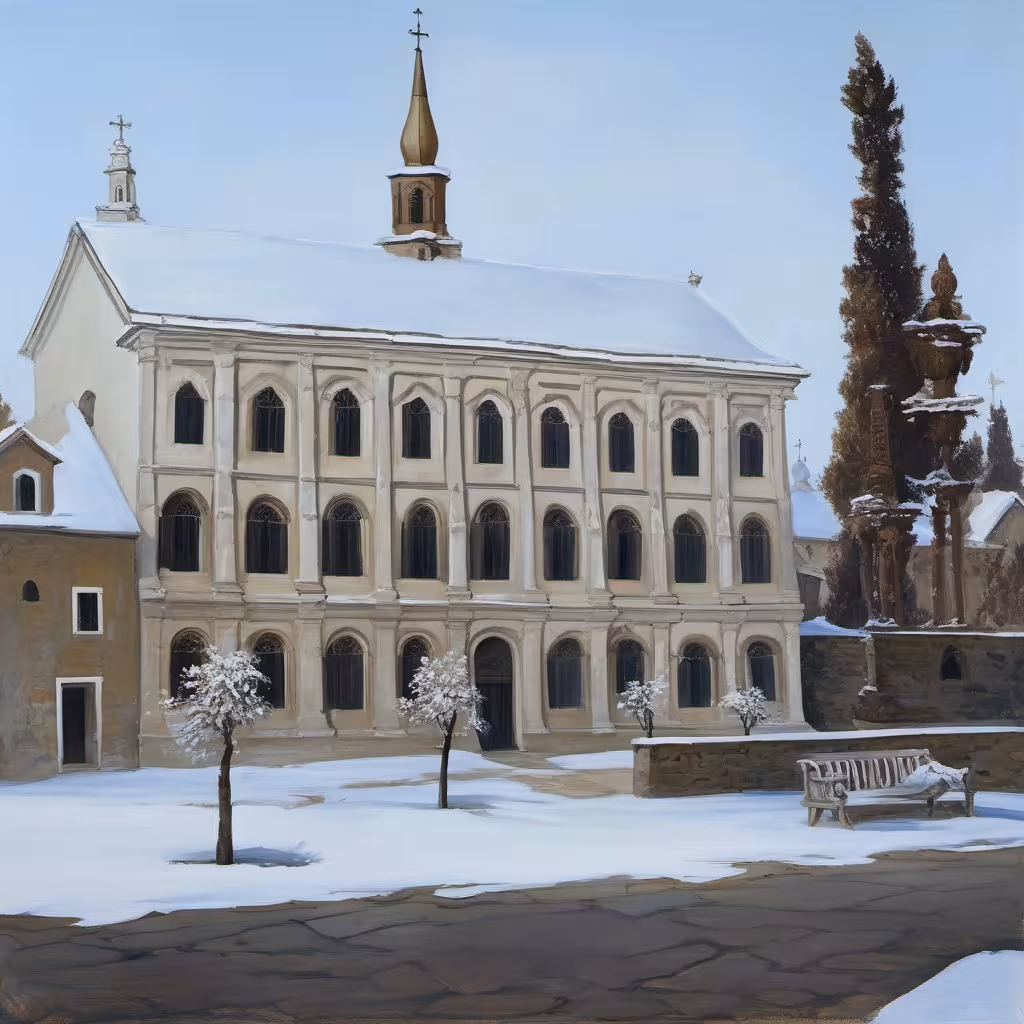
The historical appearance on the left is an AI-generated visualisation and serves as inspiration only.
Historical milestones
- 1865
- The Boromejský Monastery was officially opened.
Architectural development
Constructed in the neo-Romanesque style, the Boromejský Monastery features arch windows and high pilasters. Initially serving educational purposes, it later transitioned to a post office after its closure as a religious institution in 1951.
Historical events
- 1865
- The Boromejský Monastery was officially opened as a girls' school and boarding house.
- 1945
- Post-war, the building began to be used for educational purposes by Czechoslovakia's unified schooling system.
- 1951
- The monastery was closed as a religious institution and repurposed for secular use.
Points of interest
- The Boromejský Monastery was originally established as a girls' school and boarding house in 1865 by Emperor Ferdinand V Habsburg, reflecting the era's emphasis on education for women.
- Interestingly, the monastery is often referred to locally through postcards as "Nonnenkloster" (nuns' monastery) or "Klosterschule" (monastic school), highlighting its dual educational and religious roles despite not being an actual nunnery.
- The architectural style of the Boromejský Monastery includes neo-Romanesque elements, such as arch windows and high pilasters, which were popular in mid-19th-century Europe for their romanticized historical appeal.
- After World War II, the monastery was integrated into Czechoslovakia’s unified schooling system before being repurposed as a post office in 1951, illustrating its adaptive reuse through changing political landscapes.
- The site's transformation from an educational and religious institution to a public service building mirrors broader European trends of secularization and modernization during the 20th century.
Guide
This guide is narrated by a synthetic voice generated by artificial intelligence.
Show guide text
This text was created by artificial intelligence and has not been editorially reviewed. It may contain inaccuracies.
Welcome to the Boromejský Monastery in Zákupy, a remarkable historical site that stands as a testament to 19th-century architecture and social history. As you stand here, take a moment to appreciate the grandeur of this robust two-story brick building before you. Its neo-Romanesque arch windows and high pilasters stretch across both floors, inviting you into its storied past.
The Boromejský Monastery was officially opened in 1865, founded by Emperor Ferdinand V Habsburg. Originally established as a girls' school and boarding house, it reflected the era's growing emphasis on education for women—a progressive move at the time. This historical context is vital to understanding the monastery’s role in shaping educational opportunities during that period.
As you approach, notice how the architecture speaks volumes about its past life. The building's sturdy brickwork and distinct neo-Romanesque features are immediately striking. These elements not only define its aesthetic but also highlight the architectural trends of the time. Although the original architects remain unknown, their work has left a lasting impression on this community landmark.
The story of this place is intertwined with significant historical figures, notably Ferdinand V Habsburg and Maria Anna Pia of Savoy. Their vision brought this institution into existence, marking an important chapter in educational history. It’s fascinating to think about the lives that passed through these halls, learning and growing under the monastery's roof.
One intriguing aspect of the Boromejský Monastery is its local nickname "Nonnenkloster," or nuns' monastery, as seen on postcards—a nod to its monastic origins despite its educational purpose. This playful reference adds a layer of cultural charm to your visit, inviting you to ponder how perceptions and stories evolve over time.
As we conclude this brief journey through the Boromejský Monastery's history, I invite you to explore further and let your imagination roam. Whether it’s imagining the echoes of student laughter or reflecting on the architectural beauty before you, there is much to discover in this historic site. Thank you for joining me today, and I hope this experience has enriched your understanding of Zákupy’s cultural heritage.
Tips for visitors
The best time to visit the Boromejský Monastery in Zákupy is during late spring or early autumn, when the weather is mild and pleasant for exploring both the monastery grounds and the surrounding natural beauty. During these months, you can enjoy the lush greenery of the rolling hills and forests without the crowds that might be present in peak summer months. Additionally, the soft light of these seasons provides excellent conditions for photography.
For those preferring public transport, local buses can bring you close to Zákupy, from where a short walk will lead you to the monastery.
When planning your visit, consider bringing comfortable walking shoes as there are several paths around the monastery that offer beautiful views of the landscape. A camera or smartphone with a good camera is recommended for capturing the stunning scenery and architectural details of the monastery. Don't forget to bring water and some snacks, especially if you plan on spending several hours exploring.
For photography enthusiasts, the best spots are those offering panoramic views of the surrounding hills and forests, particularly during sunrise or sunset when the light creates dramatic effects. The interior of the monastery also provides unique opportunities for capturing its historical architecture in different lighting conditions throughout the day.
Nearby attractions within a 30-minute drive include the ruins of a Capuchin monastery, which offer an intriguing glimpse into the region's monastic history. For those interested in nature, the surrounding forests and hills are perfect for hiking or simply enjoying a peaceful walk. These sites complement your visit to the Boromejský Monastery by providing additional historical context and natural beauty.
For families with children, the Boromejský Monastery offers an educational experience that can be both engaging and informative. The history of the site as a girls' school and boarding house provides interesting stories to share with young visitors. The nearby natural landscapes are also ideal for family activities such as picnics or nature walks. Be sure to check if there are any specific events or guided tours suitable for children during your visit.
Frequently asked questions
Can the monument be visited?
Religious buildings are usually open mainly during services; at other times a visit is normally arranged with the parish or the operator. We have not verified specific times.
Where is the monument?
Location: Zákupy, Liberecký kraj. The map on this page shows the exact spot.
Businesses nearby
Do you run a restaurant, accommodation, shop, museum, rental, wellness or other visitor service near this monument? Show yourself directly to the people heading to it — this is how they will see you in the app and on the web:
Events nearby
Zdroj akcí: otevřená data měst a obcí ČR (Národní katalog otevřených dat) a kalendář akcí Národního památkového ústavu.
Nearby
Zákupy is known for its picturesque landscapes and historical sites, including the nearby ruins of a Capuchin monastery. The area offers natural beauty with rolling hills and forests within a five-kilometer radius.
Accommodation nearby
Themed route
Tematická výletní trasa: Klášter Boromejek a okolí Zákup
1. Klášter boromejek (klášter)
Proč stojí za návštěvu: Tento klášter je nejen architektonickou perli, ale také důležitým kulturním a historickým místem v obci Zákupy. Jeho bohatá historie a krásná stavba přitahují návštěvníky z celého světa.
2. Ruiny kapucínského kláštera
Proč stojí za návštěvu: Tyto ruiny jsou fascinujícím připomínáním minulosti a nabízejí pohled na historický vývoj oblasti. Jsou umístěny nedaleko Zákup, což je ideální pro krátké procházky mezi návštěvami kláštera.
3. Přírodní krajina kolem Zákup
Proč stojí za návštěvu: Obklopující oblast je známá svými krásnými pohledy, s mírně zalesněnými kopci a lesními prostory. Tato přírodní krajina nabízí klidné chvíle pro relaxaci a poznání místní flóry a fauny.
Tato trasa vám umožňuje prozkoumat nejen historické památky, ale také přírodní krásy oblasti Zákup.
Thematic Tour: The Boromean Monastery and the Surroundings of Zákupy
1. Boromean Monastery (monastery)
Why Visit: This monastery is not only an architectural gem but also a significant cultural and historical site in the town of Zákupy. Its rich history and beautiful architecture attract visitors from around the world.
2. Ruins of the Capuchin Monastery
Why Visit: These ruins are a fascinating reminder of the past, offering insight into the area's historical development. Located near Zákupy, they provide an ideal spot for short walks between monastery visits.
3. Natural Landscape around Zákupy
Why Visit: The surrounding area is known for its beautiful views, featuring gently wooded hills and forested areas. This natural landscape offers peaceful moments for relaxation and exploration of the local flora and fauna.
This tour allows you to explore not only historical landmarks but also the natural beauty of the Zákupy region.
Seasonal recommendations
Spring: Visiting the Boromeo Monastery during spring offers a unique experience as nature awakens, enveloping the site with lush greenery and vibrant wildflowers. The soft light of early morning or late afternoon enhances the monastery's serene atmosphere, creating an ideal setting for peaceful reflection. With fewer visitors than in summer, it’s a perfect time to explore without crowds. Dress comfortably in layers as temperatures can vary; bring a hat and sunglasses for sunny days.
Summer: Summer at the Boromeo Monastery is characterized by long daylight hours and warm weather, making it an excellent time for outdoor exploration of its gardens and surroundings. The vibrant colors of blooming flowers add to the picturesque setting, though it’s wise to arrive early in the morning or later in the afternoon to avoid the peak visitor times. Light, breathable clothing is recommended, along with sun protection like hats, sunglasses, and sunscreen.
Autumn: Autumn brings a stunning display of fall foliage around the Boromeo Monastery, transforming the landscape into a tapestry of reds, oranges, and yellows. The cooler temperatures create a cozy atmosphere perfect for leisurely walks through the monastery’s grounds. As daylight hours shorten, plan to visit during midday when light is optimal for photography. Layered clothing will help you stay comfortable as temperatures can fluctuate.
Winter: Winter at the Boromeo Monastery offers a serene and tranquil experience, with snow often blanketing the landscape in a peaceful white. The monastery’s architecture takes on a majestic appearance against the winter sky, while shorter days mean earlier closures; plan your visit for midday to make the most of the natural light. Warm clothing is essential, including thermal layers, gloves, hats, and sturdy boots, as paths may be icy or snowy.
Visualizations and artistic views


The visualisations are generated by artificial intelligence and serve as inspiration.
Photos from the area
Real photos taken near the monument


Zdroj a licence jsou uvedeny u každého snímku.
Atmosphere of the place
This atmospheric visualisation of the place and period was generated by artificial intelligence. It is not real footage of the location.
Tips from visitors
No tips yet. Be the first!
Log in and add your tip.
Sources and literature
Photos: Zákupák / Public domain, rozlišení zvýšeno umělou inteligencí — Wikimedia Commons. The author and licence also appear when you hover over the image.
Faktickým podkladem tohoto textu byl článek na Wikipedii, jehož autory jsou přispěvatelé Wikipedie. Článek je dostupný pod licencí CC BY-SA 4.0.
Location on the map

Příběhy a pověsti
Legendy, pověsti a příběhy spjaté s touto památkou
Fotografie návštěvníků
Zatím žádné fotografie. Buďte první, kdo přidá fotografii z návštěvy!
Log in a přidejte svou fotografii nebo hodnoťte.
Za ověřenou návštěvu v aplikaci získáte víc bodů — poznáme podle GPS, že jste na místě.
Reviews and comments