



Konská Castle
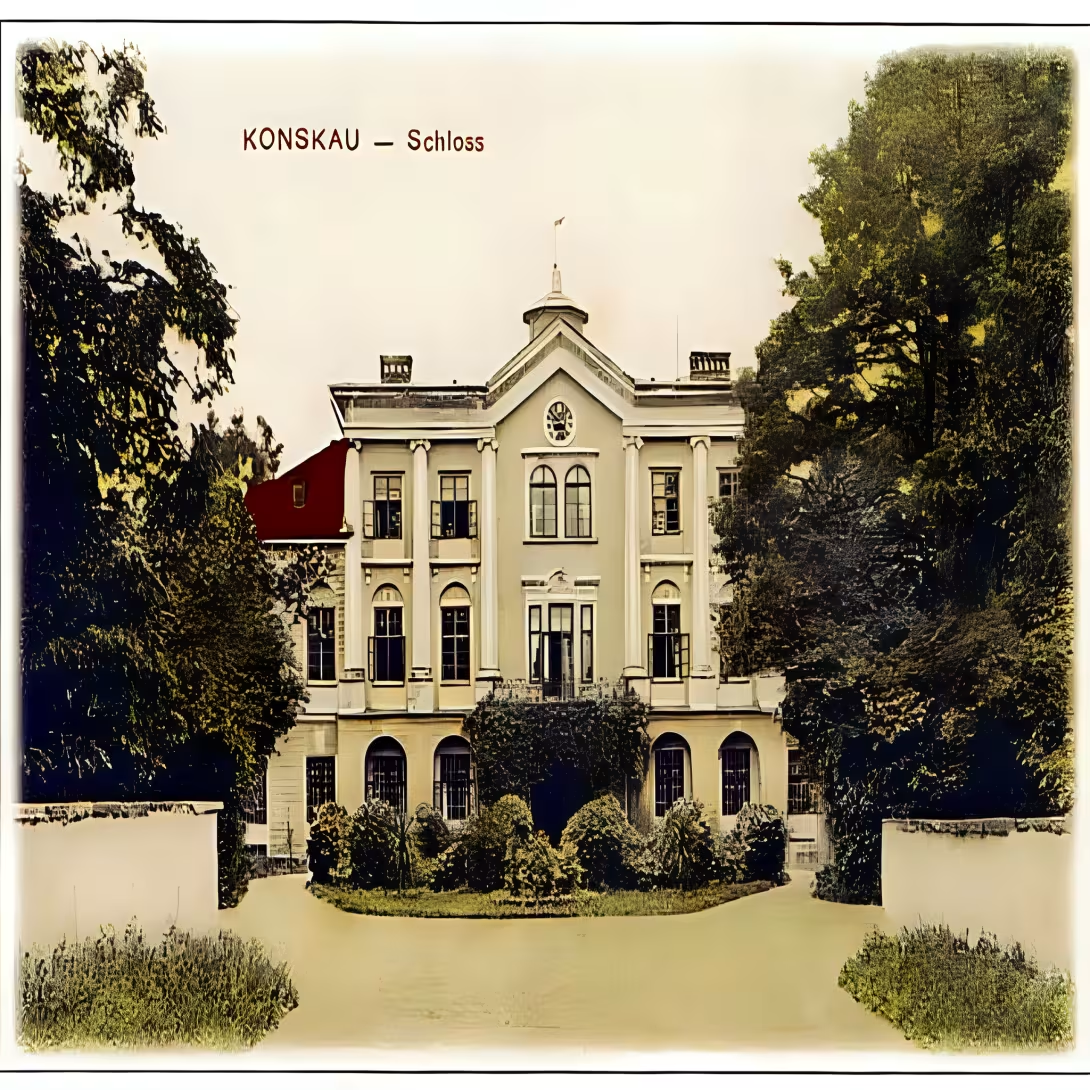
The Koneprussian Castle is a testament to the architectural development of the region in history, located in Konská in the Thřenecký region of the Moravian-Silesian Region. This Baroque castle, which was originally built around 1652 for the Sobek family, has undergone significant transformations for centuries that reflect wider historical and cultural shifts. His journey from noble residence to his current role in office space summarises a rich story about changes in ownership, architectural rework and industrial rework.
The origin of the Koneprussian castle is rooted in the mid-17th century when the Czechs were part of the Habsburg monarchy under Emperor Ferdinand III. This period meant political stability and saw the flourishing of Baroque architecture throughout Europe, a style characterized by grandeur and abundance. The initial construction of the castle for the Sobek family coincides with this architectural trend, which serves as a noble house that reflects the aesthetic preferences of the era.
Architecturally, Koneprussian Castle began its life in baroque style, embodiment decorated and sophisticated properties typical of the period. At the end of the 18th century, however, it underwent a major transformation when the architect Josef Kornhäusel converted it into a neoclassical style under the ownership of Jiří Bees z Chrostiny. This redesign reflected a wider European shift towards neoclassicism and highlighted symmetry and simplicity over baroque complexity.
The ownership of the Koneprussian Castle recorded a number of changes during its history, each leaving an indelible mark on its structure and purpose. Originally built for Jan Jiří Sobek in 1652, passed through various hands including Skrbenští z Hříště, Jan Dětřich Gočálkovský z Gočálkovic, Adam Václav Pačinský z Velké Pačiny, and Jindřich Vilém hrabě Vlček z Dobrozemice. The castle neoclassical redesign under Jiří Bees z Chrostiny in 1790 meant a key moment in its architectural history. The following owners were Karel Bees and Grohmannové z Gronau, with the Těšín Land Society, which acquired it in 1913. This acquisition has led to a transformation into a girls' agricultural school that reflects changing social needs.
The key events in the history of the castle include the neoclassical reconstruction of Josef Kornhäusel and its acquisition by the Těšín Land Society in 1913. Another important event was a radical reconstruction after 1946, which deprived the castle of its historical character and led to its current use as office space. During the renovation period in 1953 a small summer house or pavilion was built Easy, but later demolished.
Today, Koneprusské castle is located near the confluence of the Staviska River and the Olší River in the industrial area of the Thřenecká greenery. Although it no longer retains its historical architectural features due to its extensive reconstruction, its location in the middle of the remains of historical buildings and modern industrial facilities offers a unique view of the past and present of the region. The conversion of the castle from noble residence to office space underlines the dynamic nature of historical protection and adaptation.
The visit to Koneprussky Castle provides a view of the complex layers of history that shaped this monument. Its journey through various architectural styles, ownership and purposes reflects wider historical stories and cultural shifts. As such, it remains a valuable place for interested parties to explore the crossroads of architecture, history and industrial development.
Then and now
Drag the slider to compare how the landmark may have looked when it was built with the view today.
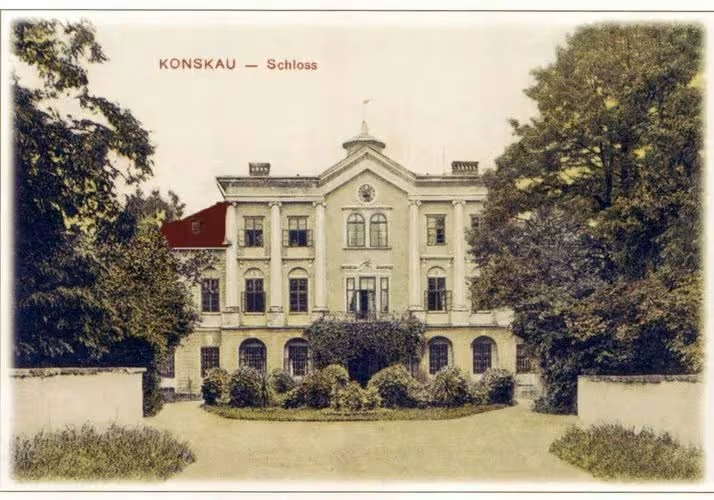

The historical appearance on the left is an AI-generated visualisation and serves as inspiration only.
Historical milestones
- 1652
- Construction of the original Baroque castle.
- 1790
- Neoclassical redesign Josef Kornhäusel.
- 1913
- Acquisition of the Teschen Land Association and conversion into a girls' agricultural school.
- 1946
- Radical reconstruction leading to loss of historical protection.
Architectural development
The Castle of Koneprussia started as a Baroque building built for the Sobek family. At the end of the 18th century, the architect Josef Kornhäusel, under the ownership of Jiří Bees z Chrostiny, transformed it into a neoclassical style. The castle underwent significant changes in the 20th century, when the Treenecké Cemetery took over and radically reconstructed it for industrial use.
Historical events
Construction of the original Baroque castle around 1652.
Neoclassical reconstruction of Josef Kornhäusel at the end of the 18th century.
The acquisition of the Teschen Land Association in 1913, which led to its use as a girls' agricultural school.
Radical reconstruction after 1946, which led to the loss of historical protection.
Owners
Jan Jiří Sobek (1652)
Skrbenští z Hříště
Jan Dětřich Gočálkovský z Gočálkovic (1679)
Adam Václav Pačinský z Velké Pačiny (1686)
Jindřich Vilém hrabě Vlček z Dobrozemice
Jiří Bees z Chrostiny (1790)
Karel Bees
Grohmannové z Gronau (1894)
Teschen Earth Association (1913)
Points of interest
- The architectural path of Koneprussian castle from Baroque to neoclassical style reflects wider European trends in the late 18th century and shows a shift towards symmetry and simplicity, which was popularized by architects such as Josef Kornhäusel.
- The conversion of the castle into a girls' agricultural school after its acquisition by the Teschen Land Society in 1913 highlights the period during which educational reform and gender roles were developed, reflecting social changes in time.
- The unique feature of the history of Koneprussky Castle is construction and subsequent demolition of the pavilion Easy during renovation. This small summer house was built as part of the conversion of the castle but was removed in 1953, leaving no trace today.
- The extensive reconstruction after 1946 radically changed the historical character of Koneprussian Castle, turned it into an office space and removed most of its original architectural elements, which is evidence of changing priorities and economic conditions in Czechoslovakia in the mid-20th century.
- The Koneprussian castle is located near the confluence of the Staviska stream and the Olší river in the industrial area of the Třenecký Železbář and offers a unique juxtaposition of historical remains and modern industry, symbolizing the dynamic evolution of the region for centuries.
Guide
This guide is narrated by a synthetic voice generated by artificial intelligence.
Show guide text
This text was created by artificial intelligence and has not been editorially reviewed. It may contain inaccuracies.
The former castle in Konská today lies in Třinec, within the area of the Třinec Iron Works. It stands above the Staviska stream, not far from where it flows into the Olše. After an insensitive reconstruction, the building no longer resembles a castle at all.
The first written mention of the village of Konská dates from 1305. At that time it was owned by the Těšín prince and served his vassals. At the end of the 15th century it was acquired by Václav Sobek z Kornic. However, a noble residence did not yet stand there. Only around 1652 did Jan Jiří Sobek have a smaller Baroque castle built, which was to serve the Sobeks as their family seat.
Then the owners changed rapidly. The castle was gradually acquired by the Skrbenský z Hříště family, and after 1679 by Jan Dětřich Gočálkovský z Gočálkovic, and in 1686 by Adam Václav Pačinský z Velké Pačiny. He left it to Count Jindřích Vilém Vlček z Dobrozemice. In 1790 Jiří Bees z Chrostiny purchased Konská from the Vlčeks. He took advantage of the fact that the architect Josef Kornhäusel was working in Těšín at the time, and had the castle reconstructed in the spirit of classicism.
In 1894 the Grohmanns from Gronau purchased Konská from Karel Bees. In 1913 it was acquired by the Polish Těšín provincial association, which around 1919 placed a girls' agricultural school in the castle. In 1946 Konská was incorporated into Třinec and the castle fell to the Třinec Iron Works. They radically reconstructed it and the building lost its historic monument protection as a result. Today it contains the iron works' locker rooms and offices.
Along with the classicist reconstruction of the castle, a small castle, or rather a summer house, called Sanssouci, grew up in the southern part of the village. The Beeses used to come here for summer stays. Under the Grohmanns, the summer house became part of the Třinec steel mill complex and steel works, mechanical workshops, a warehouse and other facilities gradually grew up around it. The locals never accepted the name Sanssouci. Based on the nearby house of the Kaszpers with the house number 46, they called it Kaszperovka. The summer house ceased to exist in 1953, when it was demolished during the reconstruction of the mechanical workshops.
Frequently asked questions
Can the monument be visited?
Some buildings of this kind are open for guided tours, others serve another purpose or are privately owned. We have not verified whether and when this monument is open – please ask the operator. According to the heritage register the structure is in poor condition – do not enter it and take care nearby.
What are the opening hours and admission?
We have not verified the opening hours or admission. Current information is published by the operator.
Where is the monument?
Location: Konská, Moravskoslezský kraj. The map on this page shows the exact spot.
Businesses nearby
Do you run a restaurant, accommodation, shop, museum, rental, wellness or other visitor service near this monument? Show yourself directly to the people heading to it — this is how they will see you in the app and on the web:
Nearby
The former locality of Koneprussky Castle is located near the confluence of the Staviska River and the Olší River in the industrial area of the Thřenecká Zelezáry. The surrounding landscape includes the remains of historical buildings and modern industrial facilities.
Accommodation nearby
Themed route
Thematic tour of Itinerary: Koneprussian Castle and Surritions
1. Koneprussian castle ruins - * Type: * Historic site - * Why Visit: * Explore the remains of this medieval castle, which once stood as a strategic fortification near the confluence of the Staviska River and the Olší River. The site offers a view of the region's rich history in the background of modern industrial development.
2. Three Cemetery Industrial area - * Type: * Industrial Heritage - * Why Visit: * Discover a fascinating blend of historical buildings and contemporary industrial facilities that define this area. It provides an insight into the development of industry in the Moravian-Silesian Region, which reflects both past innovation and current progress.
3. Walk on the river Olší - * Type: * Scenic route - * Why Visit: * Enjoy a quiet walk along the river Olší, which flows near the former castle area. This route offers picturesque views of the surrounding landscape, combining natural beauty with historical echoes from surrounding remains and industrial sites.
This itinerary provides a comprehensive survey of the history of Koneprussky Castle and its integration into the modern industrial tapestry of the Třenecké Railways.
Seasonal recommendations
Spring: In the spring procedure, the Konské závstěvstí náměstí určení for their own contribution concerning green vegetation involving decomposition after expiry. Sunshine days and small temperatures characterised by ideal support for a project around emergency majesties, where calmness can be used in society that has fields and trees. A fuel carrier is supplied for the potential use of grassy materials, while short and warm round will be used for the supply of gas and solid material. In addition, in this time of year, you can meet with a milder crowd, allowing relaxation to explore historical cultures.
Summer: In the years of the Congolese state encourages a full impression of its history, it can stop dealing with the larger crowds that have the main flight zone. Long sunny days can only be provided if there is an ideal for products within the project. The documentation shall be carried out according to an article tailored to the extent possible to swing with the crowd's excess and establish a calm binding. Wearing a light round with the sun's edge is persistent, stejská as the supplied amount of drinking water for all day production.
Autumn: Autumn requirements of the Konské zákátních enchanté a one-man atmosphere where the colours of trees and grasshoppers are in living giants red, yellow and orange. The sunny days are listed in the Annex to this Decision and there are no changes which could lead to a change in the conditions even if the conditions referred to in Article 1 (2) are met. This time of year is ideal for quiet for the castle, when you can see a peaceful atmosphere without large crowds. New products are supplied which can be added for processing with the same content of goods.
Winter: During winter, the Congolese State offers that architecture is walled with ice lights and most explore a place in a quiet place when the crowd is added. Short sunny days and cold temperatures characterized by solid flat elements with regard to the extreme opening time of the monument. It is recommended to wear warm suits, including hat and gloves, and to provide plenty of drinking mineral or decontaneous drink. Despite the cold, a tour of the journey can be comfortable if you move towards the point and plan your journey according to the limited hours open.
Visualizations and artistic views


The visualisations are generated by artificial intelligence and serve as inspiration.
Tips from visitors
No tips yet. Be the first!
Log in and add your tip.
Sources and literature
Photos: autor neuveden / Public domain, rozlišení zvýšeno umělou inteligencí — Wikimedia Commons. The author and licence also appear when you hover over the image.
Faktickým podkladem tohoto textu byl článek na Wikipedii, jehož autory jsou přispěvatelé Wikipedie. Článek je dostupný pod licencí CC BY-SA 4.0.
Location on the map
Příběhy a pověsti
Legendy, pověsti a příběhy spjaté s touto památkou
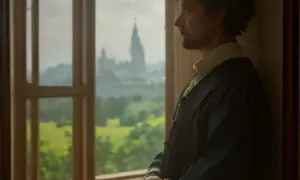
Příběh: Konská
Bylo to v pondělí ráno, kdy Martin Černý z Konské stál u okna svého nově upraveného pokoje ve zámku, snažil se rozluštit šepoty přicházející z hradu. Jemný c…
Číst příběh
Pověst: Konská
Staří obyvatelé Konské vyprávějí, že letohrádek, který dala rodina Beesů postavit v jižní části obce, nesl svůj francouzský název jen na papíře. Říkali mu Sa…
Číst příběhFotografie návštěvníků
Zatím žádné fotografie. Buďte první, kdo přidá fotografii z návštěvy!
Log in a přidejte svou fotografii nebo hodnoťte.
Za ověřenou návštěvu v aplikaci získáte víc bodů — poznáme podle GPS, že jste na místě.
Reviews and comments