



Konůvky Defunct village
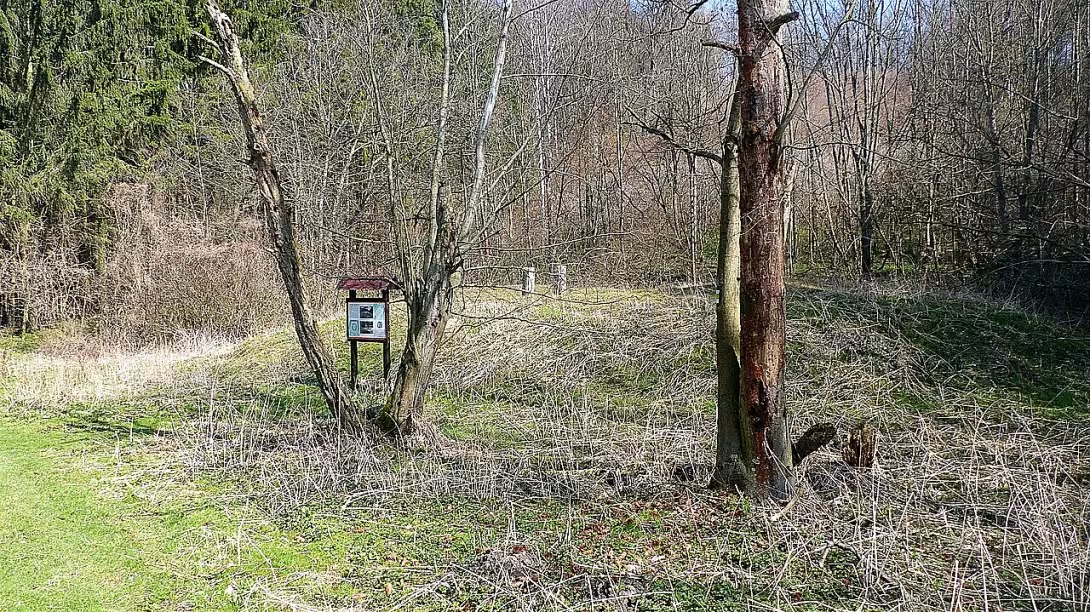
Objekt se nedochoval — na místě dnes nestojí. Následující text popisuje jeho historii, ne současnou návštěvu.
Konůvky are an extinct medieval village and fortress in Zdánický forest. They are located in the cadastral territory of the municipality Heršpice in the district of Vyškov in the South Moravian Region. This archaeological monument is remarkable by its lánové arrangement and traces of settlement, which probably disappeared during the Hussite wars. The location is registered by the National Heritage Institute as a cultural monument.
The village was probably founded before the middle of the 14th century. The first written mention dates back to 1365. The village was called Kunovice at the time; The Latin text mentions the property transaction between Jakub of Kunovice and Pavel of Sovinka. The names of Kunovice later appear and since 1464 Kunůvka, which was the current name Konůvky.
From the point of view of topography it was a two-row forest lánové village, which was spread on both sides of the creek. The settlement in a valley of 40 to 60 metres wide stretched almost one kilometre. In the southern and highest part, she stood on an artificial hill surrounded by a ditch. Above the southern end of the village was a terraced cemetery with a skeleton and a small church. On the right bank of the creek, about half the village, there is an artificially designed elevation, called motte. It could have been a small mansion surrounded by a moat that was abandoned due to a swamp terrain.
The village was relatively large for its time, which is confirmed by the remains of at least 33 houses. The inhabitants were engaged in craft, trade and vine cultivation. This is evidenced by the 1365 Earth plates and the findings of wine knives. The presence of more luxurious objects such as glass and bronze fittings suggests the economic activity of the settlement.
A trade trail probably passed through the horseshoe of the Ždánic Forest. This location was tempting for the robbers who set up their base here. According to the executions from Jihlava, the local vicar carried beer and bread into the woods. The end of the village was probably violent and accompanied by fire during the Hussite wars, namely in the 1930s. In 1481, the municipality was already mentioned as desolate.
Archaeological research was conducted in the 1960s and 1970s under the leadership of Dagmar Shaur. The findings involving ceramics, weapons, armaments, agricultural and craft tools, products made of bone, glass and bronze are today stored in the Moravian Museum in Brno. The complete processing of the material was published in 1998 by Zdeněka Měchurová.
Today, the foundations of the houses, motte and hill fort with bread oven are partially preserved. They are visible in the field, especially outside the growing season. Information boards are installed on site for visitors. The location is freely accessible by yellow tourist sign from the village of Mourínov, which continues through a place called U angel to Zdánice. About 1.5 kilometers northwest there are tiny remnants of Kepkov Castle.
Konůvky presents a unique insight into the organization of the medieval countryside and its dramatic demise. Visiting this archaeological site allows you to directly track traces of a extinct community in the field.
Historical milestones
- 1365
- First written mention of the village called Kunovice.
- 1464
- The name of Kunouvka appears in the documents.
- 1481
- The village is listed as desolate.
Architectural development
The settlement was grouped along a creek of almost one kilometer. The dominance included a fortress on an artificial hill with a moat and a so-called motto, which was an artificially designed elevation.
Historical events
In 1365 is the first written mention of the village under the name Kunovice. The village is likely to have disappeared in a violent and fire manner during the Hussite wars of the 1930s. In 1481 it is already mentioned as desolate.
Points of interest
- It's an extinct medieval village and a fortress with a remarkable lána arrangement. - The settlement in the valley was nearly one kilometre long and included at least 33 houses. - Residents were engaged in trade, craft and vine cultivation. - There were probably robbers at the scene, who had a local vicar carrying beer and bread. - The village probably died violently during the Hussite wars as a result of a fire.
Guide
Show guide text
This text was created by artificial intelligence and has not been editorially reviewed. It may contain inaccuracies.
Welcome to one of the most fascinating yet hidden monuments of our region. You are standing right in front of a place that, at first glance, looks like a quiet part of the Zdánic Forest in the vicinity of Heršpice, but under your feet and in the surrounding countryside, sleeps the story of an entire extinct community. Look around you. You may only perceive trees and the silence of the forest, but this is where the archaeological site Konůvky is located. It is a place where time has stopped and where today only traces of land and remains of ancient buildings speak. Imagine that life once throated in this space, there were voices of people, and there was the smell of smoke from fireplaces and work in the fields.
Let us now move in time deep into the Middle Ages. This settlement was not created by accident, but was carefully planned. Most researchers agree that Konůvky was created probably before the mid-14th century. At the time, it was a so-called forest lago village. What does that even mean? Imagine that the village was not gathered in one narrow centre, but stretched through the valley like a long line. Home was really many, estimates talking about at least thirty-three buildings, and the entire settlement stretched almost one kilometer long. It was therefore a relatively large and important village for its time, which by its structure followed the natural lines of the terrain.
Now pay attention to where you are. Even if you can't see the walls up today, observe the relief of the terrain. In the southern part of the complex there was a fortress which was built on an artificial hill. This element was intended to protect even in the asserting power of a local nobleman. A terraced cemetery was then spread over this fortress, where there was a small church. Try to draw this painting in spirit: a fortified manor, above it a place of last rest and prayer, and around all the long rows of houses spread out in the valley. It is a remarkable arrangement that today shows us how people organized their space at the time and how much weight they attached to the hierarchy and order.
When we talk about the history of this place, we can't forget the names of the people who left their trail. The documents show personalities like Jakub z Kunovic or Pavel ze Sovince. It was these men who were associated with the fate of this village. The first written mention of this place dates back to a thousand three hundred and sixty-five, when the village was called Kunovice. Later, in the year one thousand four hundred sixty-four, the name Kunouvka appears in the documents. It is interesting to see how the names changed slightly over time, while the place itself remained at the centre of events for the local population.
You were wondering maybe what people in Conuvka were doing for a living. It wasn't just an agricultural village. The inhabitants were enterprising and dedicated to trade, craft and, above all, vine cultivation. So imagine that this valley was once filled with vineyards that provided wealth and prosperity. It was this combination of craft and wine that made them an interesting knot in the then network of business trips.
But with every rise comes a fall. The history of Conulek ends very sharply. Already in the year one thousand four hundred eighty one is mentioned as desolate in the documents. This is the moment that raises the most questions in us. Why so large and prosperous a village with over 30 houses suddenly disappeared from the map? What caused people to leave their homes, vineyards and forts? Whether it was the consequences of plague epidemics, war moves or economic decline remains the subject of discussion.
And here we come to one of the most mysterious and a little bizarre mysteries of this place. There's been word among the people that there were probably robbers in the area. And here begins a really strange story. They say the local vicar, instead of driving these criminals away or inviting the law on them, brought them beer and food. It's a fascinating contrast to an otherwise strict medieval order. Was it out of grace, fear, or was it some sort of secret pact? This story gives the place a certain sense of mystery and reminds us that history is not only about data and buildings, but above all about people and their unexpected relationships.
Now, when you look around, feel the atmosphere of this place as a layered book. Under a layer of leaves, dirt and forest paths lies the memory of a lána village that once flourished. Observe the silence that today rules where the calls of merchants and the bell of the church once sounded. Konůvky is now registered as a cultural landmark, which means that their value lies precisely in what they tell us about the extinct world.
I ask you to take a slow step through the surroundings. Try to imagine the path between the houses and exactly where the fort stood on its hill. Let your imagination guide you and perceive the energy of this place, which has decided to go into oblivion so that it can wake up after centuries with archaeological research.
Thank you for spending time with us in Conuvka. We hope you are interested in this short trip to the Middle Ages and that you are leaving with the feeling that even in the quiet forest a great story can be hidden. We wish you a pleasant further journey and many other discoveries during your walks history. Goodbye.
Businesses nearby
Do you run a restaurant, accommodation, shop, museum, rental, wellness or other visitor service near this monument? Show yourself directly to the people heading to it — this is how they will see you in the app and on the web:
Nearby
Lokalita leží ve Ždánickém lese; asi 1,5 kilometru severozápadně se nacházejí nepatrné zbytky hrádku Kepkov.
Visualizations and artistic views

The visualisations are generated by artificial intelligence and serve as inspiration.
Photos from the area
Real photos taken near the monument


Zdroj a licence jsou uvedeny u každého snímku.
Tips from visitors
No tips yet. Be the first!
Log in and add your tip.
Sources and literature
Photos: Luděk Zahradníček / CC BY-SA 4.0 — Wikimedia Commons. The author and licence also appear when you hover over the image.
Faktickým podkladem tohoto textu byl článek na Wikipedii, jehož autory jsou přispěvatelé Wikipedie. Článek je dostupný pod licencí CC BY-SA 4.0.
Location on the map
Příběhy a pověsti
Legendy, pověsti a příběhy spjaté s touto památkou
Fotografie návštěvníků
Zatím žádné fotografie. Buďte první, kdo přidá fotografii z návštěvy!
Log in a přidejte svou fotografii nebo hodnoťte.
Za ověřenou návštěvu v aplikaci získáte víc bodů — poznáme podle GPS, že jste na místě.
Reviews and comments