



Kostel Očišťování Panny Marie Church
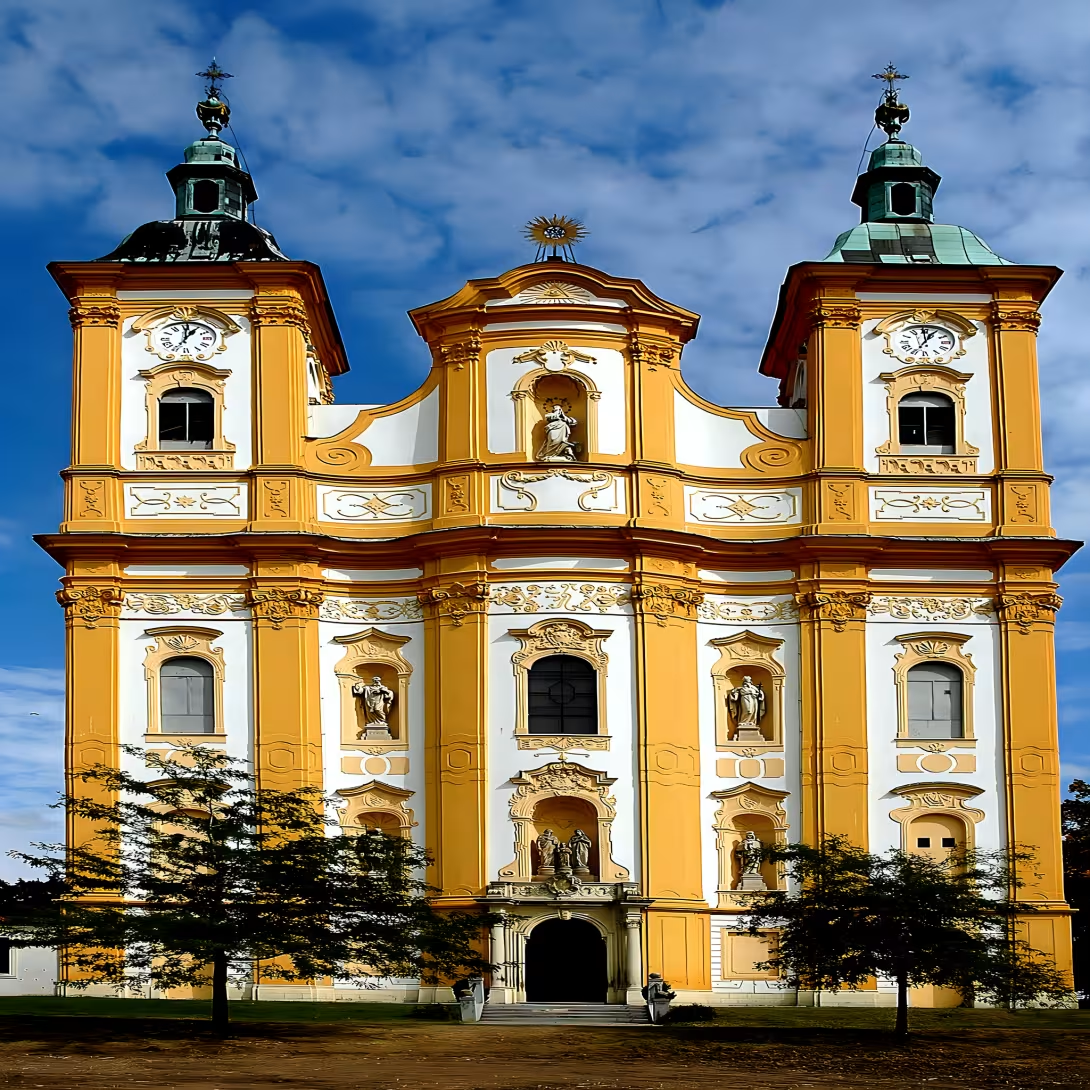
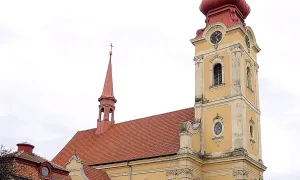
The Church of the Purification of the Virgin Mary in Dub nad Moravou is an important Baroque monument located in the Olomoucký kraj region of the Czech Republic. Built in the mid-18th century, it stands as a significant cultural site due to its architectural beauty and historical importance. Architect František Benedikt Klíčník from Brno initiated its construction, with completion by his son Jiří after František's death in 1755. The church is renowned for its unique organ crafted by Jan Výmola and has been a major pilgrimage site since receiving the revered black Byzantine Madonna print in 1727.
The origins of this church date back to before 1297, as mentioned by Pope Boniface VIII. Over time, it underwent several transformations, including new construction around 1470 and modifications in the late 16th century when it was dedicated to All Saints. The arrival of the black Byzantine Madonna print in 1727 marked a pivotal moment for the site, attracting numerous pilgrims due to its reputed healing powers. This influx led to the decision to construct a new church, initially designed by Pavel Malnovský ze Slavkova and later executed under František Benedikt Klíčník and his son Jiří.
Architecturally, the Church of the Purification of the Virgin Mary exemplifies Baroque style. Its design reflects mid-18th-century artistic trends, characterized by elaborate ornamentation and dramatic forms. Notably, it houses one of the few surviving Baroque organs made by Jan Výmola, enhancing its historical and cultural value. Despite a vault collapse in 1853 that required seven years for repairs, the church has been meticulously preserved as a protected cultural monument.
Throughout its history, the church experienced various administrative changes, including its elevation to a provostship in 1861. These developments underscore its importance within the local religious community and beyond. Its role as a pilgrimage site since receiving the black Byzantine Madonna print highlights its enduring significance.
Today, the Church of the Purification of the Virgin Mary remains an accessible and cherished landmark. Visitors can explore its rich history and architectural beauty while appreciating its cultural heritage. As a protected monument, it continues to be preserved for future generations. The church's unique blend of historical significance, artistic craftsmanship, and spiritual importance makes it a must-visit destination for those interested in Baroque architecture or Czech cultural history.
Then and now
Drag the slider to compare how the landmark may have looked when it was built with the view today.
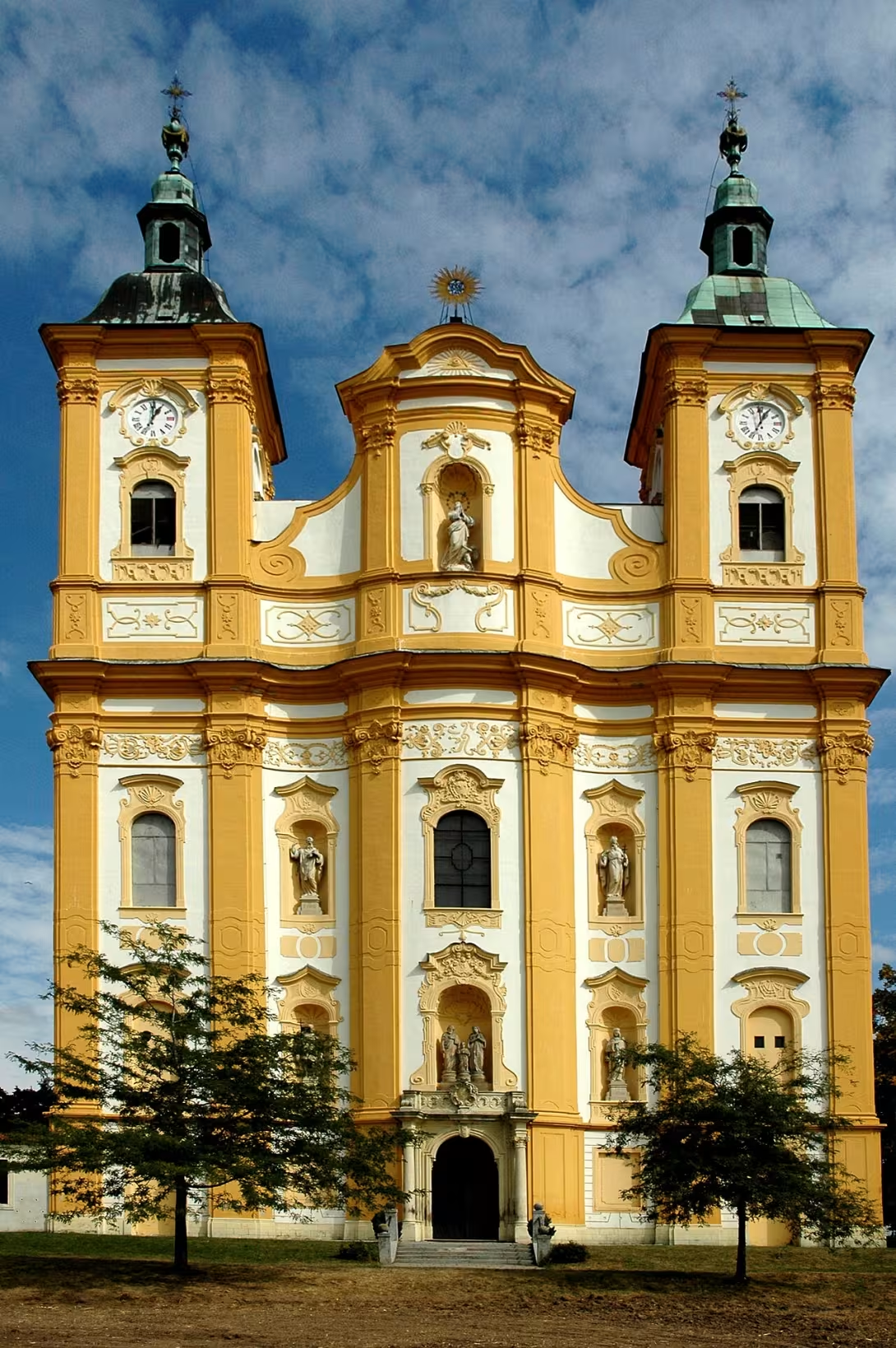

The historical appearance on the left is an AI-generated visualisation and serves as inspiration only.
Historical milestones
- 1297
- Pope Boniface VIII mentioned the church before 1297.
- 1470
- The new construction of the church was completed around 1470.
- 1727
- The arrival of the Black Byzantine Madonna increased pilgrimage.
- 1755
- Franz Benedikt Klíčník died, and his son Jiří continued the construction.
- 1756
- Completion of the Church of the Purification of the Blessed Virgin Mary.
- 1853
- The collapse of the vault required seven years of repairs.
Architectural development
Originally built as a pilgrimage site due to the miraculous black Byzantine Madonna print, the Church of the Purification of the Virgin Mary underwent significant construction phases. The initial design was by Pavel Malnovský ze Slavkova, with František Benedikt Klíčník and later his son Jiří overseeing its completion in 1756. In 1853, a collapse of the vault required seven years for repairs.
Historical events
In 1755, František Benedikt Klíčník passed away, and his son Jiří completed the church's construction.
The church was elevated to a proboštství (provostship) in 1861.
Points of interest
- The Church of the Purification of the Virgin Mary is notable for its organ crafted by Jan Výmola, one of the few surviving Baroque organs from that era. - Despite a significant structural failure in 1853 when the vault collapsed, the church was meticulously restored over seven years, demonstrating its cultural resilience and importance. - The site's historical significance is further highlighted by its mention as early as before 1297 by Pope Boniface VIII, indicating its long-standing religious relevance. - Originally dedicated to All Saints in the late 16th century, the church underwent a significant transformation after receiving the black Byzantine Madonna print in 1727, marking it as a major pilgrimage destination. - The transition of the church's administrative status to a provostship in 1861 underscores its elevated importance within the local religious community and beyond.
Guide
This guide is narrated by a synthetic voice generated by artificial intelligence.
Show guide text
This text was created by artificial intelligence and has not been editorially reviewed. It may contain inaccuracies.
Welcome in front of the Church of the Purification of the Virgin Mary in Dub nad Moravou. You are standing before an exquisite example of Baroque architecture, which is an important cultural monument. The church dominates this small village and its rich history and unique architecture will surely captivate you.
Let's step back into the past to discover how the church became part of history. The first mention of the church dates back to 1297 when Pope Boniface VIII referred to it. Over the centuries, the church underwent several changes and renovations, but its current form is the result of a Baroque renovation that began in the mid-18th century. František Benedikt Klíčník, a Brno architect, was instrumental in its creation, and after his death in 1755, his son Jiří Klíčník continued with the construction.
Today you can see how the church opens up to you with its beautiful façade. Notice how it is adorned with rich details and ornaments typical of Baroque architecture. Take a look at the windows and doors decorated with stucco and stone. Let's move on to the main part of the church to see its interior space. The church is known for its unique sculptures and paintings, but today we will focus on its main attraction – the organ.
Notice the unique organ created by Jan Výmola. It is one of the few surviving Baroque organs from that era. The organ is not only beautifully decorated but also fills the church with its auditory beauty. In the church, you can also find a black Byzantine Virgin Mary brought from Italy, which increased the pilgrimage appeal of the church.
Now pay attention to one of the most interesting parts of the church – its history. In 1853, the church faced great misfortune when its vault collapsed. This led to seven years of repairs carried out with great care. The church was reopened and once again became a place of pilgrimage.
Whether you have come for history, architecture, or music, the Church of the Purification of the Virgin Mary in Dub nad Moravou is a place that will surely captivate you. Enjoy its beauty and atmosphere, and thank you for your attention.
Tips for visitors
The best time to visit the Church of the Purification of the Virgin Mary in Dub nad Moravou is during late spring or early autumn. During these months, you can enjoy pleasant weather that enhances your experience of exploring the Baroque architecture and surrounding nature without the crowds typical of peak tourist seasons. Additionally, visiting on a weekday might offer a more serene atmosphere for appreciating the church's intricate details.
This flexibility allows visitors to choose their preferred mode of travel.
When planning your visit, consider bringing comfortable walking shoes and weather-appropriate clothing, as exploring the church's interior and surrounding areas may involve some walking. A camera or smartphone with a good camera is recommended to capture the stunning architecture and details of the church. Additionally, carrying water and snacks can enhance your comfort during the visit.
For photography enthusiasts, the best spots for capturing the Church of the Purification of the Virgin Mary are from the front entrance and the surrounding gardens in the early morning or late afternoon when the light is soft and golden. These times provide ideal lighting conditions to highlight the Baroque features of the church. Exploring different angles can also reveal unique perspectives of its architectural beauty.
In terms of nearby attractions within a 30-minute drive, visitors might consider exploring other cultural sites in Olomoucký kraj or enjoying the natural landscapes around Dub nad Moravou. For families with children, planning a visit to these areas can offer both educational and recreational opportunities, allowing for a well-rounded experience during your trip.
Frequently asked questions
Can the monument be visited?
Religious buildings are usually open mainly during services; at other times a visit is normally arranged with the parish or the operator. We have not verified specific times.
Where is the monument?
Location: Pod Školou, Dub nad Moravou, Olomoucký kraj. The map on this page shows the exact spot.
Why is the monument protected?
It is listed in the Central List of Cultural Monuments of the Czech Republic as a cultural monument (register no. 19008/8-1799).
Businesses nearby
Do you run a restaurant, accommodation, shop, museum, rental, wellness or other visitor service near this monument? Show yourself directly to the people heading to it — this is how they will see you in the app and on the web:
Events nearby

Zdroj akcí: otevřená data měst a obcí ČR (Národní katalog otevřených dat) a kalendář akcí Národního památkového ústavu.
Accommodation nearby
Trips and activities nearby
Guided tours, tickets and activities nearby from GetYourGuide
Affiliate link: if you buy from the partner, we may receive a commission. The price for you does not change.
Search tours and activities →Themed route
Tour: Church of the Purification of the Virgin Mary and Surroundings
1. Church of the Purification of the Virgin Mary: This church is a dominant feature of the village Dub nad Moravou and is worth visiting for its unique architecture and history. The church was built in the 14th century and is among the oldest churches in the Olomouc Region.
2. Chapel of Saint John of Nepomuk: Located near the church, this chapel is worth visiting for its simple yet striking architecture. The chapel was constructed in the 18th century and is dedicated to Saint John of Nepomuk.
3. Cemetery: The cemetery by the church is a peaceful and enchanting place where you can stroll among old graves and reflect on the history and lives of those who rest here.
Seasonal recommendations
Jaro
In the spring season, St. Mary of the Snow Church is surrounded by lush greenery and blooming flowers, creating a pleasant atmosphere. The lighting is soft and warm, providing a cozy environment for exploration. We recommend visiting the church in the spring when the weather is sunny and mild, allowing you to be captivated by the natural beauty of the surroundings.
Summer
In the main summer season, St. Mary of the Snow Church is very popular, so it's advisable to arrive early to avoid crowds. The lighting is bright and clear, allowing for a good view of the church interior details. Don't forget to bring sunglasses and water to prevent sunburn.
Autumn
In autumn, St. Mary of the Snow Church is surrounded by colorful foliage, creating a pleasant atmosphere. The lighting is soft and warm, providing a cozy environment for exploration. We recommend visiting the church in the autumn when the weather is cool and damp, allowing you to be captivated by the natural beauty of the surroundings.
Winter
In winter, St. Mary of the Snow Church is enveloped in gloom and silence, creating a tranquil atmosphere. The lighting is soft and warm, providing a cozy environment for exploration. We recommend visiting the church in winter when the weather is cold and damp, allowing you to be captivated by its calmness and quiet. Don't forget to bring warm clothing and snow goggles.
Visualizations and artistic views


The visualisations are generated by artificial intelligence and serve as inspiration.
Photos from the area
Real photos taken near the monument


Zdroj a licence jsou uvedeny u každého snímku.
Atmosphere of the place
This atmospheric visualisation of the place and period was generated by artificial intelligence. It is not real footage of the location.
Tips from visitors
No tips yet. Be the first!
Log in and add your tip.
Sources and literature
Photos: Mik Herman / CC BY-SA 3.0, rozlišení zvýšeno umělou inteligencí — Wikimedia Commons. The author and licence also appear when you hover over the image.
Faktickým podkladem tohoto textu byl článek na Wikipedii, jehož autory jsou přispěvatelé Wikipedie. Článek je dostupný pod licencí CC BY-SA 4.0.
Location on the map

Příběhy a pověsti
Legendy, pověsti a příběhy spjaté s touto památkou

Příběh: Kostel Očišťování Panny Marie
Bylo to v pondělí ráno, kdy Kryštof zjistil, že nemůže odvrátit své oči od tajemného barev hliněných kvetin, které se náhle projevil před jeho domovem. Byl t…
Číst příběh
Pověst: Kostel Očišťování Panny Marie
Traduje se, že do Dubu nad Moravou přišel dřevoryt Černé Madony způsobem, jenž sám o sobě připomínal zázrak. Byl to rok 1727 a starý dubský kostel, posvěcený…
Číst příběhFotografie návštěvníků
Zatím žádné fotografie. Buďte první, kdo přidá fotografii z návštěvy!
Log in a přidejte svou fotografii nebo hodnoťte.
Za ověřenou návštěvu v aplikaci získáte víc bodů — poznáme podle GPS, že jste na místě.
Reviews and comments