



Kostel Panny Marie Sněžné (Ruda) Church
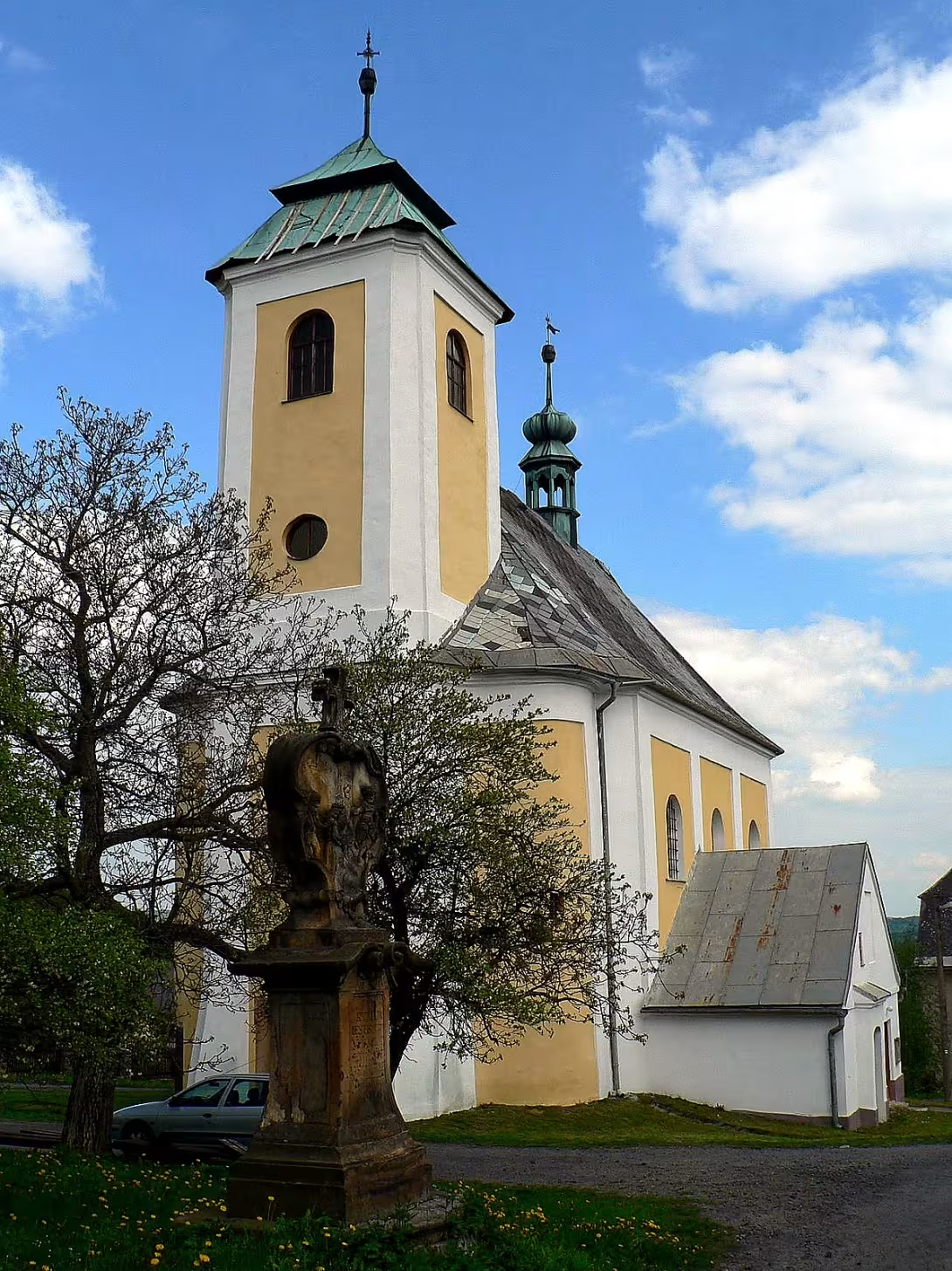
The Church of the Virgin Mary Snow in Ruda, district Bruntál, is one of the most famous pilgrimage places in the region. It was declared a national cultural monument of the Czech Republic in 2018. The traditional pilgrimage takes place here the first time in August, when the faithful celebrate the feast of the consecration of the Roman Basilica of the Virgin Mary of the Snow mentioned since 432.
Ruda has a rich ecclesiastical history. Until 1758 she belonged to the parish Dolní Dlouhá Loučka and only had a simple bell tower with a bell from 1583. The year was a turning point in 1756, when the refugee speedster Jiří Greschenberger decided to build his own church here. According to local tradition, he built it as a thank you for saving his life. The construction was completed in 1758. Sixteen years later, in 1774, the municipality became independent as a curacia. In 1851 she was promoted to parish. Greschenberger and his wife contributed not only to the construction of the temple itself, but also to the construction of a sandstone crossroads leading to the Cross Hill and the establishment of a major foundation designed to ensure the operation of the pilgrimage site.
The one-boat Baroque building is turned off on a slight slope in the upper part of the village. The church has a rectangular floor plan with a semi-rounded presbytery on the east side of which is a small sacristy. A four-sided tower with a mansard roof rises above the main west entrance. In the corners between the ship and the tower, there is a spindle staircase covered with an convex brick coat. In the middle of the 19th century, a chapel was added to the south side of the ship, which now serves as a side entrance to the church. The roof is covered by a saddle roof with an onion-shaped sandbox.
The inner space of the ship is encased by rolling with sections, presbytery with sections. In the western part of the ship, the walled crust is turned off on two prism columns. The dominance of the interior is the Baroque marble altar with a copy of the image from the Roman Basilica of the Virgin Mary Snow, supplemented by statues of St. Jachy and St. Anne. In the hall of the church, a picture from 1755 depicts a dramatic scene with wild horses - an event that probably preceded the church's very foundation. The organ from 1762, the last known work of Master Jan Schwarz from Libavá, deserves attention.
To this day, the church serves the faithful and visitors who come here especially during the summer pilgrimage. The combination of the original Baroque building with the cross road and the natural environment created space ideal for spiritual stopping. The construction remains a testament to the godliness of the 18th century and the personal faith of an individual who has decided to give his gratitude for salvation a lasting form.
Then and now
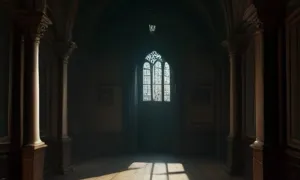
Drag the slider to compare how the landmark may have looked when it was built with the view today.
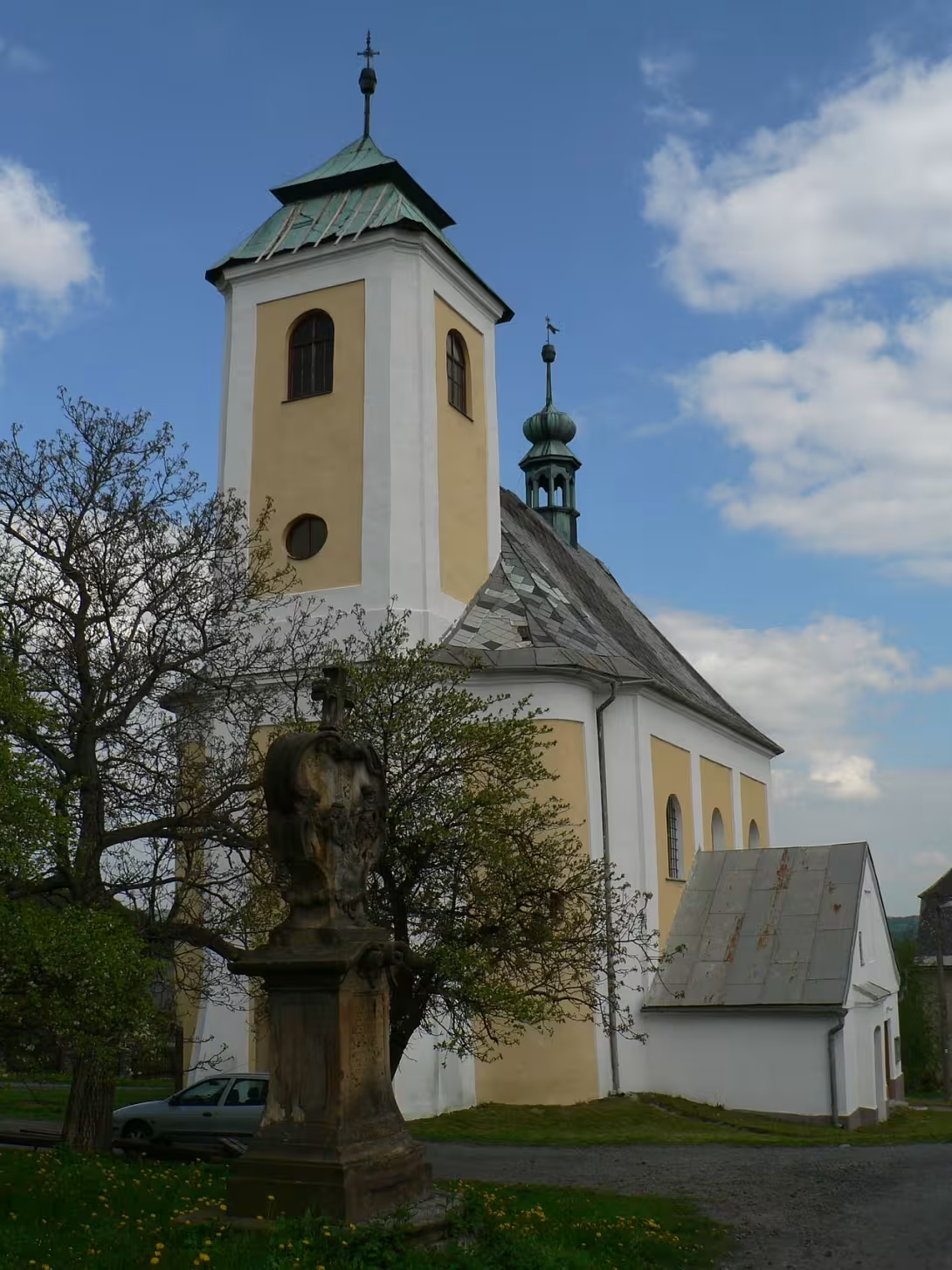

The historical appearance on the left is an AI-generated visualisation and serves as inspiration only.
Historical milestones
- 1583
- Making a bell for the bell tower that preceded the church.
- 1756
- The beginning of the construction of the church by order of Jiří František Greschelsberger.
- 1762
- The production of organ by Master Jan Schwarz from the town of Libavá.
- 1851
- Rudy's promotion to the parish.
- 2018
- Declaration of the church and cross roads for the national cultural monument.
Architectural development
The church was built in 1756-1758 on the site of the former garden. The building is walled, single-boat with a half-circle presbytery and a prism tower. In the 19th century the chapel was built on the south side of the ship. The interior is covered with a valed vault with sections and presbytery with a limb. The church is supplemented by a valuable cross from sandstone.
Historical events
- 1755
- Saving the life of Jiří František Greschelsberger, which led to the decision to build a church as a thank you.
- 1774
- Removing Rudy as a curacia, which allowed separate administration of the church.
- 2018
- Declaration of the church and cross roads for the national cultural monument.
Owners
Owning a church is linked to a local Roman Catholic church. Accurate information about ownership changes is not available, but it can be assumed that the church was owned by the church from its inception until now. It is possible that during the communist era in Czechoslovakia, the church could have been under state control or even closed.
Points of interest
- The Church of the Virgin Mary Snežné was declared a national cultural monument of the Czech Republic in 2018 along with the cross road.
- The traditional pilgrimage takes place here on the first Sunday in August, commemorating the feast of the consecration of the Roman Basilica of Our Lady of Snow.
- The church was built in 1758 as a thank you for saving the life of the refugee speedster George Greschenberger.
- In the hall of the church there is a picture from 1755 depicting a dramatic scene with wild horses that preceded the foundation of the church.
- The organ in the church dates back to 1762 and is the last known work of Master Jan Schwarz from Libavá.
Guide
Show guide text
This text was created by artificial intelligence and has not been editorially reviewed. It may contain inaccuracies.
Welcome, dear visitors. You are standing in front of one of the most beautiful and most important Baroque churches in our territory - the church of Our Lady of Snow in Ruda. His walls tell you today about centuries of tradition, prayers and the love of God who lived and lived here.
In front of you, you see a simple but very impressive church, built in a place where only a bell used to stand. His half-circle presbytery, which appears to be the semicircle of heaven, and the prism tower that rises above the village, are typical of baroque architecture. Note how the tower turns towards the presbytery - this is a typical feature of the church built on an older building. And right here, in this place, it opens up a view of the surrounding landscape, reminding you that this monument is part of a living environment.
Let's move on to the history of this place. The church was built between 1756 and 1758 at the order of Jiří František Greschelsberger, who was a refugee speedster. His decision was to thank him for the grace that Our Lady of Snow gave him. According to legend, Jiří František Greschelsberger was lost in the forest and this is where the Virgin Mary appeared to him. Since then there has been a pilgrimage, and it is at this point that the church has become a pilgrimage place.
Now pay attention to the interior. Notice how the church is decorated with Baroque elements. The marble altar with a copy of the image from the Roman Basilica of Our Lady Snow is one of the most important elements. This altar was probably brought out of the way to commemorate the miracles that took place here. The Baroque decoration you find here is proof of how people tried to bring heaven to earth.
The church was originally built as a single-boat building, but later a side chapel from the 19th century was added. This proves that the community wanted to maintain tradition and expand the space for prayer. In 1851 Ruda became a parish, which means that the people here acquired their own church where they could regularly go to worship.
Among the most important personalities associated with this church are Jan Blokša, a priest who developed a pilgrimage tradition. His work here was crucial because of his efforts there were regular pilgrimage festivities. Antonín Vavroušek, another vicar, was responsible for repairs to the church and rectory. His work ensured that the church remained in good condition and could serve the faithful for many years.
One of the most interesting things you can see here is that the church was declared a national cultural monument in 2018 along with the cross road. This means that this church is important not only for the local community, but also for our whole country. In 2018, the feast of the Holy Roman Basilica of the Virgin Mary Snow was also announced, just on the first Sunday in August. In this daily festivities, people gather to pray together to remember the miracles that took place here.
The interesting thing is that the church was built in 1758 to thank you for what happened to Jiří František Greschelsberger. According to legend, the Virgin Mary appeared here at the time of his disappearance in the forest. This miracle was for many evidence that the Virgin Mary was a protector and that her home was here. People's traditions say that when you pray in front of this church, you can wish for anything you wish and the Virgin Mary will give it to you.
Now that you've looked at history and architecture, I'll invite you to the next tour. Take a walk around, look at the cross road that is part of this church, and find out more about its significance. The traditions here are rich and full of stories worth diving into. May you find the peace and spiritual rest you seek.
Thank you for your attention and we wish you pleasant tours. Don't forget to take the time to enjoy not only the church but also its surroundings. Let new stories and secrets that hide these places always be revealed to you here. With the wish of a pleasant day and a good taste for further discovery.
Tips for visitors
Best time to visit the church of Our Lady of Snow is in the summer months, namely from June to August. In this period the weather is pleasant and you can see the surrounding nature, including the cross road and the Cross Hill. The morning on Sunday or on holiday is also the ideal choice because there are often services that can enrich the visit with a spiritual dimension.
The church is accessible by car and public transport. If you prefer public transport, check the current connection in the traffic search engine because the connection to Rudy may not be very common.
When visiting the church, wear comfortable clothes and shoes because you will move along stone pavements and along the cross road. It is also appropriate to take an umbrella or a light sun protection, because it can be windy on the Cross Hill. Prepare a high-quality camera or smartphone with good optics for photography, as the interior of the church and surrounding landscape offers many picturesque details.
The best places for photography are the interior of the church, especially its baroque decoration, and the outdoor cross road. For quality images is the ideal time in the morning or afternoon when light is not too strong and creates pleasant shadows. On the Cross Hill you can also get beautiful panoramic pictures of the surrounding landscape.
In the vicinity of the church, the sandstone cross road leading to the Cross Hill is worth visiting. This journey is part of a national cultural monument and offers not only a spiritual experience, but also an opportunity for hiking with a view of the surrounding countryside. It is interesting for families with children to explore the cross road as a small adventure path where children can relax in individual locations.
Families with children can enjoy a cross-road walk around the church, which is relatively short and clear. Children can tell stories associated with individual crossroads, which can make a visit fun and educational. On the Cross Hill it is also possible to relax and observe the surrounding landscape, which can be interesting and educational for children. It is also recommended to take with you some small reward, such as candy that children can get after successfully exploring the cross road.
Frequently asked questions
Can the monument be visited?
Religious buildings are usually open mainly during services; at other times a visit is normally arranged with the parish or the operator. We have not verified specific times.
Where is the monument?
Location: Ruda, Moravskoslezský kraj. The map on this page shows the exact spot.
Why is the monument protected?
It is listed in the Central List of Cultural Monuments of the Czech Republic as a national cultural monument (register no. 436).
Businesses nearby
Do you run a restaurant, accommodation, shop, museum, rental, wellness or other visitor service near this monument? Show yourself directly to the people heading to it — this is how they will see you in the app and on the web:
Nearby
- The sandstone cross road leading from the church to the Cross Hill, which is part of the national cultural monument.
- The altitude to which the cross road leads and offers a view of the surrounding landscape.
- Nature reservation with rich flora and fauna, about 15 km from Rudy.
Accommodation nearby
Themed route
Thematic cruise route: Cross Way and the Spirit of Rudy
1. Church of the Virgin Mary Snow The basic point of the trip is a Baroque church from the 18th century, which boasts rich decoration and historic tombstone. Its location in the middle of the village offers an ideal starting point for further discovery.
2. Cross Way The sandstone cross road leading from the church to the cross hill is part of the national cultural monument. Each of 15 stations is carved into local sandstone and offers a meditative walk with historical and religious subtext.
3. Cross Hill At the top, the visitor awaits a view of the surrounding landscape, which connects the forests and the Polish Nivas. The atmosphere here is calm and ideal for relaxation or short reflection.
The route is simple and logically combines the main monument with its directly connected natural and cultural accompaniment. The total length of walk shall not exceed 2 kilometres, most of which shall be equal and accessible.
Seasonal recommendations
Spring The Spring in Ruda at the Church of Our Lady of Snow brings gentle sunlight, which falls through the windows of the church and creates playful shadows on the stone walls. Nature is awakening to life - meadows are blooming, forests are green and the air smells of wet ground and first flowers. The atmosphere is calm, almost meditative, as if the church, standing on the edge of the village, witnessed a new beginning. In this period, it is ideal to visit the memory in a weak morning light, when the sun lights up the towers and windows without too much contrast. I recommend wearing light, but headgear (e.g. a scarf), because it is sometimes cold in the church and avoid the main working days when locals come here to visit graves or family meetings. The best time is Tuesday or Wednesday morning, when the neighborhood is quiet and the crowds are avoided.
Summer Summer in Ruda offers a golden afternoon when the sun shines directly on the church tower and creates long shadows on its facade that highlight its architectural details. Nature is lush - around the church the fields are decomposed with reduced sun and the air is warm but refreshing thanks to the Beskyd winds. The atmosphere is alive, but not busy if you avoid the high summer season that starts in July. During this period the church is often visited by families with children who come here for walks or photography. I recommend you bring plenty of water and light clothes, but also sunglasses and a hat, because the sun may be intense on open surfaces. The best time to visit is early morning or after 15 o'clock, when the crowds disperse and you can see the church in peace. If you go on a trip, don't forget the comfortable shoes - the roads around the church are often uneven.
Autumn Autumn Rudu controls fog and soft, gray light, which falls through the windows of the church and creates mysterious shadows on its inner walls. Nature is colored in shades of yellow, brown and red, forests become fairy tale and air smells of fallen leaves and wet ground. The atmosphere is quiet and reflective, as if the church had encouraged to reflect on the past year. During this period, a visit to the church is especially pleasant in the light of the afternoon, when shadows extend and create interesting patterns on the ground. I recommend wearing warm but not too thick clothes - autumn in this area can be variable, with rapid changes in weather. Avoid Saturdays when locals often come here to visit the cemetery or for walks. The best time is Wednesday or Thursday afternoon, when it is quiet outside and you can see the surrounding nature without crowds.
Winter Winter Ruda is covered by a white blanket that softens the church and creates a magical impression on its facade. Nature is covered in snow, forests look like fairy tales and the air is clean and cold. The atmosphere is calm and mysterious, as if the church was surrounded by a snow curtain. During this period, the visit to the church is particularly pleasant with a weak afternoon light, when the sun shines from a low angle and creates shadows on snow and stones. I recommend to wear warm but not too thick clothes - it is cold in the church and therefore it is advisable to wear a warm sweater or jacket. Avoid Saturdays and do not share when visitors often come to the Christmas markets or visit the cemetery. The best time is Tuesday or Wednesday afternoon, when it is quiet outside and you can see the surrounding nature without crowds. If you go on a trip, don't forget the anti-slip shoes - trips around the church can be slippery.
Visualizations and artistic views


The visualisations are generated by artificial intelligence and serve as inspiration.
Photos from the area
Real photos taken near the monument

Zdroj a licence jsou uvedeny u každého snímku.
View from the area
This animation was generated by artificial intelligence from a real photograph of the surroundings. The motion and details are not real footage of the location.
Tips from visitors
No tips yet. Be the first!
Log in and add your tip.
Sources and literature
Photos: Martin Vavřík / Public domain — Wikimedia Commons. The author and licence also appear when you hover over the image.
Faktickým podkladem tohoto textu byl článek na Wikipedii, jehož autory jsou přispěvatelé Wikipedie. Článek je dostupný pod licencí CC BY-SA 4.0.
Location on the map
Příběhy a pověsti
Legendy, pověsti a příběhy spjaté s touto památkou
Fotografie návštěvníků
Zatím žádné fotografie. Buďte první, kdo přidá fotografii z návštěvy!
Log in a přidejte svou fotografii nebo hodnoťte.
Za ověřenou návštěvu v aplikaci získáte víc bodů — poznáme podle GPS, že jste na místě.
Reviews and comments