






kostel svaté Markéty (Čermná ve Slezsku) Church
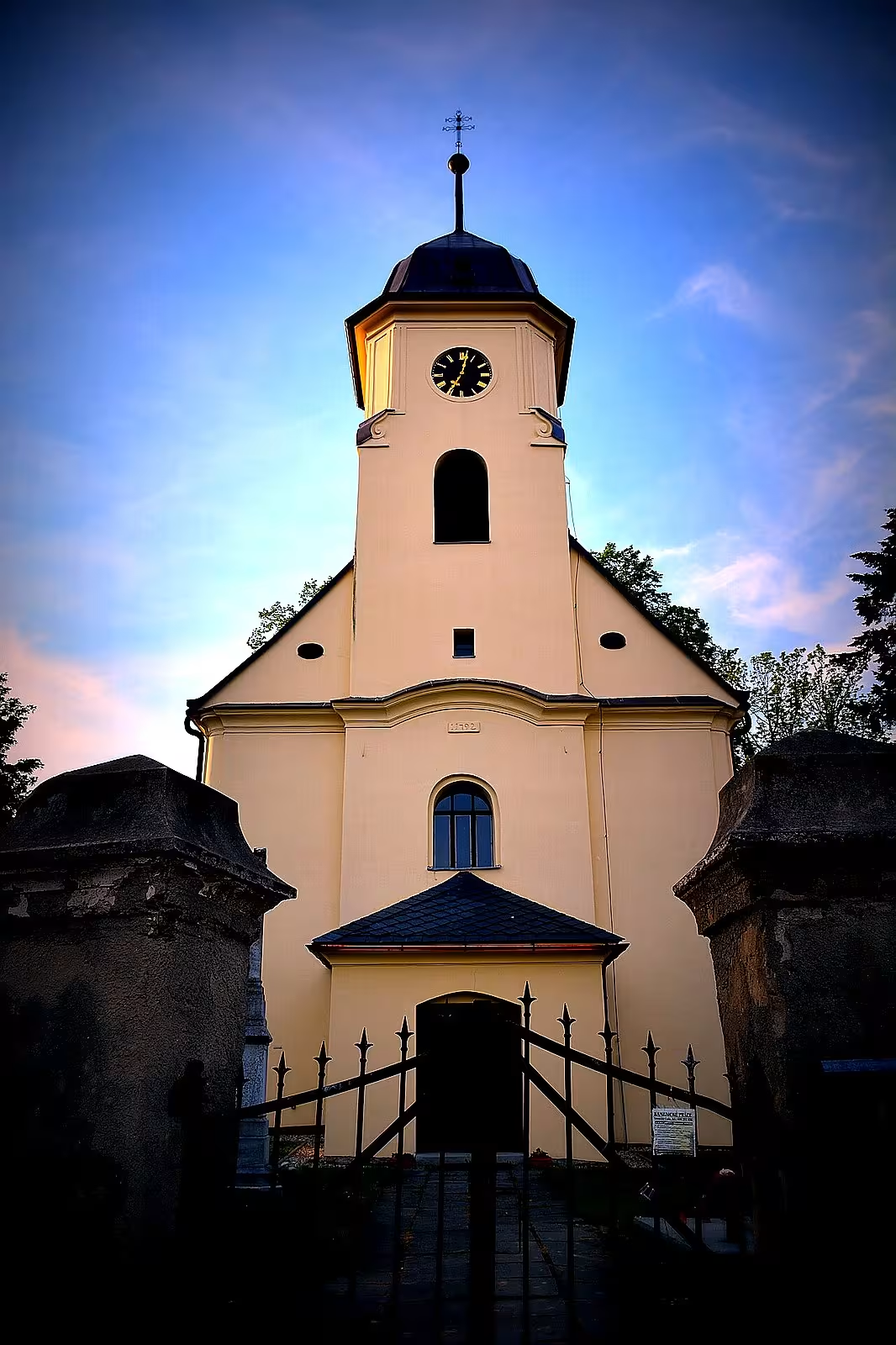
The Church of Saint Margaret in Čermná ve Slezsku is a Baroque Roman Catholic Filial Church in the cadastral area of the village. In 2007, the Ministry of Culture of the Czech Republic declared a cultural monument, an architectural proof of its historical importance and permanent presence. This single-boat brick construction with fenced surfaces has an elongated plan, semi-circular apps and polygonal stone tower attached to the western facade. The remarkable elements include a saddle roof covered with tiles, a whirlwind on the tower, and a bag with an apron leading to the main entrance.
The origin of the church dates back to the first half of the 17th century, during which Bohemia was part of the Habsburg monarchy - a period characterized by significant religious and political changes throughout Europe. The 30-year war (1618-1648) deeply affected the cultural and architectural landscape of the region, which created a stage for the construction of the church. Historical sources suggest that two bells documented in 1666 show its existence until then.
Architecturally, St. Margaret's church has undergone several transformations. Initially built in the first half of the 17th century, she experienced renovation between 1791-1792, probably incorporating the original tower into a new structure. Significant renovation in 1855 gave the church its current form. Comprehensive restoration from 2008 to 2010 has preserved its Baroque style.
The exterior is characterized by a brick construction with plastered surfaces, an elongated plan and a semi-circular apside. The polygonal stone tower connected to the western facade adds architectural interest. The remarkable elements include a saddle roof covered with tiles, a whirlwind on the tower, and a satchel with an oblique porch leading to the main entrance.
Inside, the church represents a flat ceiling with highlighted cornice in the ship, while sacristy and Chancel boast vaulted ceilings. The statue of St. John Nepomuk from 1853 stands before the church, recognized as a cultural monument. This statue adds historical depth on site.
the church is part of a larger ensemble which includes its cemetery, funeral chapel, closed wall with gate and iron cross - all declared cultural monuments in 2007. The cover wall, documented on the Müller map from 1716 and the first military survey map from 1762-1784, outlines the area around the church. It is made of a quarry stone, dry up to a height of 1.60 m and cast with cast iron mortar.
Today, the Church of St. Margaret remains an important cultural place that reflects its historical significance and architectural beauty. Visitors can appreciate its Baroque style and the calm atmosphere it offers. The status of the church as a cultural monument underlines its value, making it a valuable destination for people interested in history and architecture.
Then and now
Drag the slider to compare how the landmark may have looked when it was built with the view today.
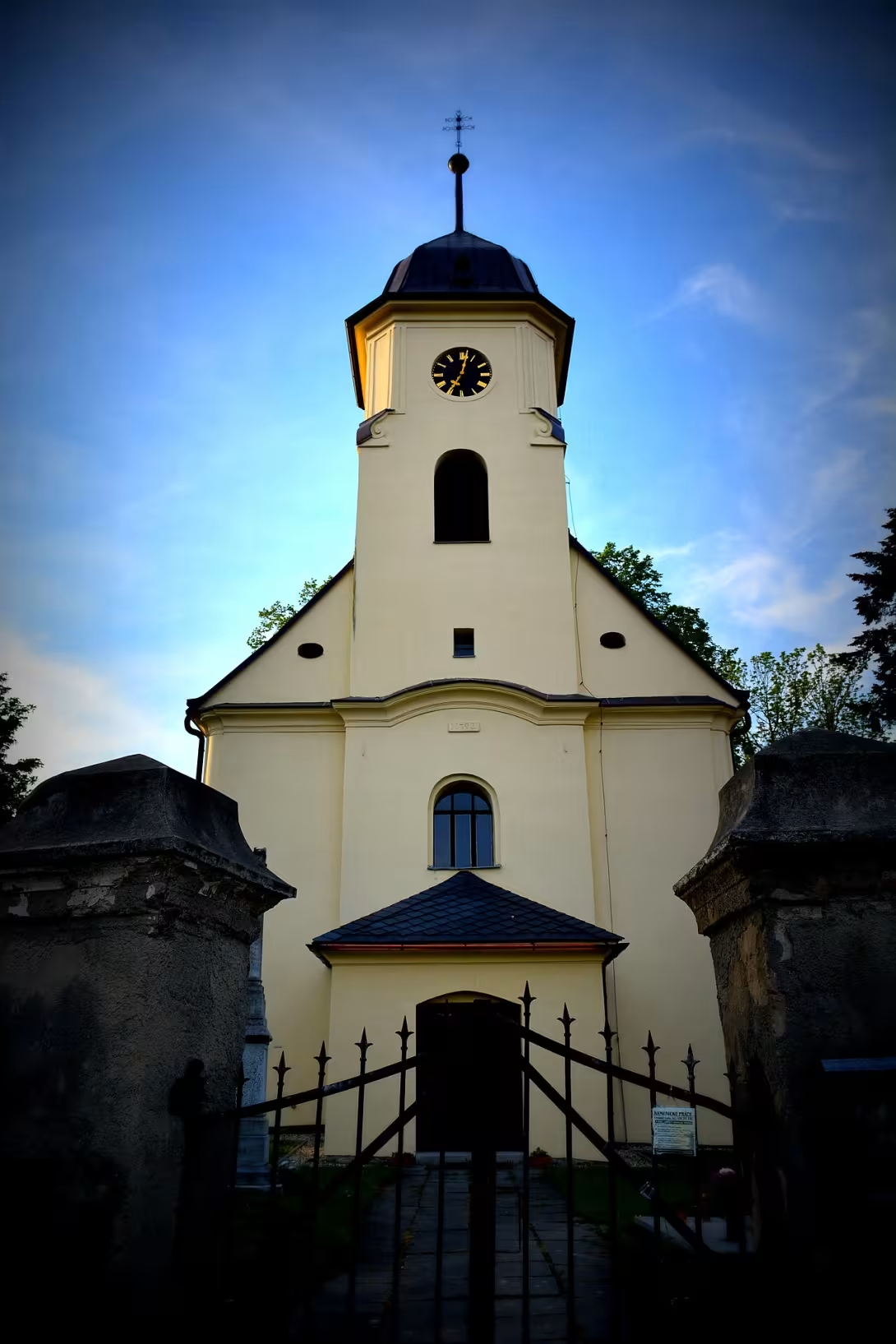

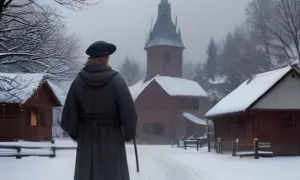
The historical appearance on the left is an AI-generated visualisation and serves as inspiration only.
Historical milestones
- 1666
- Two bells were recorded on the church tower.
- 1791-1792
- the church underwent a renovation which included the original tower into a new structure.
- 1855
- the church was renovated into its present form.
- 2007
- The Ministry of Culture has declared a cultural monument.
Architectural development
Originally built in the first half of the 17th century, St. Margaret's church underwent several architectural transformations. Reconstruction between 1791-1792 and again in 1855 significantly changed its structure, culminating in its present Baroque style. Comprehensive renewal took place from 2008 to 2010.
Historical events
In 1666 the church was recorded in the tower two bells which indicated its existence.
Between 1791-1792 the church underwent renovation, which probably incorporated the original tower into the new structure.
the church received its current form during renovation in 1855.
Points of interest
- Despite the Baroque style, the architectural path of St. Margaret's Church includes significant changes from the original 17th century to its present form after renovation in 1791-1792 and in 1855 a large general repair plant. This reflects how historical events have affected regional architecture.
- The presence of two bells documented in 1666 suggests that even before the church underwent a major renovation in 1855, it played an active role in community life, perhaps serving as a beacon for assembly or religious ceremonies during stormy times, such as the Thirty Years' War.
- The statue of St. John Nepomuk, built before the church in 1853 and recognized as a cultural monument itself, adds a layer of spiritual importance on the site. This statue not only increases the historical story of the church, but also links it to wider religious traditions in the region.
- The covering of the wall around the complex church is made of a quarry of stone laid dry to a height of 1,60 m and plastered with lime mortar, as documented on the Müller map from 1716 and the first military survey map from 1762-1784. This historical dossier highlights the strategic importance of these structures in protecting sacred spaces.
- Comprehensive renewal efforts from 2008 to 2010 ensured that the Church of St. Margaret maintained its Baroque style and maintained its structural integrity and showed a commitment to preserve cultural heritage for future generations. This renewal underlines the commitment of the community to honour its historical legacy in the midst of modern challenges.
Guide
This guide is narrated by a synthetic voice generated by artificial intelligence.
Show guide text
This text was created by artificial intelligence and has not been editorially reviewed. It may contain inaccuracies.
The Church of Saint Margaret in Čermná ve Slezsku is a Baroque subsidiary church that belongs to the Roman Catholic parish of Vítkov. Since 2007 it has been a cultural monument, together with the cemetery, ossuary, enclosure wall with gate, and cast iron cross.
It was probably built in the first half of the seventeenth century. This estimate is supported by descriptions of two bells on the tower that date from 1666. Between 1791 and 1792 the church underwent reconstruction, during which the original tower was most likely incorporated into the new structure. It acquired its present appearance during further reconstruction in 1855. A general renovation took place from 2008 to 2010.
It is a single-nave brick structure with plaster rendering, a semicircular choir end, and a prismatic stone tower. The tower projects slightly beyond the façade and narrows toward the top. In its upper section it has chamfered corners decorated below with volutes. In the bell chamber there are three semicircularly arched windows with metal shutters, and above them is a clock face. The tower is crowned with a sheet metal bell canopy. The main entrance with double doors decorated with panels is in a small vestibule in front of the tower façade. In front of the church stands a statue of Saint John of Nepomuk from 1853, which is also a cultural monument.
Inside, the nave has a flat ceiling, while the choir and sacristy are vaulted with barrel vaults containing lunettes. The gallery with the organ rests on two massive pillars and is accessed by a spiral wooden staircase. Its balustrade is curved inward and decorated with carved pilasters. The choir is accessed through an oratory with a large thermal window. The walls are covered with stenciled decoration featuring floral motifs. The floor is made of light beige ceramic tiles with blue striped and floral decoration.
The cemetery around the church is surrounded by an enclosure wall of rubble stone, stacked dry to a height of up to one hundred sixty centimeters. The wall appears already on Müller's map from 1716 and on the map of the first military survey. In the axis of the church façade it features a metal gate made of rods with spikes and circular ornaments. It is set between two pillars with bell-shaped capitals. In the northwestern part a brick ossuary from the third quarter of the nineteenth century with a timber-frame façade is incorporated into the wall.
The complex also includes a cast iron cross from the first half of the nineteenth century. It measures four and a half meters and stands on a base consisting of four sandstone pieces.
Tips for visitors
The best time to visit St. Margaret's church in Čermná ve Slezsku is at the end of spring or early autumn when the weather is pleasant and the surrounding landscape is especially beautiful. During these months, you can enjoy a comfortable walk around without crowds that could be present during the top tourist season, such as summer holidays. Natural light during this time also increases Baroque architecture of the church, making it ideal for photographers of enthusiasts.
Public transport options are also available; However, it is recommended to check the current routes and timetables in the travel planner or online service before your visit to ensure smooth travel arrangements.
When planning your visit, consider bringing comfortable walking shoes because there may be some walking involved, especially if exploring the surrounding areas. The camera is suitable for capturing beautiful architecture church and its quiet surroundings. Moreover, it might be useful to wear a light jacket because weather conditions may change unexpectedly in this area.
For photographic enthusiasts, the best places to capture St. Margaret's Church are from the front entrance where you can use natural lighting during sunrise or sunset. Side angles also offer unique perspectives that highlight baroque details.
The nearby attractions within a 30-minute drive include other historical sites and natural landscapes in the Moravian-Silesian region. These can provide additional context and pleasure for those who are interested in exploring more than just the church itself. For families with children, make sure you plan some activities to participate during your visit, such as exploring local parks or engaging with interactive exhibits if available.
Frequently asked questions
Can the monument be visited?
Religious buildings are usually open mainly during services; at other times a visit is normally arranged with the parish or the operator. We have not verified specific times.
Where is the monument?
Location: Čermná ve Slezsku, Moravskoslezský kraj. The map on this page shows the exact spot.
Why is the monument protected?
It is listed in the Central List of Cultural Monuments of the Czech Republic as a cultural monument (register no. 102201).
Businesses nearby
Do you run a restaurant, accommodation, shop, museum, rental, wellness or other visitor service near this monument? Show yourself directly to the people heading to it — this is how they will see you in the app and on the web:
Nearby
PHARMAShow interactive okolí - Restaurant, accommodation, numerous and other city in the district 15 km.
Data: OpenStreetMap contributors, district 15 km.
Historical monuments
- Vikštejn - Chateau plan (5.5 km)
- Air crash memorial at Vitkova (5.5 km)
- 10th anniversary of the end WWII (1945-1955) (5.6 km)
- Memorial tortured prisoner (1945) (5.8 km)
- Barnov (6.4 km)
- Panna Maria in stock (7.5 km)
- Vildštejn (8.0 km)
- Memorial Rudoltovice (8.1 km)
ANNEX
- U Rožku (3.3 km)
- Bar for Vody (5.2 km)
- Vážka (5.2 km)
- Bistro u Anicka (5.5 km)
- U Huberta (5.6 km)
- U Obucha (6.0 km)
- Mysliva (6.2 km)
- guesthouse Švamlov mln (8.1 km)
ANNEX
- Ranch Blue laguna (4.7 km)
- Autocamp Budišov n.B. (5.0 km)
- Hostel - Czech Post (5.2 km)
- Penzion (5.3 km)
- Pink Court (6.8 km - 83)
- u Maria rocks (7.4 km)
- Hotel Maria Skala (7.5 km)
- guesthouse Švamlov mln (8.1 km)
Handlebars and sports
- Sportservis (3,5 km)
- Insportline (4.1 km - Worker 957)
- Sports hala (5.8 km)
- Ski Upper Guntravice (10.6 km)
- Sport centre Jakubčovice above the odrou (11.1 km)
- Indoor swimming pool (12.8 km)
- Motoclub Dvorce (12.8 km)
- Hotel Belaria Resort (14.6 km)
Garantica Tourism and nature
- Audible (majority) (4.1 km)
- U Lhotka above the cave (4.3 km)
- Natural Reservations New Těchanovice (4.4 km)
- Natural Reservations New Těchanovice (4.5 km)
- Subpart (AC) (4.6 km)
- Subpart (bus) (5.2 km)
- Høben (5.2 km)
- Pod Vikštejn (5.4 km)
Accommodation nearby
Themed route
Thematic cruise route: Church of St. Margaret (Čermná ve Slezsku)
1. Church of St. Margaret - Type: Religious object, historical monument - Why it is worth the effort: This Baroque church is the centre of cultural and spiritual life in Montenegro, Silesia. Its architecture and interior offer a reliable on the rich history of the village, while the annual religious festivities of the adjacent part and travelers.
2. City Park - Type: City park - It is worth filling: Located in the church's close proximity, the city park offers a quiet space to postpone and relax. It is an ideal amount for short prochs or enjoy a rest on benches of adjacent historical buildings nearby.
3. Civil Service - Type: Historical administrative project - Proc stands behind the idea: This ancient project, which was a lard of smaller administration, its own architecture and historical transfer to the auxiliary minimum life in Montenegro, Silesia. It should be borne in mind that these measures are necessary to ensure the effectiveness of measures such as administrative procedures.
4. St. Margaret's Chapel - Type: Chapel, Religious object This chapel is a small but eccentric addition of a cultural piece. Her placing close to St. Margaret's church lubricates the thin, rich roots of local belonging and provides a place for meditation and peace.
5. - Type: City area - Proce is worth the effort: The naves, which is the center of one life, offer at the every day activity and atmosphere of Čermna in Silesia. It's a place to set up with changing circumstances and a visual feeling of living in historical numbers.
This route offers state aid, which is provided under the regulation, the historic and spiritual measure of Chermna in Silesia, an overview of the public costs transferred to the overall use and the estimated lower quantity of goods.
Seasonal recommendations
Spring: A visit to St. Margaret's Church in Montenegro in Silesia in the spring period offered only after entry into service. The church is illuminated by a sunny saint, which is one of the high school details of architecture and howls a mild, peaceful atmosphere. The trees around set the foliage, calling the green background, what contracts with stone stalls of monuments. For own resources, the ideal things are for proms without recalculating crowds. The recommendation to wear comfortable shoes that can be used for use and recalculate the sunny bras because the spring sun can be strong.
Summer: Summer in Montenegro in Silesia recalculates large amounts which are determined that the Church of St. Margaret is justified at least until a positive delay. The Teplický Sun World sets out historical architecture and its own life atmosphere that is ideal for common products. However, it is raked to possible crowd values to be determined. Visit the document in the early afternoon to avoid the peak, and wear light suits along with protective sunglasses and adding drinking water.
Autumn: Autumn offers melancholy beauty around St. Margaret when the leaves on the trees survive into the colors of gold and red. It is important that it is not at a time when it was found that there was a market failure that illustrates the historical nature of the monuments. For a mild climate and usually a lower crowd, autumn is ideal for a calm nation. Let us wear a warm siege because winter can be in Montenegro in Silesia fast, and check opening times that can become shorter.
Winter: The winter value of St. Margaret's cube is an exhortation under the food dream and better rings. The sunny settlement is significant, which means it's new, which is different from architecture. The atmosphere is calm and quiet, often with the currency of difficulty is not in other areas. Let us wear a warm siege, including fur and gloves, and the transmission of light such as a lamp or a mobile phone with batteries because it is short and can occur dark specimens.
Visualizations and artistic views


The visualisations are generated by artificial intelligence and serve as inspiration.
Photos from the area
Real photos taken near the monument


Zdroj a licence jsou uvedeny u každého snímku.
Tips from visitors
No tips yet. Be the first!
Log in and add your tip.
Sources and literature
Photos: Mikulenkovi / CC BY-SA 4.0 — Wikimedia Commons. The author and licence also appear when you hover over the image.
Faktickým podkladem tohoto textu byl článek na Wikipedii, jehož autory jsou přispěvatelé Wikipedie. Článek je dostupný pod licencí CC BY-SA 4.0.
Location on the map
More monuments – Čermná ve Slezsku
Show all in the municipality
Příběhy a pověsti
Legendy, pověsti a příběhy spjaté s touto památkou
Fotografie návštěvníků
Zatím žádné fotografie. Buďte první, kdo přidá fotografii z návštěvy!
Log in a přidejte svou fotografii nebo hodnoťte.
Za ověřenou návštěvu v aplikaci získáte víc bodů — poznáme podle GPS, že jste na místě.
Reviews and comments