






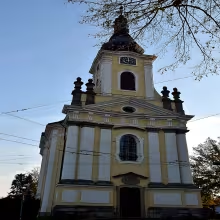
The Church of Saint Anthony the Hermit in Slezské Předměstí, Hradec Králové, exemplifies architectural evolution from Gothic to Baroque styles over several centuries. Founded by the city administration in 1379, it underwent significant transformation between 1705 and 1726 under architect Jan Blažej Santini-Aichel. Despite its demolition in 1766 for a fortress, the site remains historically important, now home to a new church dedicated to Saint Anthony the Hermit.
The original Gothic structure lacked a tower but featured buttresses and a polygonal closure. It faced challenges such as a fire in 1441 requiring restoration. The Thirty Years' War further devastated it when Swedish forces destroyed it between 1639-1640 and again in 1645. Despite these setbacks, the church began its Baroque transformation around 1705, with contributions from Jan Blažej Santini-Aichel, notably his design of the bell tower over the sacristy in 1719.
The Baroque reconstruction marked a significant architectural shift, reflecting broader European trends under Habsburg rule. The redesign included a cross-shaped floor plan and reduced transept arm depth, inspired by structures like the seminary church of Saint John Nepomucene in Hradec Králové. Interior decoration continued until 1726, involving artists such as Jan Pavel Čechpauer, Ondřej Decker, and Petr Brandl.
Ownership and administration changed dramatically over time. Initially managed by the city administration, its fate was sealed by military orders in 1766 when it was demolished to make way for a fortress under Podplukovník Václav Pavlovský z Rosenfeldu, commissioned by Joseph II.
The site holds archaeological significance. During the demolition of fortress walls in 1905, remnants of an unknown cemetery were uncovered, providing historical insights. Additionally, a painting from 1638 offers a visual record of the church before its Baroque transformation, capturing its Gothic essence.
Today, while the original Church of Saint Anthony no longer stands, its legacy endures through the new church on Svatováclavské náměstí, built between 1769 and 1772. This site remains a point of interest for those exploring Hradec Králové's rich architectural history. Visitors are invited to reflect on the layers of history embedded in this location, from its Gothic origins through Baroque transformation to its modern incarnation, offering a unique glimpse into the past.
Historical milestones
- 1379
- Foundation of the original Gothic church by the city administration.
- 1719
- Design and construction of the bell tower over the sacristy by Jan Blažej Santini-Aichel.
Architectural development
The original Gothic structure, built without a tower and featuring buttresses and a polygonal closure, was damaged by fire in 1441 but restored. It suffered destruction during the Thirty Years' War and underwent Baroque reconstruction starting around 1705. The redesign included contributions from Jan Blažej Santini-Aichel, particularly for the bell tower over the sacristy.
Historical events
- 1441
- The church was restored after being damaged by fire.
- 1639-1640, 1645
- The Swedish army destroyed the church during the Thirty Years' War.
- 1766
- Demolition of the church to build a fortress in Hradec Králové.
Points of interest
- The Church of Saint Anthony the Hermit was originally founded in 1379 by the city administration of Hradec Králové, marking it as a significant historical structure from its inception. - Despite being destroyed multiple times, including during the Thirty Years' War when Swedish forces demolished it twice between 1639 and 1645, the church underwent a remarkable Baroque transformation starting in 1705.
Guide
Show guide text
Welcome to the historic site of Kostel svatého Antonína Poustevníka in Hradec Králové, located in Slezské Předměstí. As you stand here, imagine the rich tapestry of history that once enveloped this place. Though today it is but a memory etched into the landscape, its story continues to captivate and inspire.
The Church of Saint Anthony the Hermit was first founded in 1379 by the city administration of Hradec Králové. This Gothic church marked the beginning of a significant era for the community, serving as both a spiritual haven and a testament to the architectural ambitions of its time. However, it wasn't until the early 18th century that this church underwent a remarkable transformation. Between 1705 and 1726, under the visionary guidance of architect Jan Blažej Santini-Aichel, the church embraced Baroque elements, adding layers of grandeur and complexity to its structure.
As you stand here today, envision the church's former presence through its historical context rather than physical remnants. The bell tower designed by Santini-Aichel in 1719 is a testament to his genius, reflecting the intricate craftsmanship that once defined this sacred space.
Throughout its existence, the Church of Saint Anthony the Hermit faced numerous challenges, including destruction during the Thirty Years' War when Swedish forces demolished it. Yet, its resilience was short-lived as it was ultimately razed in 1766 to make way for a fortress, marking an end to its physical journey but not its historical significance.
Jan Blažej Santini-Aichel's contributions remain a focal point of intrigue and admiration. His work on the bell tower over the sacristy exemplifies his innovative spirit and architectural prowess, leaving behind echoes of Baroque elegance that once graced this site.
As you reflect on what stands before you today, consider the layers of history beneath your feet. This place is not just a relic of the past but a narrative woven into the fabric of Hradec Králové's identity.
We invite you to continue exploring the rich heritage of Slezské Předměstí and discover more about the stories that have shaped this remarkable region. Thank you for joining us on this journey through time, and may your curiosity lead you to uncover even more hidden gems in Hradec Králové.
Farewell, until we meet again at another historical treasure.
Tips for visitors
The best time to visit the site of the Church of Saint Anthony the Hermit is during late spring or early autumn. During these seasons, the weather is typically mild, making it comfortable for walking and exploring the area. Additionally, visiting outside of peak tourist season can provide a more serene experience, allowing you to reflect on the historical significance of the location without large crowds.
Parking and transportation options are available nearby. You can drive to Slezské Předměstí in Hradec Králové, as there are parking facilities in the vicinity. For those preferring public transport, both bus and tram services operate in the area. It's advisable to check current routes and schedules using a transportation app or website to ensure you have the most up-to-date information.
When visiting the site, it is recommended to bring comfortable walking shoes as there may be uneven surfaces around the area where the church once stood. Additionally, carrying a light jacket is wise since weather conditions can change unexpectedly. A camera or smartphone for taking photos is also suggested, especially if you're interested in capturing the historical ambiance of the location.
Photography enthusiasts will find that the best spots to capture the essence of this site are around dawn or late afternoon when the lighting is softer and more dramatic. The surrounding architecture and landscape can provide a beautiful backdrop for photographs, highlighting the contrast between past and present.
For those interested in exploring nearby attractions within 30 minutes, consider visiting other historical sites in Hradec Králové. These include the Old Town Hall with its Renaissance tower or the Holy Trinity Column, which is an impressive Baroque monument. Both locations offer a glimpse into the rich history of the city and are easily accessible by foot or public transport.
Businesses nearby
Do you run a restaurant, accommodation, shop, museum, rental, wellness or other visitor service near this monument? Show yourself directly to the people heading to it — this is how they will see you in the app and on the web:
Accommodation nearby
Themed route
Tematická výletní trasa: Kostel svatého Antonína Poustevníka a okolí
1. Kostel svatého Antonína Poustevníka - *Typ:* Církevní památka - *Proč stojí za návštěvu:* Tento barokní kostel je nejen duchovním centrem obce Slezské Předměstí, ale také architektonickou perli v Hradci Králové. Jeho bohatě zdobený interiér a historie zasvěcení svatému Antoninu Poustevníkovi nabízejí nádherný pohled na minulost.
2. Nádvoří kostela - *Typ:* Historické nádvoří - *Proč stojí za návštěvu:* Nádvoří před kostelem je klidným místem, kde si můžete užít krásného venkovního prostoru. Je to ideální místo pro odpočinek a reflektování po návštěvě samotného kostela.
3. Kaple svaté Anny - *Typ:* Kaple - *Proč stojí za návštěvu:* Tato kaple, nacházející se v blízkosti kostela, je dalším důležitým církevním místem. Její historie a architektura přidávají do trasy hlubší náboženský rozměr.
4. Park u kostela - *Typ:* Místní park - *Proč stojí za návštěvu:* Park v okolí kostela nabízí příležitost pro relaxaci a procházku v přírodním prostředí. Jeho zelené plochy jsou ideální pro si odpočinutí po návštěvě historických míst.
Tato trasa nabízí kombinaci duchovního a kulturního dobrodružství, umožňující hlubší porozumění historii a kultuře obce Slezské Předměstí.
Seasonal recommendations
Spring: Visiting the site of the Church of Saint Anthony the Hermit in Hradec Králové during spring offers a unique experience as nature begins to awaken around the historic remains. The area is lush with budding flowers and vibrant greenery, creating an idyllic backdrop that enhances the contemplative atmosphere of the once-sacred space. This season brings moderate temperatures, making it ideal for leisurely exploration without the need for heavy clothing. To fully enjoy this serene environment, visitors are encouraged to arrive early in the morning when the site is less crowded and the air is fresh with the scent of new blooms.
Summer: The summer months at the Church of Saint Anthony the Hermit's site are marked by long daylight hours that illuminate the historic landscape beautifully. This period sees an increase in tourists, drawn by the warm weather and the opportunity to explore outdoor heritage sites comfortably. To avoid the peak crowds, it is advisable to visit during weekday mornings or late afternoons. Light, breathable clothing is recommended for comfort as temperatures can rise significantly. The lush summer foliage adds a vibrant touch to the historical ambiance, making this an ideal time for photography enthusiasts.
Autumn: Autumn transforms the area around the Church of Saint Anthony the Hermit with a stunning display of fall colors. The changing leaves create a picturesque setting that contrasts beautifully against the historic remnants, offering a poignant reminder of nature's cycles and history's enduring presence. Cooler temperatures make this season comfortable for walking tours and extended visits without overheating. Visitors should consider wearing layers to adapt to fluctuating weather conditions throughout the day. This is an excellent time to appreciate the tranquility before winter sets in, as visitor numbers typically decrease.
Winter: Winter at the site of the Church of Saint Anthony the Hermit offers a serene and introspective experience, with snow often blanketing the area and creating a quiet, almost mystical atmosphere. The stark beauty of the landscape under a blanket of white can evoke a sense of peace and reflection. However, visitors should be prepared for cold temperatures by dressing warmly in layers and wearing appropriate footwear. It's important to check opening hours as they may vary during this season due to shorter daylight hours and weather conditions. Despite fewer tourists, the winter months provide an intimate opportunity to connect with history in a unique setting.
Tips from visitors
No tips yet. Be the first!
Log in and add your tip.
Reviews and comments