



Kostel svatého Bartoloměje (Nová Ves) Church
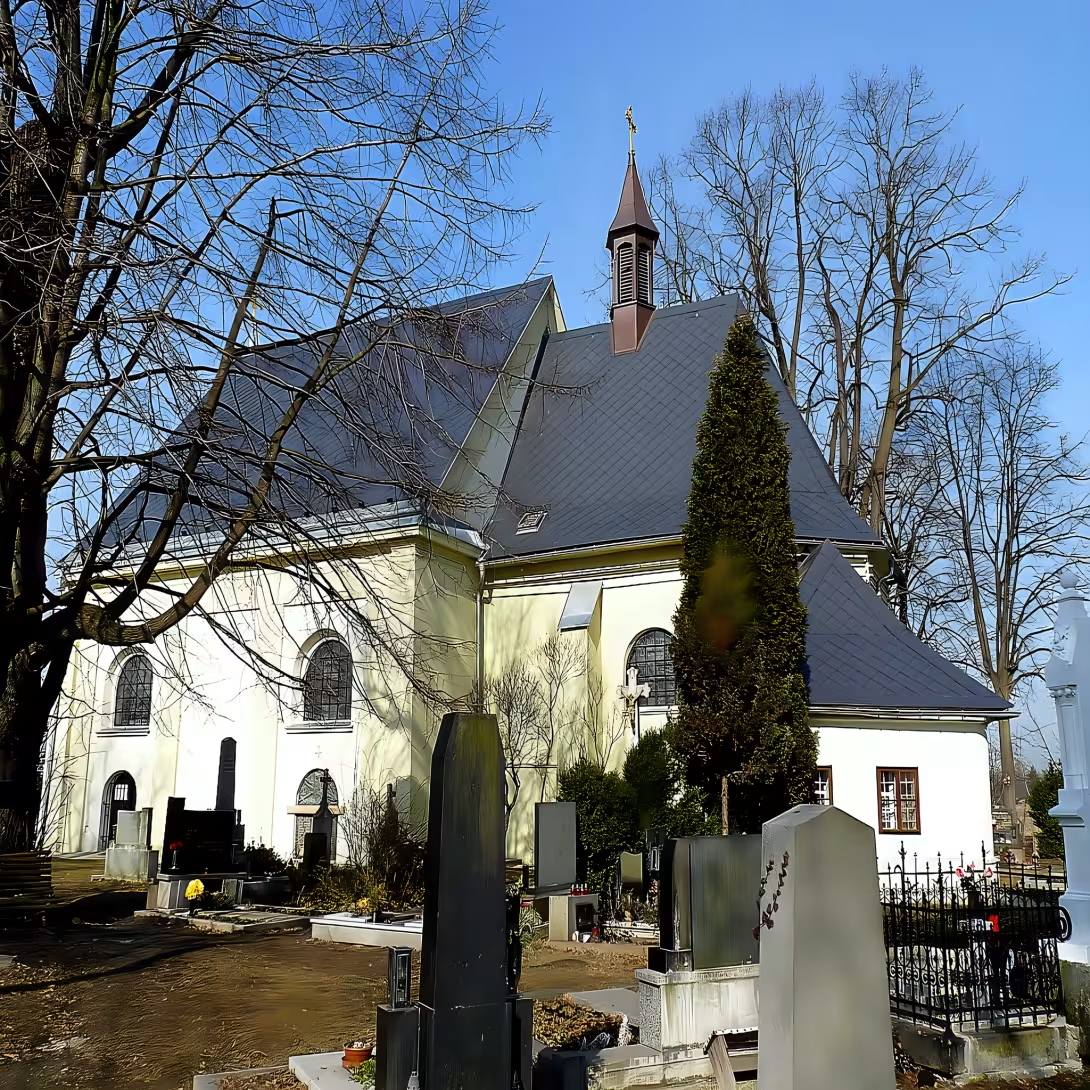
St. Bartholomew's Church is a philic church of Roman Catholic faith focused on a patron of the same name, who has been a defender of the New Vi since time immemorial. It is located in the Ostrava district of Nová Ves and is now under the parish of Mariánské Hor.
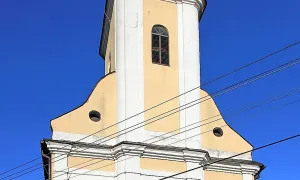
The oldest mention of the pilgrimage place on this site dates back to 1443, when Ostrava's vicar Řehoř built the chapel in the current place. However, it did not remain in its original form; was later demolished and replaced by a new building in a Gothic style at the end of the sixteenth century. Over time, however, the building was changing - in the eighteenth century, a baroque ship was added to the Gothic Chapel, making the original building a presbytery of a new church. This architectural redesign has created such an interesting change of styles that the church sees as a layer of history.
The history of the memorial is not without dramatic moments. In 1807, the church was restored, during which it was threatened to be demolished - the church was preserved thanks to the intervention of period protection. Another significant correction followed in 1913, when the parish was probably moved under the administration of Mariánské Hor.
The interior of the church contains a collection of artistic artifacts. The main altar is decorated with a statue of Saint Bartholomew's patron saint. Next to the altar stands the coat of arms of Prostějov canary František Ondřej from Mandorf, dating from the seventeenth century. An epitaph painting of Ostrava painter George Milotsky, painted in 1639, has been at the altar since the nineteenth century. The other space is served by two adjacent altars dedicated to St. Barbara and Mother of God Chenstochovská, thus opening the church wider of the number of devout members with different respects.
The Church of St. Bartholomew's design offers a rare view of the layering of Gothic and Baroque elements that were left as part of the building palimpsest. In particular, an art-historian or independent tourist will meet here with the authenticity of long-term devotions and local life.
Then and now
Drag the slider to compare how the landmark may have looked when it was built with the view today.
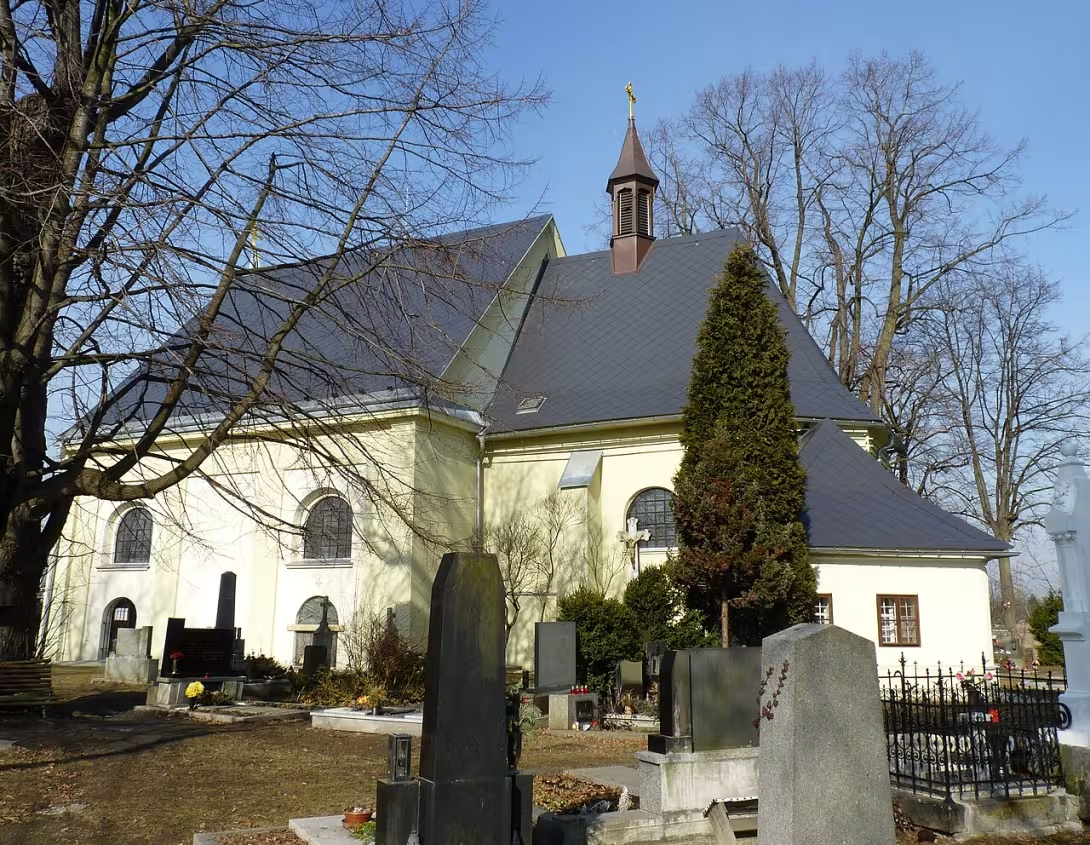
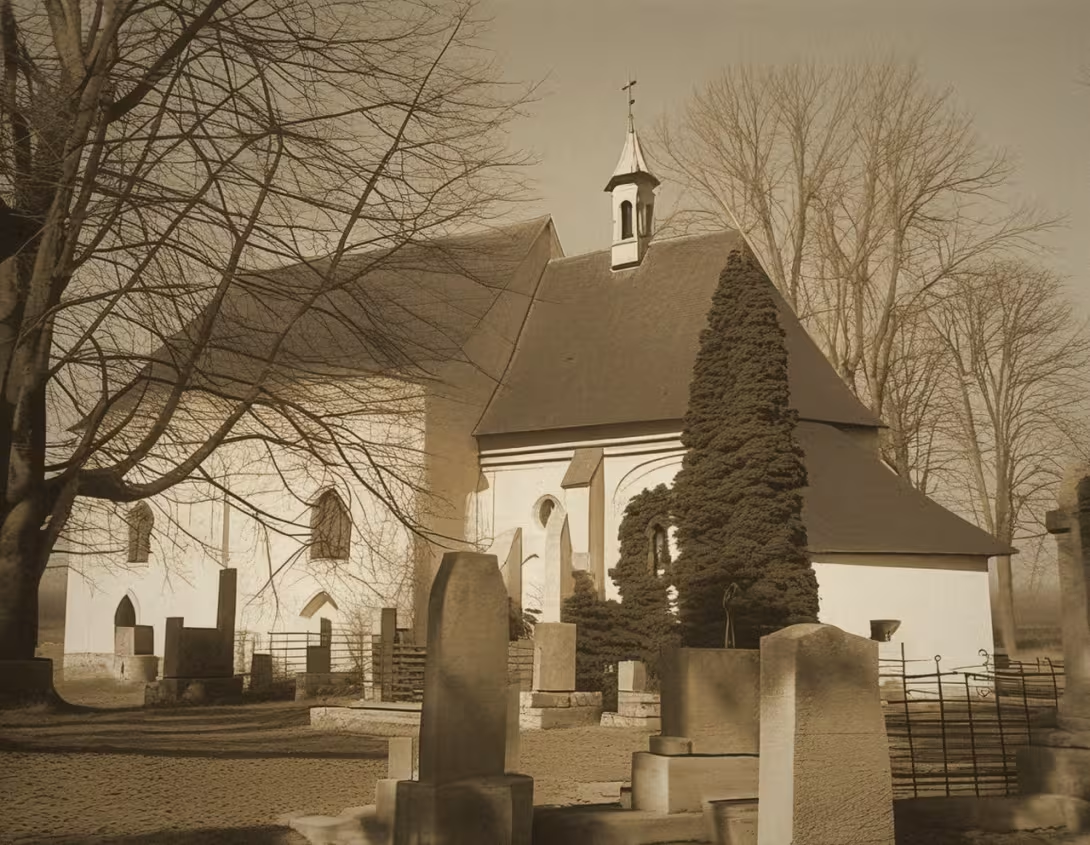
The historical appearance on the left is an AI-generated visualisation and serves as inspiration only.
Historical milestones
- 1443
- The establishment of the first chapel by the priest of Ostrava, Gregory.
- End of the 16th Century
- Built by a Gothic chapel that later became a presbytery.
- 18th Century
- Rebuilding to a classicist single-boat church with baroque boat.
- 1913
- The church moved to the parish of Mariánska Hora.
Architectural development
The original chapel from 1443 was demolished and replaced by a Gothic chapel at the end of the 16th century. In the 18th century, a baroque ship was built, making the original chapel presbytery. The construction is classical, with a slightly rectangular boat and a facade with a triangular shield. There were repairs in the 19th century that preserved the original character of the church.
Historical events
In 1443 the first chapel was created, in the 16th century it was replaced by a Gothic chapel, in the 18th century a Baroque reconstruction took place in the contemporary classical form. In 1913 the church was added to the parish of Mariánské Hora.
Points of interest
- The church of St. Bartholomew was established as a pilgrimage place already in 1443, when Ostrava's vicar Řehoř built a chapel here.
- The Gothic Chapel was later demolished and replaced by a new construction in the Gothic style at the end of the 16th century.
- In the eighteenth century, the original Gothic chapel was converted into a presbytery, with a baroque ship attached to it.
- In 1807, the church was threatened by destruction, but it was saved by the conservation of monuments.
- The interior of the church contains the coat of arms of Prostějov canary František Ondřej of Mandorf from the seventeenth century.
Guide
This guide is narrated by a synthetic voice generated by artificial intelligence.
Show guide text
This text was created by artificial intelligence and has not been editorially reviewed. It may contain inaccuracies.
The Church of Saint Bartholomew is a Roman Catholic chapel church in the Nová Ves district of Ostrava. It belongs to the Mariánské Hory parish.
Its origins date back to the year 1443. At that time, the Ostrava parish priest Řehoř built a chapel in this location. It was later demolished and at the end of the 16th century it was replaced by a new chapel in the Gothic style. In the 18th century, a Baroque nave was added to it and the Gothic chapel became the presbytery of the new church.
The building underwent two major repairs. The first took place in 1807, when the church was even threatened with demolition, and the second in 1913. From its foundation, the church was affiliated with Moravská Ostrava. From 1913 it falls under Mariánské Hory.
On the main altar stands a statue of Saint Bartholomew, the patron of Nová Ves. Next to the altar is placed the coat of arms of the Prostějov canon František Ondřej from Mandorfu from the 17th century. Since the 19th century, the altar has been decorated with an epitaph painting by the Ostrava painter Jiří Milotský, which was created in 1639. Two side altars are dedicated to Saint Barbara and Our Lady of Częstochowa.
Tips for visitors
Best time to visit St. Bartholomew's church is in the morning
00 and 11:00. It is quiet in the church and you can see the interior without disturbing crowd. If you prefer a pleasant light for photography, come here in the early afternoon, when the sun rays illuminate the facade of the church from the south side and create pleasant shadows.
Parking near the church is possible in public parking lots in New Vsi. It is recommended to use public transport, especially when you come from Ostrava. The location is available by car on local roads, but there can be limited parking in the centre of the village. Find out the current connection and traffic options in the traffic search engine.
When visiting the church, wear comfortable clothes and shoes as the interior can be cold, especially during the winter months. It is also important to take a small towel or handkerchief, because there is often a fountain or sink for believers in the church. Prepare a camera or smartphone with sufficient storage space for photography, as the interior and exterior offer many interesting details.
The best places for photography are the entrance portal of the church where classical processing is captured, and the interior with the original Gothic chapel. It is advisable to use natural light from window holes for quality images. If you want to capture a general view of the church, go to the edge of the natural park Moravian Gate, where there is a view of the whole building.
In the vicinity of the church is worth visiting the natural park Moravian Gate, located just a few minutes walk from the church. It is also advisable to visit the historic Ostrava centre, which is about 10 minutes away by car. The Church of the Assumption of the Virgin Mary in Mariánské Hory, located about 15 minutes drive from Nové Vsi, is also interesting. For families with children it is advisable to visit the area of former Ostrava mines where there is an interactive exhibition and possibilities for children's activities.
For families with children it is advisable to visit the church at a time when services or other cultural events are held, which are often accompanied by musical accompaniment. Children can see the interior of the church and get to know its history. In the vicinity of the church it is possible to use the natural park Moravian Gate for walks and small trips which are very interesting for children. In the area of former Ostrava mines you can visit exhibitions that are interactive and interesting for children.
Frequently asked questions
Is Kostel svatého Bartoloměje (Nová Ves) open to the public?
Yes, the church is open to the public. The tours are possible without prior booking.
How do I get to the place by car / public transport?
You can get by bus No. 92 from the center of Ostrava or park in a nearby parking lot and walk.
How much is the entrance fee and is it paid on the spot?
Admission to the church is free of charge, but a small admission fee may be charged when visiting a museum or gallery nearby.
Is the tour suitable for children and seniors?
Yes, tours are suitable for all ages. The church has wheelchair accessible access and some parts are adapted for people with disabilities.
How long does the tour take?
The church tours take approximately 30-60 minutes, but you can spend more time in the area.
What are the opening times and booking is required?
The church is accessible from 9 a.m. to 5 p.m. There is no need for booking, but a small admission fee may be charged when visiting a museum or gallery nearby.
What's interesting in the immediate vicinity?
Around the church there are several restaurants and cafés where you can provide lunch or breakfast. Visit the Ostrava Museum or Gallery for more attractions.
For kids
Imagine going back to the past and finding yourself in a small town called Nová Ves near Ostrava. It was a time when people lived by their traditions and rituals. And right here, in this place, was the church of St. Bartholomew.
It was like a game where heroes wait for their story. The church was built in 1600, but what happened here before? What was living here? They were people who lived by their traditions and rituals, people who believed in the magical forces of nature.
Businesses nearby
Do you run a restaurant, accommodation, shop, museum, rental, wellness or other visitor service near this monument? Show yourself directly to the people heading to it — this is how they will see you in the app and on the web:
Events nearby
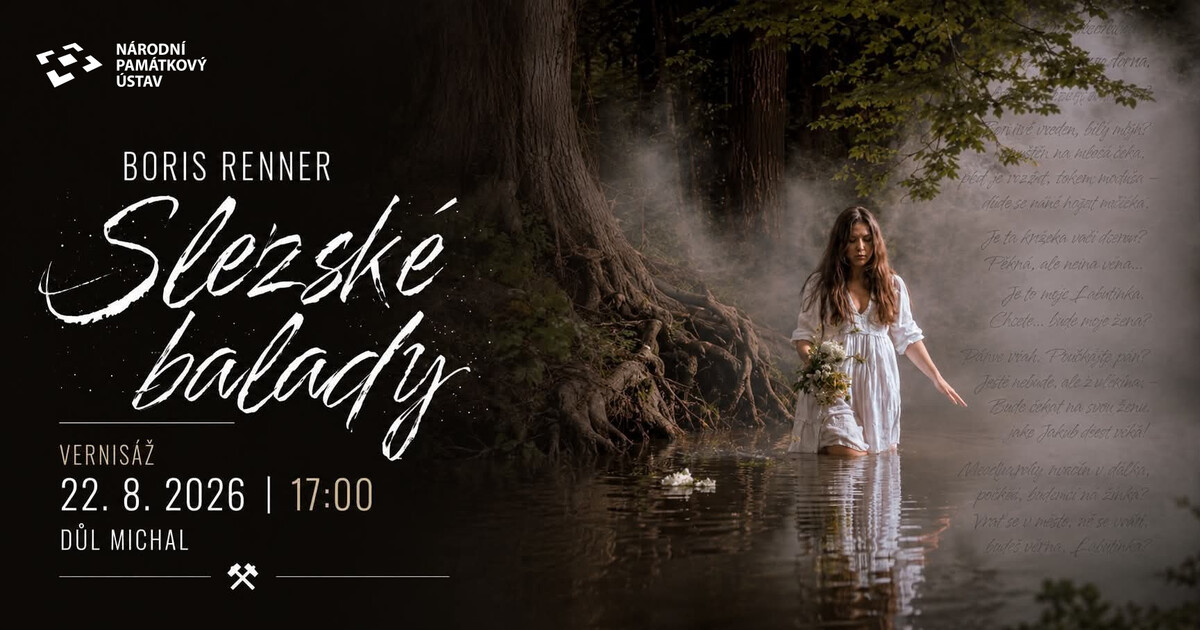
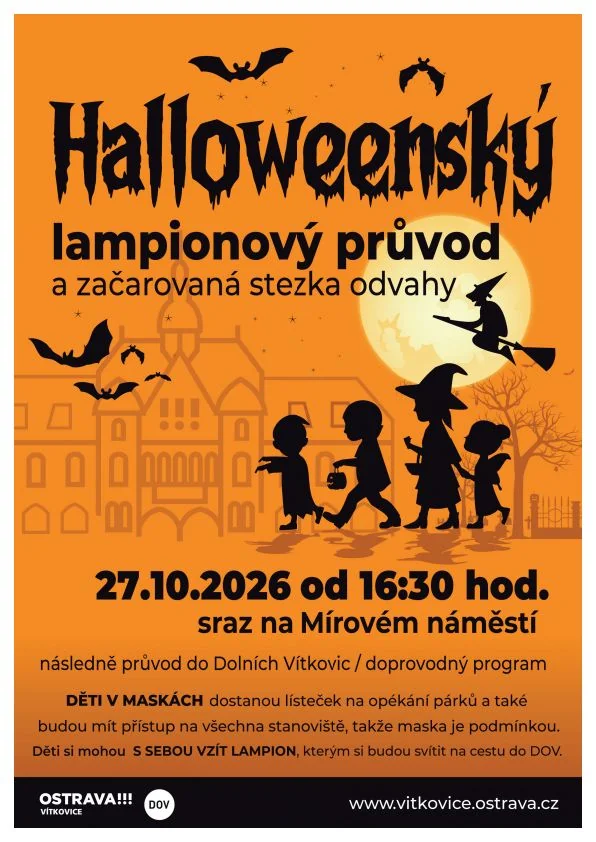
Zdroj akcí: otevřená data měst a obcí ČR (Národní katalog otevřených dat) a kalendář akcí Národního památkového ústavu.
Nearby
In the vicinity of the church there is a natural park Moravská gate and historical center of Ostrava. Within 5 km there are other cultural monuments such as the Church of the Assumption of the Virgin Mary in Mariánské Hory and the area of former Ostrava mines.
Accommodation nearby
Themed route
Thematic cruise route: Baroque and mining history of Moravian-Silesian Region
1. Church of St. Bartholomew in Nové Vsi * Type: Sacral landmark * A unique Baroque church from the 18th century with rich decoration and historical frescoes. Its location in the middle of the village offers a quiet environment for knowledge of local sacral architecture and regional history.
2. Historical Centre of Ostrava (Silesia Ostrava) * Type: Urbanistic landmark * Around 5 km from Nové Vsi is a well-preserved core of the city with typical Silesian development, St. Wenceslas church and historical houses. Ideal for walking in the footsteps of industrial development and cultural heritage.
3. Church of the Assumption of the Virgin Mary in Mariánska Hora * Type: Pilgrimage Church * It lies about 3 km from Nové Vsi and is an important Baroque building with rich sculpture decoration. A pilgrimage place with historical significance for Catholics in the region.
4. Area of former Ostrava mines (Lower Silesian Ostrava Region) * Type: Industrial landmark * Around 4 km from Nová Vsi there are preserved parts of mines that document the mining tradition of the region. Suitable for people interested in technical history and industrial architecture.
* The route combines sacral, urban and industrial monuments in a close neighbourhood, ideal for a day trip. *
Seasonal recommendations
Spring: In the spring months, the church in Nové Vsi works calmly; nature, fresh greenery and variable sky create softer light suitable for outdoor views. To visit, choose a dry morning time where it is less busy than during holidays and the interior can be better perceived without summer groups. Take an extra layer, because even after a colder morning, the air may still be wet, and check the actual approach before travelling.
Summer: In summer, the church stands out in a greener frame of the village and on a clear day the surroundings have a brighter, sharper light; inside, the atmosphere becomes quieter compared to the hot sun outside. Due to possible higher attendance in the main season, please come in the morning before larger groups appear, and count on the possibility of a limited parking in a small village. Choose breathtaking clothes, a head for the road and a light scarf or shirt with longer sleeves into a cooler interior.
Autumn: In autumn, the surrounding church receives warm leaf colors and low sun creates long shadows and golden lights that are suitable for outdoor views; inside it makes the monument more intimate and contemplative. It is best to plan a visit on a dry day in the morning or early afternoon, when there is no shade and the journey to the village is safer. Bring with you a waterproof jacket, stronger shoes on wet roads and a warmer layer, because the church space can act colder.
Winter: In winter, the church has a rough, calm character; snowy or frozen landscape and shorter daylight will highlight its mass and quiet atmosphere, while the interior can act cold and serious. Due to shorter opening times and possible restricted access, it is necessary to check the visiting hours in advance and leave as soon as possible after opening. Get dressed in layers, choose warm shoes with a good sole on the ice and count on the outdoor views to be the best around noon when the most light is.
Visualizations and artistic views


The visualisations are generated by artificial intelligence and serve as inspiration.
Photos from the area
Real photos taken near the monument


Zdroj a licence jsou uvedeny u každého snímku.
Atmosphere of the place
This atmospheric visualisation of the place and period was generated by artificial intelligence. It is not real footage of the location.
Tips from visitors
No tips yet. Be the first!
Log in and add your tip.
Sources and literature
Photos: Michal Klajban / CC BY-SA 3.0, rozlišení zvýšeno umělou inteligencí — Wikimedia Commons. The author and licence also appear when you hover over the image.
Faktickým podkladem tohoto textu byl článek na Wikipedii, jehož autory jsou přispěvatelé Wikipedie. Článek je dostupný pod licencí CC BY-SA 4.0.
Location on the map
Příběhy a pověsti
Legendy, pověsti a příběhy spjaté s touto památkou
Fotografie návštěvníků
Zatím žádné fotografie. Buďte první, kdo přidá fotografii z návštěvy!
Log in a přidejte svou fotografii nebo hodnoťte.
Za ověřenou návštěvu v aplikaci získáte víc bodů — poznáme podle GPS, že jste na místě.
Reviews and comments