



kostel svatého Jana Křtitele (Velké Losiny) Church
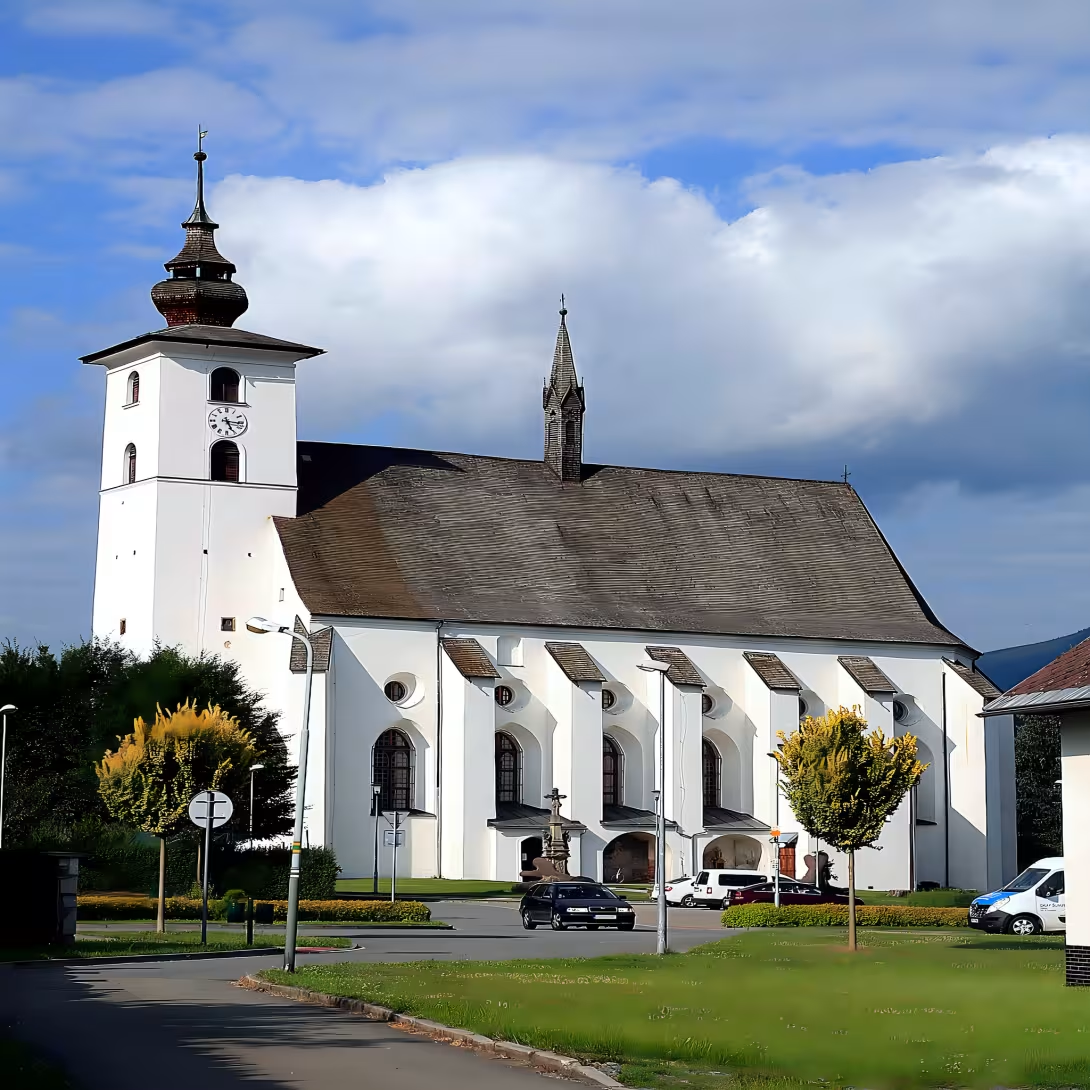
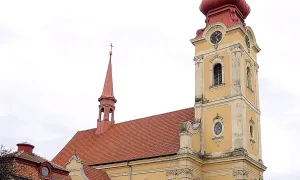
The church serves as a parish temple of the local Roman Catholic parish and is protected as a cultural monument since 1958. Its premises attract attention not only to believers but also to interested in the history of Czech architecture and construction of the late Renaissance.
The beginnings of sacral life at this place date back to 1351, when for the first time in writing it is referred to in the Los Angeles church, allegedly wooden and extensive. In 1599, by order of John Jr. of Žerotín, owner of the estate there, this building was demolished. The wood was used to build three smaller churches around it - in Maršíkov, Zárová and Klepáčov. A new brick church was built in the same place between 1599 and 1603, which is referred to as the builder Antonio Thoma, a builder known from other sacral buildings in the Šumper region.
The original building was designed for evangelical Lutheran services. The interior layout corresponded to this purpose - a simple interior with bleachers, a ship with a vaulted vaults lined with empores and a massive sandstone altar with the award of the Baptist Christ in presbytery. The church had a single boat without a separate priesthood. In the western part there was a square tower, which was later raised to 32 meters and adjusted to its windows and floors. On the east side, the church closes the polygonal conclusion.
After 1620, the interior was gradually transformed for Catholic services. The original equipment was replaced alternately by Baroque, rococo and classical furniture and paintings. The most extensive construction modifications took place in 1784, when the presbyteria was broken down by empores, a new oratory was established and the order was changed. The stone altar fell into the background and a large altar painting of St. John the Baptist was placed on the wall behind the new altar by the Brno theatre painter Pachmayera.
A significant part of the church is the Baroque chapel of St. Cross built in 1724-1725 on the north side at the command of Jan Ludvik of Žerotín. It is a polygonal chapel in Baroque style serving as a funeral chapel and tomb of the family Žerotín. The chapel contains forty-four funeral homes, where family members rest in coffins hidden in the walls of the gallery. The sculpture decoration of the chapel was created by Jiří Antonín Heinz, who worked for Žerotín in the 1920s and 1930s, and its paintings are attributed to Jan Kryštof Handke, even though he survived only a fraction of them.
During the 19th and 20th centuries, fundamental changes could no longer be made to the construction. In 1873 the old cemetery around the church was abolished and some tombstones were left on its walls. Between 2004 and 2016, the costal facade underwent a gradual renewal. At the entrance there is a cross from 1807 dedicated to Johannes Thiel and the sculpture from 1813. The interior is encapsulated with a massive vaulted arch with lunettes and stucco decoration, which still bears witness to the wealth of its time.
Then and now
Drag the slider to compare how the landmark may have looked when it was built with the view today.
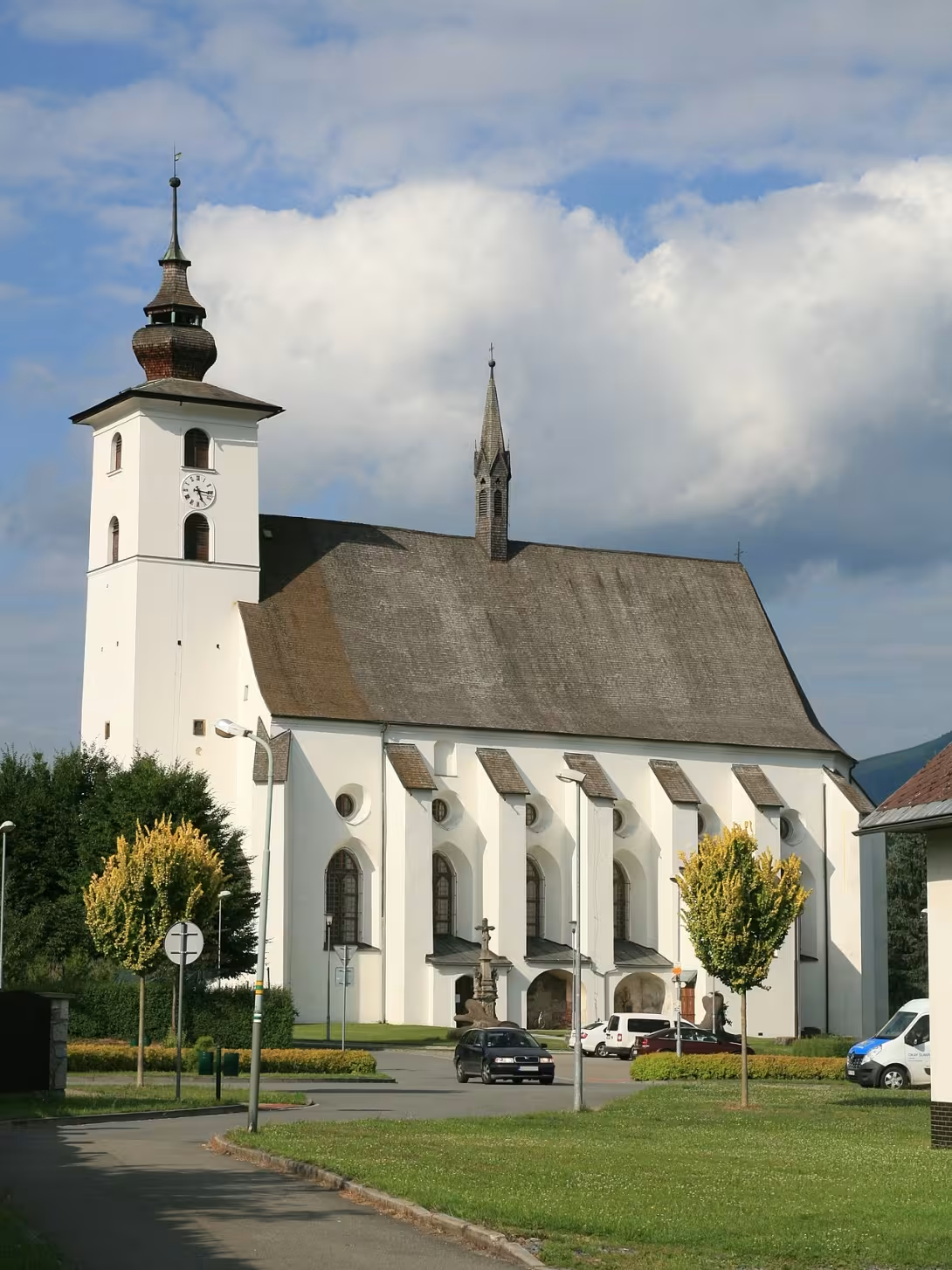
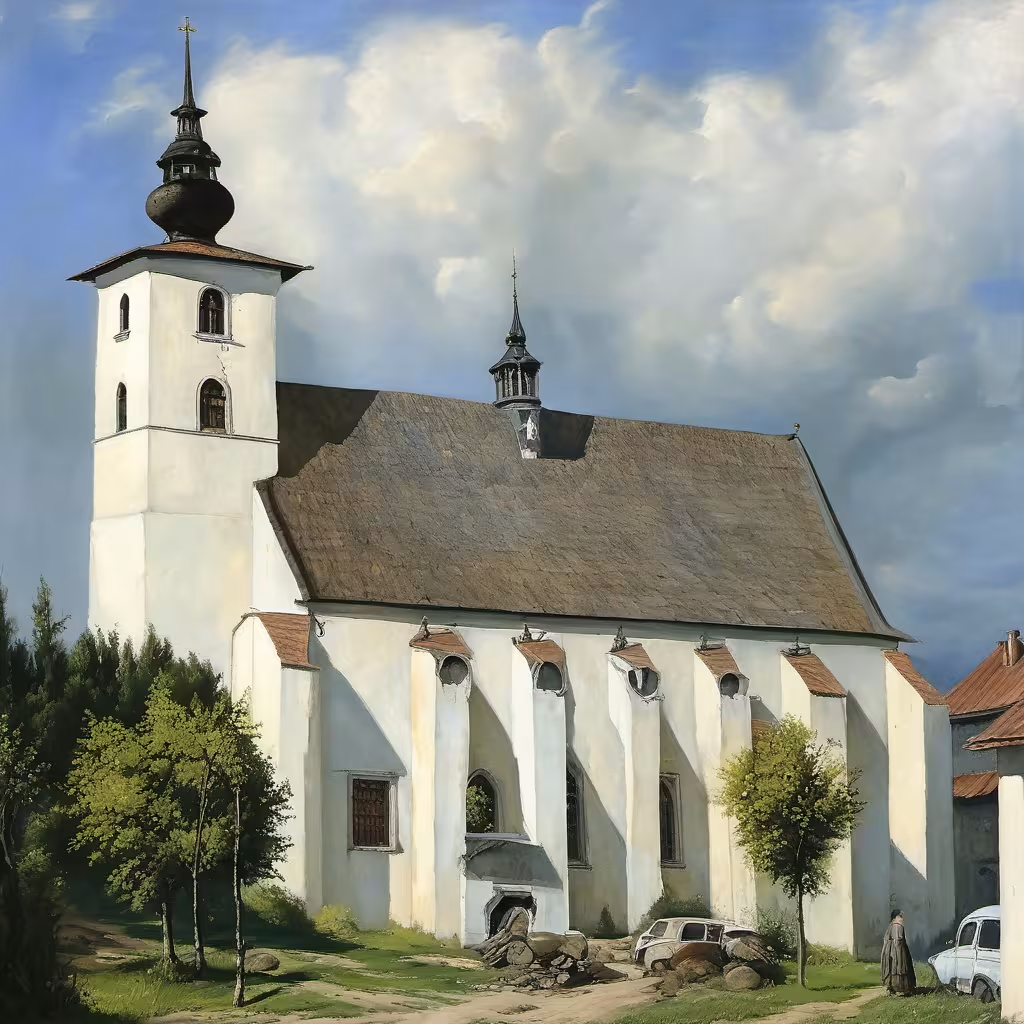
The historical appearance on the left is an AI-generated visualisation and serves as inspiration only.
Historical milestones
- 1351
- First written mention of the church.
- 1599
- The demolition of the original wooden church.
- 1599-1603
- Construction of the contemporary Renaissance church.
- 1724-1725
- Building the Baroque Chapel of the Holy Cross.
- 1784
- Construction of presbyterium and removal of stone altar.
Architectural development
After the demolition of the original wooden church, a new Renaissance building was built between 1599- 1603. After 1620 there was a gradual Baroque reconstruction of the interior and in 1784 there were significant changes in presbyterium. The facade was restored between 2004 and 2016.
Historical events
In 1599 the original wooden church was demolished by order of John Jr. from Žerotín. In 1599- 1603, a contemporary Renaissance brick building was built. In 1724-1725, the Baroque chapel of the Holy Cross was built for the family of Žerotín.
Owners
House of Žerotín
Points of interest
- The church serves as a parish temple of the local Roman Catholic parish and is protected as a cultural monument since 1958. - The beginnings of sacral life at this place date back to 1351, when the first written mention of the Church of Los Angeles, allegedly wooden and extensive. - In 1599 this building was demolished at the order of Jan Jr. from Žerotín and a new brick church was built between 1599 and 1603, which is described as the builder Antonio Thoma. - After 1620, the interior was gradually transformed for Catholic services and the most extensive building arrangements took place in 1784 when empores were demolished from the presbytery. - A significant part of the church is the Baroque Chapel of the Holy Cross built in 1724-1725 at the order of Jan Louis of Žerotín, which contains forty-four funeral homes for the family Žerotín.
Guide
This guide is narrated by a synthetic voice generated by artificial intelligence.
Show guide text
This text was created by artificial intelligence and has not been editorially reviewed. It may contain inaccuracies.
The Church of Saint John the Baptist in Velké Losiny is among the largest and most distinctive rural sacred monuments in Moravia. It serves as the parish church of the local Roman Catholic parish and its grounds have been protected as a monument since 1958.
The first written mention of the church in Losiny dates from 1351. It is said that it was wooden and quite extensive. However, research suggests that before 1599, a smaller church stood here, partly built of stone with a massive rectangular tower. The estate owner Jan the Younger from Žerotín had it demolished and its wood allegedly served for the construction of three smaller churches in Maršíkov, Žárová and Klepáčov.
The new stone church was built between 1599 and 1603. Antonio Thoma is credited as its builder. The church was originally designed for Protestant Lutheran services. This was reflected in its austere interior and the galleries that survive to this day. The nave with a barrel vault was lined with galleries and in the chancel stood a massive sandstone altar. A fragment of it depicting the Baptism of Christ in the Jordan is still walled into the eastern wall. The tower at that time reached a height of 32 meters.
After 1620, the interior was gradually adapted for Catholic services. Baroque, Rococo and Classicist furnishings and wall paintings were added, though many were later plastered over or destroyed. The biggest changes came in 1784. The stone altar disappeared, the chancel was reduced in size and raised, and behind the altar a large painting of Saint John the Baptist by the Brno theatrical painter Pachmayr was added. In 1787, vestibules were created at the north and south entrances.
Jan Ludwig from Žerotín had a Baroque chapel of the Holy Cross with a family crypt built against the north side of the church in 1724 and 1725. Burials took place there until 1931. Around the chapel are thirty-four burial niches into which coffins and caskets were placed and then sealed. The sculptural decoration was created by Jiří Antonín Heinz. The paintings are traditionally attributed to Jan Kryštof Handke, though only fragments have survived.
The church is a single-nave structure of the preaching type, that is without a separate chancel, with a projecting rectangular tower on the west. The vault is secured from the outside by buttress pillars. Tombstones from the old cemetery, which was closed in 1873, remain on the walls. By the entrance stands a cross from 1807 and a group of sculptures from 1813. The façade was renovated between 2004 and 2016.
Tips for visitors
The best time to visit the church of St. John the Baptist in the Great Losiny is the early spring or late autumn. In these months you avoid extreme temperatures and sunlight, which allows you to better appreciate the architectural details of the building.
For those travelling by public transport, direct links with Olomouc or other neighbouring cities are offered. We recommend checking the current possibilities and times of using the traffic search engine.
When visiting the church, bring your shoes suitable for walking on stone paths that can be endless. Complete your inventory with a map of the area and scientific publications on the history of the church if you are interested in learning more about its background.
Photography of the church offers the best effects before and after the end of the sun, when the light is softer. Remember also to consider the inner details of the church that are illuminated by natural light.
There are several attractions in the vicinity of the Great Losiny. Visit the surrounding forests for short walks or enjoy a quiet moment in nature. For families with children it is also appropriate to visit the local park where children can move safely.
Frequently asked questions
Can the monument be visited?
Religious buildings are usually open mainly during services; at other times a visit is normally arranged with the parish or the operator. We have not verified specific times.
Where is the monument?
Location: Velké Losiny, Olomoucký kraj. The map on this page shows the exact spot.
Why is the monument protected?
It is listed in the Central List of Cultural Monuments of the Czech Republic as a cultural monument (register no. 28829/8-1186).
For kids
Imagine going back to the past. Where would you like to look? To the world of princes and knights, perhaps a city full of markets and people? But I'm offering you something completely different.
The village Velké Losiny, where we stand today in front of the church of St. John the Baptist. This place is full of history and secrets. To get back to the past, I have to ask you to travel through time.
Businesses nearby
Do you run a restaurant, accommodation, shop, museum, rental, wellness or other visitor service near this monument? Show yourself directly to the people heading to it — this is how they will see you in the app and on the web:
Events nearby


Zdroj akcí: otevřená data měst a obcí ČR (Národní katalog otevřených dat) a kalendář akcí Národního památkového ústavu.
Nearby
Forests
Rovensko pod Troskami
Accommodation nearby
Themed route
Thematic cruise route: Church of St. John the Baptist in the Great Losin
1. Church of St. John the Baptist (Velké Losiny) * Type: * Religious landmark * Why is it worth visiting: * This Baroque church is not only the spiritual centre of the village, but also an architectural pearl with a rich history. Its interior offers beautiful frescos and statues that attract visitors from all over the region.
2. Chapel of the Virgin Mary Help * Type: * Chapel * Why is it worth a visit: * This chapel is a place of quiet coziness and prayer, located near the church. It is famous for its historic decoration and provides a view of the surrounding landscape of the Great Losin.
3. Local Museum * Type: * Museum * Why is it worth a visit: * The local museum offers valuable information about the history and culture of the village Velké Losiny. Here you can see traditional objects and artifacts that tell us about the life of our ancestors.
4. Church Tower * Type: * Architectural structure * Why is it worth a visit: * Church tower offers a unique view of the village and surrounding landscape formations. It is an ideal place for those who are looking for quiet moments with a beautiful panorama.
5. Church tank * Type: * Open space * Why is it worth a visit: * The reservoir is an ideal place to relax and reflect after a tour of the church. Here you can enjoy a quiet moment in a pleasant outdoor environment while looking at the architectural details of the church.
This route offers a comprehensive view of the cultural and historical wealth of the village Velké Losiny.
Seasonal recommendations
Spring: In the spring period, the church of St. John the Baptist in the Great Losiny offers visitors a unique atmosphere where the newly expired snow retreats before the first flowering bushes and trees. The sunny days create beautiful lighting for photographing historical architectural details of the church, while nature wakes up around it. A mild warm suit is suitable for visiting, because the weather can be medium with wet days. Preferably visit on Sundays or holiday days when crowds are usually smaller.
Summer: Summer brings life and attraction to St. John the Baptist Church. The sunny days offer ideal conditions for exploring historical architectural details, while nature around the church is in bloom. More visitors may appear in the main summer season, so we recommend visiting the earlier in the day to enjoy a quieter environment. A wet summer requires light clothes and plenty of drinking water.
Autumn: Autumn brings the church of St. John the Baptist an atmosphere full of fine colours, when tree leaves receive golden yellow and red shades. The sunny days are ideal for getting to know historical architectural details in a calmer atmosphere, as traffic begins to decline. It is advisable to wear mild clothes and to cross a warm jacket for a colder afternoon. Best to visit on Sundays or holiday days when there are fewer people.
Winter: The winter season offers the Church of St. John the Baptist an atmosphere full of peace and quiet. The snow blanket creates a romantic landscape around the church, while the freezing days offer brighter lighting to photograph historical architectural details. Wet and cold weather requires warm clothes, including jackets, shoes on wet floors and winter wind protection.
Visualizations and artistic views


The visualisations are generated by artificial intelligence and serve as inspiration.
Photos from the area
Real photos taken near the monument


Zdroj a licence jsou uvedeny u každého snímku.
View from the area
This animation was generated by artificial intelligence from a real photograph of the surroundings. The motion and details are not real footage of the location.
Atmosphere of the place
This atmospheric visualisation of the place and period was generated by artificial intelligence. It is not real footage of the location.
Tips from visitors
No tips yet. Be the first!
Log in and add your tip.
Sources and literature
Photos: Martin Strachoň / CC BY-SA 4.0, rozlišení zvýšeno umělou inteligencí — Wikimedia Commons. The author and licence also appear when you hover over the image.
Faktickým podkladem tohoto textu byl článek na Wikipedii, jehož autory jsou přispěvatelé Wikipedie. Článek je dostupný pod licencí CC BY-SA 4.0.
Location on the map

Příběhy a pověsti
Legendy, pověsti a příběhy spjaté s touto památkou
Fotografie návštěvníků
Zatím žádné fotografie. Buďte první, kdo přidá fotografii z návštěvy!
Log in a přidejte svou fotografii nebo hodnoťte.
Za ověřenou návštěvu v aplikaci získáte víc bodů — poznáme podle GPS, že jste na místě.
Reviews and comments