



kostel svatého Jiří (Náklo) Church
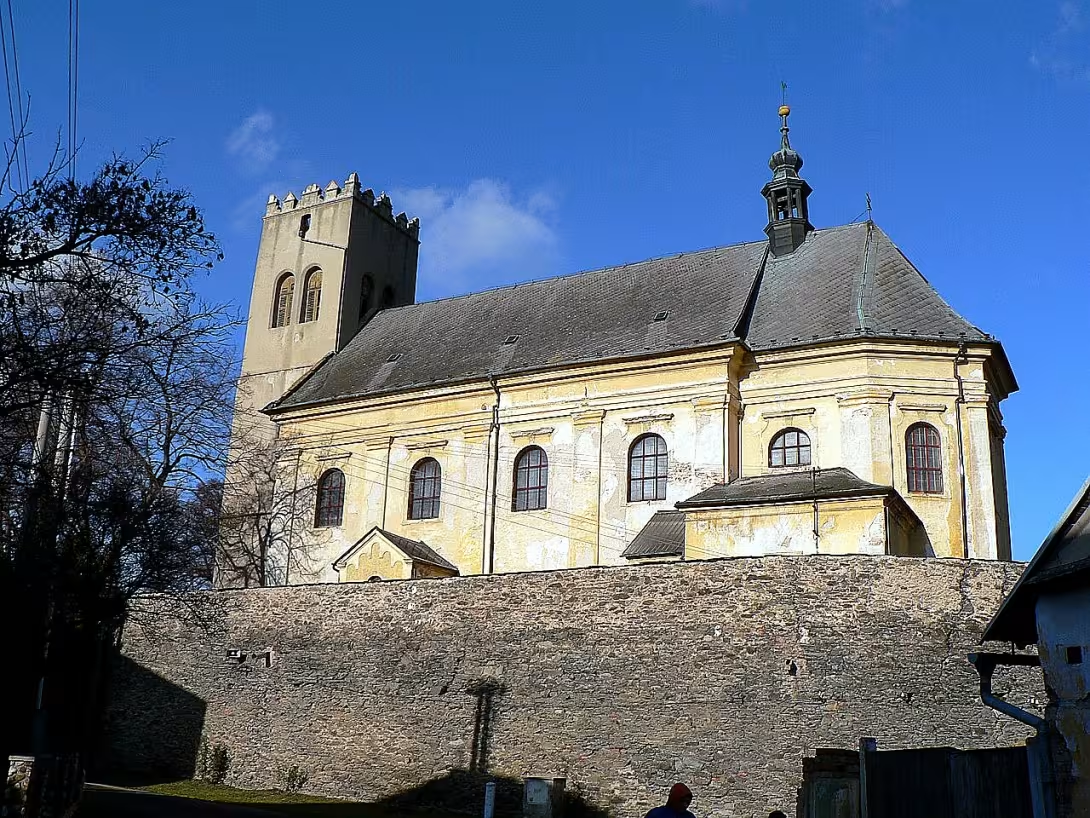
The predecessor of today's church was a medieval chateau or a fortress of knights from Nakla. The first mention of the rectory in Nakl dates back to 1140, the church itself is documented in 1250. The tower was built after 1450. In the middle of the 16th century there was a major reconstruction - a new Renaissance church was built in 1560 (other sources include dating 1572-1576). Further adjustments were made between 1587 and 1593. The Thirty Years' War was a disaster - the church was burned and partly destroyed. Today's form comes from the Baroque period. From 1696 to 1698, the baroque reconstruction was carried out by the Hradic premonstrat canaries. The base stone was laid on 19 September 1696 with the participation of Abbot Norbert of Počernice. The Renaissance tower with atics from 1572-1576 was preserved. The church was consecrated in 1698. In the 20th century maintenance was carried out - in 1928 painting and repair of the portal, between 1965 and 1966 repair of the facade.
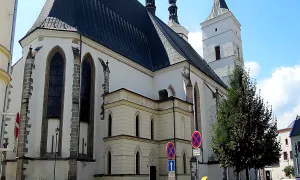
The high-rise building is oriented by a single-boat construction with a five-sided finish and a prism tower in the axis of the western facade. The tower (7,4 × 7,4 m, square ground plan) has cylindrical screw staircases on the north side. The main entrance is decorated with a stone portal with a pair of columns, which carry the upper threshold with the year 1698 and characters including the coat of arms of Abbot Želecký. There's a statue of St. Stephen above the entrance. The ship covers a rolled vaults with manhole sections, windows are framed by profile shamrans. The facade of the Tuscan Pilasters. The tower is finished with the battlements.
The interior is equipped with a baroque mobility. The main altar was completed in 1939. There's a brick on the west side of the ship. The organ was manufactured in 1824 by the Olomouc organist Michal Oranský (1768-1854) - the instrument has two manuals and sixteen registers. In 1853, the organist Konrad Blaschke repaired them and added two new registers. In the tower there are bells from 1514 and 1515 dedicated to St. Vojtej and St. George, plus cibals connected to the tower clock.
The church was originally surrounded by a cemetery, from which a brick skeleton was preserved (6 × 4,5 m). The cemetery was abolished in 1873. At the entrance stands a cross from 1745 on a two-stage pedestal - the upper part consists of a clover stone cross with the crucified Christ, the lower stage bears the relief of St. Wenceslas. The church is surrounded by an oval wall (7-10 m high) with supporting pillars and a bastion edge in the back. The wall is decorated with profiled rome and stone gargoyles. There are two gates: the eastern one with the fresco of the Virgin Mary Lourd from 1899 and the south one with the staircase.
Visiting the church will enrich the case of remarkable survival of the building through centuries. The various historical phases are still visible - from the Renaissance tower to the Baroque tower to later maintenance adjustments. The fortifications cast light on the ancient meaning of this place.
Then and now
Drag the slider to compare how the landmark may have looked when it was built with the view today.
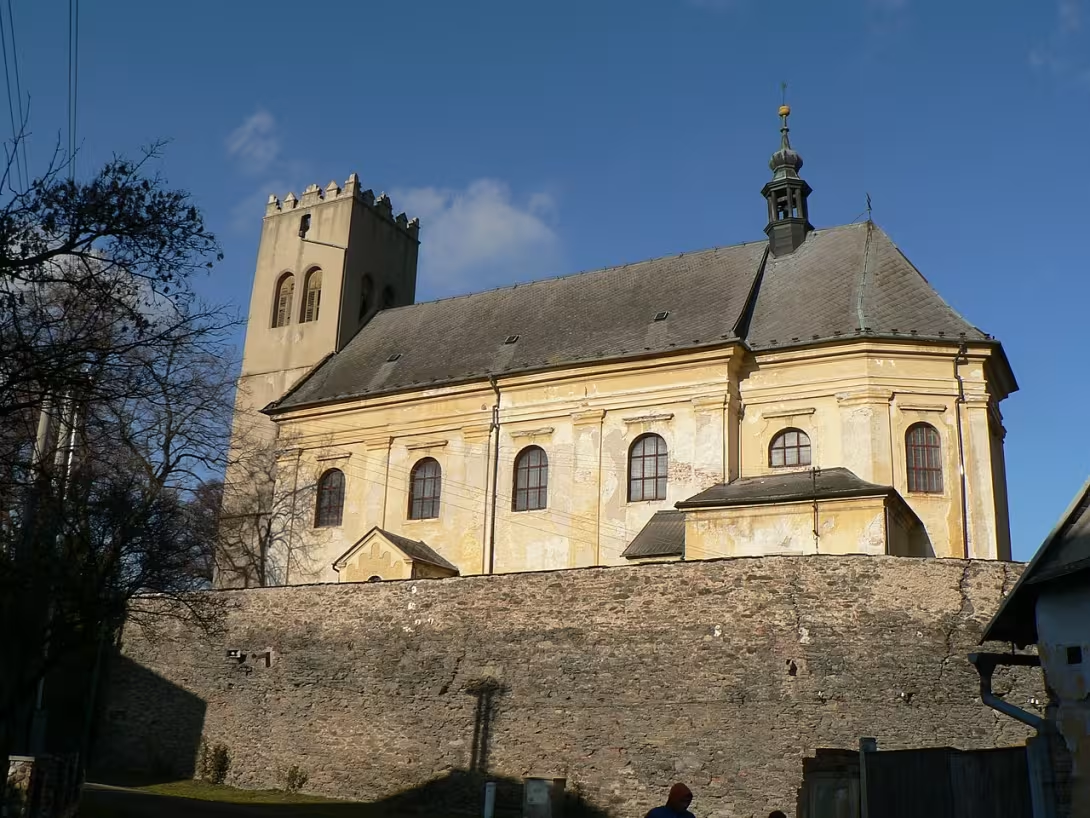

The historical appearance on the left is an AI-generated visualisation and serves as inspiration only.
Historical milestones
- 1140
- The first written mention of the rectory in the Ink.
- 1250
- First proof of the church.
- 1560
- The position of the new Renaissance church.
- 1696
- The laying of the base stone of Baroque reconstruction with the participation of Abbot Norbert Želecký.
- 1698
- The consecration of the baroque church.
Architectural development
The building underwent a complex development from the medieval fortress to the Renaissance church from the 16th century to the top Baroque reconstruction of the ship and presbytery. A characteristic element is a preserved Renaissance tower with atics and fortifying wall of quarry stone.
Historical events
In 1250, the church is first documented. A major Baroque reconstruction took place in 1696-1698. In 1873 the original cemetery surrounding the church was abolished.
Owners
hradic premonstrates (late 17th century)
Points of interest
The predecessor of today's church was a medieval chateau or a fortress of knights from Nakla. - The first mention of the rectory in Nakl dates back to 1140, the church itself is documented in 1250. - The tower was built after 1450 and the Renaissance tower with atics dates from 1572- 1576. - Baroque reconstruction of the church took place between 1696 and 1698 under the leadership of Abbot Norbert Želecký from Počernice. - The organ was produced by the Olomouc organist Michal Oransky in 1824, which was later repaired and expanded.
Guide
This guide is narrated by a synthetic voice generated by artificial intelligence.
Show guide text
This text was created by artificial intelligence and has not been editorially reviewed. It may contain inaccuracies.
The Church of Saint George in Náklu in the Olomouc region belongs to fortified churches and is a cultural monument. It stands on an elevated promontory and is surrounded by a mighty oval defensive wall.
The history of the place reaches far back into the Middle Ages. The parish in Náklu is first mentioned in the year 1140, while the church itself is documented in 1250. The predecessor of the church was supposed to be a manor or castle of the knights of Náklu. The tower was completed after 1450. Around 1560 a new Renaissance church was built on the site of the older church, though some sources give the years 1572 to 1576. Another reconstruction was to follow in the years 1587 to 1593.
During the Thirty Years' War the church was burned and partially destroyed. The Premonstratensians of Hradiště undertook its restoration. The foundation stone of the Baroque building was laid on September 19, 1696 with the participation of the Hradiště abbot Norbert Želecký of Počernice and in 1698 the church was consecrated. From its earlier form, the Renaissance tower with its attic remained.
The church is single-naved, with a pentagonal chancel and a pyramidal tower in the western façade. The tower ends with battlements and to its north side adjoins a cylindrical spiral staircase with loopholes. The main entrance is framed by a stone portal with a pair of columns. Its lintel bears the date 1698, the monastery coat of arms and the coat of arms of Abbot Želecký. In a niche above it stands a statue of Saint Stephen. In the tower hang two bells from 1514 and 1515, named Saint Adalbert and Saint George. Another bell from the same period is in the sanctus bell opening on the roof of the nave.
The interior is vaulted with a barrel vault and its furnishings are predominantly Baroque. The main altar was completed only in 1939. The organ was built in 1824 by the Olomouc organ builder Michal Oranský. In 1853 it was repaired by Konrád Blaschke who added two stops to it.
Around the church there was once a cemetery which was abolished in 1873. It is recalled by a small brick ossuary. At the entrance stands a stone cross from 1745 with a relief of Saint Wenceslas. It stood in front of the church gate until 1896.
The enclosing wall made of rough stone is seven to ten metres high and is reinforced by buttress pillars. On the rear side a bastion projects from it. Two gates lead into the area. Above the eastern one in a niche stands a statue of Our Lady of Lourdes from 1899, and stairs lead up to the southern gate.
Tips for visitors
For the best experience we recommend a visit on bright days, when the sunlight will highlight the baroque details and unique architecture of the building. More peaceful times during the day will allow you to better perceive the historic atmosphere of a fortified church without crowds.
When visiting, we recommend to bring comfortable shoes suitable for movement around the sights. For photography are the best places near the church, from where one can capture its unique connection of medieval fortification and baroque style, especially in good daylight.
Families with children can appreciate a survey of the surrounding terrain in the sharpness, which is an interesting activity in the natural environment. Within the village Náklo you can explore the historical nature of the place which is ideal for short family trips.
Frequently asked questions
Can the monument be visited?
Religious buildings are usually open mainly during services; at other times a visit is normally arranged with the parish or the operator. We have not verified specific times.
Where is the monument?
Location: Náklo, Olomoucký kraj. The map on this page shows the exact spot.
Why is the monument protected?
It is listed in the Central List of Cultural Monuments of the Czech Republic as a cultural monument (register no. 30248/8-1886).
For kids
Imagine going back to the past to a small village Náklo and standing in front of the wonderful church of St. George, which looked like a magnificent toy built on a small sand island. This church is a bit like an ancient guitar player whose strings are a house and a tower that sings history thousands of years ago.
Businesses nearby
Do you run a restaurant, accommodation, shop, museum, rental, wellness or other visitor service near this monument? Show yourself directly to the people heading to it — this is how they will see you in the app and on the web:
Events nearby

Zdroj akcí: otevřená data měst a obcí ČR (Národní katalog otevřených dat) a kalendář akcí Národního památkového ústavu.
Nearby
The church is situated on a raised island in the village Náklo.
Accommodation nearby
Trips and activities nearby
Guided tours, tickets and activities nearby from GetYourGuide
Affiliate link: if you buy from the partner, we may receive a commission. The price for you does not change.
Search tours and activities →Themed route
1. The village Náklo (village) - The journey begins in this location, which forms the basis for the exit to the monument. 2. Elevated Isle Room (natural formation) - The output follows this location, which thanks to its location offers interesting terrain. 3. Church of St. George (Náklo) (church) - The main destination of the trip, which stands right on top and represents the most important point of the route.
Seasonal recommendations
Spring: In the spring period, St. George's Church is transformed into a haven full of life and new beginnings. The sun illuminates the ancient architectural complex more precisely, increasing its beauty and detail. Nature wakes up when the first shrubs bloom and trees take on their green colors. The atmosphere is full of hope and peace, making the visit ideal for relaxing and celebrating natural changes. It is recommended to visit the church in the early afternoon when there are fewer people, and clothes suitable for mild temperatures.
Summer: Summer brings the most visitors to St. George's Church in Náklo. The sun's rays illuminate the interior and highlight its historical architecture, with rural greenery at the peak of its beauty. The atmosphere is full of vitality and active spirit, making the visit ideal for family trips or picnics under trees around the sights. It is recommended to arrive early in the morning or late in the afternoon to avoid crowds, and clothes suitable for warm weather.
Autumn: Autumn offers St. George's Church in Náklo a melancholy view when leaves colour trees and nature prepares for winter. The sun's rays shining through empty branch windows provide the interior with a magical atmosphere. This time of year is ideal for peaceful walks and celebration of the transitional colors of nature. It is recommended to visit the church in milder afternoon hours when there are fewer people, and clothes suitable for colder temperatures.
Winter: The winter period turns the church of St. George in Náklo into a snow paradise when covering snow highlights its historical beauty and trees appear as dark contours on a pale background. The atmosphere is calm and quiet, making the visit ideal for cold marches or photos in a less busy environment.
Visualizations and artistic views


The visualisations are generated by artificial intelligence and serve as inspiration.
Photos from the area
Real photos taken near the monument


Zdroj a licence jsou uvedeny u každého snímku.
Tips from visitors
No tips yet. Be the first!
Log in and add your tip.
Sources and literature
Photos: Martin Vavřík / Public domain — Wikimedia Commons. The author and licence also appear when you hover over the image.
Faktickým podkladem tohoto textu byl článek na Wikipedii, jehož autory jsou přispěvatelé Wikipedie. Článek je dostupný pod licencí CC BY-SA 4.0.
Location on the map

Příběhy a pověsti
Legendy, pověsti a příběhy spjaté s touto památkou

Fotografie návštěvníků
Zatím žádné fotografie. Buďte první, kdo přidá fotografii z návštěvy!
Log in a přidejte svou fotografii nebo hodnoťte.
Za ověřenou návštěvu v aplikaci získáte víc bodů — poznáme podle GPS, že jste na místě.
Reviews and comments