



kostel svatého Martina (Žerotice) Church
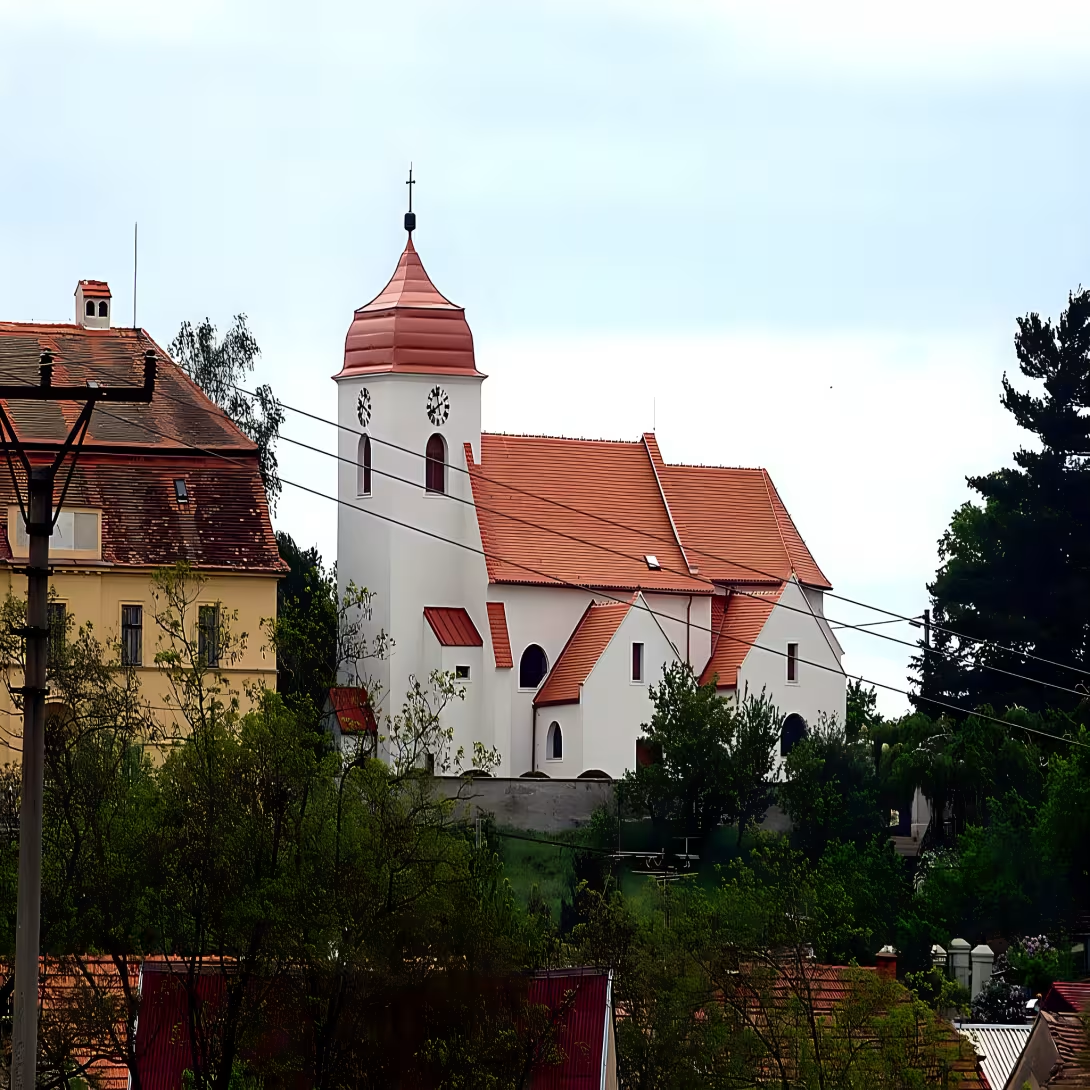
The Church of Saint Martin in Žerotice is a Roman Catholic parish church situated on the eastern edge of the village within the Jihomoravský kraj region. This historical monument, notable for its Gothic core and proximity to a Baroque parsonage, stands as a significant cultural site protected by the Czech Republic. The church's rich history spans several centuries, reflecting broader religious and political changes in Bohemia through phases of construction, destruction, and reconstruction.
The origins of the Church of Saint Martin trace back to before 1190, making it one of the oldest churches in the region. Initially constructed during a period when Bohemia was part of the Holy Roman Empire, the church underwent significant transformations influenced by the Hussite movement. In 1424, the original structure was destroyed by the Hussites, reflecting the tumultuous religious upheavals of the time. Despite this setback, a new Gothic church was erected in 1498, showcasing resilience and continuity in its architectural evolution.
Architecturally, the Church of Saint Martin has experienced various phases, each contributing to its current form. The initial Gothic structure built in 1498 laid the foundation for subsequent modifications. After suffering damage again in 1569, the church saw Baroque renovations starting in the late 17th century. Notably, a chapel dedicated to the Holy Trinity was added in 1706, featuring an altar of Saint John Nepomucene. The architecture is further distinguished by its three crypts beneath the floor and a presbytery that remains from the original construction.
Throughout its history, the Church of Saint Martin has witnessed numerous events and changes. A significant fire in 1725 led to extensive reconstruction efforts, including the addition of new altars and a statue of Saint Martin in 1774. The church's resilience is underscored by the survival of its oldest bell, which remains in use despite various relocations and reconstructions over the centuries.
Today, the Church of Saint Martin stands as a testament to historical endurance and architectural evolution. It continues to serve as an active parish church, with recent renovations ensuring its preservation for future generations. Visitors can explore its Gothic core, Baroque elements, and the chapel dedicated to the Holy Trinity, making it a worthwhile destination for those interested in Czech history and architecture.
The Church of Saint Martin is not only a place of worship but also a cultural monument that encapsulates centuries of historical narratives. Its enduring presence invites visitors to delve into its storied past and appreciate the architectural beauty that has withstood the test of time. Whether drawn by its historical significance or architectural charm, a visit to this remarkable church offers a unique glimpse into the rich tapestry of Czech heritage.
Then and now
Drag the slider to compare how the landmark may have looked when it was built with the view today.
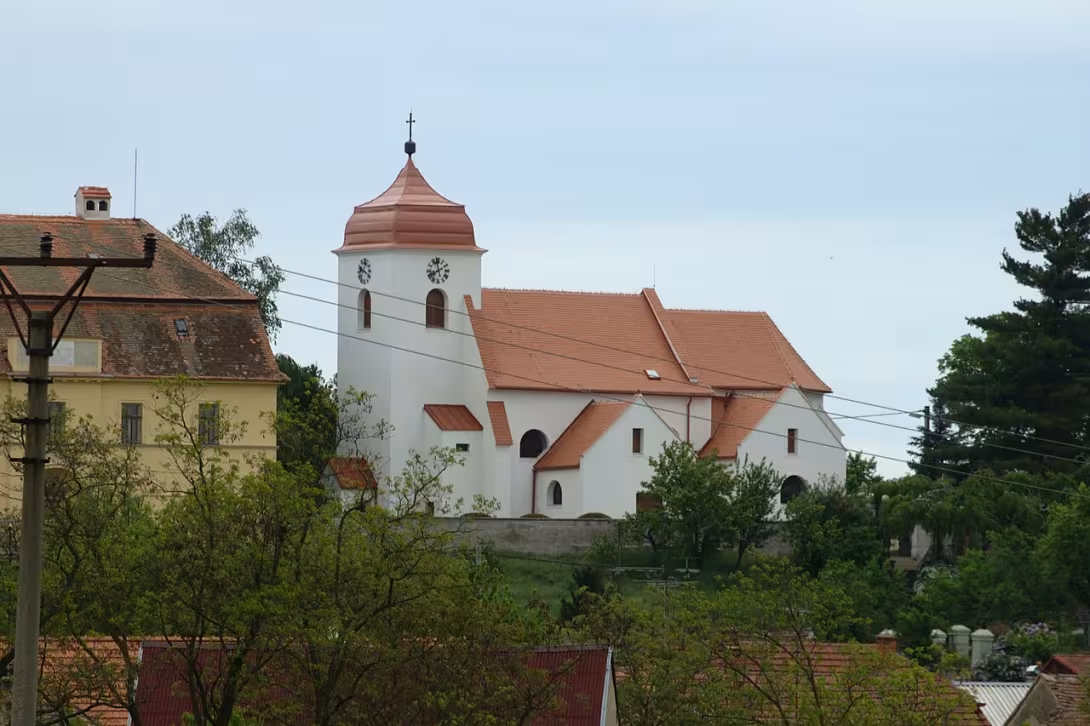

The historical appearance on the left is an AI-generated visualisation and serves as inspiration only.
Historical milestones
- 1190
- The church was mentioned with its first known parish priest.
- 1424
- The original church was destroyed by Hussites.
- 1498
- A new Gothic church was constructed.
- 1725
- The church suffered a significant fire.
Architectural development
The Church of Saint Martin has evolved through several architectural phases. Initially built before 1190, it was destroyed by Hussites in 1424 and rebuilt as a Gothic structure in 1498. After being damaged again in 1569, it underwent Baroque renovations starting in the late 17th century, including the addition of a chapel in 1706.
Historical events
The original church was likely built before 1190, making it one of the oldest in the region. It was destroyed by Hussites in 1424.
A new Gothic church was constructed in 1498, and a significant fire occurred in 1725, leading to further reconstructions.
Points of interest
- The Church of Saint Martin is one of the oldest churches in the region, with origins dating back before 1190, during a time when Bohemia was part of the Holy Roman Empire. This makes it a witness to significant historical transitions over centuries.
- Despite being destroyed by the Hussites in 1424, the church's resilience led to its reconstruction as a Gothic structure in 1498, showcasing the community’s determination to preserve their place of worship through turbulent times.
- The church features three crypts beneath its floor, an unusual architectural element that adds mystery and historical intrigue, hinting at past practices or significant burials within this sacred space.
- A notable feature is the chapel dedicated to the Holy Trinity, added in 1706 with an altar of Saint John Nepomucene. This addition reflects the Baroque era's influence on the church’s architecture during its renovation phase.
- The church houses a bell that has survived various relocations and reconstructions over centuries, making it one of the oldest bells still in use today, symbolizing continuity amidst change.
Guide
This guide is narrated by a synthetic voice generated by artificial intelligence.
Show guide text
This text was created by artificial intelligence and has not been editorially reviewed. It may contain inaccuracies.
The Church of Saint Martin is the parish church of the Žerotice parish. It stands on the eastern edge of the village, not far from a Baroque rectory, and is protected as a cultural monument.
Its origins go back deep into the past. It was probably built as early as before 1190, when a priest from Žerotice is mentioned. It thus ranks among the oldest churches in the area. In 1424 it was destroyed by the Hussites. A new Gothic church was built in 1498 and a new bell was acquired at that time. In 1569 the church was damaged again and Protestants forced the faithful to leave.
After the Battle of White Mountain, the church was restored by Dominican friars from Znojmo. By 1672 it already had three altars and a baptismal font. In 1706 a chapel of the Holy Trinity was added with an altar of Saint John of Nepomuk. In 1725 the church caught fire. In 1732 the rectory was built. In 1755 a new choir was created and the nave received a new vault. The church tower was built in 1755 or 1756.
The interior furnishing followed. In 1774 the church acquired a statue of Saint Martin and a new main altar. In 1782 two side altars were added. The first depicts Saint Joachim, Saint Anne and the Virgin Mary, the second depicts Saint Joseph and the Virgin Mary with the Child. Around 1825 the church was enlarged. In 1884 a painting of Saint Martin was purchased for the altar and in 1890 a new altar was installed.
During the First World War the bells were confiscated for war purposes. Only the oldest bell of Saint Martin remained, which was repaired in 1941. In 1927 the church was electrified and two years later stairs were built to it. In 1985 and 1986 the roof and electrical installation were repaired and the church was newly painted. In 2001 it was dehumidified and in 2002 it was painted again.
The church has a Gothic core. From the original structure the presbytery and baptismal font have been preserved. On the south side of the nave is a rectangular sacristy with a window and a chapel and on the same side is the entrance to the nave. A shelter adjoins the tower on the west side. Under the floor of the church are three crypts.
There was a cemetery near the church. After a cholera epidemic it was closed in 1831 and moved to the east of the village. On the new cemetery stands a stone cross from 1856.
Tips for visitors
The best time to visit the Church of Saint Martin in Žerotice is during late spring or early autumn. During these seasons, the weather is generally pleasant, making it ideal for exploring both the church and its surroundings without the discomfort of summer heat or winter cold. Additionally, visiting outside peak tourist season can provide a more serene experience with fewer crowds, allowing you to appreciate the Gothic architecture and Baroque parsonage in peace.
This ensures you can plan your visit efficiently without any unexpected delays.
When visiting the Church of Saint Martin, consider bringing comfortable walking shoes as you may wish to explore the surrounding village area after viewing the church. A camera is also recommended to capture the stunning Gothic architecture and intricate details of the Baroque parsonage. Since lighting inside historical buildings can be dim, a portable flashlight or your phone's light feature might come in handy for exploring darker corners.
Photography enthusiasts will find several spots around the Church of Saint Martin ideal for capturing its beauty. The best natural light is available during the early morning or late afternoon when the sun casts soft shadows that highlight the church’s architectural details. Try taking photos from the eastern side where the sunlight illuminates the facade beautifully, and don't forget to capture the contrast between the Gothic core and the Baroque parsonage.
For families with children visiting Žerotice, there are several engaging activities nearby within a 30-minute drive. The village itself offers a peaceful environment for family walks, allowing kids to explore nature and enjoy some downtime away from screens. Additionally, local markets or fairs might be happening in the area, providing an opportunity for children to experience local culture and crafts. Always check ahead for any events that could enrich your visit.
Frequently asked questions
Can the monument be visited?
Religious buildings are usually open mainly during services; at other times a visit is normally arranged with the parish or the operator. We have not verified specific times.
Where is the monument?
Location: Žerotice, Jihomoravský kraj. The map on this page shows the exact spot.
Why is the monument protected?
It is listed in the Central List of Cultural Monuments of the Czech Republic as a cultural monument (register no. 28359/7-6977).
Businesses nearby
Do you run a restaurant, accommodation, shop, museum, rental, wellness or other visitor service near this monument? Show yourself directly to the people heading to it — this is how they will see you in the app and on the web:
Accommodation nearby
Themed route
Thematic Vltour: Žerotice and Surroundings
1. Kostel svatého Martina (Žerotice) - Church Begin your journey at the heart of Žerotice with the Church of Saint Martin, a stunning example of baroque architecture that dates back to the 18th century. This church is renowned for its intricate interior design and historical significance, making it a must-visit for those interested in religious art and history.
2. Cemetery near Church of Saint Martin - Cemetery A short walk from the church leads you to the local cemetery, an often-overlooked site that offers insights into the community's heritage and traditions. The well-maintained grounds and historical gravestones provide a serene environment for reflection and appreciation of Žerotice’s past residents.
3. Local Historical Museum (if available) - Museum If there is a local museum in or near Žerotice, it serves as an excellent next stop to delve deeper into the region's history and culture. Exhibits typically feature artifacts, documents, and stories that paint a vivid picture of life in Jihomoravský kraj over the centuries.
4. Village Square (Náměstí) - Public Space Conclude your tour at the village square, where you can immerse yourself in the daily life of Žerotice. This central area often hosts local markets and events, offering a glimpse into contemporary community activities while surrounded by traditional architecture.
This thematic tour provides a comprehensive exploration of Žerotice's cultural and historical landscape, focusing on its most significant landmarks and communal spaces.
Seasonal recommendations
Spring: The arrival of spring at the Church of Saint Martin in Žerotice is marked by a rejuvenating atmosphere as nature awakens from its winter slumber. Visitors can enjoy the soft, warm light that filters through budding trees and illuminates the church's historic architecture with an ethereal glow. This season often brings mild temperatures and occasional showers, so wearing layers and bringing an umbrella or raincoat is advisable. Springtime tends to be less crowded than summer, making it a peaceful time for exploration. The best time to visit might be in late morning when the light is gentle and the air is fresh.
Summer: During the summer months, Žerotice's Church of Saint Martin basks in long days filled with vibrant sunlight that highlights the intricate details of its stonework. The surrounding landscape is lush and green, offering a picturesque setting for visitors. Summer attracts more tourists, so arriving early can help avoid crowds and ensure a more tranquil experience. Comfortable walking shoes and light clothing are recommended due to warmer temperatures. Additionally, bringing water and sunscreen is wise as you explore the church and its grounds.
Autumn: Autumn in Žerotice presents a spectacular display of colors with leaves turning shades of gold, orange, and red around the Church of Saint Martin. The crisp air and softer light create an enchanting atmosphere that enhances the historical ambiance of the site. This season is ideal for photography enthusiasts looking to capture the beauty of fall foliage against the church's backdrop. As temperatures begin to drop, wearing a warm jacket or sweater is advisable. While autumn can still attract visitors, it tends to be quieter than summer, offering a more serene experience.
Winter: The Church of Saint Martin in Žerotice takes on a magical quality during winter when snow blankets the landscape and the surrounding fields. Icicles may adorn the church's exterior, adding to its historic charm under the soft glow of streetlights or moonlight. Winter visits require preparation for colder temperatures; therefore, dressing warmly with layers is essential. The shorter days mean that visiting earlier in the day can help make the most of daylight hours. While winter might see fewer tourists than summer, it’s important to check the church's opening times as they may be reduced during this season.
Visualizations and artistic views


The visualisations are generated by artificial intelligence and serve as inspiration.
Photos from the area
Real photos taken near the monument


Zdroj a licence jsou uvedeny u každého snímku.
Atmosphere of the place
This atmospheric visualisation of the place and period was generated by artificial intelligence. It is not real footage of the location.
Tips from visitors
No tips yet. Be the first!
Log in and add your tip.
Sources and literature
Photos: I would appreciate being notified if you use my work outside Wikimedia. More of my work can be found in my personal gall / CC BY 4.0, rozlišení zvýšeno umělou inteligencí — Wikimedia Commons. The author and licence also appear when you hover over the image.
Faktickým podkladem tohoto textu byl článek na Wikipedii, jehož autory jsou přispěvatelé Wikipedie. Článek je dostupný pod licencí CC BY-SA 4.0.
Location on the map




Příběhy a pověsti
Legendy, pověsti a příběhy spjaté s touto památkou

Fotografie návštěvníků
Zatím žádné fotografie. Buďte první, kdo přidá fotografii z návštěvy!
Log in a přidejte svou fotografii nebo hodnoťte.
Za ověřenou návštěvu v aplikaci získáte víc bodů — poznáme podle GPS, že jste na místě.
Reviews and comments