



Kostel svatého Prokopa a svaté Barbory Church
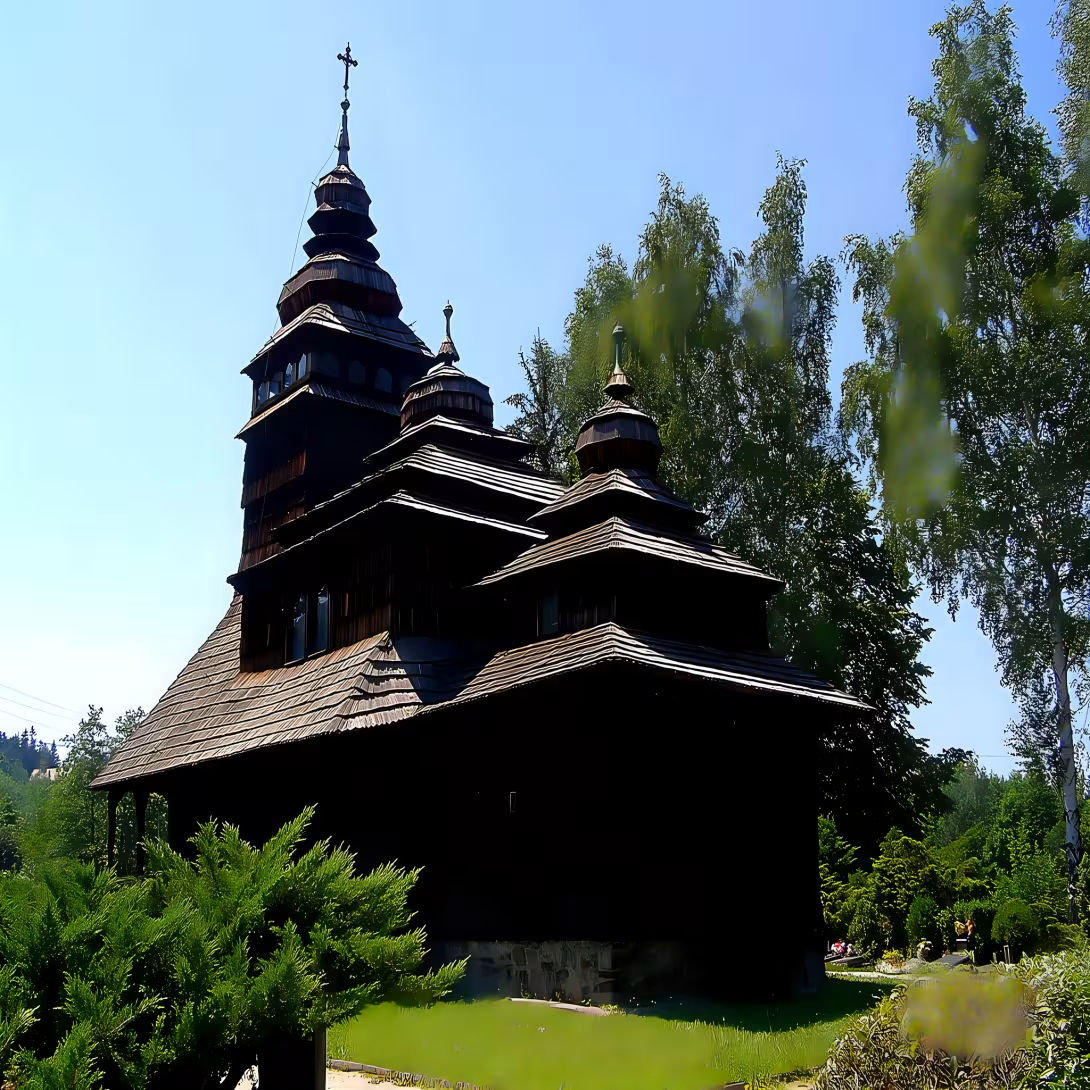
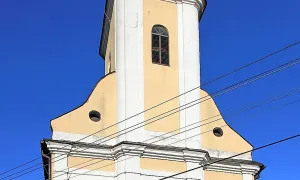
The Church of Saint Procopius and Saint Barbara in Kunčice pod Ondřejníkem is a remarkable wooden structure exemplifying Carpathian architectural traditions. Originally built at the turn of the 17th century near Čynadijov, it was relocated to its current site in 1931. This church features a distinctive stepped gable roof with domes, more commonly associated with Lemkovian churches.
The origins trace back to Hlyňanec near Čynadijov, where it was constructed at the turn of the 17th century. By the early 20th century, the building had fallen into disrepair and no longer met community needs. In response, Ing. Eduard Šebela, then president of the Okrašlovací spolek (Decoration Society), offered to purchase it in 1928. By 1931, it was dismantled, transported by train, and reconstructed on a hill called Na Humenci in Kunčice pod Ondřejníkem. The reconstruction involved rebuilding the roof and constructing a new tower based on designs from other preserved Bojkovský-type churches.
Architecturally, this church is characterized by its use of oak beams instead of the more typical coniferous wood found in similar structures. This choice necessitated specialized craftsmanship during restoration efforts, particularly in 1983 when the church was restored despite being in disrepair at the turn of the 1970s and 80s. The design includes a stepped gable roof with domes, which is more typical of Lemkovian churches than Bojkovský ones.
Throughout its history, the Church of Saint Procopius and Saint Barbara has seen various changes in administration and fortune. Initially maintained by the local parish at Kunčice pod Ondřejníkem's church of Saint Mary Magdalene, it underwent regular maintenance every seven years with Karbolineum to preserve its structure. However, despite these efforts, the church fell into disrepair by the late 20th century. Restoration work in 1983 faced challenges due to the use of oak beams and was complicated further when P. Josef Trlík, who initiated the repairs without state approval, was transferred to Kyjovice. The subsequent farář, P. Vincenc Svák, continued the restoration with local craftsmen's help, managing to save the church at remarkably low costs.
Key events in the church’s history include its relocation and reconstruction in 1931, when it was consecrated by Bishop Msgre. Jan Stavěl on August 23rd of that year. Another significant event occurred in 1994 when the church was robbed; a large cross with the crucified Christ and an image of Saints Procopius and Barbara were stolen. Despite these challenges, restoration efforts continued into the late 2000s, including repairs to the roof's plating around 2010.
Today, the Church of Saint Procopius and Saint Barbara remains a significant cultural landmark in Kunčice pod Ondřejníkem. It is surrounded by an urn grove established in 1963 near its cemetery, adding to the site’s historical ambiance. The church's preservation efforts reflect the community's dedication to maintaining this architectural gem. Visitors are invited to explore this unique structure and appreciate its rich history and cultural significance within the region.
The Church of Saint Procopius and Saint Barbara stands as a testament to the enduring legacy of Carpathian wooden architecture, offering visitors an opportunity to connect with the past while appreciating the craftsmanship and dedication that have preserved it through the centuries.
Then and now
Drag the slider to compare how the landmark may have looked when it was built with the view today.
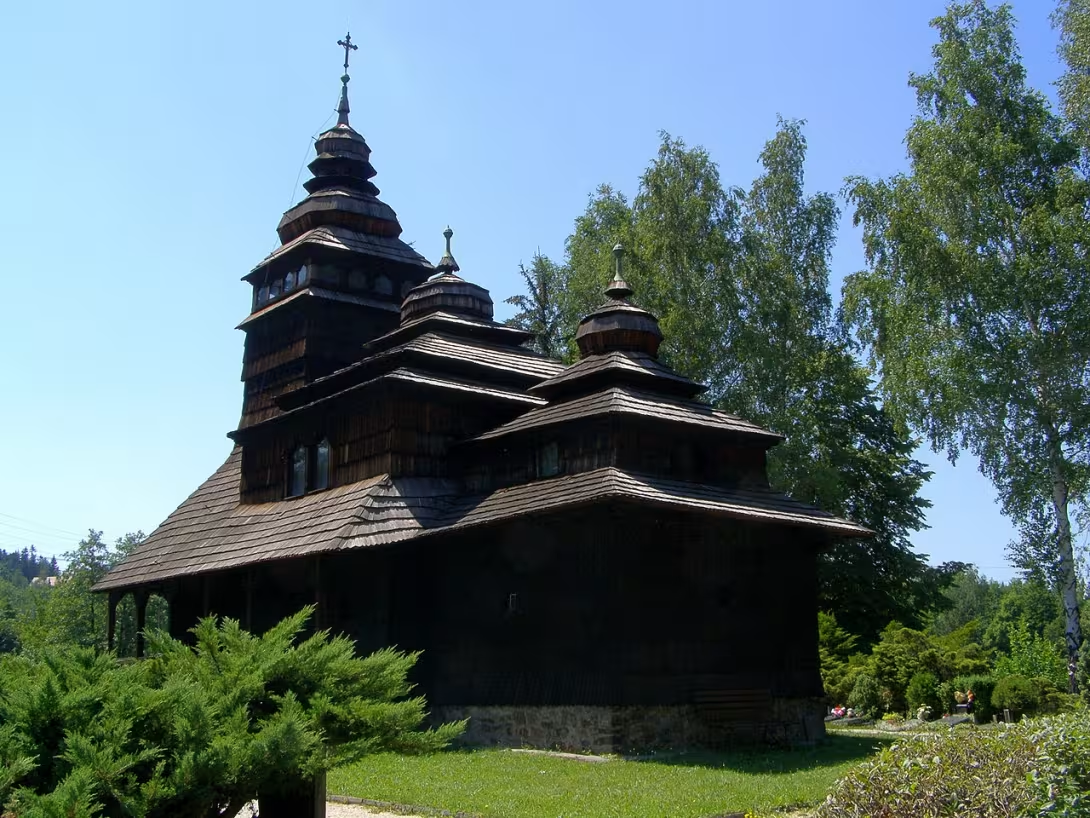
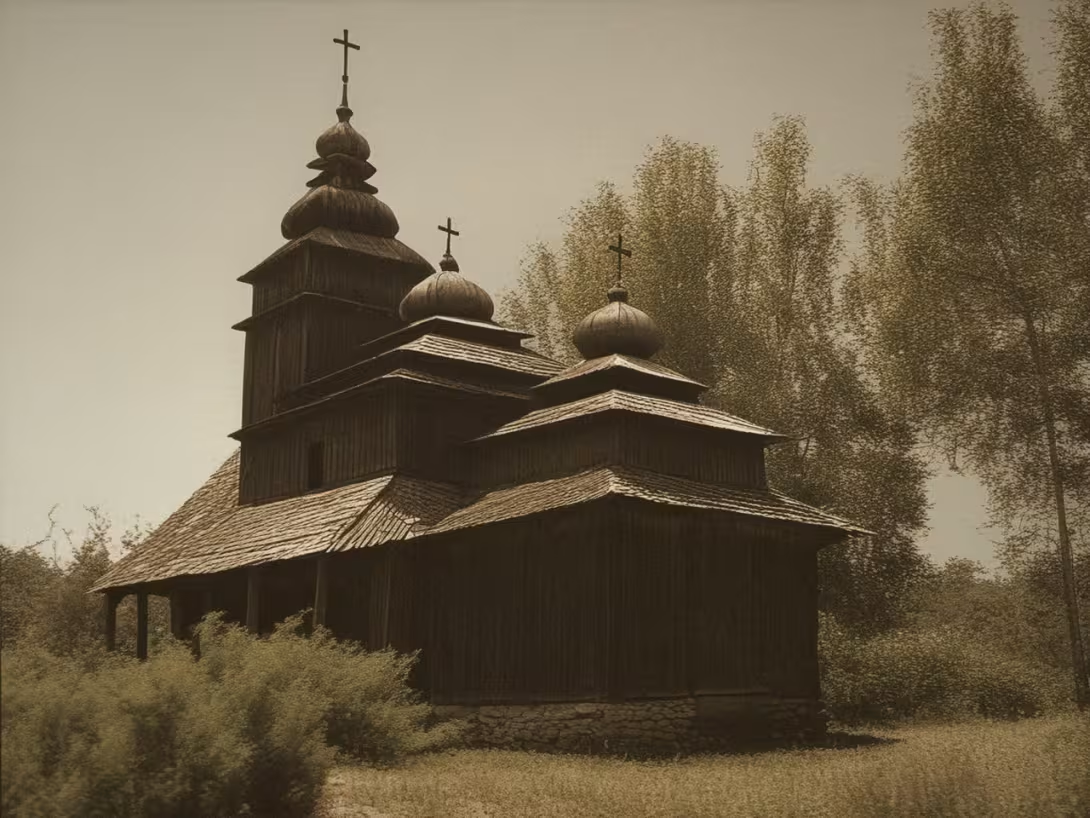
The historical appearance on the left is an AI-generated visualisation and serves as inspiration only.
Historical milestones
- kolem 1600
- Původní stavba kostela u Hlyňanec.
- 1928
- Ing. Eduard Šebela nabízí nákup kostela.
- 1931
- Kostel přemístěn a znovu postaven v Kunčicích pod Ondřejníkem.
- 1983
- Obnova kostela s ohledem na použití dubových prken.
- 1994
- Krádež v kostele, ztráta velkého kříže a obrazů.
- okolo 2010
- Obnova plachtování střechy.
Architectural development
Originally constructed in Hlyňanec, the church underwent significant changes when it was relocated to Kunčice pod Ondřejníkem. The roof had to be rebuilt, and a new tower was constructed based on other preserved churches of the Bojkovský type. In 1983, restoration efforts were complicated by the use of oak beams instead of typical coniferous wood, requiring specialized craftsmanship.
Historical events
- 1931
- The church was dismantled in Hlyňanec, transported by train, and reconstructed on a hill called Na Humenci in Kunčice pod Ondřejníkem.
- 1994
- The church was robbed; significant items including a large cross with the crucified Christ and an image of Saints Procopius and Barbara were stolen.
Points of interest
- The Church of Saint Procopius and Saint Barbara was originally constructed near Čynadijov at the turn of the 17th century, a period marked by significant religious and cultural developments in Europe. Its relocation to Kunčice pod Ondřejníkem in 1931 highlights an effort to preserve architectural heritage amidst modernization.
- Unlike most Bojkovský-type churches, this church was built using oak beams rather than the more common coniferous wood, a choice that required specialized craftsmanship during its restoration. This unique construction material underscores the church's distinctiveness and the challenges faced in preserving it.
- The church experienced an unusual administrative challenge when P. Josef Trlík initiated unauthorized repairs before being transferred to Kyjovice. Despite this setback, local farář P. Vincenc Svák continued the restoration efforts with community support, demonstrating resilience and dedication to cultural preservation.
- In 1994, the church fell victim to a robbery where a large cross featuring the crucified Christ and images of Saints Procopius and Barbara were stolen. This incident underscores the vulnerability of historical sites to modern-day crimes, despite their cultural significance.
- The surrounding urn grove, established in 1963 near the church's cemetery, adds an additional layer of historical ambiance to the site. This feature reflects mid-20th-century practices in memorialization and complements the church’s architectural heritage.
Guide
This guide is narrated by a synthetic voice generated by artificial intelligence.
Show guide text
This text was created by artificial intelligence and has not been editorially reviewed. It may contain inaccuracies.
The Greek Catholic Church of Saint Prokopios and Saint Barbara in Kunčice pod Ondřejníkem is a typical Carpathian wooden sacred building, so-called tserkovya. It belongs to the Boyko type, even though it lies far beyond the borders of Boyko territory. The Boyko type is characterized by a needle-like stepped roof. It is topped with cupolas, which are more typical for churches of the Lemko type.
The small church originated at the turn of the seventeenth and eighteenth centuries in the village of Hlyňanec near Čynadijov in the Svalava district. We know little about its fate at its original location. During the First Republic, it was already too small for the inhabitants of Hlyňanec and began to deteriorate rapidly, especially when the community built a new brick church. There was a threat that it would disappear like many other wooden structures in this region. The parishioners from the poor community therefore welcomed when engineer Eduard Šebela, chairman of the Beautification Society, offered to purchase it in nineteen twenty-eight.
In nineteen thirty-one, engineer Vojáček's company dismantled the church and transported it by rail to Kunčice pod Ondřejníkem. There it was rebuilt on a hillock called Na Humenci. The roof had to be made anew. The original tower was not preserved at all, so a new one was created according to other churches of the Boyko type. On Sunday, August twenty-third, nineteen thirty-one, the church was consecrated anew to the patrons of miners, Saint Prokopios and Saint Barbara, by Bishop Monsignor Jan Stavěl. He also said the first mass here. Similar small churches at the same time ended up in Kinský Gardens in Prague, in Nová Paka, Blansko, Hradec Králové, and Dobříkov.
The local parish of the Church of Saint Mary Magdalene took care of the church. Every seventh year it was treated with creosote, and yet at the turn of the nineteen seventies and eighties it ended up in a critical state. The repair in nineteen eighty-three was all the more demanding because the church was not built from the usual coniferous beams, but from oak. It was started by Father Josef Trlík, however without state approval, and therefore he was transferred to Kyjovice in the Opava region. His successor, Father Vincenc Svák, continued the repairs only with great difficulty. With the help of local craftsmen, the church was ultimately saved at remarkably low cost.
In nineteen ninety-four the church was robbed. Thieves took away a large cross with a crucified Christ and an image of Saint Prokopios and Barbara from eighteen ninety-three. It previously hung in the guildhall of the Šalamoun pit in Moravská Ostrava. At the turn of two thousand nine and two thousand ten, the roof received a new cover. Around the cemetery extends an urn grove, founded in nineteen sixty-three.
Tips for visitors
The best time to visit the Church of Saint Procopius and Saint Barbara is during late spring or early autumn, when the weather is mild and pleasant for exploring outdoor sites. These seasons offer clear skies and comfortable temperatures ideal for appreciating the church's architecture and surrounding landscape without the summer crowds or winter cold.
The hilltop location provides a scenic drive or walk up to the site.
When visiting, bring comfortable walking shoes as you'll likely explore the surrounding area, including the urn grove near the cemetery. A camera is recommended to capture the unique wooden structure of the church and its picturesque setting on Na Humenci Hill. Don't forget water and a hat for sun protection during warmer months.
For photography enthusiasts, early morning or late afternoon light offers the best conditions to photograph the church, casting soft shadows that highlight the intricate woodwork typical of Carpathian 'cerekev' architecture. The hilltop provides panoramic views, making it an excellent spot for landscape shots as well.
Nearby attractions within a 30-minute drive include other historical sites and natural landscapes in the Moravskoslezský region. Families with children can enjoy exploring the urn grove around the cemetery, which adds to the cultural experience of the area. It's an educational opportunity for kids to learn about local history and traditions.
Frequently asked questions
Can the monument be visited?
Religious buildings are usually open mainly during services; at other times a visit is normally arranged with the parish or the operator. We have not verified specific times.
Where is the monument?
Location: Kunčice pod Ondřejníkem, Moravskoslezský kraj. The map on this page shows the exact spot.
Why is the monument protected?
It is listed in the Central List of Cultural Monuments of the Czech Republic as a cultural monument (register no. 20654/8-678).
Businesses nearby
Do you run a restaurant, accommodation, shop, museum, rental, wellness or other visitor service near this monument? Show yourself directly to the people heading to it — this is how they will see you in the app and on the web:
Nearby
The church is located on a hill called Na Humenci in Kunčice pod Ondřejníkem. The surrounding area includes an urn grove established around the cemetery, adding to its cultural landscape.
Accommodation nearby
Themed route
Thematic Walking Tour: Kunčice pod Ondřejníkem
1. Kostel svatého Prokopa a svaté Barbory
- Type: Church
- Why Visit: This church, perched on the hill called Na Humenci, is an architectural gem that offers panoramic views of Kunčice pod Ondřejníkem. Its serene atmosphere and historical significance make it a perfect starting point for exploring local heritage.
2. Urny Grove
- Type: Cultural Landscape
- Why Visit: Located around the cemetery near the church, this urn grove adds to the cultural landscape of Kunčice pod Ondřejníkem. It provides a tranquil space for reflection and appreciation of traditional burial practices, enhancing your understanding of local customs.
3. Cemetery
- Type: Cemetery
- Why Visit: The cemetery surrounding the church is not only a resting place but also an integral part of the area's cultural heritage. Walking through its paths offers insights into the community's history and traditions, making it a meaningful stop on your tour.
This route allows you to immerse yourself in the historical and cultural essence of Kunčice pod Ondřejníkem while enjoying the natural beauty of the surrounding landscape.
Seasonal recommendations
Jaro: In the spring, the Church of Saint Procopius and Saint Barbara in Kunčice pod Ondřejníkem comes to life with vibrant colors as green vegetation begins to spread around this historic monument. Sunny days provide ideal lighting for photography and exploring the architectural details of the church with clear but gentle light. The atmosphere is calm and friendly, making this an ideal time for relaxed visits without the pressure of crowds. Visitors should wear clothing suitable for mild temperatures and prepare for possible rain, as spring weather can be changeable suddenly. The best times to visit are in the morning or late afternoon to avoid potential rain showers.
Summer: Summer offers long days and warm sunlight, making the Church of Saint Procopius and Saint Barbara a draw for visitors seeking an escape from city life. Nature around the church is in full bloom, adding color and vitality to the atmosphere. However, summer also brings higher numbers of visitors, especially during peak season when people are more mobile. Visitors should arrive early to enjoy a quieter tour of the church. Warm clothing and sun protection (such as a scarf or hat) are recommended, along with plenty of water to drink during your visit.
Autumn: Autumn brings changing colors and a mature atmosphere around the Church of Saint Procopius and Saint Barbara. Leaves on trees take on vivid hues, providing beautiful backdrops for photographing the monument. Sunny days are typically warm and friendly, while cooler evenings offer pleasant strolls around the church. Visitors should be prepared for quick weather changes and wear layered clothing that can easily be adjusted according to temperature. This time of year is ideal for visiting as it avoids summer crowds and offers a peaceful atmosphere.
Winter: In winter, the Church of Saint Procopius and Saint Barbara is enveloped in silence under snow or alternating wet conditions, creating a unique atmosphere. Sunny days offer beautiful lighting for visits while increasing the number of people seeking refuge from the cold outdoors. Visitors should wear warm clothing and appropriate footwear for possible wet conditions, such as boots with waterproof seams or quality snow shoes. The best time to visit is early morning or late afternoon to avoid colder weather and ensure sufficient lighting for the tour.
Visualizations and artistic views


The visualisations are generated by artificial intelligence and serve as inspiration.
Photos from the area
Real photos taken near the monument


Zdroj a licence jsou uvedeny u každého snímku.
Tips from visitors
No tips yet. Be the first!
Log in and add your tip.
Sources and literature
Photos: Daniel Baránek / CC BY-SA 3.0, rozlišení zvýšeno umělou inteligencí — Wikimedia Commons. The author and licence also appear when you hover over the image.
Faktickým podkladem tohoto textu byl článek na Wikipedii, jehož autory jsou přispěvatelé Wikipedie. Článek je dostupný pod licencí CC BY-SA 4.0.
Location on the map
Příběhy a pověsti
Legendy, pověsti a příběhy spjaté s touto památkou
Fotografie návštěvníků
Zatím žádné fotografie. Buďte první, kdo přidá fotografii z návštěvy!
Log in a přidejte svou fotografii nebo hodnoťte.
Za ověřenou návštěvu v aplikaci získáte víc bodů — poznáme podle GPS, že jste na místě.
Reviews and comments