



kostel svatého Václava (Lukovany) Church
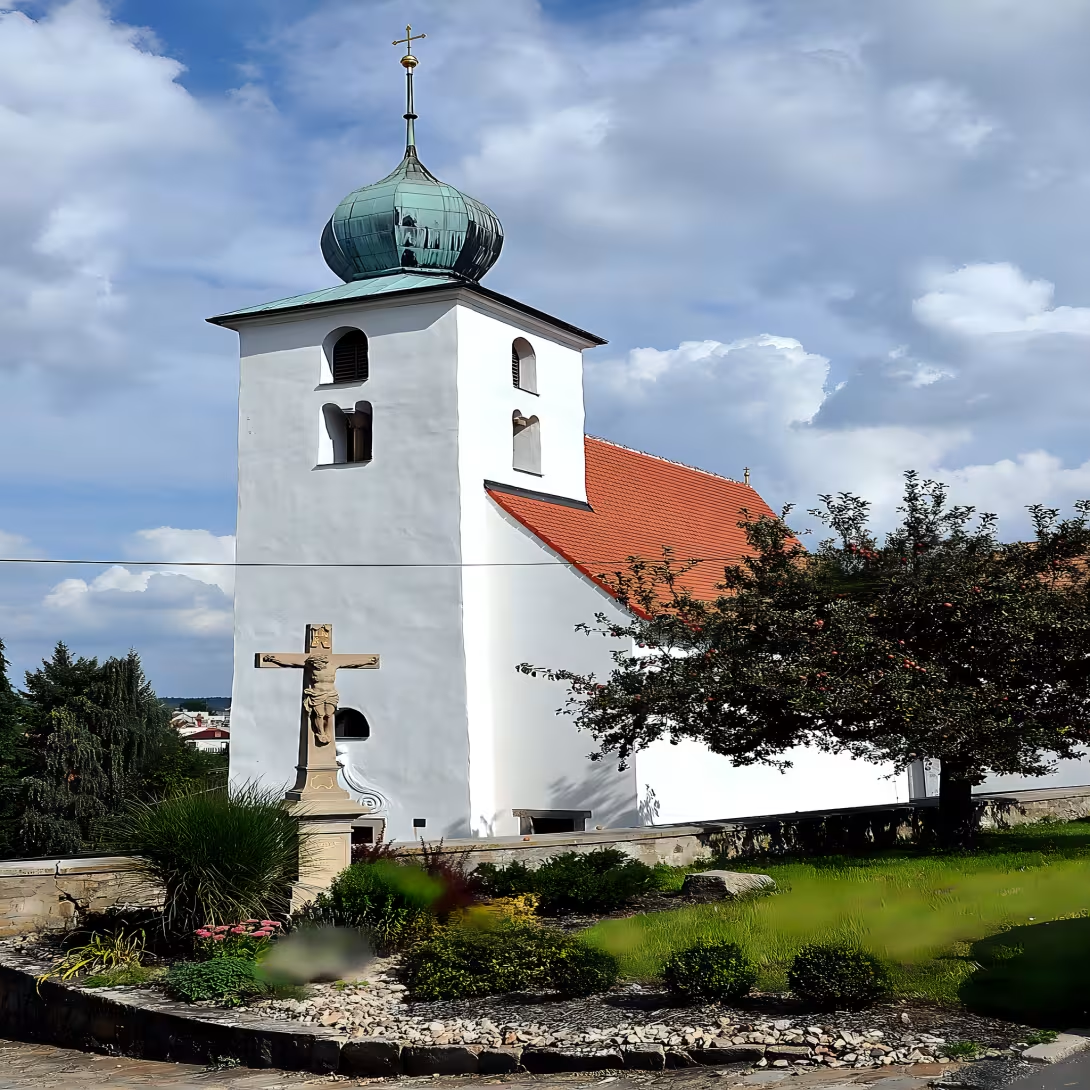
The Church of Saint Wenceslas in Lukovany is a Roman Catholic church located in the village within the Brno-Country District. Built in the early 13th century, it stands as a protected cultural monument in the Czech Republic and serves as a filial church to the parish of Vysoké Popovice. Notable for its architectural evolution from late Romanesque to Baroque style, this church reflects significant historical transformations over several centuries.
Originally constructed during the early 13th century when Bohemia was part of the Holy Roman Empire, this era marked substantial cultural and architectural development across Europe. The transition from Romanesque to Gothic styles became more pronounced. The church's initial design as a late Romanesque tribune church reflects these broader trends.
Architecturally, the Church of Saint Wenceslas began in the late Romanesque style, characterized by robust structures and rounded arches typical of that period. Over time, it underwent significant modifications altering its appearance and structure. In 1715, the church was transformed into Baroque style, known for its grandeur and dramatic use of space. This transformation included replacing the original choir with an apsidal end, heightening surrounding walls, introducing new vaulting, and adding a bell tower level in 1745. These changes led to most Romanesque windows being bricked up, although some were restored after World War II.
Throughout its history, the church has been under the administration of the Roman Catholic Church, serving as a filial church to the parish of Vysoké Popovice. Its status as a protected cultural monument underscores its historical and architectural significance within the Czech Republic.
Key events in the church's history include Baroque modifications in 1715 and further structural changes in 1745 when a bell tower level was added. After World War II, efforts were made to restore some of the original Romanesque windows in the tower, preserving elements of its early architectural heritage. Historically, a cemetery surrounded the church, adding to its role as a central place for community and spiritual life.
Today, the Church of Saint Wenceslas remains an important cultural and historical site. Its blend of Romanesque and Baroque elements offers visitors a glimpse into the architectural evolution over centuries. The church's protected status ensures it is well-maintained, making it accessible to those interested in exploring its rich history. Visitors are invited to appreciate this monument not only for its architectural beauty but also as a testament to the enduring cultural heritage of the region.
Then and now
Drag the slider to compare how the landmark may have looked when it was built with the view today.
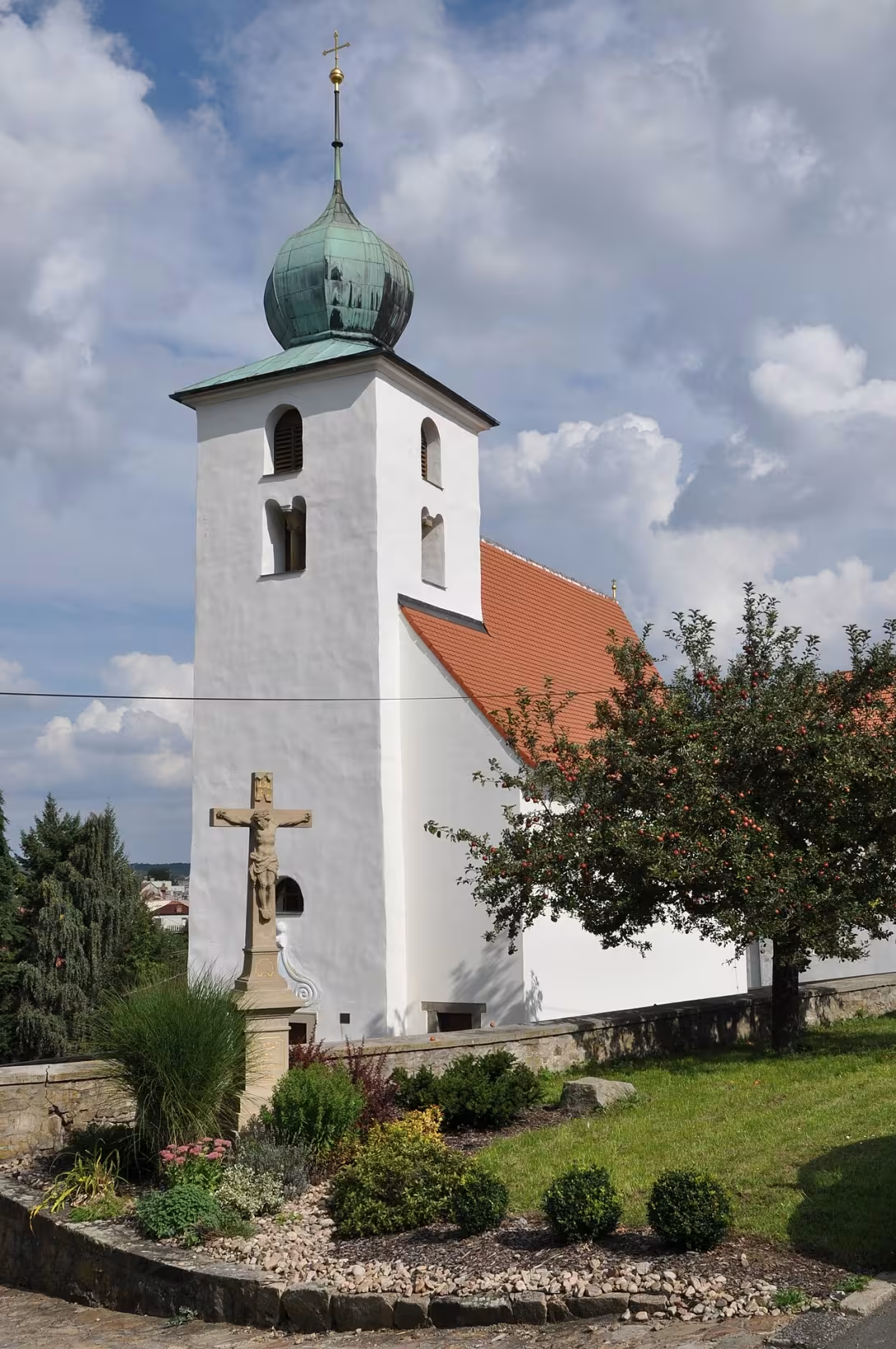
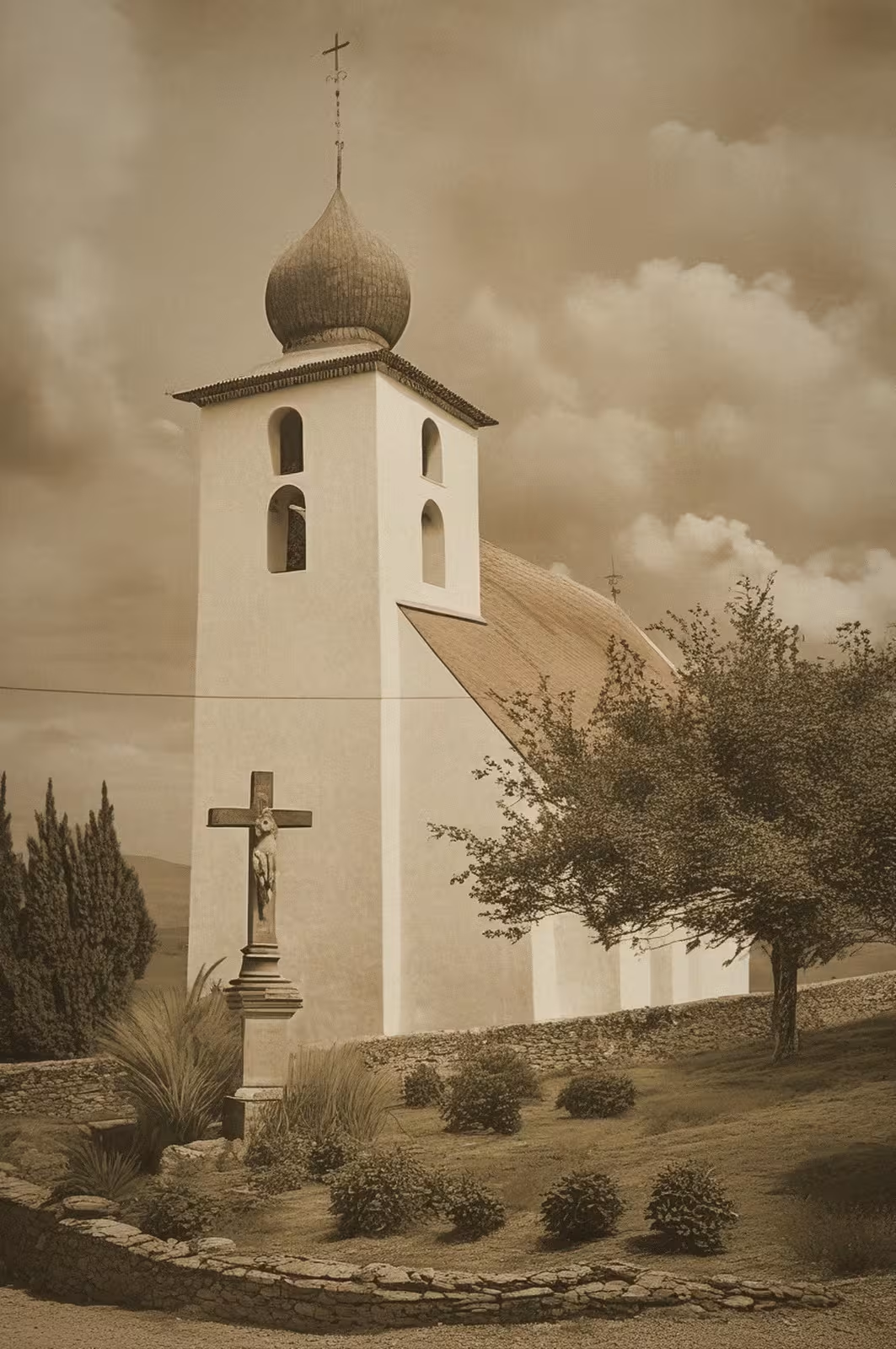
The historical appearance on the left is an AI-generated visualisation and serves as inspiration only.
Historical milestones
- kolem 1300
- Vznik kostela svatého Václava v Lukovanách.
- 17. století
- Přechod architektury z pozdně románské do gotické.
- 1715
- Barokní přestavba kostela, včetně nového chóru a výškování stěn.
- 1745
- Přidání úrovně zvonice.
- po druhé světové válce
- Obnova některých románských oken v zvonici.
Architectural development
Constructed initially in late Romanesque style during the first half of the 13th century, the Church of Saint Wenceslas experienced significant architectural changes over time. In 1715, it was transformed into Baroque style with an apsidal end replacing the original choir and new vaulting introduced. Further modifications occurred in 1745 when a bell tower level was added, leading to most of its Romanesque windows being bricked up.
Historical events
The church was originally built in the early 13th century as a Romanesque tribune church.
In 1715, it underwent Baroque modifications including the addition of an apsidal end and new vaulting.
Points of interest
– The Church of Saint Wenceslas is one of the few churches in the Czech Republic that underwent a dramatic architectural transformation from late Romanesque to Baroque style, reflecting broader European trends during its period.
– In 1715, the church was significantly altered when it adopted Baroque elements, including an apsidal end replacing the original choir and increased wall height, which marked a departure from its initial design.
– The addition of a bell tower level in 1745 is particularly notable as it highlights the ongoing architectural evolution and community investment in maintaining the church's prominence within Lukovany.
– After World War II, some of the Romanesque windows that were bricked up during earlier modifications were restored, showcasing efforts to preserve elements of its original architectural heritage.
– Historically surrounded by a cemetery, the Church of Saint Wenceslas served not only as a place of worship but also as a central community hub for spiritual and social gatherings in Lukovany.
Guide
This guide is narrated by a synthetic voice generated by artificial intelligence.
Show guide text
This text was created by artificial intelligence and has not been editorially reviewed. It may contain inaccuracies.
The Church of Saint Václav in Lukovanec is a Roman Catholic church in the Brno-venkov district. It falls under the parish of Vysoké Popovice as a subsidiary church and is protected as a cultural monument of the Czech Republic.
Its origins date back to the first half of the thirteenth century. At that time it was built as a late Romanesque tribune church. A cemetery was located around it.
Its present appearance was largely shaped by a Baroque reconstruction in seventeen fifteen. The original presbytery was demolished and replaced by an apse. The perimeter walls were raised, the nave received a new barrel vault and a new roof, and the old windows were replaced with new ones. The original entrance portal was also removed and people entered the church anew through the porch beneath the tower. The spiral staircase to the tower possibly also came into being at that time.
A further modification came in seventeen forty-five. The tower received a bell chamber and most of its Romanesque windows were bricked up. In eighteen hundred and five a sacristy was added to the northern wall.
After the Second World War, the Romanesque windows in the tower were opened again. In this way they recall the oldest, medieval appearance of the building.
Frequently asked questions
Can the monument be visited?
Religious buildings are usually open mainly during services; at other times a visit is normally arranged with the parish or the operator. We have not verified specific times.
Where is the monument?
Location: Lukovany, Jihomoravský kraj. The map on this page shows the exact spot.
Why is the monument protected?
It is listed in the Central List of Cultural Monuments of the Czech Republic as a cultural monument (register no. 14347/7-800).
Businesses nearby
Do you run a restaurant, accommodation, shop, museum, rental, wellness or other visitor service near this monument? Show yourself directly to the people heading to it — this is how they will see you in the app and on the web:
Accommodation nearby
Trips and activities nearby
Guided tours, tickets and activities nearby from GetYourGuide
Affiliate link: if you buy from the partner, we may receive a commission. The price for you does not change.
Search tours and activities →Themed route
Tematická výletní trasa: Kostel svatého Václava, Lukovany
1. Kostel svatého Václava (Lukovany)
Typ: Historická památka
Proč stojí za návštěvu: Tento barokní kostel je nejvýraznější architektonickou památkou v Lukovanách. Jeho bohaté historie a umělecké prvky, jako jsou fresky a sochy, přitahují návštěvníky z celého regionu. Je to nejen duchovní centrum obce, ale také svědectví o bohaté kulturní minulosti.
2. Obecní úřad Lukovany
Typ: Historická budova
Proč stojí za návštěvu: Tato historická budova, nacházející se v centru obce, je příkladem tradiční architektury regionu. Její elegantní design a historie jako administrativní sídlo poskytují vhled do místního řízení a života v minulých stoletích.
3. Lokální muzeum (pokud existuje)
Typ: Muzeum
Proč stojí za návštěvu: Lokální muzeum nabízí cenné informace o historii a kultuře Lukovan. Vystavuje předměty, které dokumentují životní styl obyvatel i vývoj obce, což poskytuje návštěvníkům hlubší porozumění místnímu dědictví.
4. Park u kostela
Typ: Místní park
Proč stojí za návštěvu: Park u kostela nabízí klidnou přestávku pro ty, kteří chtějí pochutnat si na krásné zelené prostory. Je to ideální místo pro relaxaci a prohlídku se v přírodním prostředí, které doplňuje historickou atmosféru obce.
Tato trasa nabízí návštěvníkům komplexní pohled na kulturní a historický bohatství Lukovan. Každý bod přináší jedinečný pohled na život v této části Jihomoravského kraje, od architektonických dovedností po místní tradice a historii.
Seasonal recommendations
Spring: The arrival of spring breathes new life into the Church of Saint Wenceslas in Lukovany, as vibrant wildflowers carpet the surrounding meadows and gentle breezes carry the sweet scent of blossoming trees. This season is characterized by soft, diffused sunlight that enhances the church's architectural details, creating a serene atmosphere perfect for contemplation. Visitors are encouraged to wear comfortable layers, as temperatures can vary throughout the day. Early morning visits are recommended to avoid larger crowds and enjoy the tranquility before the area becomes busier.
Summer: Summer at the Church of Saint Wenceslas offers long days filled with bright sunlight that accentuates the church's historic façade, making it an ideal time for photography enthusiasts. The lush greenery surrounding the site provides a picturesque backdrop, while local flora is in full bloom, adding to the vibrant atmosphere. Given the popularity of this period, visitors should plan their visit early in the morning or later in the afternoon to avoid peak tourist hours and ensure a more peaceful experience. Light clothing and sun protection are advisable due to the warmer weather.
Autumn: Autumn transforms Lukovany into a tapestry of warm colors as leaves change from green to shades of red, orange, and yellow, creating a stunning visual contrast against the church's timeless architecture. The cooler temperatures make for comfortable exploration, while the softer light during this season casts a golden hue over the landscape. This is an excellent time for photography or simply enjoying a leisurely walk through the picturesque surroundings. Visitors should dress in layers to accommodate fluctuating temperatures and consider bringing a light jacket as evenings can be brisk.
Winter: Winter cloaks the Church of Saint Wenceslas in a serene blanket of snow, offering a magical and tranquil setting that is quite different from other seasons. The stark beauty of the church against the white landscape creates an enchanting atmosphere, perfect for capturing unique photographs or enjoying a quiet moment of reflection. However, visitors should be prepared for shorter visiting hours due to reduced daylight and colder temperatures. Warm clothing, including hats, gloves, and insulated boots, is essential, and it's advisable to check ahead for any seasonal closures or changes in opening times.
Visualizations and artistic views


The visualisations are generated by artificial intelligence and serve as inspiration.
Photos from the area
Real photos taken near the monument


Zdroj a licence jsou uvedeny u každého snímku.
Tips from visitors
No tips yet. Be the first!
Log in and add your tip.
Sources and literature
Photos: Ben Skála / CC BY-SA 3.0, rozlišení zvýšeno umělou inteligencí — Wikimedia Commons. The author and licence also appear when you hover over the image.
Faktickým podkladem tohoto textu byl článek na Wikipedii, jehož autory jsou přispěvatelé Wikipedie. Článek je dostupný pod licencí CC BY-SA 4.0.
Location on the map


Příběhy a pověsti
Legendy, pověsti a příběhy spjaté s touto památkou
Fotografie návštěvníků
Zatím žádné fotografie. Buďte první, kdo přidá fotografii z návštěvy!
Log in a přidejte svou fotografii nebo hodnoťte.
Za ověřenou návštěvu v aplikaci získáte víc bodů — poznáme podle GPS, že jste na místě.
Reviews and comments