






Kostel svatého Václava (Velká Polom) Church
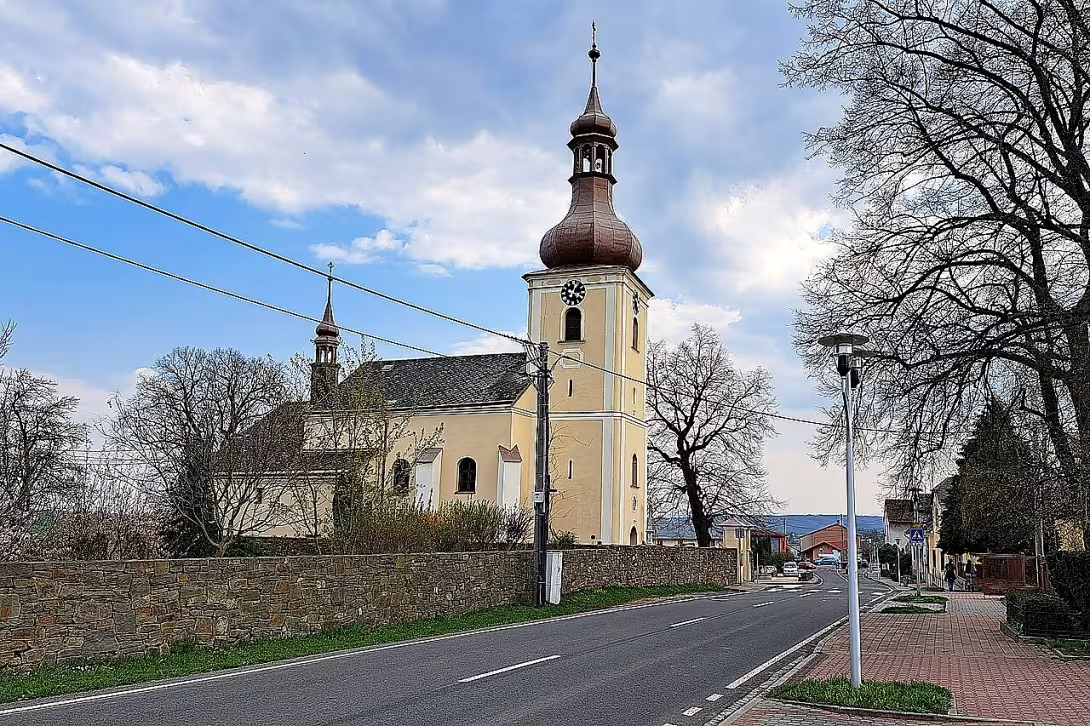
The Church of Saint Wenceslas in Velká Polom is a cultural monument located in the village within the Moravian-Silesian Region. Constructed at the end of the 13th century, it features a Gothic chancel, a Renaissance nave, and a Baroque tower. The church has been under heritage protection since 1964 and serves as a spiritual center for the community with regular services.
Velká Polom's origins trace back to 1288 during the reign of the Opavian branch of the Přemyslid dynasty when it was first mentioned in records. The Church of Saint Wenceslas was established on then-uninhabited land between Opava and Ostravě as a parish church for new villages, reflecting significant Gothic architectural developments across Europe.
The church's architectural evolution mirrors its historical context and the development of surrounding villages. Initially constructed as an early Gothic chapel at the end of the 13th century, it underwent several expansions over the centuries. In 1589, a Renaissance nave was added during the tenure of the Hukovských and Pražmů families. A Baroque tower was later erected in 1741 by the Wilczkové family, who held ownership for 216 years from 1702 to 1918. The church also features a sacristy built in 1859, which remains today.
Ownership of the village and church transitioned through ten feudal families from 1288 to 1918, with the Wilczkové family being the longest-serving owners. Since 1508, there have been 26 parish priests and 48 chaplains serving at the church, reflecting its longstanding religious significance.
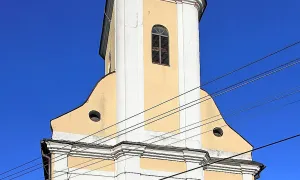
The Church of Saint Wenceslas stands prominently on the village square, making it easily accessible to visitors. The area includes a barrier-free parking lot for those with limited mobility. Its architectural elements include a Gothic chancel with a cross-ribbed vault, a Renaissance nave with a barrel-vaulted ceiling, and a Baroque tower featuring typical baroque onion domes and lucernas.
Today, the church remains an active place of worship and a testament to its rich historical and artistic heritage. Its accessibility and cultural significance make it a worthwhile visit for those interested in history, architecture, or spirituality. The Church of Saint Wenceslas invites visitors to explore its storied past and appreciate its enduring presence as a spiritual heart of Velká Polom.
Then and now
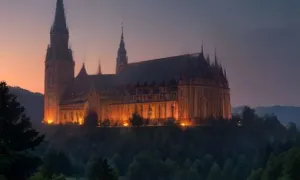
Drag the slider to compare how the landmark may have looked when it was built with the view today.
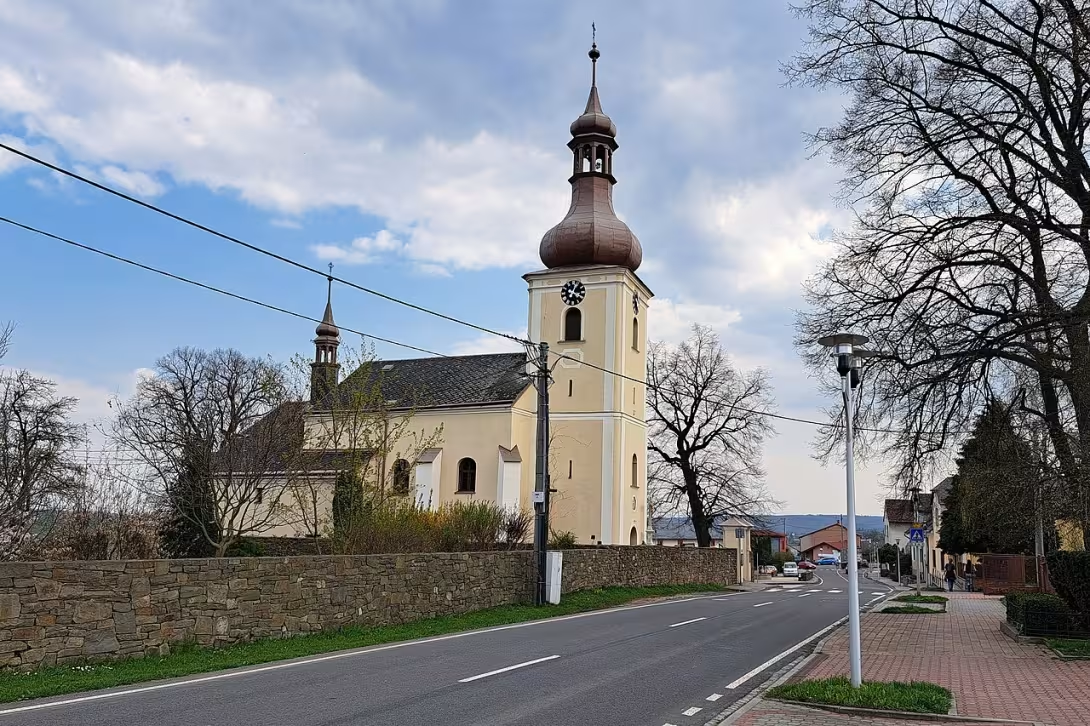
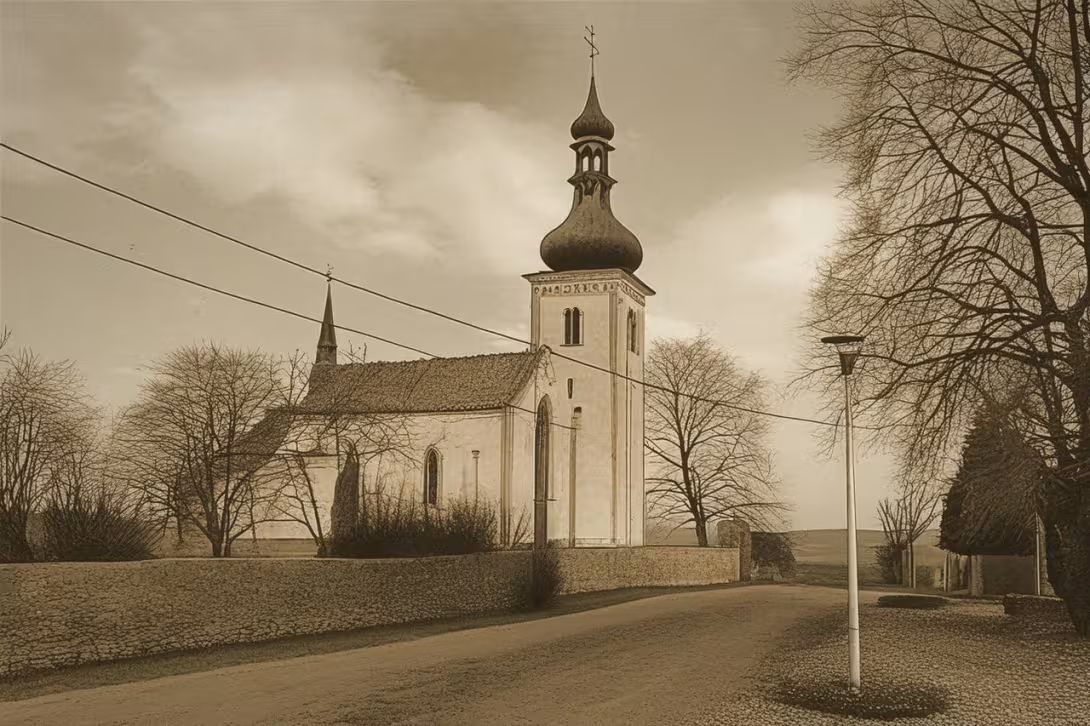
The historical appearance on the left is an AI-generated visualisation and serves as inspiration only.
Historical milestones
- 1288
- First mention of Velké Polom during the reign of the Opavian Přemyslids.
- Late 13th century
- Construction of the original Gothic chapel of St. Wenceslas church.
- 1589
- Addition of a Renaissance nave during the ownership of the Hukovský and Pražma families.
- 1741
- Construction of a Baroque tower by the Wilczk family.
- 1859
- Building of the sacristy, which has been preserved to this day.
- 1964
- The church was designated as a cultural monument under protection.
Architectural development
The church was built in stages, reflecting the development of surrounding villages. Initially constructed as an early Gothic chapel at the end of the 13th century, it underwent significant expansions and renovations over the centuries. A Renaissance nave was added in 1589, followed by a Baroque tower in 1741. The church also features a sacristy built in 1859, which remains to this day.
Historical events
The first written mention of Velká Polom dates back to 1288 during the reign of the Opavian branch of the Přemyslid dynasty. The church was founded as a parish church for new villages in an area between Opava and Ostrava.
In 1589, a nave was added to the original Gothic chapel during the tenure of the Hukovských and Pražmů families.
Owners
The village and church were owned by ten feudal families from 1288 to 1918, with the Wilczkové family holding it for 216 years from 1702 to 1918. Since 1508, there have been 26 parish priests and 48 chaplains serving at the church.
Points of interest
- The Church of Saint Wenceslas was initially built on land that was uninhabited at the time, highlighting its role in encouraging settlement and community development during the late 13th century.
- Ownership of the church transitioned through ten different feudal families over six centuries, with the Wilczkové family serving as owners for an impressive 216 years, showcasing a unique continuity amidst changing political landscapes.
- The addition of the Renaissance nave in 1589 was facilitated by two notable families, the Hukovských and Pražmů, reflecting how influential local nobility could shape architectural evolution during that period.
- Despite its long history, only one sacristy has been added to the church since its construction, built in 1859. This single addition stands as a testament to the church's largely unchanged sacred space over centuries.
- The Baroque tower features distinctive onion domes and lucernas, architectural elements that were popular in Europe during the period but are less commonly seen in Moravian-Silesian church architecture, making it an intriguing example of regional adaptation.
Guide
This guide is narrated by a synthetic voice generated by artificial intelligence.
Show guide text
This text was created by artificial intelligence and has not been editorially reviewed. It may contain inaccuracies.
Welcome to the Church of Saint Wenceslas in Velká Polom, a remarkable cultural monument nestled within this picturesque village in the Moravian-Silesian Region. As you stand before it, take a moment to absorb the serene atmosphere and rich history that surrounds you.
The story of this church begins at the end of the 13th century when an initial Gothic chapel was constructed on what was then uninhabited land. This strategic choice played a pivotal role in encouraging settlement and community development during that era. Imagine stepping back in time to 1288, when Velká Polom first appeared in records under the rule of the Opavian Přemyslids—a testament to its long-standing significance.
As you look around, notice the harmonious blend of architectural styles—the Gothic chancel, a product of medieval craftsmanship, stands alongside the Renaissance nave added in 1589 during the era when the Hukovský and Pražm family estates flourished. The church's Baroque tower, completed in 1741 by the Wilczkové family, adds a touch of grandeur to the skyline.
Pay attention to the details that make this structure unique—the way light filters through its windows, casting patterns on the stone floor, or how the exterior walls tell stories of centuries past. Though we may not know the architects who designed it, their vision endures in every arch and corner.
Ownership of this church has transitioned through ten different feudal families over six centuries, each leaving their mark on its history. This rich tapestry of ownership reflects the changing tides of time and influence that have swept across Velká Polom.
An intriguing aspect to ponder is how this once uninhabited land was transformed into a thriving community hub thanks to the church's presence—a beacon for settlers seeking new beginnings in the late 13th century. The addition of the sacristy in 1859, which remains intact today, further underscores its enduring role within the village.
As you continue your exploration, remember that this site has been protected as a cultural monument since 1964, ensuring its preservation for future generations to appreciate and enjoy.
We invite you to delve deeper into the history of Velká Polom and discover more about this enchanting church. Thank you for joining us on this journey through time, and may your visit inspire curiosity and wonder.
Tips for visitors
The best time to visit the Church of Saint Wenceslas in Velká Polom is during late spring or early autumn when the weather is pleasant, allowing for a comfortable walk around the village square and church grounds. These seasons offer mild temperatures and beautiful natural lighting, ideal for exploring the architectural details of this Gothic monument.
Additionally, both private vehicles and public transport options can be used to reach Velká Polom; however, it's recommended to check current routes and schedules in advance.
When planning your visit, consider bringing comfortable walking shoes as you'll likely want to explore the surrounding area of Velká Polom. A camera is also advisable for capturing the church’s intricate Gothic architecture. Since photography can be best enjoyed during the golden hours—shortly after sunrise or before sunset—you might plan your visit accordingly to take advantage of the soft, natural light.
For families with children visiting the Church of Saint Wenceslas, it's a great opportunity to introduce them to historical and cultural heritage in an engaging way. The village square provides ample space for kids to play while parents explore the church. Additionally, the nearby areas within 30 minutes offer more attractions that can make the trip enjoyable for all ages.
Frequently asked questions
Can the monument be visited?
Religious buildings are usually open mainly during services; at other times a visit is normally arranged with the parish or the operator. We have not verified specific times.
Where is the monument?
Location: Velká Polom, Moravskoslezský kraj. The map on this page shows the exact spot.
Why is the monument protected?
It is listed in the Central List of Cultural Monuments of the Czech Republic as a cultural monument (register no. 34550/8-1504).
Businesses nearby
Do you run a restaurant, accommodation, shop, museum, rental, wellness or other visitor service near this monument? Show yourself directly to the people heading to it — this is how they will see you in the app and on the web:
Events nearby

Zdroj akcí: otevřená data měst a obcí ČR (Národní katalog otevřených dat) a kalendář akcí Národního památkového ústavu.
Nearby
The church is situated directly on the village square, making it easily accessible. The area around the church includes a barrier-free parking lot for visitors with limited mobility.
Accommodation nearby
Themed route
Thematic Walking Tour: Velká Polom and the Church of Saint Wenceslas
Welcome to a charming exploration around Velká Polom, where history and community spirit converge at this picturesque village square. This tour is designed to immerse you in local culture, architecture, and serene surroundings.
1. Church of Saint Wenceslas (Kostel svatého Václava) - Type: Historical Church - Why Visit: Begin your journey with the centerpiece of Velká Polom's village square—the Church of Saint Wenceslas. This architectural gem reflects centuries-old traditions and offers a glimpse into the spiritual life that has shaped this community. Its prominent location makes it an ideal starting point for exploring the area.
2. Village Square - Type: Public Space - Why Visit: After admiring the church, take a moment to stroll around the village square itself. This open space is not only a hub of local activity but also provides a scenic setting where you can appreciate the harmonious blend of nature and architecture. It's perfect for capturing photographs or simply enjoying a quiet moment.
3. Barrier-Free Parking Lot - Type: Accessibility Feature - Why Visit: As you explore, note the barrier-free parking lot nearby. This thoughtful addition ensures that all visitors, regardless of mobility limitations, can easily access and enjoy the village's offerings. It reflects Velká Polom’s commitment to inclusivity and community accessibility.
This tour invites you to experience the heart of Velká Polom through its central landmarks, offering a peaceful yet enriching exploration of local heritage and communal life.
Seasonal recommendations
Spring: Visiting the Church of Saint Wenceslas in Velká Polom during spring offers a unique experience as nature begins to awaken around this historic site. The surrounding landscape is adorned with blooming flowers and fresh greenery, creating an enchanting atmosphere that complements the church's serene beauty. As daylight hours increase, you'll find the play of natural light through stained glass windows particularly captivating. This season tends to attract fewer visitors compared to summer, allowing for a more peaceful exploration. It’s advisable to wear comfortable layers as temperatures can vary throughout the day, and carrying an umbrella is wise due to occasional spring showers.
Summer: The Church of Saint Wenceslas shines in the full light of summer, with long days providing ample time to explore both the church's interior and its picturesque surroundings. This is a peak season for visitors, so it’s best to arrive early to avoid crowds. The lush greenery and vibrant flowers enhance the church's historic charm, making it an ideal backdrop for photography enthusiasts. Dressing in light, breathable clothing is recommended due to warmer temperatures, and don't forget sunscreen if you plan on spending time outdoors.
Autumn: Autumn transforms Velká Polom with a stunning display of fall colors that envelop the Church of Saint Wenceslas in a warm, golden glow. The cooler weather makes for comfortable strolls around the church grounds, which are often less crowded than during summer months. This season is perfect for those who appreciate the quieter side of travel and enjoy capturing dramatic landscapes. Layered clothing is advisable to accommodate fluctuating temperatures, and carrying a jacket or sweater can be beneficial as evenings tend to cool down.
Winter: Winter offers a magical setting at the Church of Saint Wenceslas, with snow often blanketing the area in a serene white cover that enhances its historic architecture. The shorter daylight hours mean it’s best to plan your visit during midday for optimal lighting inside and outside the church. While winter can be quieter in terms of tourism, it's important to note that some facilities may have reduced opening times. Dress warmly with layers, including hats and gloves, and ensure you have sturdy footwear suitable for potentially icy conditions.
Visualizations and artistic views


The visualisations are generated by artificial intelligence and serve as inspiration.
Photos from the area
Real photos taken near the monument


Zdroj a licence jsou uvedeny u každého snímku.
Tips from visitors
No tips yet. Be the first!
Log in and add your tip.
Sources and literature
Photos: Mikuláš Galuszka / CC BY-SA 4.0 — Wikimedia Commons. The author and licence also appear when you hover over the image.
Faktickým podkladem tohoto textu byl článek na Wikipedii, jehož autory jsou přispěvatelé Wikipedie. Článek je dostupný pod licencí CC BY-SA 4.0.
Location on the map
Příběhy a pověsti
Legendy, pověsti a příběhy spjaté s touto památkou
Příběh: Kostel svatého Václava (Velká Polom)
Bylo to v pondělí ráno, kdy Jindřich zjistil, že jeho cesta je osudová. Prach se tancoval pod okovy bot po půdě cest vedoucích ke kostelu svatého Václava. Sl…
Číst příběh
Pověst: Kostel svatého Václava (Velká Polom)
Traduje se, že v dobách, kdy opavská větev Přemyslovců vládla krajině mezi řekami a lesy, vydal se jednoho podzimního rána průvodce stavitelského mistra do d…
Číst příběhFotografie návštěvníků
Zatím žádné fotografie. Buďte první, kdo přidá fotografii z návštěvy!
Log in a přidejte svou fotografii nebo hodnoťte.
Za ověřenou návštěvu v aplikaci získáte víc bodů — poznáme podle GPS, že jste na místě.
Reviews and comments