



Kostel Všech svatých (Vlčovice) Church
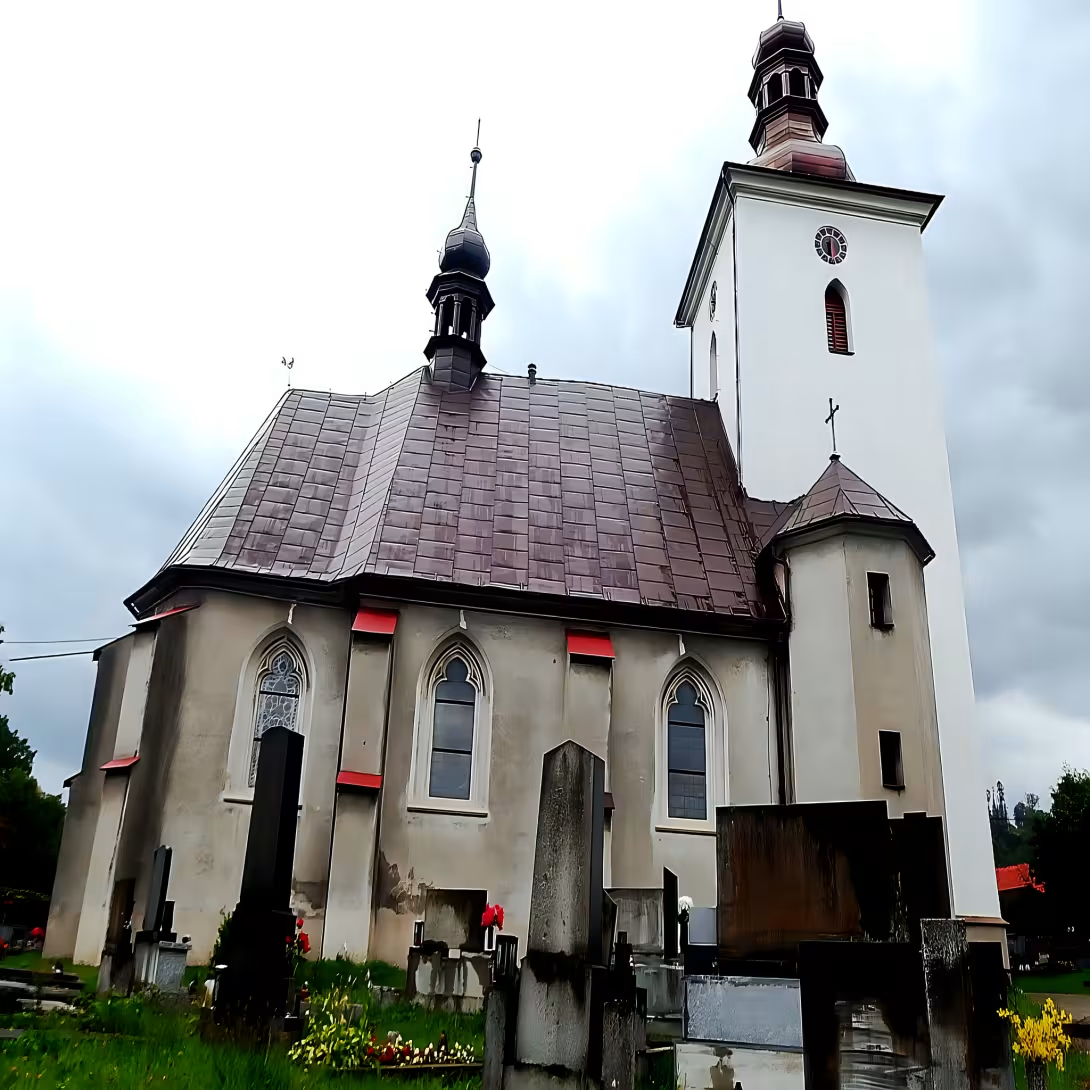
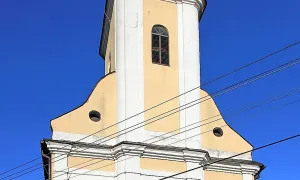
The Church of All Saints in Vlčovice is an outstanding example of late Gothic architecture located in Kopřivnice, Moravskoslezský kraj. Originally built as a chapel after 1510, it expanded into its current form by the end of the 16th century. Recognized as a cultural monument of the Czech Republic, this church is notable for its historical significance and architectural elegance.
The origins trace back to a late Gothic chapel constructed post-1510. By the late 16th century, significant expansion transformed it into the present structure with a polygonal presbytery and a prominent tower on the western facade. Consecrated in 1597 by Bishop Stanislav Pavlovský, this marked an important milestone.
Architecturally, the church features late Gothic style with modifications over centuries. Construction began as a chapel that later expanded to include a tower, side chapels, and a new vault in the presbytery. The nave was arched in the second half of the 17th century, with further changes occurring in the latter half of the 18th and early 19th centuries. A partial Gothic revival took place at the end of the 19th century.
The exterior includes opěráky supporting both the presbytery and the northern wall of the nave, adorned by lomená windows with trojlaločnou kružbou hints. The main entrance is on the north facade, featuring a simple lomený oblouk with ornate detailing. Additional entrances lead to the chapel and tower in the northwest corner.
Inside, the presbytery boasts lunetové vaulting with hřebínkovitými edges, while the nave features valená klenba with výsečemi. A significant element is the zpěvácká kruchta supported by hranolovými columns in the western part of the nave. The church houses mid-19th century paintings of the Nativity of Christ and All Saints by Ignaz Berger, adding artistic value.
During renovations in 2016, a tube containing coins from 1765 and 1924 was discovered in the vault, along with commemorative documents from 1902 and 1936. This highlights the rich historical layers within the structure.
Recent restoration efforts began in 2011, including restoring stained glass and improving drainage to address humidity issues. By 2017, these renovations were completed, culminating in celebrations marking the church's 420th anniversary of consecration.
Today, the Church of All Saints remains a cultural treasure open for visitors to explore its architectural beauty and historical depth. Preservation efforts ensure it continues as an important site for both locals and tourists. The church offers insights into late Gothic architecture and serves as a testament to the region's rich history, making it a worthwhile destination for those interested in cultural heritage.
Then and now
Drag the slider to compare how the landmark may have looked when it was built with the view today.
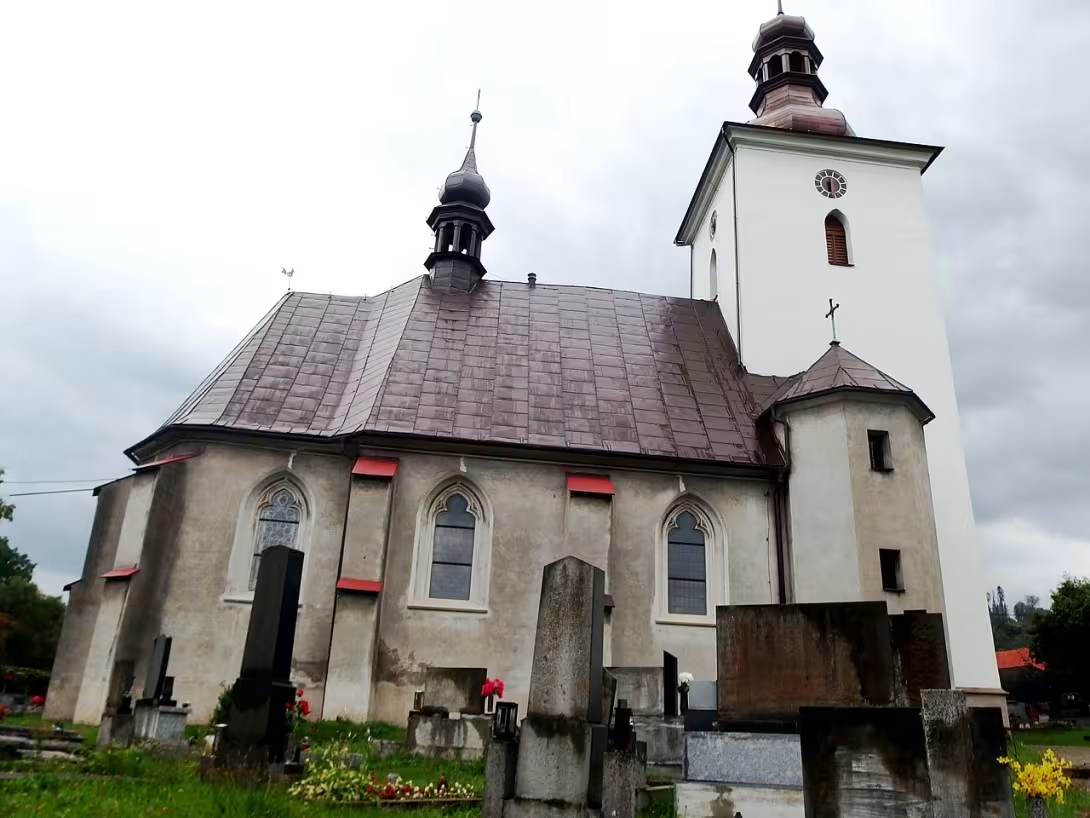
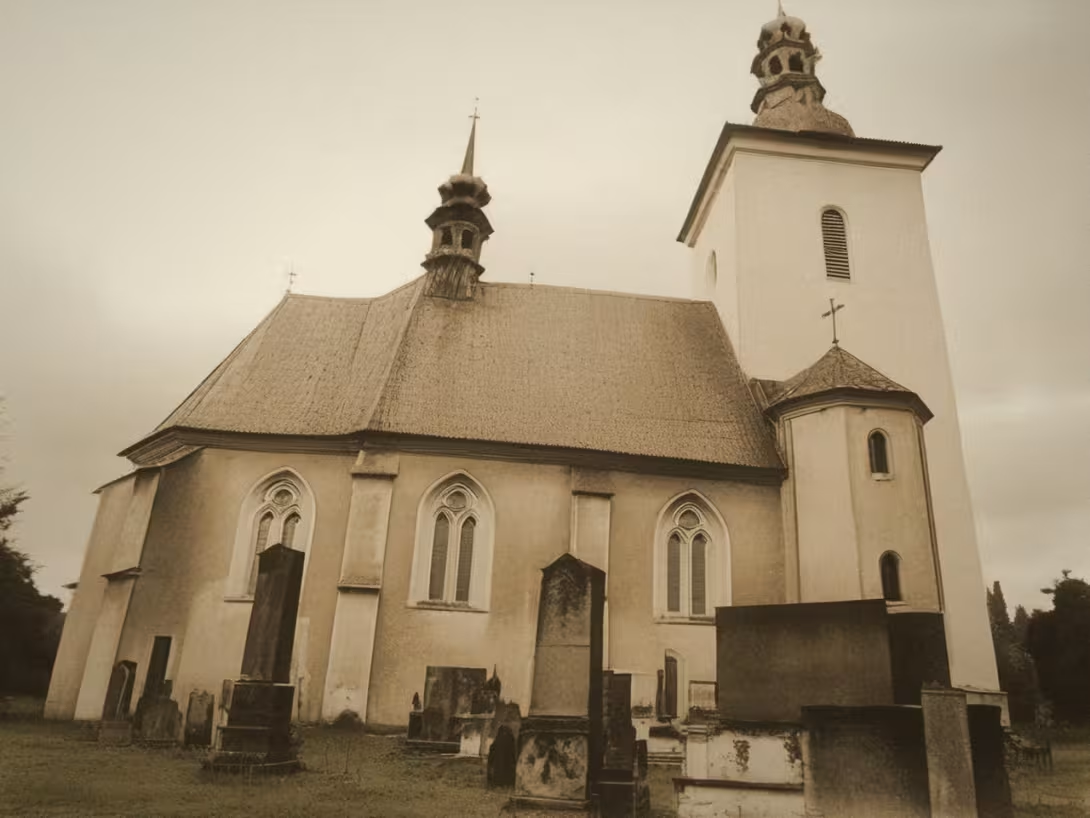
The historical appearance on the left is an AI-generated visualisation and serves as inspiration only.
Historical milestones
- 1597
- The church was consecrated by Bishop Stanislav Pavlovský.
- 2011
- Restoration efforts began, including the restoration of stained glass and drainage improvements to address high humidity issues.
Architectural development
The church's construction began as a late Gothic chapel after 1510. It underwent significant expansion in the late 16th century, adding a tower, side chapels, and a new vault in the presbytery. Further modifications occurred in the second half of the 17th century with the arching of the nave, and additional changes were made in the latter half of the 18th century and early 19th century. A partial Gothic revival took place at the end of the 19th century.
Historical events
- 1597
- The church was consecrated by Bishop Stanislav Pavlovský.
- 2011
- Restoration efforts began, including the restoration of stained glass and drainage improvements to address high humidity issues.
Points of interest
- The Church of All Saints in Vlčovice was originally built as a chapel after 1510 and only expanded into its current form by the end of the 16th century, reflecting the gradual evolution typical of many historical religious sites.
- During renovations in 2016, workers discovered a tube containing coins from 1765 and 1924 hidden within the church's vault, offering a glimpse into the site’s use as a time capsule or treasure trove over centuries.
- The church houses mid-19th century paintings by Ignaz Berger depicting the Nativity of Christ and All Saints, adding an artistic layer to its architectural significance with works that blend religious themes with historical artistry.
- In 2016, alongside coins, commemorative documents from 1902 and 1936 were found in the church’s vault, suggesting it may have played a role in significant local or regional events during those years.
- The zpěvácká kruchta, supported by hranolovými columns in the western part of the nave, is an important feature that highlights the church's blend of functionality and aesthetic design, serving both as a choir loft and an architectural focal point.
Guide
This guide is narrated by a synthetic voice generated by artificial intelligence.
Show guide text
This text was created by artificial intelligence and has not been editorially reviewed. It may contain inaccuracies.
The Church of All Saints in Vlčovice, a local part of Kopřivnice, is originally a late Gothic temple. It is surrounded by a cemetery and the entire area is enclosed by a wall with buttresses. The church is a cultural monument.
A late Gothic chapel of All Saints originally stood on this site, built after fifteen ten. In the late sixteenth century it was expanded. From the original construction, the core remained, that is the perimeter walls of the choir and the original nave. A tower was added and a side chapel, and in the presbytery the vault was reconstructed. In fifteen ninety-seven the church was consecrated by bishop Stanislav Pavlovský.
In the second half of the seventeenth century the nave received a vault. Further modifications came in the second half of the eighteenth century and in the first half of the nineteenth century. At the end of the nineteenth century the church was partially re-gothicized, that is returned to Gothic forms. The roof was opened and repaired in nineteen hundred two and nineteen thirty-six. After twenty eleven restoration work began again. Stained glass windows were restored and due to high humidity a drainage system was installed. The work was completed in twenty seventeen, when the four hundred twentieth anniversary of the consecration was celebrated.
It is a single-nave oriented structure. The polygon-ended presbytery thus faces east and a distinctive tower stands in the western facade. A longitudinal chapel adjoins the southern wall. The presbytery and the northern wall of the nave are supported by twice stepped buttresses with roofs. Pointed windows are finished with a hint of three-lobed tracery. The main entrance is on the northern side. It has the form of a simple pointed arch, whose reveals are formed by a small arch with a groove. The tower and the gallery are entered by a rectangular portal in a polygon-shaped tower-like extension in the northwestern corner.
The presbytery is vaulted with lunettes with comb-like ribs. From the nave it is separated by an inconspicuous triumphal arch of pointed form. The nave and side chapel have barrel vaults with sections. A relatively powerful pointed portal leads into the nave. In its western part is a singers' gallery supported by prismatic columns.
From the furnishings, two paintings by Ignaz Berger from the second half of the nineteenth century deserve mention, the Birth of Christ and All Saints. The church also has a bell dated fifteen sixty-two, decorated with ornaments and an inscribed border.
In twenty sixteen, during repairs to the roof, a tube with coins from seventeen sixty-five was discovered, from the time of Baroque reconstructions, and from nineteen twenty-four. It also contained memorial documents from nineteen hundred two and nineteen hundred thirty-six.
Frequently asked questions
Can the monument be visited?
Religious buildings are usually open mainly during services; at other times a visit is normally arranged with the parish or the operator. We have not verified specific times.
Where is the monument?
Location: Vlčovice, Moravskoslezský kraj. The map on this page shows the exact spot.
Why is the monument protected?
It is listed in the Central List of Cultural Monuments of the Czech Republic as a cultural monument (register no. 33259/8-1697).
Businesses nearby
Do you run a restaurant, accommodation, shop, museum, rental, wellness or other visitor service near this monument? Show yourself directly to the people heading to it — this is how they will see you in the app and on the web:
Accommodation nearby
Themed route
Tematická výletní trasa: Kostel Všech svatých (Vlčovice)
1. Kostel Všech svatých, Vlčovice
- Typ: Náboženská památka
- Proč stojí za návštěvu: Tento barokní kostel je architektonickým dílem s bohatou historií a uměleckou hodnotou. Jeho interiér nabízí fascinující fresky a sochy, které přitahují návštěvníky z celého regionu.
2. Nádvoří kostela Všech svatých
- Typ: Historický areál
- Proč stojí za návštěvu: Nádvoří je klidným místem, kde si můžete užít pohledu na kostel a jeho okolní zelené prostory. Je to ideální místo pro relaxaci a reflektování po prozkoumání interiéru.
3. Věž kostela Všech svatých
- Typ: Historická věž
- Proč stojí za návštěvu: Návštěva věže nabízí jedinečný pohled na obec Vlčovice a okolní krajinné prvky. Je to nejen historické místo, ale také skvělé pro fotografii a pochopení místního prostředí.
4. Park u kostela
- Typ: Zelená zóna
- Proč stojí za návštěvu: Park nabízí klidné chodníky pro procházku a relaxaci v přírodě. Je to ideální místo k odpočinku po prozkoumání kostela, s možností si užít zeleného prostředí bez velkých vzdáleností.
Tato trasa nabízí kompaktní a poutavý zážitek ve Vlčovicích, zaměřený na hlavní památku a její okolí.
Seasonal recommendations
Spring: The arrival of spring brings a refreshing atmosphere to the Church of All Saints in Vlčovice, with blooming flowers and lush greenery enhancing its historic charm. Natural light filters through stained glass windows, casting vibrant patterns that highlight architectural details. This season is ideal for photography enthusiasts who wish to capture the interplay between nature and architecture. Visitors should dress comfortably for mild weather, which can be unpredictable, and consider bringing a light jacket in case of cooler mornings or evenings. The church might experience moderate visitor numbers as people enjoy outdoor activities, so arriving early can provide a more serene experience.
Summer: Summer at the Church of All Saints offers long daylight hours perfect for exploring its historical intricacies without rushing. The warm weather invites visitors to linger and appreciate the tranquil surroundings, often enhanced by evening light that softly illuminates the church's façade. This is peak tourist season, so expect larger crowds, particularly during weekends and holidays. To avoid congestion, it’s advisable to visit early in the morning or later in the afternoon. Dress in lightweight clothing and comfortable shoes for walking around the area, and don’t forget sun protection as you enjoy the vibrant summer atmosphere.
Autumn: Autumn transforms Vlčovice with a tapestry of warm colors, providing a picturesque backdrop for the Church of All Saints. The falling leaves create a serene and almost mystical ambiance that complements the church's historical aura. Cooler temperatures make it an ideal time to explore without the summer crowds, offering a more intimate experience. Visitors should wear layers to accommodate fluctuating weather conditions and consider bringing a hat or scarf as evenings can be brisk. This season is perfect for those who appreciate nature’s beauty intertwined with cultural heritage.
Winter: The Church of All Saints takes on an ethereal quality in winter, with snow-covered landscapes creating a serene and peaceful atmosphere that enhances its historical significance. Shorter daylight hours mean planning visits during the day to fully experience the church's beauty under natural light. Winter can be chilly, so visitors should dress warmly in layers and wear waterproof footwear for any icy paths. Despite fewer tourists, this season offers a unique opportunity to enjoy the tranquility of Vlčovice’s winter wonderland.
Visualizations and artistic views


The visualisations are generated by artificial intelligence and serve as inspiration.
Photos from the area
Real photos taken near the monument


Zdroj a licence jsou uvedeny u každého snímku.
Tips from visitors
No tips yet. Be the first!
Log in and add your tip.
Sources and literature
Photos: Palickap / CC BY-SA 4.0, rozlišení zvýšeno umělou inteligencí — Wikimedia Commons. The author and licence also appear when you hover over the image.
Faktickým podkladem tohoto textu byl článek na Wikipedii, jehož autory jsou přispěvatelé Wikipedie. Článek je dostupný pod licencí CC BY-SA 4.0.
Location on the map
Příběhy a pověsti
Legendy, pověsti a příběhy spjaté s touto památkou
Fotografie návštěvníků
Zatím žádné fotografie. Buďte první, kdo přidá fotografii z návštěvy!
Log in a přidejte svou fotografii nebo hodnoťte.
Za ověřenou návštěvu v aplikaci získáte víc bodů — poznáme podle GPS, že jste na místě.
Reviews and comments