



Kraví Hora Castle ruin
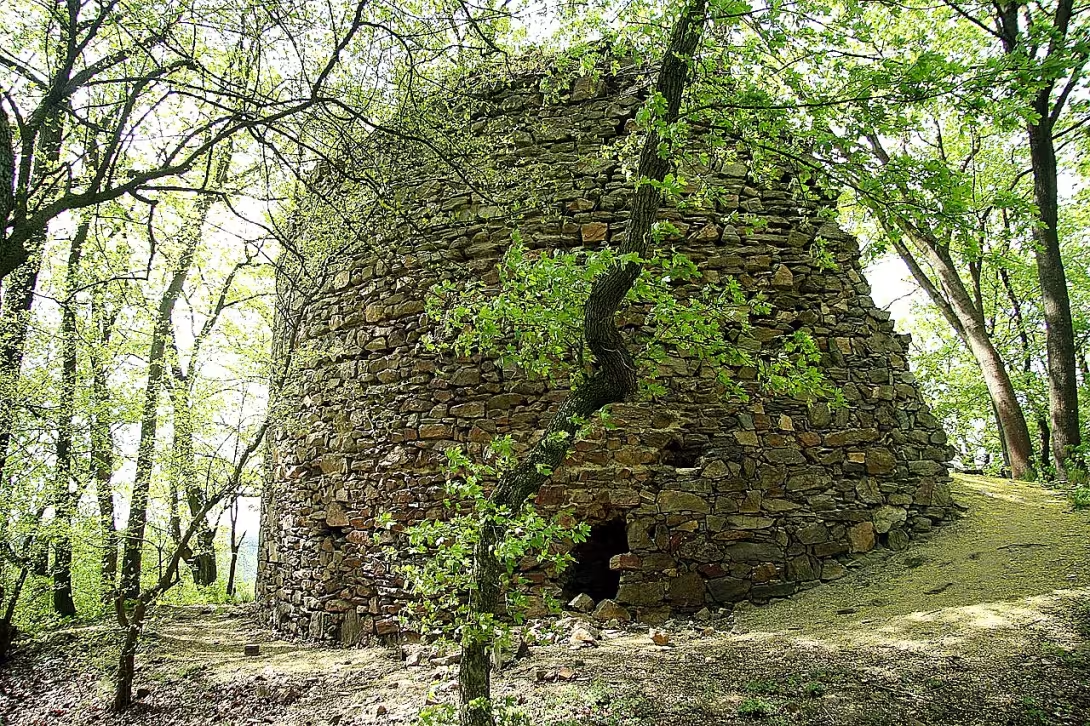
The ruin of castle Kraví Hora lies southeast of the village of Kuroslepy above the river Záslavou, near its confluence with Chvojnice. This medieval building from the 14th century is protected as a cultural monument of the Czech Republic. She's known primarily for her connection to the robbery squad.
The first written mention of the castle comes from the Charter of 1367. At that time, the object appears in connection with Náchoda Jesek, which was owned by Kuroblindy municipality around 1349.
The fort was strategically fortified using the terrain. On three sides, it was protected by a deep moat, wall and wall. The west side was a ravine and a southern rocky cliff. Access to the area was from the west side through the drawbridge leading to the square bastion. The core of the castle was a cylindrical tower with a diameter of 5.5 meters. Today, the torso is about five meters high.
After Ješek of Naděda Castle his son sold to the masters of Šelmberk. Later, in 1459, Jan Komorovský from Komorovice is mentioned in connection with the building. Subsequently, Matej from Náchodno and Březník acquired the building from King George. After his death in 1492, there was a property dispute won by the lords of Kralic. In the 1494 charter, King Vladislav II confirms the castle as the property of Blud of Kralic, already described as desolate in the document.
During the Margrave Wars between Yošt and Prokop the castle was dominated by Jindřich ze Šelmberka. This is where the brigand was operating, attacking the property of the Benedict monastery in Třebíč. The archaeological findings of weapons, riding equipment, blacksmiths and ceramics in the forefront confirm the presence of fighters connected to Jan Sokol from nearby Lamberk. Among the people who operated here were Hynek Suchý Čert, the brothers Henry and Peter Interesting from Kunštát, Wilhelm Sudlice, Jan Klát, called Grand Master of the Criminals, or Wolf of the Wolf, known as Shibal. In short, there was Jan Žižka. Along with four other men on the crew, he was charged with assault by three southerners. In April 1409, the Moravian state castle was surrounded and conquered. The prisoners were taken to Brno and executed as pests. According to the rumours of Václav Hájek of Libočan, the Moravans were hiding here from Hungary after the fall of the Grand Comorado Empire. One of these families subsequently began to write from Cow Mountain.
The ruin is now available after the red tourist mark leading from the Sedlečko to Ketkovic settlement. The castle Levnov is also nearby.
The Kraví Hora Memorial is an important witness to medieval unrest and strategic use of the terrain. Visiting this place offers the opportunity to see the remains of castle architecture in a natural environment over the river Sladou.
Then and now
Drag the slider to compare how the landmark may have looked when it was built with the view today.
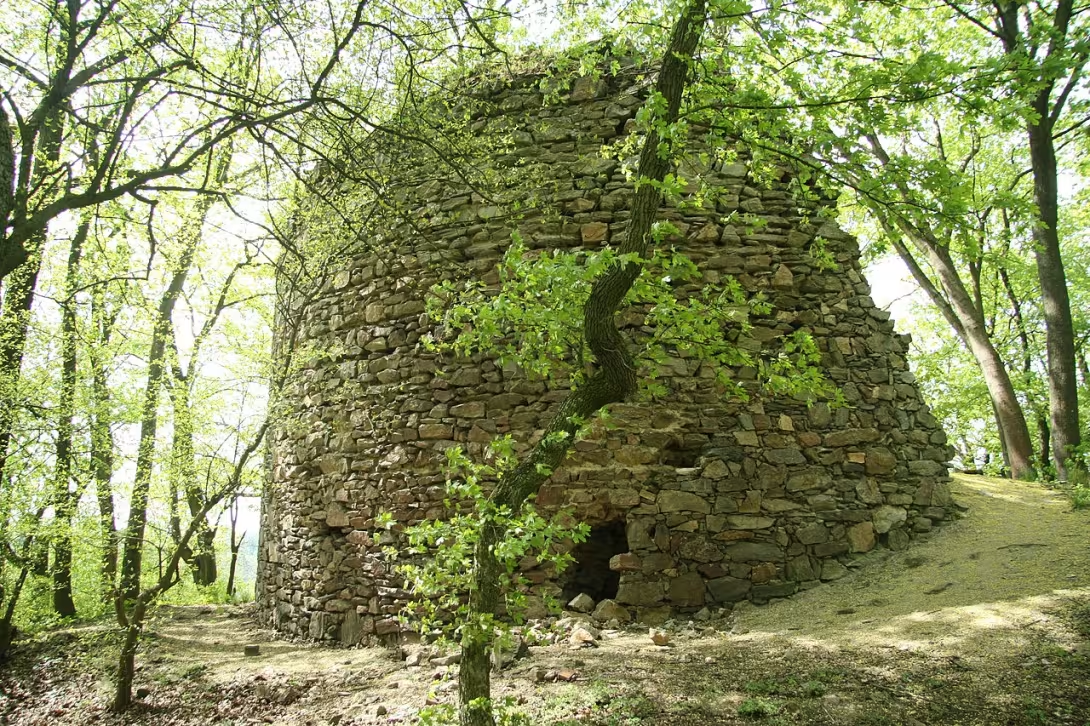

The historical appearance on the left is an AI-generated visualisation and serves as inspiration only.
Historical milestones
- 1367
- The first written mention of the castle in connection with Náchodá Ješek.
- 1409
- Conquering the castle of Moravian states in the fight against robbery.
- 1494
- The castle is mentioned in the charter as desolate.
Architectural development
The castle was fortified by a deep moat, valley and wall, with access through the drawbridge to the square bastion. The core of the building was a cylindrical tower with a diameter of 5.5 metres, from which the torso is now about five meters high.
Historical events
1409: Siege and conquest of the castle by Moravian states and execution of prisoners in Brno. 1494: Confirmation of the castle as desolate in the charter of King Vladislav II.
Owners
Ješek z Náchoda (from about 1349), gentlemen from Šelmberk, Jan Komorovský from Komorovice (mentioned 1459), Matej from Náchoda and Březník, Blud from Kralic (1494)
Points of interest
- The ruin of castle Kraví Hora is protected as a cultural monument of the Czech Republic.
- The first written mention of the castle comes from the charter of 1367, where it appears in connection with the Náchoda Jesek.
- After Nadeha, his son sold the castle to the masters of Shelmberg. Jan Komorovský from Komorovice is later mentioned in 1459.
- During the Margrave Wars between Yošt and Prokop, the castle was dominated by Jindřich ze Šelmberka, where there was a robbery satellite attacking the property of the Benedict monastery in Třebíč.
- In April 1409 the morale states surrounded and conquered the castle, the captives were taken to Brno and executed like earthlings.
Guide
Show guide text
This text was created by artificial intelligence and has not been editorially reviewed. It may contain inaccuracies.
Welcome to the place where history touches the earth and where the silence of the present talks of ancient glory and dark times. You are standing in front of the ruins of castle Kraví Hora. Before you go any further, I suggest you stop for a moment, soak up the view of the surrounding landscape and let yourself pass through the atmosphere of this place. Feel the calm of the Festival River mixed here with the monumental strength of the stone remains that stand above the surrounding area. This ruin is not just a pile of stone, it is a witness to the events that shaped our history, and even though it is fragile today, its legacy remains unwavering.
Let's go back in time together to understand why this place was so important. The first clues that history has left us about the castle go deep into the 14th century. The first written mention of this castle dates back to 1367. At that time the castle was a fixed point in the hands of a nobleman named Ješek z Náchoda. Imagine the world back then, the world of knights, the linkages of the family and the constant building of power. Kraví Hora was not just a seat, it was a strategic point that had to be well protected. It was during this period that the castle began to consolidate in its role and became part of a significant political and military map of the region.
Now pay attention to what you see around you. Even if you stand today at a ruin that no longer has its roofs or high walls, you can easily imagine how impenetrable this fortress was. Notice how the castle uses the natural advantages of this terrain. Look at the rocky cliff on which the castle stands. This natural barrier was one of the main pillars of defense. The castle was built not only on the strength of human hands, but mainly on cooperation with the harsh beauty of nature. Notice also how the entire area was protected by a deep moat and a wall. These elements together formed a complex defense system to repel any enemy. Now, when you look at the stone remains, try to fill in in your spirit those invisible lines of defense that once formed an impenetrable wall between the safety of the inhabitants of the castle and the danger of outer worlds.
But the history of Castle Kraví Hora was not just a story of noble masters and quiet life. Things have become much darker with time. In the later Middle Ages, instead of serving as a symbol of order, the castle became a hiding place for those who rejected the order. Robbery squads have arrived. Imagine those nights when people who lived in these walls were hiding from illegal gas and attack trade routes. However, this activity did not take long. Robbery triggered a strong response from the surrounding forces. In 1409, the Moravian states had to intervene. There was a siege and a subsequent conquest of the castle, thereby trying to erase this outbreak of danger from the map. It was a period of great upheaval when power clashed with the illegal struggle for survival and wealth.
In this context, names appear in the history of the castle that you should remember. In addition to Náchoda Ješka, who defined the castle in the beginning, there are other figures. After Ješek, the castle went into the hands of the masters of Šelmberk, among whom Jindřich ze Šelmberka appears in the records. Later, in the middle of the 15th century, the name of Jan Komora appears in connection with this place. The history of this place is interwoven with the names of the people who have made decisions about fate here, who have sought shelter here or who have fought here. Names such as Jan Žižka, Jan Klát or Hynek Suchý Čert are inseparably linked to the stormy events that took place all over the country at the time. Although their direct action may not be explicitly expressed in each sheet, their shadows move in these stones.
But now we must ask what happened to this once mighty fortress. Why are we only seeing these fragments today? The answer is in the silence that exists here. After a period of conflict and constant changes, the castle gradually lost its meaning. In 1494 there is a reference in the period papers which is very important to us - the castle was already marked as desolate at that time. That means people left him, life in him went quiet, and nature began its work. The castle became an abandoned place where instead of the screams of soldiers and the noise of the market began to rule the silence and the gradual disintegration of stone structures. However, this wasteland did not mean the end, but the beginning of the new existence of the castle as a monument that teaches us about the fleeting of human efforts.
Now we can think about one interesting thing that rules here. It is fascinating how this place survived centuries of oblivion and is today protected as a cultural monument of the Czech Republic. It is proof that even a ruin that no longer has its original purpose retains its value. Kraví Hora is not just a ruin, it's an open book you can read yourself. Every stone, every trace of the rolls, and every hole in the ground is a letter in this story. This monument makes us think about how fast power changes, how fast human fate changes, and how strong the memory of space can be, even if its walls are long gone.
Now I expect you not to return to the modern world, but to continue this quiet dialogue with history. I suggest you take a walk around, see the River Celebration and try to redraw the shapes of the castle in spirit as it looked at the time of its greatest bloom. Explore the surrounding terrain, notice how nature tries to unite with these remains of human architecture. Let yourself drift through the atmosphere of this place and enjoy the peace you are here. Thank you for choosing to visit Cow Mountain and become part of her story. We wish you a pleasant further journey in the footsteps of history.
Tips for visitors
The best time to visit the ruins of castle Kraví Hora is in summer or early autumn, when there are comfortable temperatures and beautiful lighting conditions for shooting. This period also offers the most beautiful views of the surrounding countryside.
When visiting, bring your shoes suitable for walking on uneven terrain, umbrella and plenty of drinking. In addition, it is good to carry a map or GPS device if you plan to explore the surrounding area.
For photography are ideal places around the ruins themselves and the views towards the river Slava. The best lighting conditions offer morning or late afternoon hours when the sun is lower in the sky.
In the vicinity of the ruins you can visit the castle Levnov and explore the natural beauty of the Chvovice stream. These places are also suitable for families with children where they can discover nature or look at historical monuments.
Frequently asked questions
Can the monument be visited?
This is a ruin. Such sites are often freely accessible, but some can only be visited with a guide or are closed for safety reasons. We have not verified the current situation – take care and respect any restrictions.
Why is the monument protected?
It is listed in the Central List of Cultural Monuments of the Czech Republic as a cultural monument (register no. 1000125881).
Businesses nearby
Do you run a restaurant, accommodation, shop, museum, rental, wellness or other visitor service near this monument? Show yourself directly to the people heading to it — this is how they will see you in the app and on the web:
Events nearby
Zdroj akcí: otevřená data měst a obcí ČR (Národní katalog otevřených dat) a kalendář akcí Národního památkového ústavu.
Nearby
The river Celebra, the brook Chvojnice, the castle Levnov and the village Kuroslepy.
Accommodation nearby
Trips and activities nearby
Guided tours, tickets and activities nearby from GetYourGuide
Affiliate link: if you buy from the partner, we may receive a commission. The price for you does not change.
Search tours and activities →Themed route
1. village Kuroblindy, village: Great place to start the trip. 2. stream Chvěnice, water flow: Offers a pleasant walk in nature. 3. Kraví Hora, ruin: The main destination of the route that offers a view of the surrounding landscape. 4. The River Celebration, Water Flow: An ideal place for a quiet rest by the water. 5th Castle Levnov, castle: Historical monument for dignified end of journey.
Seasonal recommendations
Spring: In spring, the ruin wakes up with nature. Fresh grass and first flowers begin to grow around the stone remains, giving the place a fresh look. The lighting is delicate and bland during this period, which is ideal for shooting details of architecture. We recommend wearing layered clothes because the morning cold can quickly turn into warmer air during the day. The road can be muddy because of the frozen soil, which is why solid shoes are useful.
Summer: The summer months bring the highest temperatures and longest days when the ruins are covered in dense green vegetation. The atmosphere is lively and full of sun, but heat can be very intense in the open space of the ruins. Due to the increased interest of visitors in the main summer season, it is best to arrive early in the morning or late in the afternoon to avoid crowds even the greatest heat. Don't forget enough drinking water and sun protection.
Autumn: Autumn visit offers a melancholy and calm atmosphere, where leaf colours turn into golden and brown shades. The morning fog surrounding the ruins creates a magical environment that perfectly contrasts with dark stones. It is necessary to prepare for variable weather and wet conditions, therefore waterproof shoes and warmer clothing are necessary. The best time for a tour is in the morning when the sun can still shine through the trees.
Winter: During the winter, Kraví Hora acts raw and majestic, especially when the landscape is covered with snow or frost. Limited daylight and cold air create a quiet, almost deserted atmosphere that allows visitors to observe the very structure of the ruins in peace. Due to low temperatures and shorter days, it is necessary to choose very warm and durable equipment. At this time, the minimum people are available, which guarantees maximum privacy.
Visualizations and artistic views


The visualisations are generated by artificial intelligence and serve as inspiration.
Photos from the area
Real photos taken near the monument


Zdroj a licence jsou uvedeny u každého snímku.
Tips from visitors
No tips yet. Be the first!
Log in and add your tip.
Sources and literature
Photos: Jiří Sedláček / CC BY-SA 4.0 — Wikimedia Commons. The author and licence also appear when you hover over the image.
Faktickým podkladem tohoto textu byl článek na Wikipedii, jehož autory jsou přispěvatelé Wikipedie. Článek je dostupný pod licencí CC BY-SA 4.0.
Location on the map
Příběhy a pověsti
Legendy, pověsti a příběhy spjaté s touto památkou
Fotografie návštěvníků
Zatím žádné fotografie. Buďte první, kdo přidá fotografii z návštěvy!
Log in a přidejte svou fotografii nebo hodnoťte.
Za ověřenou návštěvu v aplikaci získáte víc bodů — poznáme podle GPS, že jste na místě.
Reviews and comments