

Kultovní místo Housing estate
The archaeological site near Makotřasy is an extensive Eneolithic settlement dating back to the middle of the fourth millennium BC. It is located east of the village of Makotřasy in the Kladno district. The location is exceptionally notable for featuring a unique square fortified enclosure with a possible cult-astronomical function. This enclosure spans an area of over 90 hectares, and the site holds the distinction of being the oldest known metal-processing location in the Czech Republic. Protected as a cultural monument since 1987, this expansive area offers profound insights into early agriculture, metallurgy, and community organization during the Baalberg phase of the funnel beaker culture.
During the mid-fourth millennium BC, central Europe underwent significant social and economic shifts associated with the Eneolithic period. These changes were marked by the introduction of new agricultural practices and early metallurgy. The Baden culture and its Baalberg phase were expanding across the region, bringing advanced pottery styles and complex community organization. Within this historical context, the inhabitants of the Makotřasy settlement engaged in early metal processing. They also farmed crops such as wheat, along with small amounts of barley, beans, and millet, while raising cattle and rarely hunting wild animals.
Architectural development at the site began with an older arc-shaped ditch. This feature was approximately 650 meters long and protected a ten-hectare area near the Dolanský brook southwest of the later fortifications. The structure was succeeded by a large square-shaped enclosure with a northern side measuring 300 meters and a western side reaching 320 meters. The enclosure was defined by a four-meter-wide and 1.4-meter-deep ditch that delimited a 9.33-hectare area. It featured a prominent 17-meter-wide gate on the western side and a probable similar gate on the eastern side. Residential huts, storage pits, kilns, and specialized metalworking furnaces were established across the settlement.
The site does not feature a traditional history of named owners, feudal administrators, or medieval fortifications. Its significance is strictly prehistoric and archaeological, and its fortunes remained entirely underground until modern discovery. The principal turning point in its modern history occurred in 1961. That year, the location was discovered and partially explored during the construction of the Prague-Slaný road through a systematic surface excavation of a 40 by 500-meter strip. Following these archaeological findings, the remains were officially placed under state protection as a cultural monument in 1987.
Key events and discoveries at the site include the oldest known metal processing in the Czech Republic. This is documented by four sunken furnaces, a ceramic crucible fragment, slag, and a piece of copper ore, alongside Bavaria-sourced chert harvesting knives and a large dome-shaped kiln. Excavations within the settlement pits also revealed numerous burials of over fifty individuals. Many of these were children buried in a contracted ceremonial position with grave goods; however, several graves also contained evidence of physical violence or decapitation. Furthermore, researchers note that the dimensions of the square enclosure hypothetically correspond to a primitive mathematical expression of the annual cycle of twelve lunar months of 29 and a half days each. Meanwhile, the nine-hectare field area matches the acreage necessary to sustain a population of fourteen to seventeen people.
Today, the archaeological site exists as a protected cultural monument situated within the flat agricultural landscape of central Bohemia. While its structural features lie primarily subterranean or are revealed only through targeted research, the locality stands as a cornerstone of Czech prehistoric archaeology. Visitors interested in early human history, prehistoric astronomy, and the dawn of metallurgy will find Makotřasy to be a fascinating window into the innovations of the fourth millennium BC.
Then and now
Drag the slider to compare how the landmark may have looked when it was built with the view today.
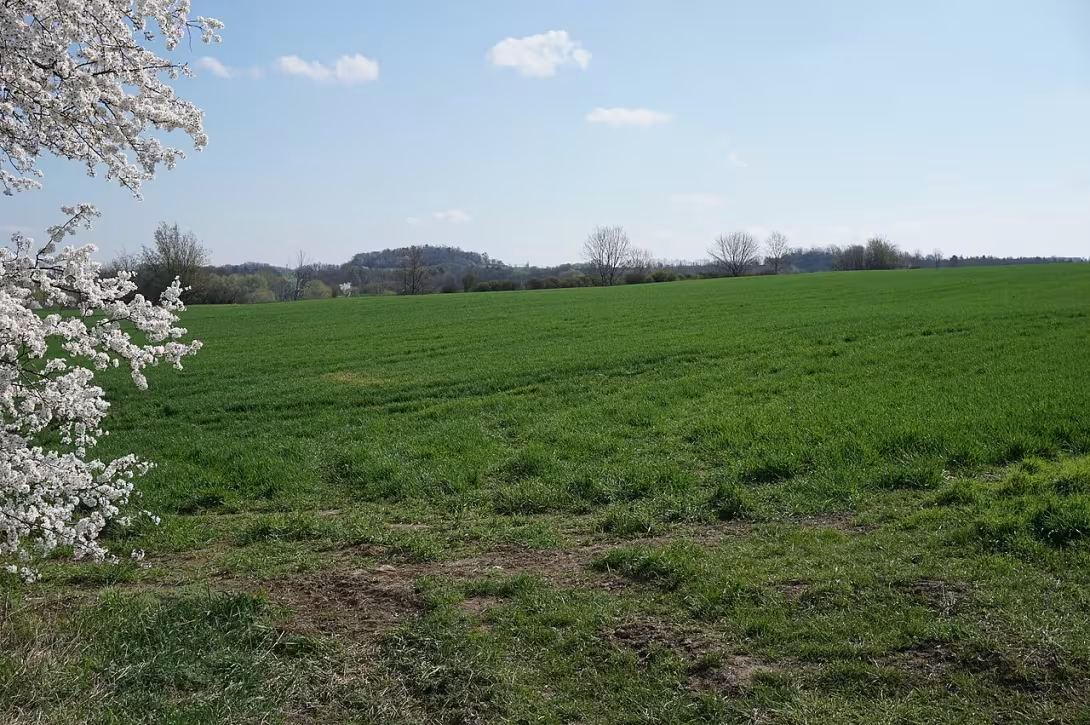
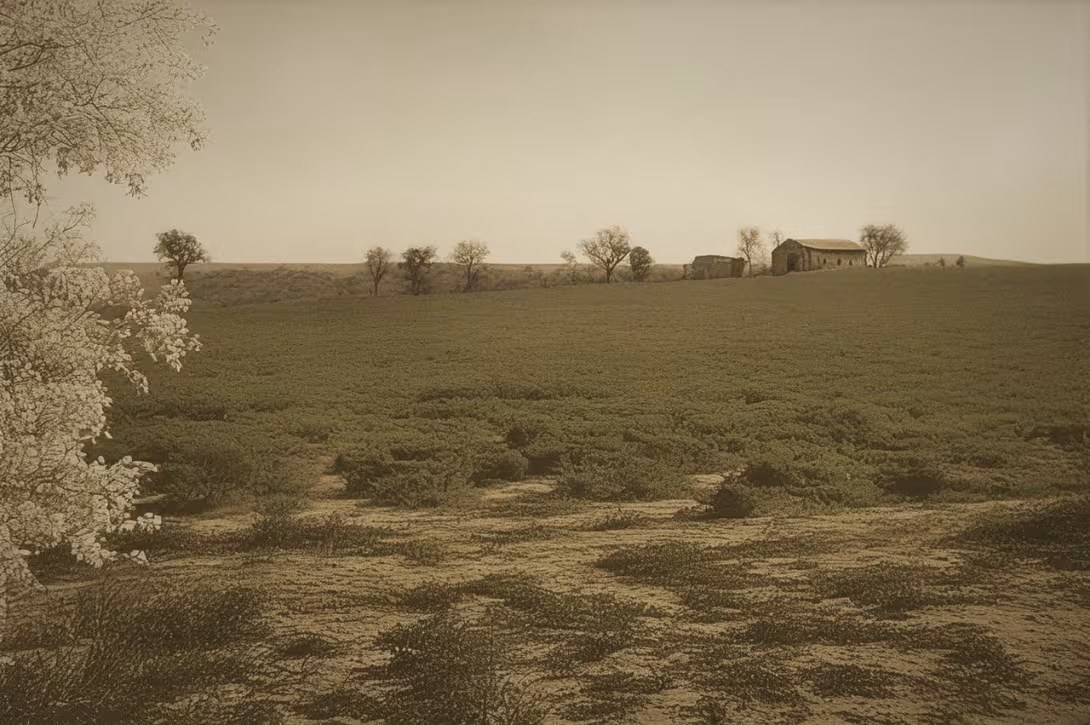
The historical appearance on the left is an AI-generated visualisation and serves as inspiration only.
Historical milestones
- around 3500 BC
- Eneolithic settlement established during the Baalberg phase
- around 3500 BC
- Construction of the square fortified enclosure and metal furnaces
- 1961
- Discovery and partial exploration of the site during road construction
- 1987
- The site was designated as a state-protected cultural monument
Architectural development
The construction development began with an older arc-shaped ditch protecting a ten-hectare area near the Dolanský brook. This was later succeeded by a large square-shaped enclosure with sides measuring approximately 300 by 320 meters, defined by a four-meter-wide and 1.4-meter-deep ditch. Entrances included a prominent seventeen-meter-wide gate on the western side. The settlement also included residential huts, storage pits, and specialized metalworking furnaces.
Historical events
Excavation and discovery of the site during the construction of the Prague-Slaný road in 1961; Designation of the site as a cultural monument in 1987.
Points of interest
– The archaeological site near Makotřasy is an extensive Eneolithic settlement dating back to the middle of the fourth millennium BC and is located east of the village of Makotřasy in the Kladno district. – It features a unique square fortified enclosure with a possible cult-astronomical function that spans an area of over 90 hectares, and it holds the distinction of being the oldest known metal-processing location in the Czech Republic. – Architectural development at the site began with an older arc-shaped ditch about 650 meters long, which was later succeeded by a large square-shaped enclosure defined by a four-meter-wide and 1.4-meter-deep ditch. – The location was discovered and partially explored in 1961 during the construction of the Prague-Slaný road, and it has been officially protected as a cultural monument since 1987. – Early metal processing at the site is documented by four sunken furnaces, a ceramic crucible fragment, slag, a piece of copper ore, Bavaria-sourced chert harvesting knives, and a large dome-shaped kiln.
Guide
This guide is narrated by a synthetic voice generated by artificial intelligence.
Show guide text
This text was created by artificial intelligence and has not been editorially reviewed. It may contain inaccuracies.
Welcome. You are standing before the remarkable archaeological site near Makotřasy, an extensive Eneolithic settlement that takes us back in time to the middle of the fourth millennium BC, located just east of the village of Makotřasy in the Kladno district. As you look around the landscape before you, take a moment to absorb the atmosphere of this ancient place. While much of the ancient architecture lies beneath the surface or has faded through the millennia, you are standing upon ground that once hummed with human activity more than five and a half thousand years ago, spanning an impressive area of over 90 hectares.
Let us travel back in time to around 3500 BC, during the Baalberg phase of the Eneolithic period, when this significant settlement was first established. This was a transformative era of human history, marked by shifting social structures and early innovations in metallurgy. The people who lived here were not merely surviving; they were actively shaping their environment, constructing a remarkable society that left deep footprints in the soil of this region.
Now, let us examine the features that make this location truly exceptional. Although you will not find soaring stone walls or standing buildings today, the ground beneath your feet holds the secrets of a unique square fortified enclosure. Archaeologists believe this massive geometric structure may have served a dual purpose, combining defensive fortification with a profound cult-astronomical function. As you scan the vast expanse of the site, imagine the precision required by ancient builders to layout such a vast square enclosure in the landscape without modern surveying tools. Within this enclosure, researchers have uncovered evidence of storage pits, kilns, residential huts, and metal furnaces dating back to around 3500 BC, pointing to early technological mastery in metalworking.
While the specific names of the architects and historical personalities who walked these grounds remain lost to the mists of time, the stories of the everyday inhabitants and their community endure through the artifacts they left behind. Numerous burials have been discovered within the site, accompanied by rich grave goods that offer a poignant glimpse into their spiritual beliefs, social hierarchy, and reverence for the afterlife. Each artifact tells a silent story of a life lived thousands of years ago.
This brings us to the fascinating mysteries that continue to captivate researchers and visitors alike. The true purpose behind the precise geometry of the square fortified enclosure and its potential cult-astronomical alignment remains a subject of ongoing study and wonder. How did these Eneolithic people track the cosmos, and what rituals took place within these earthen boundaries? The site remained hidden beneath the modern world until 1961, when it was fortuitously discovered and partially explored during road construction. Recognizing its immense historical and cultural value, the site was officially designated as a state-protected cultural monument in 1987, ensuring that its secrets would be preserved for future generations.
As we bring our audio tour to a close, take one last look across the sprawling landscape of the Makotřasy archaeological site. Let the quiet dignity of this ancient settlement resonate with you as you continue your journey of exploration and discovery today. Thank you for listening, and goodbye.
Tips for visitors
The best time to visit the archaeological site near Makotřasy is during spring or autumn. These seasons offer pleasant weather for walking through the flat agricultural landscape of central Bohemia, and the lower vegetation provides a clearer view of the terrain.
For transportation, the site is accessible by car and public transport, though you should check current connections in a reliable transit planner.
Since this is an open-air archaeological site situated near the Dolanský brook, you should bring sturdy footwear suitable for uneven agricultural paths, weather-appropriate clothing, and plenty of water, as shade is limited in the surrounding flat landscape.
For photography enthusiasts, the best time for capturing the vast landscape and the setting of the Eneolithic settlement is during the golden hour shortly before sunset. Positioning yourself along the paths near the Dolanský brook allows for striking wide shots of the central Bohemian countryside.
Families with children can turn the visit into an educational outdoor trip by exploring the open landscape of this middle fourth-millennium BC site. Ensure children stay on designated paths, and combine the walk with a relaxing picnic nearby in the peaceful environment of the Kladno district.
Frequently asked questions
Can the monument be visited?
This is a structure in a public space that can usually be seen from outside free of charge. We have not verified that this particular one is freely accessible.
Why is the monument protected?
It is listed in the Central List of Cultural Monuments of the Czech Republic as a cultural monument (register no. 1000135293).
Businesses nearby
Do you run a restaurant, accommodation, shop, museum, rental, wellness or other visitor service near this monument? Show yourself directly to the people heading to it — this is how they will see you in the app and on the web:
Nearby
🏰 Historic sites (500)
- sv. Jan Křtitel 1.2 km
- sousoší Archanděla Rafaela s dítětem Tobiášem 1.3 km
- sv. Ludmila a sv. Václav 1.4 km
- Hromadný hrob mužů 2.1 km
- Muzeum Památníku Lidice 2.1 km web
- Pomník dětským obětem války 2.2 km
- Jan Rákos 2.3 km
- Podstavec sochy sv. Salvátora 2.9 km
- Lidická galerie 3.0 km
- Okoř 3.0 km web
- Zámek Buštěhrad 3.1 km
- Buštěhradské muzeum Oty Pavla 3.5 km Kladenská 207/38 web
- Pomník obětem války 3.7 km
- Dinosauria 3.9 km Ke Kopanině 421 +420 702 222 433 web
- Pomník Obětem 2. světové války 5.6 km
- Pomník Obětem 1. světové války 5.6 km
- Sv. Juliána 5.9 km
- Pomník Obětem povstání v květnu 1945 6.1 km Pražská
- Antonín Zápotocký 6.1 km
- Pomník obětem 1. a 2. světové války 6.2 km
🍽️ Restaurants and dining (1948)
- Dvůr Hoffmeister 1.5 km Číčovice 45 +420 604 142 438 web
- Polich 1.8 km
- U Václava 2.0 km
- Hostinec Zájezd 2.7 km +420 604 934 751 web
- Cukrárna pod hradem 2.9 km
- Dělová bašta 2.9 km web
- Okoř 2.9 km
- Zámecká vinotéka 3.0 km
- Hospůdka u Davida 3.0 km
- Ella 3.1 km
- Pizza sebou 3.2 km
- Mezi domky 3.2 km web
- Na Hřišti 3.2 km
- Na Návsi 3.3 km
- MARMELINDA 3.3 km Palackého 62/4 web
- Pension restaurant PilotClub 3.3 km
- McDonald's 3.5 km
- U Junků 3.5 km
- U Bečvářů 3.5 km
- V Maštali 3.5 km
🏨 Accommodation (296)
- Courtyard Prague Airport 4.9 km Aviatická 1092/8 +420 236 077 077 web
- Holiday Inn Prague Airport 5.0 km +420 236 161 111 web
- Penzion Oto Plus 5.7 km K Padesátníku 10 +420737823135 web
- Ramada Airport Hotel Praha 6.2 km web
- Penzion Jasoň 6.4 km Dvořákova 238
- Hostel Modra 6.6 km K Letišti 916/8
- Domov důchodců 7.2 km
- Modrá Stodola 7.5 km +420 220 406 444 web
- Dolce Villa Hotel 8.1 km
- Sporthotel Hostivice Břve 8.3 km Hájecká 1866 +420 777 813 241 web
- Ponte 8.4 km
- Sporthostel Scandinavia 8.7 km Ztracená 737
- Skyhotel Prague 8.8 km
- Hoffmann 8.9 km
- Meritum 8.9 km Staré náměstí 14/8 +420 235 007 711 web
- Džbán 8.9 km Nad Lávkou 672/5 +420 725 956 457 web
- Spartakiáda 9.0 km Nad Lávkou 105/6 +420 235 311 222
- Pension Větrný mlýn 9.1 km Ruzyňská 96/3 +420 235 30 16 86 web
- Villa St.Tropez 9.1 km web
- Hotel Kladno 9.2 km náměstí Sítná 3113 +420 312 523 119 web
🚲 Rentals and sport (207)
- Koupaliště Středokluky 0.8 km
- Sport centrum Statek 3.2 km
- Sportovně-kulturní sdružení 5.5 km
- Jeneč - Sportovní hala 5.9 km Lidická 210
- Cykloservis Onderka 6.2 km web
- Sportservis Hostivice 6.9 km 17. listopadu 807 web
- Elektrokola 7.0 km
- Půjčovna elektrokol ekolo.cz 7.0 km
- Rock Point 7.0 km Fajtlova 1090/1 +420 233 320 924 web
- Sportisimo 7.0 km
- Sokolovna 7.1 km
- TJ Hostivice 7.1 km web
- Bowling Modrá Stodola 7.5 km
- Decathlon 7.8 km Americká 3252 web
- Intersport 7.8 km
- Otvovické koupaliště 7.9 km
- Koupaliště Divoká Šárka 8.0 km
- JamJam 8.5 km web
- Stěna Ruzyně 8.7 km web
- KOLO&KÁVA 8.8 km web
🥾 Hiking and nature (366)
- Andělská studánka 1.2 km
- Na zvonici 1.4 km
- Číčovický kamýk 1.4 km
- Pazderna 2.5 km
- Zámecký park 3.1 km
- LKPR Spotting Point 3.9 km
- viadukt u Nového mlýna 4.0 km
- Vyhlídková plošina 4.1 km
- Buštěhradská halda 4.5 km
- LKPR spotting point 4.6 km
- LKPR Spotting Point 4.6 km
- Vyhlídková Terasa pro veřejnost 4.7 km
- Illusion Art Museum 4.8 km
- Miniature airport LEGO 5.0 km
- Kovárské stráně 5.1 km
- LKPR Spotting Point 5.2 km
- Štola Dvořákova 5.5 km
- Žraločí zuby 5.5 km
- Jáma Stelčoves 5.6 km
- Štola Václav 5.7 km
Accommodation nearby
Trips and activities nearby
Guided tours, tickets and activities nearby from GetYourGuide
Affiliate link: if you buy from the partner, we may receive a commission. The price for you does not change.
Search tours and activities →Themed route
Thematic Tour Itinerary: Makotřasy Archaeological Site and Surroundings
1. Kultovní místo (Archaeological Site) - Type: Historical/Cultural - Why Visit: This is the primary attraction, offering a glimpse into ancient rituals and settlements in central Bohemia. The site provides insights into prehistoric life with its well-preserved artifacts and structures.
2. Dolanský brook - Type: Natural Feature - Why Visit: Located near the archaeological site, this brook offers a serene natural setting perfect for reflection or a short walk. Its proximity to the site adds context to the historical landscape of the area.
3. Makotřasy Village - Type: Cultural/Community - Why Visit: Just east of the site, Makotřasy village provides a charming glimpse into local life and culture in the Kladno district. Exploring this village offers an opportunity to experience traditional Czech architecture and community atmosphere.
4. Agricultural Landscape - Type: Natural/Scenic - Why Visit: The flat agricultural landscape surrounding Makotřasy is ideal for a leisurely stroll or cycling. It highlights the rural beauty of central Bohemia, offering picturesque views that complement the historical significance of nearby sites.
5. Nearby Fields and Meadows - Type: Natural/Scenic - Why Visit: These open spaces provide an opportunity to appreciate the natural environment and tranquility of the region. They serve as a perfect backdrop for picnics or quiet contemplation, enhancing the overall experience of visiting the archaeological site.
This itinerary offers a balanced exploration of history, culture, and nature in the vicinity of Makotřasy's archaeological site.
Seasonal recommendations
In spring, the archaeological site undergoes a beautiful transformation as the surrounding landscape awakens with fresh greenery. The light is soft and gentle, making it an ideal time for photography of the ancient structures amidst the budding nature. To make the most of your visit, bring layered clothing to accommodate the unpredictable weather, and aim for a mid-morning arrival to enjoy the mild temperatures before the midday sun.
During the height of the summer season, the site is bathed in intense sunlight and long, warm days. The atmosphere is lively, but the heat can be quite strong among the open archaeological remains. Because this is the busiest time of year, it is highly recommended to arrive as early as possible to avoid both the largest crowds and the peak midday heat. Be sure to bring sun protection and plenty of water.
Autumn brings a unique, contemplative mood to the cult site, characterized by golden hues in the vegetation and often misty, atmospheric mornings. The lighting becomes more dramatic as the sun sits lower in the sky, highlighting the textures of the ruins. For a comfortable experience, wear sturdy, waterproof footwear as the ground may become damp, and try to visit in the afternoon to capture the beautiful autumnal glow.
Visiting in winter offers a sense of profound solitude and stillness, as the landscape becomes stark and quiet. The low winter sun creates long shadows across the archaeological features, emphasizing their historical shapes. Since daylight is limited and temperatures can drop significantly, ensure you wear heavy, windproof clothing. Keep in mind that visiting hours may be shorter during this season, so plan your trip accordingly to avoid arriving too late in the day.
Visualizations and artistic views


The visualisations are generated by artificial intelligence and serve as inspiration.
Photos from the area
Real photos taken near the monument


Zdroj a licence jsou uvedeny u každého snímku.
Tips from visitors
No tips yet. Be the first!
Log in and add your tip.
Sources and literature
Photos: MartinVeselka / CC BY-SA 4.0, rozlišení zvýšeno umělou inteligencí — Wikimedia Commons. The author and licence also appear when you hover over the image.
Faktickým podkladem tohoto textu byl článek na Wikipedii, jehož autory jsou přispěvatelé Wikipedie. Článek je dostupný pod licencí CC BY-SA 4.0.
Location on the map
Příběhy a pověsti
Legendy, pověsti a příběhy spjaté s touto památkou

Fotografie návštěvníků
Přidat fotografiiZatím žádné fotografie. Buďte první, kdo přidá fotografii z návštěvy!
Máte k místu vzpomínku nebo zajímavý příběh?
Log in a přidejte svou fotografii nebo hodnoťte.
Za ověřenou návštěvu v aplikaci získáte víc bodů — poznáme podle GPS, že jste na místě.
Reviews and comments
⭐ Byli jste tu? Ohodnoťte památku a pomozte dalším. Přihlásit přes Google →