



Loreta Loretan chapel
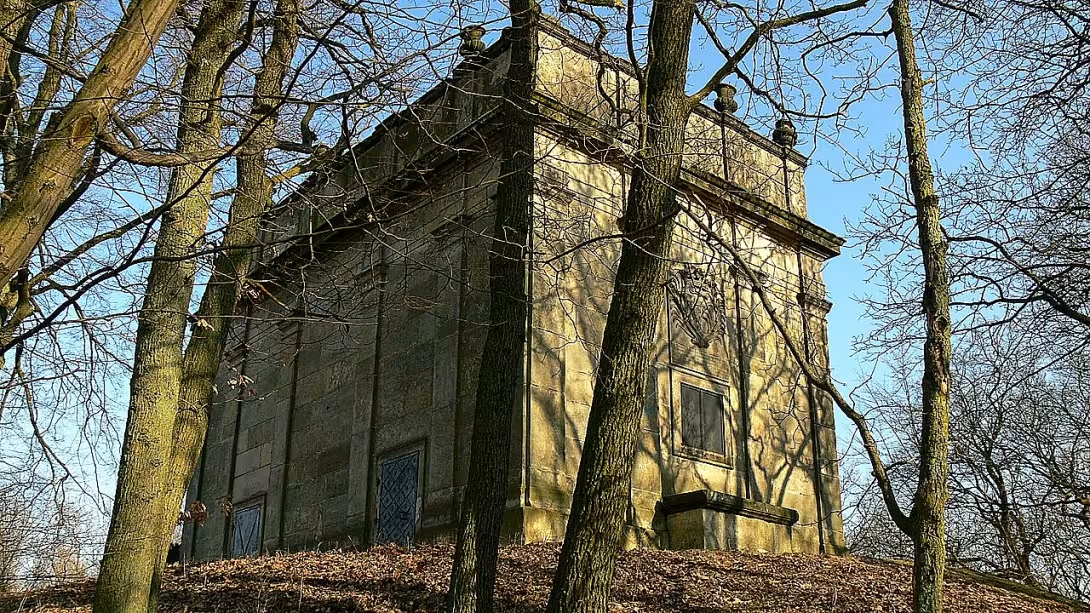
The Baroque chapel Loreta from 1694 is a cultural monument of the Czech Republic. It stands in the village Podhradí on a wooded basalt skirt at an altitude of 415 meters. The building is part of the Velišský lobe and stands out in its location in the centre of Baroque landscape composition.
The building was founded by Count Franz Josef Šlik at the time of the boom of Baroque architecture, when absolutism and counter-reformation prevailed in Europe. The author of the plans was Jan Baptista Mathey. The chapel was designed not as a separate object, but as a central point and intersection of the landscape axes of the so-called Marian Garden.
From the architectural point of view Jan Baptista Mathey deliberately suppressed the exterior decoration of the building. A specific element is the roof with a scenic terrace. This option was conditional on the top of the skirt, from which you can see the panorama of northeast Bohemia and two parts of the Schlikov estate in Jičín.
Loreta served as a buckle of the Schlikov landscape. In the past, the shape of the cross has led four forest passages towards other points in the composition. These axes connected the chapel with the chapel of Saint Anne at Lower Loch's, the chapel of St. Angel of the Strážný nad Vrášné Lhota, the Schlikov castle in Vokšice, the Hola hill under Křilina and the church of the Assumption of the Virgin Mary and the castle of the House of Schlik in Jičíněv.
The building is located in the Register of the Famous Lhoty, the closest to which is the village of Křilina. Historically they held a procession from a wide area. Currently, every first Saturday of the month, from May to October, the Holy Mass is served here, and the association of the municipalities of Mariánska Garden is organized by the annual procession.
The monument represents a unique link between architecture and landscape planning of the Baroque era. It offers visitors not only a view of the historic building, but also an extensive view of the northeast Bohemia.
Historical milestones
- 1694
- Establishment and construction of Baroque chapel by Count Franz Joseph Šlik
- 1700
- The period of flowering Baroque architecture and use as the centre of landscape composition
- 1800
- Traditional holding of religious processions from surrounding municipalities
- 2024
- Contemporary organisation of regular mass and processions within the Marian Garden
Architectural development
Author Jan Baptista Mathey deliberately suppressed the exterior decoration of the building. The chapel is specific to its roof, provided with a scenic terrace. The entire building is built on a wooded basalt hill at an altitude of 415 metres.
Points of interest
- The 1694 Baroque Chapel stands on a wooded basalt skirt at an altitude of 415 meters. - The building was founded by Count Franz Joseph Šlik according to the plans of Jan Baptiste Mathey. - A specific element of the building is the roof with a sightseeing terrace, from which is an overview over northeast Bohemia. - The chapel formed the centre of the Marian Garden, from which four forest passages led to other points of the landscape. - From May to October, every first Saturday of the month there is a Holy Mass.
Guide
Show guide text
This text was created by artificial intelligence and has not been editorially reviewed. It may contain inaccuracies.
Welcome to this beautiful building. You are standing in front of the chapel Loreta, which stands before you in all its baroque beauty. Feel her calm and the atmosphere of this place that surrounds you. It is a space where human architecture combines with the natural beauty of the surrounding nature. Look where you are now. This chapel is not just randomly placed. It stands on a basalt skirt, which is an elevated rock formation from an extinct volcano, which is part of the Velvet ridge. It is this position at an altitude of 400 meters above sea level that gives the whole place its unique character and a sense of supremacy.
Let us now stop at how this building was created and why it is standing here at all. Let us move in time deep into the past, namely the year six hundred ninety-four. It was this year that the chapel was founded and built. Her creator and founder was Count Franz Joseph Šlik. Why did the Count choose to build this holy space here? It wasn't just for religious reasons, but Count Šlik had a much wider mind. Loreta was to be part of an extensive landscape composition. Imagine it as a huge picture in a landscape where every road, every view and every building has its exact place. The chapel was located to serve as the intersection of the main landscape axes of the Marian Garden. So it's the central point where the lines of view and the road meet, which makes it the spiritual and aesthetic center of the whole neighborhood.
Now pay attention to the architecture itself. When you look at the building, realize that behind it is a recognized creator of Jan Baptista Mathey. Notice the Baroque style, which is typical of the late seventeenth century. The Baroque is characterized by dynamism and desire to induce strong feelings, which you see here. Take a look at the facade and overall available buildings. It's an architecture that was supposed to create wonder and lead ideas to heaven. In the year of these seven hundred, this area was at its peak, when Baroque art reached its peak. It was at that time that Loreta was fully at the asserted as the center of the mentioned landscape composition.
When we think about the people who were connected to this place, there is again Count Franz Joseph Šlik in the first place. He was a man with a vision who wanted to leave a trail in the landscape and create space for prayer and contemplation. But Loreta is not just about one founder. It's a place connected to thousands of people from surrounding communities. If we move into the nineteenth century, we can imagine a noisy and humble crowd of people at the same time. At that time, it traditionally held a religious procession. People from the surrounding villages walked to this chapel to express their faith and pray together. This tradition has been maintained in various forms until now. Even today, in the year two thousand twenty-four, Loreta is a living place. There are regular mass and processions within the Marian Garden, which means the chapel is not just a dead museum, but still serves its original purpose.
Now I would like to draw your attention to one very interesting feature of this construction that you should not overlook. Look up on the roof. The specific element that makes this chapel special is the roof with a scenic terrace. It's not common for all chapels. This terrace was designed to be an overview of northeast Bohemia. With the chapel standing on a wooded basalt skirt, it offers an absolutely stunning panorama from this point. It's a place where a view into a distance connects to a sense of inner peace. Imagine how people must have felt centuries ago when they went up and saw the landscape spread under their feet. It is a combination of land and heaven, which is very typical of baroque thinking.
Notice also how much this building is perceived as valuable. Loreta is protected as a cultural monument of the Czech Republic. This means that the State recognises its historical, artistic and architectural value. It is a monument that has survived for centuries and tells us the story of the ambitions of noble generations, the faith of simple people and the genius plans of architects.
If we were to sum up what makes Loretta so special, it's just this combination. On the one hand, we have a hard basalt skirt, on the other, the softness of baroque shapes. We have the personal ambition of Count Šlik and the collective faith of thousands of pilgrims. We have here a precise plan of Jan Baptiste Mathy and at the same time the natural beauty of the Great Ridge. All of these elements meet right here, at this point where they cross the axis of the Marian Garden.
Imagine now, in this space, the sound of the bells or singing of people during the procession. Feel the silence that exists here today, and try to find the echoes of the past. It's a place that encourages us to stop. In today's rush world, such a space is rare. Loreta offers you the opportunity to exhale, look far away at northeast Bohemia and think about how times change, but some values and beauty remain the same.
I will allow you now to quietly explore the surroundings of the chapel. You can walk around it, perceive the texture of the surrounding rocks and maybe try to look for the landscape axes we talked about. Watch how the building is inserted into the wooded hill and how dominant it is. If you have the opportunity, pay attention to details that you find interesting and let yourself be guided by the atmosphere of this historic place.
Thank you for accompanying me on this short journey through the history of the chapel Loreta. I hope you enjoyed this view of the past and that this place has charmed you as it charmed people over 300 years ago. You are now being left to explore this beautiful landscape. I wish you a pleasant rest of the day and many other beautiful experiences during your travels. Goodbye.
Tips for visitors
The best time to visit is late spring or autumn, when the Velišské lobe landscape offers beautiful colours and milder temperatures for walks around. The road to the Baroque chapel from 1694 leads through the basalt suk, which makes the visit an interesting trip to nature.
For the site we recommend to wear comfortable shoes suitable for the field, as the construction stands on elevated rock ground. As it is a sacral area, it is advisable to carry a garment suitable for visiting a religious monument.
For the best photos we recommend using the morning or late afternoon light to highlight the details of baroque architecture and drama of the basalt skirt. The most interesting views can be obtained when looking up from the bottom, which underlines the dominant position of the construction in the landscape.
Families with children can connect the way to the chapel with the exploration of surrounding nature and geology of the Velišké lobe. In the nearby area you can visit the chapel of St. Anne at Lower Lochov, the chapel of St. Angel of the Strážný nad Vrásná Lhota or go to the Holý vrch under Křilina.
Frequently asked questions
Can the monument be visited?
Religious buildings are usually open mainly during services; at other times a visit is normally arranged with the parish or the operator. We have not verified specific times.
Where is the monument?
Location: Podhradí. The map on this page shows the exact spot.
Why is the monument protected?
It is listed in the Central List of Cultural Monuments of the Czech Republic as a cultural monument (register no. 1000134075).
Businesses nearby
Do you run a restaurant, accommodation, shop, museum, rental, wellness or other visitor service near this monument? Show yourself directly to the people heading to it — this is how they will see you in the app and on the web:
Nearby
V okolí se nachází Velišský hřbet, kaple sv. Anny u Dolního Lochova, kaple sv. Anděla Strážného nad Hlásnou Lhotou a Holý vrch pod Křelinou.
Accommodation nearby
Themed route
Here is the design of the thematic route:
1.Loreta (chapel) - Main destination of the trip in the village Podhradí. It's a unique building that serves as a place of prayer and peace.
2. Velišké loin (height) - Natural way from the village towards the surroundings. It offers beautiful views of the landscape.
3. St. Anne's Chapel near Lower Lochov (shrine) - Small sacral building nearby. It is an ideal place for a short stop and reflection.
4. Chapel of St. Angel of the Strážný nad Vršné Lhota (shrine) - Another pilgrimage stop nearby. It stands in a high place with a pleasant atmosphere.
5. The bare top under the quartz (top) - Final point. The peak offers an overview of the entire visited area.
Seasonal recommendations
Spring: When spring season comes, the surroundings of the subsoil start to grow green again, and flowering trees make the place fresh. The gentle morning sun lights the stone walls of the chapel beautifully, creating a pleasant atmosphere. It is advisable to take several layers of clothing because the morning cold can quickly change with the gradual heat of the day. The best time for a walk is in the morning when the air is the cleanest.
Summer: In the summer months the area is rich in dense vegetation, which offers a pleasant shade during hot days. The sun shines most strongly around noon, so it is advisable to plan a visit in the early hours or late afternoons when the light is golden and less sharp. Don't forget the headgear and enough fluids to avoid high temperature fatigue.
Autumn: Autumn moons bring gold and red to the landscape. Foggy morning hours create a mysterious and melancholy atmosphere around historic buildings. The path to the monument can be slippery due to falling leaves, so we recommend choosing fixed shoes with good grip. A warm jacket and scarf are essential in this period.
Winter: In winter, the surrounding area is rough and thanks to the missing leaves it is easier to see the distant outlines of the landscape and the structure of the substation. Light is low and cold in these months, underlining the character of stone objects. Due to low temperatures it is necessary to wear very warm clothes and high quality bottom layers. It is best to take advantage of the bright days when the sun most illuminates shadows.
Visualizations and artistic views

The visualisations are generated by artificial intelligence and serve as inspiration.
Photos from the area
Real photos taken near the monument


Zdroj a licence jsou uvedeny u každého snímku.
Tips from visitors
No tips yet. Be the first!
Log in and add your tip.
Sources and literature
Photos: Petr Jakubec / CC BY-SA 3.0 — Wikimedia Commons. The author and licence also appear when you hover over the image.
Faktickým podkladem tohoto textu byl článek na Wikipedii, jehož autory jsou přispěvatelé Wikipedie. Článek je dostupný pod licencí CC BY-SA 4.0.
Location on the map
Příběhy a pověsti
Legendy, pověsti a příběhy spjaté s touto památkou

Fotografie návštěvníků
Zatím žádné fotografie. Buďte první, kdo přidá fotografii z návštěvy!
Log in a přidejte svou fotografii nebo hodnoťte.
Za ověřenou návštěvu v aplikaci získáte víc bodů — poznáme podle GPS, že jste na místě.
Reviews and comments