



Palliardiho hradisko Hillfort
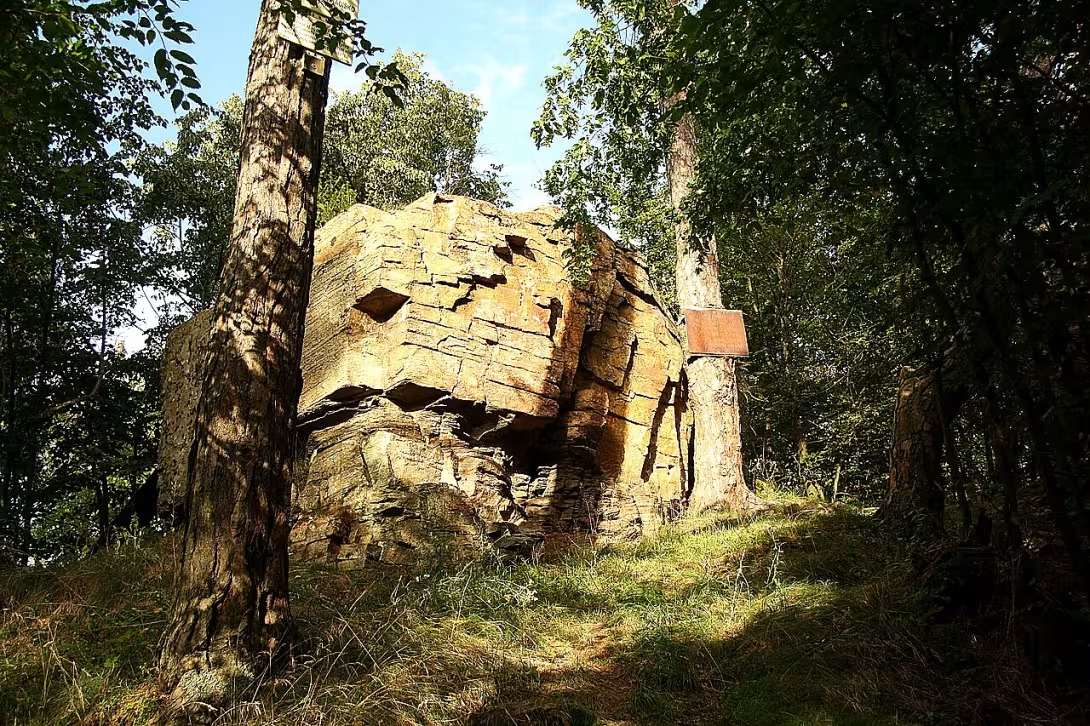
Palliardiho hradisko is an archaeological site on a rocky island above the valley of Želečka in Znojmo district, approximately two kilometres northwest of Bítov Castle. The location stands out for long-term settlements ranging from the late Stone Age to the Halštat period to the Slavic era. The area is protected as a cultural monument of the Czech Republic.
The fort is situated on a narrow edge approximately 350 metres long and 40 to 50 metres wide. Two rocks obstructed access to it, between which clear moats used to defend themselves were dug. In the vicinity of the inner ditch is a rock formation known as the "rock pit," which gives the location another interesting feature.
The history of Palliardi's castle is rich. The settlement dates back to the late Stone Age, which confirms the strategic importance of the site as a high settlement. In the Halštat time, the fort became an important cultural and commercial centre, as shown by archaeological findings. While its functions and structure may have changed during the period of Slavic use, the place has retained its importance.
The architecture of the fort is defined by the ditches between the rocks. These elements together with the rock formed an effective defence system. Traces of settlements from various epoch demonstrate the adaptability of the site and its long-term importance.
Hradisko bears the name of his discoverer, South Moravian archaeologist Jaroslav Palliardiego, who made a fundamental contribution to this important site by his study.
Today, Palliardiho hradisko is accessible to people interested in history and archaeology. The location offers a unique view of living conditions and strategic use of the terrain over several millennia. The place is worth visiting in terms of both history and nature.
Palliardiho hradisko testifies to the development of human societies. This monument allows us to better understand the past and its influence on the present. Visiting the site is not only a way into history, but also an opportunity to reflect on the importance of cultural heritage and its protection for future generations.
Then and now
Drag the slider to compare how the landmark may have looked when it was built with the view today.
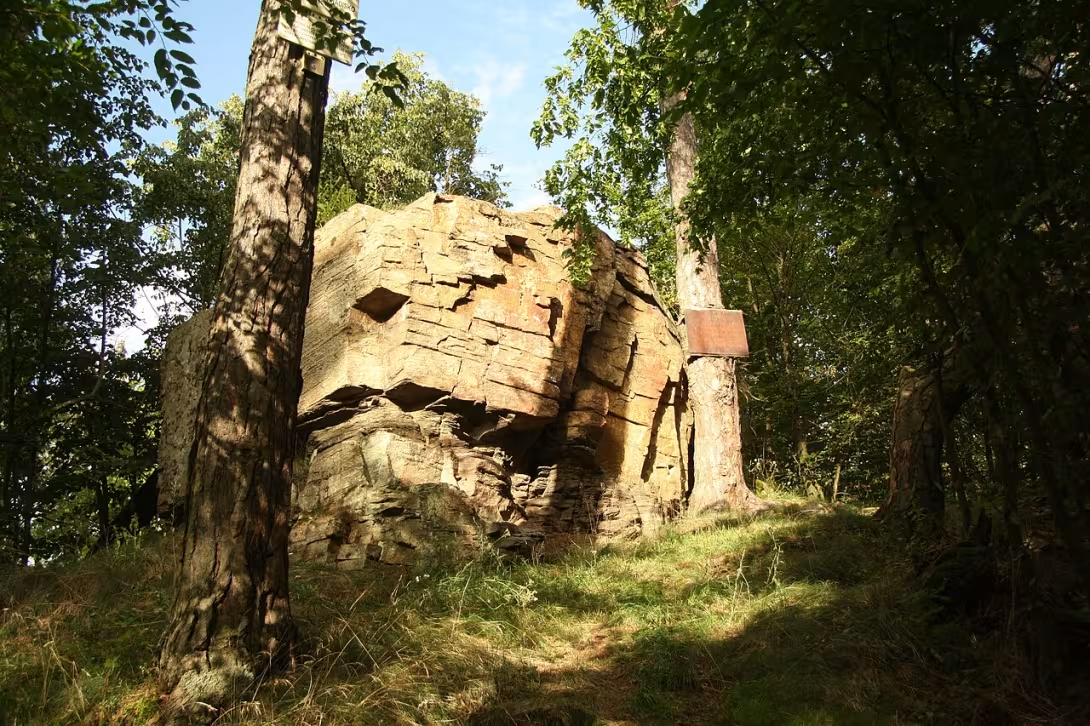
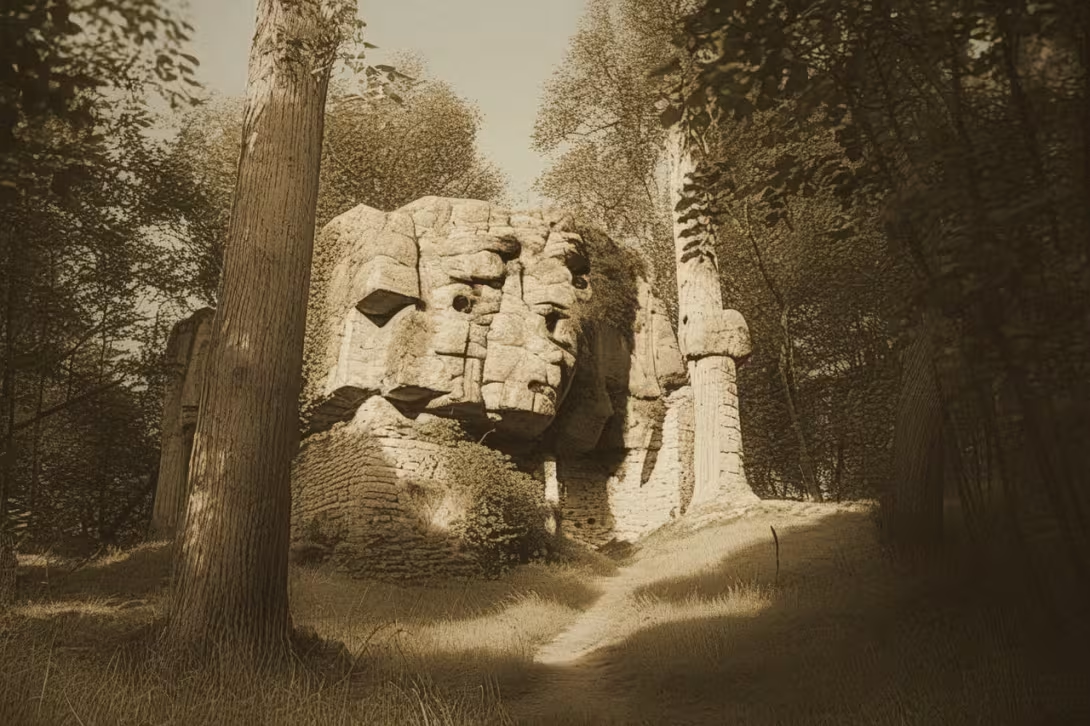
The historical appearance on the left is an AI-generated visualisation and serves as inspiration only.
Architectural development
The location shows traces of settlements from various epoch, from late stone to Slavic. Typically, the trenches are dug between rocks to protect access to the edge.
Points of interest
- The settlement dates from the late Stone Age to the Halštat period to the Slavic era. - The fort lies on a narrow edge and its defenses were served by trenches dug between two rocks. - There is a rock formation near the inner trench called the "rock can." - There was an important cultural and commercial centre in the Halštat time. The monument bears the name of its explorer, archaeologist Jaroslav Palliardiego.
Guide
Show guide text
This text was created by artificial intelligence and has not been editorially reviewed. It may contain inaccuracies.
Welcome to the Palliardi Castle, a unique archaeological site that boasts its rich history and its breathtaking view of the surrounding landscape. You stand before a rocky edge whose steep walls create an admirable defense of nature. Under your feet is the valley of Želečka, which gives this location great grace and peace.
Palliardiho hradisko is an important monument to history, inhabited since the late Stone Age. Over time, people from different cultures have settled here, from the Halloween period to the Slavic era. This location in the Znojmo district is not only a witness of the past, but also a monument protected as a cultural heritage of the Czech Republic.
Look up and see how the castle lies on the narrow edge. Its defenses were used by ditches dug between two rocks - this structure can only be seen today as a reference to the past, but it is evidenced by archaeological studies. In the vicinity of the inner trench there is a rock formation called the "rock bane," which gives this location another oddity.
One of the key personalities associated with this place is Jaroslav Palliardi, whose name has contributed enormously to the discovery and study of this site. Thanks to his work, the door to the past, which was almost forgotten.
The interesting thing about this place is that the settlement dates back to the late Stone Age. This long history reflects the rich past of the area where different cultures collided and overlap. It is indeed a place that offers countless possibilities for exploration and discovery.
Now pay attention to the overall atmosphere of the quay. Notice how nature and history intersect into one fascinating image. This view can only be the first step on the path of knowing this place.
Let's move on to explore more of this fascinating location. Each stone and every hidden valley can represent a new chapter in the history of the Palliardi Castle.
Thank you for your visit. We hope this guide helped you open the door to the past and inspired further exploration of this historic place. Let free exploration of this site fill you with joy and interest!
Tips for visitors
The most suitable period for visiting is spring and autumn, when the weather is mild and vegetation in the valley Želanovka provides beautiful color contrasts to the rocky edge. In summer it may be hot in the exposed area, while in winter the terrain may be slippery and dangerous. We recommend avoiding the top sun to enjoy better lighting conditions for field orientation.
Transport to the site is provided mainly by a private car because it is an isolated archaeological site. If you choose to use public transport, check the current connection in the search engine as direct lines can rarely or not exist.
Don't forget to wear solid shoes with a good heel and anti-slip sole in the field because the path to the castle leads on rocky and uneven ground. We recommend taking enough drinking water, light snacks and layered clothing, because the heights can be windy and temperatures can change quickly. Sunglasses and hat are necessary in summer.
For photography is the best time in the morning or late afternoon when light is softer and creates dramatic shadows on the rock edge.
In the vicinity, specifically within 30 minutes, there is Bítov Castle, which is an important historical monument and a great choice for further tours. The River Želečka valley also offers opportunities for short walks in a quiet environment. For families with children it is important to note that the terrain of the barrier is not suitable for prams and smaller children should be supervised due to uneven surfaces and heights.
Frequently asked questions
Can the monument be visited?
This is an archaeological site. Often there is little to see on the ground and the land may be private. We have not verified access.
Why is the monument protected?
It is listed in the Central List of Cultural Monuments of the Czech Republic as a cultural monument (register no. 1000148420).
Businesses nearby
Do you run a restaurant, accommodation, shop, museum, rental, wellness or other visitor service near this monument? Show yourself directly to the people heading to it — this is how they will see you in the app and on the web:
Events nearby

Zdroj akcí: otevřená data měst a obcí ČR (Národní katalog otevřených dat) a kalendář akcí Národního památkového ústavu.
Nearby
The castle of Bítov and the valley of the river Želečka.
Accommodation nearby
Themed route
1. Bítov Castle (historical monument) - This important building represents the cultural centre of the region and offers a fascinating view of the surrounding landscape. 2. valley of the river Želečka (natural location) - A picturesque space suitable for relaxing and observing nature during the journey to the destination. 3. Palliardiho hradisko (archaeological site) - The main destination of the trip, which allows us to explore traces of ancient human existence.
Seasonal recommendations
In spring the castle comes alive with the arrival of the first flowers and fresh greenery, which gently encapsulates the old establishment. Soft spring light ideally highlights the relief of terrain and details of archaeological structures. I recommend a tight-footed shoe, because the roads can be muddy on a frozen ground. An ideal visit in the morning is when the air is the cleanest.
The summer season brings rich colours of dense foliage and intense sunlight that fills the space with energy. Expect more visitors in the high season, which is why it is best to arrive first thing in the morning to avoid heat and clumps of people. Remember light clothing, hat and plenty of fluids to keep hydration during walks.
The autumn atmosphere is influenced by a golden shade of leaves and frequent morning fog, which give the monument mystery. Light is milder in this period and creates deeper shadows, which is suitable for photography. Due to the variable weather, select layered clothes and plan a visit to the late afternoon when the colors of the landscape are most saturated.
In winter, the castle is a desert and quiet place when bare branches of trees reveal the whole range of archaeological grounds. Freezing air and any snow cover create a minimalist and peaceful scene. It is necessary to have warm and waterproof clothes.
Visualizations and artistic views


The visualisations are generated by artificial intelligence and serve as inspiration.
Photos from the area
Real photos taken near the monument


Zdroj a licence jsou uvedeny u každého snímku.
Tips from visitors
No tips yet. Be the first!
Log in and add your tip.
Sources and literature
Photos: Jiří Sedláček / CC BY-SA 4.0 — Wikimedia Commons. The author and licence also appear when you hover over the image.
Faktickým podkladem tohoto textu byl článek na Wikipedii, jehož autory jsou přispěvatelé Wikipedie. Článek je dostupný pod licencí CC BY-SA 4.0.
Location on the map
Příběhy a pověsti
Legendy, pověsti a příběhy spjaté s touto památkou

Fotografie návštěvníků
Zatím žádné fotografie. Buďte první, kdo přidá fotografii z návštěvy!
Log in a přidejte svou fotografii nebo hodnoťte.
Za ověřenou návštěvu v aplikaci získáte víc bodů — poznáme podle GPS, že jste na místě.
Reviews and comments