



Památník objevu radia Memorial
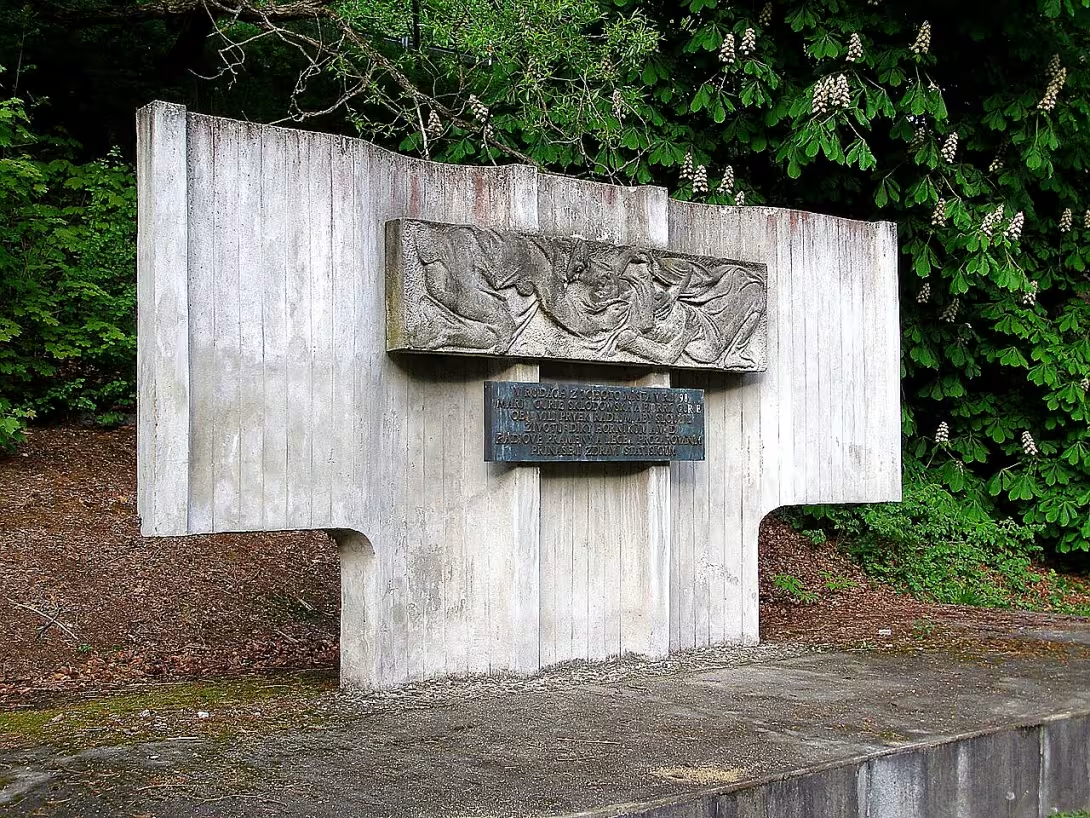
Památník objevu radia in Jáchymov is a sculpture work from 1950, which resembles the insulation of the radioactive element from the local pitch. The property is located in the spa park between the Agricola building and the Radiological Pavilion. It represents a constant reminder of the connection between the science and history of this city.
The monument was revealed in 1950 as part of the reconstruction of the spa area. Its creation falls within the period of construction of a socialist state, when Jáchymov had a significant influence on uranium ore mining, key to the political and economic development at the time. The object also worships the scientific success of Marie Curie-Skłodowski, her husband Pierre Curie and Gustav Bémont, who discovered the radium in 1898 thanks to the Jáchymov pitch.
The architectural solution corresponds to the period concept of monuments from the mid-20th century. The dominant element is a sculpture called Mercy by academic sculptor Karl Lidický. The work is planted in the pietable space and symbolizes the importance of Jáchymov pitch from which the radio was first obtained. The name of the statue refers to the therapeutic use of radioactivity in the local spa.
The monument resembles a discovery that has fundamentally influenced modern physics and medicine. The scientific breakthrough of 1898 was followed by a ceremonial discovery of this work in 1950.
Today the monument is freely accessible in the park near the historical centre. Visiting the site offers the opportunity to learn about the history of scientific progress, which is closely related to local mining and spa tradition. The building represents an important link between the history of science and the development of the spa in the region.
Historical milestones
- 1898
- Discover radio using Jachymov pitch
- 1950
- Ceremonial unveiled memory in the park
Architectural development
The monument was built in 1950 as part of the reconstruction of the spa park. Part of it is the sculpture of Karel Lidický, which is planted in the drinking space. The architectural solution corresponds to the period concept of monuments from the middle of the 20th century.
Historical events
1898: Discover radio in Jáchymov pitch. 1950: Discovering the monument in Jáchymov.
Points of interest
- The monument is a sculpture piece from 1950, which resembles the isolation of the radioactive element from the local pitch. - The building is located in the spa park between the Agricola building and the Radiological Pavilion. - The dominant element is a sculpture called Mercy by academic sculptor Karl Lidický. - The title refers to the therapeutic use of radioactivity in the local spa. - Radium was discovered by Marie Curie-Skłodowská, her husband Pierre Curie and Gustav Bémont in 1898 thanks to the Jáchymov pitch.
Guide
Show guide text
This text was created by artificial intelligence and has not been editorially reviewed. It may contain inaccuracies.
Welcome to this noble monument to the discovery of radio, which boasts its historical and cultural value. You are standing here in the centre of the spa park in Jáchymov, where nature and art intersect into a harmonious symphony. Under your feet, there is a peaceful space between the Agricola building and the Radiological Pavilion, which gives this place something strange and mysterious.
The monument was revealed in 1950 as a tribute to the scientific success of Marie Curie-Skłodowski, Pierre Curie and Gustav Bémont. These people have become a symbol of the relentless search for truth in the world of chemical elements. Their work led to the discovery of radio in 1898, which was possible thanks to the unique properties of the Jachymov pitch. This pitch, originating in this valley, has become a key element in scientific progress.
Now pay attention to the sculpture called "Mercy" created by academic sculptor Karel Lidický. This sculpture is a dominant element of the monument and symbolizes not only scientific but also human aspects of the discovery of radium. Its details tell the story of love for the closer and protecting life, which is extremely important in the context of radioactive elements.
Note the historical personalities associated with this location. Marie Curie-Skłodowská, known for its discoveries and courage, has become one of the most important scientists of our century. Together with Pierre Curiem and Gustav Bémont they contributed to the development of chemistry and physics of the new age. Their work opened the door to a world that used to be a fantasy.
The interesting thing about this local monument is that it serves as a reminder of the insulation of the radioactive element from the local pitch. This success not only opened new horizons in medicine and technology, but also showed the strength of the human spirit and its desire for knowledge.
An invitation to explore this location is its peaceful atmosphere and natural beauty. Take a walk in the park, enjoy your peace and take time to think about the historical events that have taken place here. I hope this monument inspires you to understand the past and the present.
Thank you for your visit, and I wish you the rest of the day. Let every other place you visit be as fascinating as this monument to the discovery of the radio.
Tips for visitors
The best time to visit is during a sunny morning when the light hits the memorial and allows to take clean pictures without disturbing shadows of trees in the park. The location is freely accessible throughout the year, making it an ideal stop while walking through the spa area.
You can easily reach the monument by car, which you can park on dedicated areas near the spa buildings.
Take your comfortable park walking shoes and a camera with you. The monument is situated in a quiet green, therefore it is advisable to have a bottle of water or snack with you if you plan to stay longer in the area. For photographers is the most interesting detailed view of the relief monument with the background of spa architecture.
In the immediate vicinity of the monument you can visit the Agricola Spa Building and the Radiological Pavilion, which form a historical complex connected with the scientific history of the city. A walk between these objects takes only a few minutes and provides a comprehensive view of the important sights Jáchymova.
For families with children this place is suitable as a stop during an educational walk. The park offers plenty of space for movement and a quiet environment where you can bring the story of the scientific discovery of husband and wife Curie and Gustav, which is remembered on the monument.
Frequently asked questions
Can the monument be visited?
This is a structure in a public space that can usually be seen from outside free of charge. We have not verified that this particular one is freely accessible.
Where is the monument?
Location: Jáchymov, Karlovarský kraj. The map on this page shows the exact spot.
Why is the monument protected?
It is listed in the Central List of Cultural Monuments of the Czech Republic as a cultural monument (register no. 1435946630).
Businesses nearby
Do you run a restaurant, accommodation, shop, museum, rental, wellness or other visitor service near this monument? Show yourself directly to the people heading to it — this is how they will see you in the app and on the web:
Nearby
Lázeňská budova Agricola, Radiologický pavilon, historické centrum města Jáchymov.
Accommodation nearby
Trips and activities nearby
Guided tours, tickets and activities nearby from GetYourGuide
Affiliate link: if you buy from the partner, we may receive a commission. The price for you does not change.
Search tours and activities →Themed route
Thematic cruise route: Památník objevu radia and surroundings
1.Památník objevu radia (memorial) Type: Historical monument Why is worth a visit: This monument celebrates the significant contribution of Jáchymova to the history of technology, namely the discovery of radio. It is an ideal place to understand the importance of this village in world history.
2. Agricola Spa Building Type: Historical architectural object Why is it worth a visit: This building is a reminder of the former use of Jáchymova as a spa centre. It's a beautiful example of architecture from when the city was known for its mineral springs.
3. Radiological Pavilion Type: Historical building with scientific exposure Why is worth a visit: Pavilion is an important place to understand the history of radiology and its development. It contains information about the use of radium in medicine, which adds depth to the knowledge of the subject.
4. Historical Center of Jáchymov Type: Cultural and historical area Why is it worth a visit: The centre is full of ancient buildings and streets that tell about the rich past of the city. It is an ideal place to walk and gain total impression of the historical significance of Jáchymova.
This route offers a comprehensive view of the history of radio discovery and its context in the city of Jáchymov.
Seasonal recommendations
Spring: In the spring season Památník objevu radia in Jáchymov is presented in a special atmosphere, when flowering shrubs and trees revive the surroundings. The sun illuminates the memory of warmer rays, creating a pleasant impression for visitors. A visit is recommended in the early spring season when the openness of nature is most evident. A good tip is to wear mild clothes with the possibility to add a shirt or jacket for cooler morning and evening.
Summer: In summer Památník objevu radia in Jáchymov becomes a popular place for visitors looking for sun rest and historical experiences. The sun illuminates the memory of the long rays that emphasize its architectural details, while nature is in full force. It is advisable to visit the memory of an earlier afternoon to avoid the biggest crowds. Hot clothing and sun protection (e.g. hat, protective cream) are basic recommendations for a comfortable stay.
Autumn: In autumn the Památník objevu radia in Jáchymov offers a different, calmer experience. Tree leaves are turned into living colours and the lighting is milder than in summer. This period is ideal for those looking for a quieter visit without large crowds. Clothes should be adapted to colder conditions with the possibility of adding a shirt or jacket, especially in the winter months. Visit the memory in the half-hour for the best impression.
Winter: In winter Památník objevu radia in Jáchymov has a unique charm when it is lit by an ice atmosphere and snow. Despite the colder conditions, the monument becomes a place with a magical atmosphere, especially in the evening when it shines in darkness. Hot clothes, including leather shoes and protective clothing against cold, are essential for a comfortable experience.
Visualizations and artistic views


The visualisations are generated by artificial intelligence and serve as inspiration.
Photos from the area
Real photos taken near the monument

Zdroj a licence jsou uvedeny u každého snímku.
Tips from visitors
No tips yet. Be the first!
Log in and add your tip.
Sources and literature
Photos: Palfi / CC BY-SA 4.0 — Wikimedia Commons. The author and licence also appear when you hover over the image.
Faktickým podkladem tohoto textu byl článek na Wikipedii, jehož autory jsou přispěvatelé Wikipedie. Článek je dostupný pod licencí CC BY-SA 4.0.
Location on the map



Příběhy a pověsti
Legendy, pověsti a příběhy spjaté s touto památkou

Fotografie návštěvníků
Zatím žádné fotografie. Buďte první, kdo přidá fotografii z návštěvy!
Log in a přidejte svou fotografii nebo hodnoťte.
Za ověřenou návštěvu v aplikaci získáte víc bodů — poznáme podle GPS, že jste na místě.
Reviews and comments