



Pasionál abatyše Kunhuty Manuscript
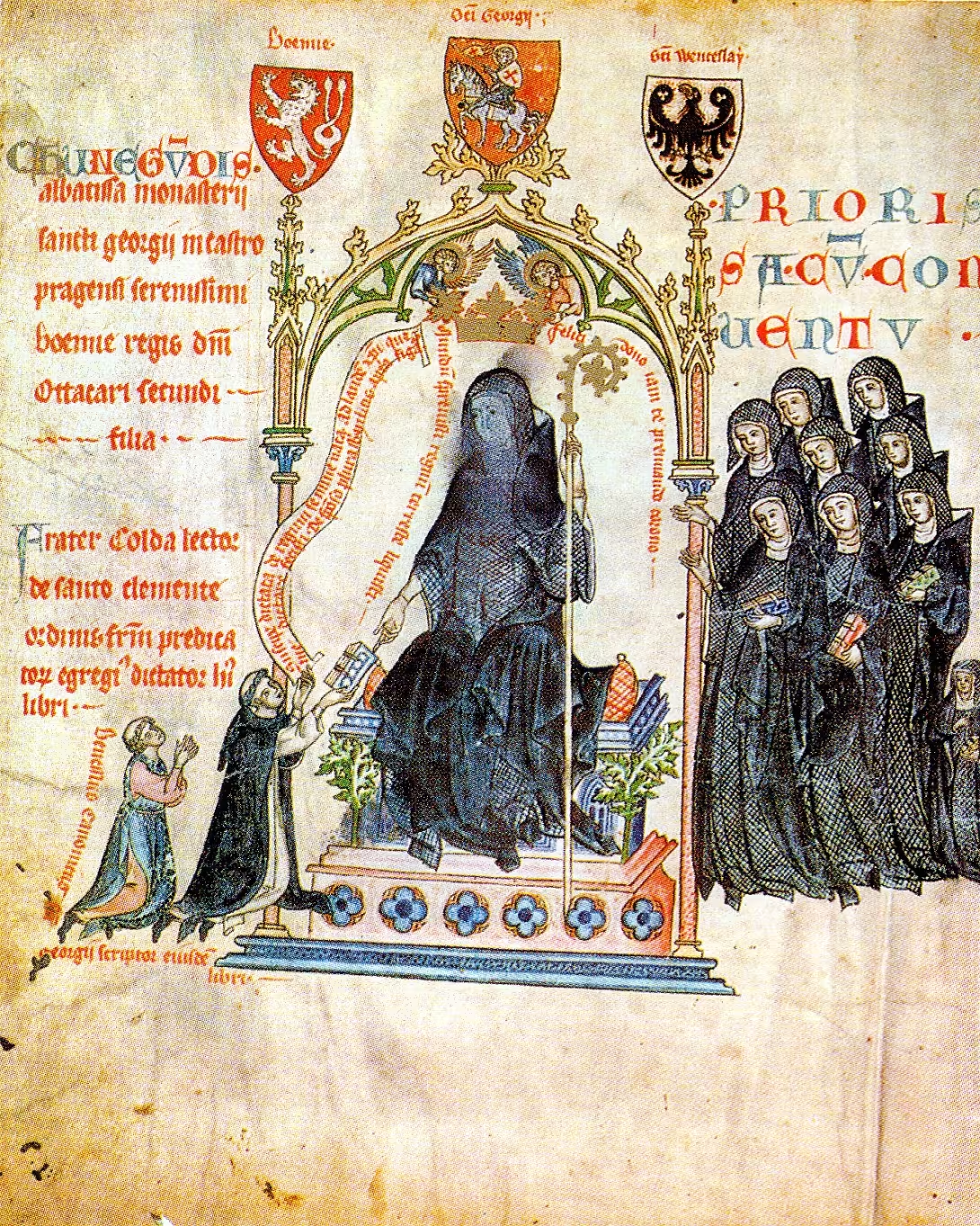
The Passionál of Abbess Kunhuta is an illuminated Latin manuscript from the early 14th century. Commissioned by Prague Benedictine Abbess Kunigunde of Bohemia, daughter of King Ottokar II, it was created after 1312 and completed around 1321. This remarkable work stands out for its exceptional medieval artistry and spiritual depth. It features high-quality illuminations that elevate its significance beyond Central Europe, making it a notable cultural artifact.
The manuscript includes five spiritual texts with thirty-six illustrations depicting theatrical scenes performed in the St. George's Monastery during Easter. These serve as metaphors for the suffering of the Church. Created under the patronage of Kunhuta Přemyslovna, the Passionál reflects the significant religious influence on art and culture during the early 14th century when Bohemia was part of the Holy Roman Empire.
During this period, monasteries played a central role in intellectual life. The manuscript is an anthology of mystic treatises on Christ's passion. Two texts were composed by Czech Dominican friar Kolda of Koldice, while Prague canon Beneš wrote and possibly illuminated it, serving as a priest in the St. George's Convent.
The artistic form of the Passionál is particularly noteworthy for its illuminations. These include the earliest surviving colored depiction of the heraldic emblem of Bohemia, now part of the Lesser coat of arms of the Czech Republic. The manuscript is likened to a medieval orrery, with Christ as the Sun and his bride as Venus, integrating complex allegorical elements.
A two-page insert depicts Abbess Kunhuta both as a princess and as the Bride of Christ, highlighting her dual role in spiritual and temporal realms. Throughout its history, the Passionál has been closely associated with its creator and commissioner, Kunhuta Přemyslovna. Its completion around 1321 coincided with Kunhuta's death, marking an end to a significant chapter in Bohemian religious art.
In 2005, it was declared a national cultural monument of the Czech Republic, underscoring its enduring importance. Today, the Passionál remains a testament to the rich spiritual and artistic heritage of medieval Bohemia. Its intricate illuminations and profound allegorical content continue to captivate scholars and visitors alike. The manuscript's status as a national cultural monument ensures its preservation for future generations, making it a must-visit for those interested in medieval art and history.
Its significance lies not only in its beauty but also in its ability to convey the deep spiritual reflections of its time, inviting modern audiences to explore the rich tapestry of Bohemian culture and faith.
Then and now
Drag the slider to compare how the landmark may have looked when it was built with the view today.
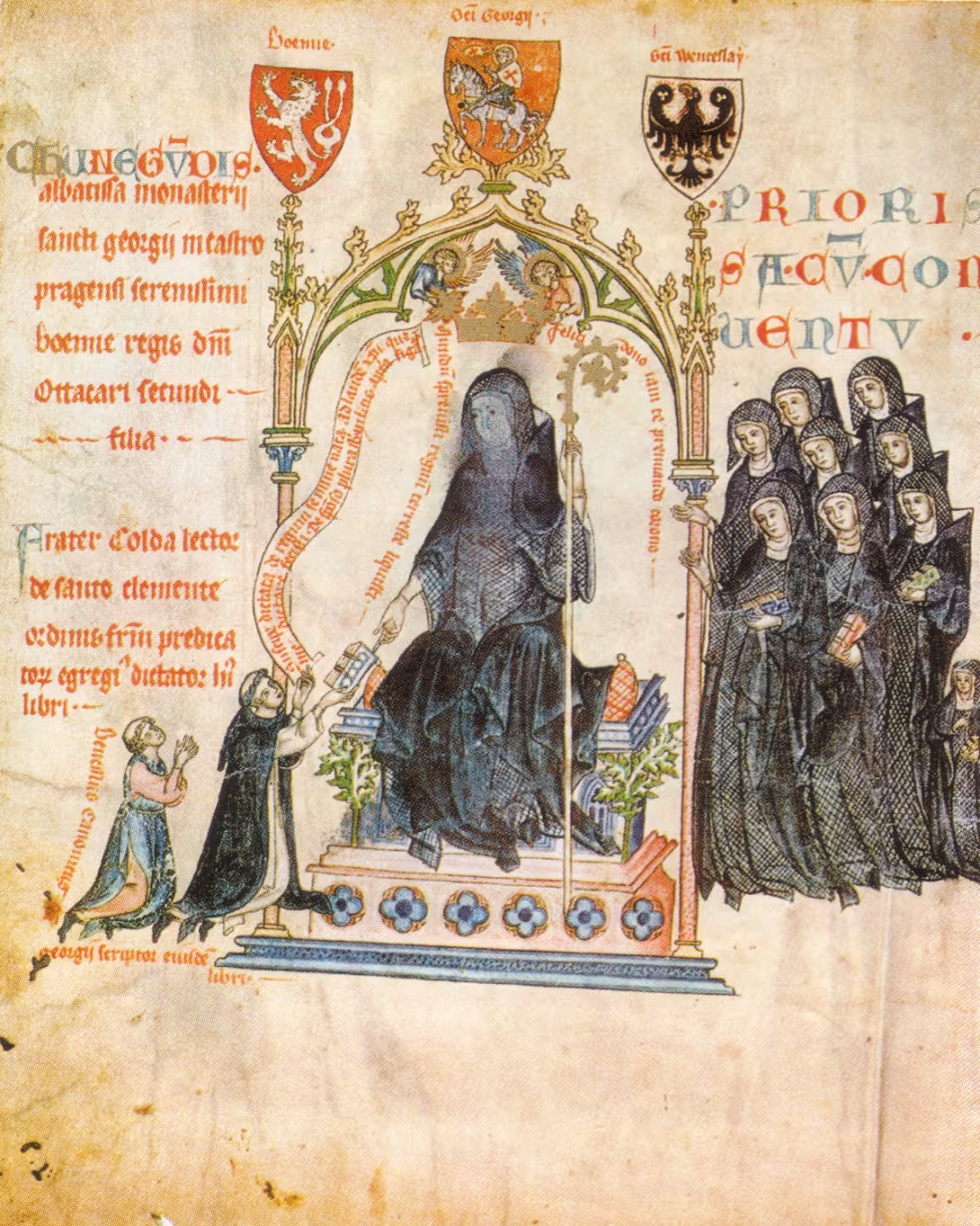
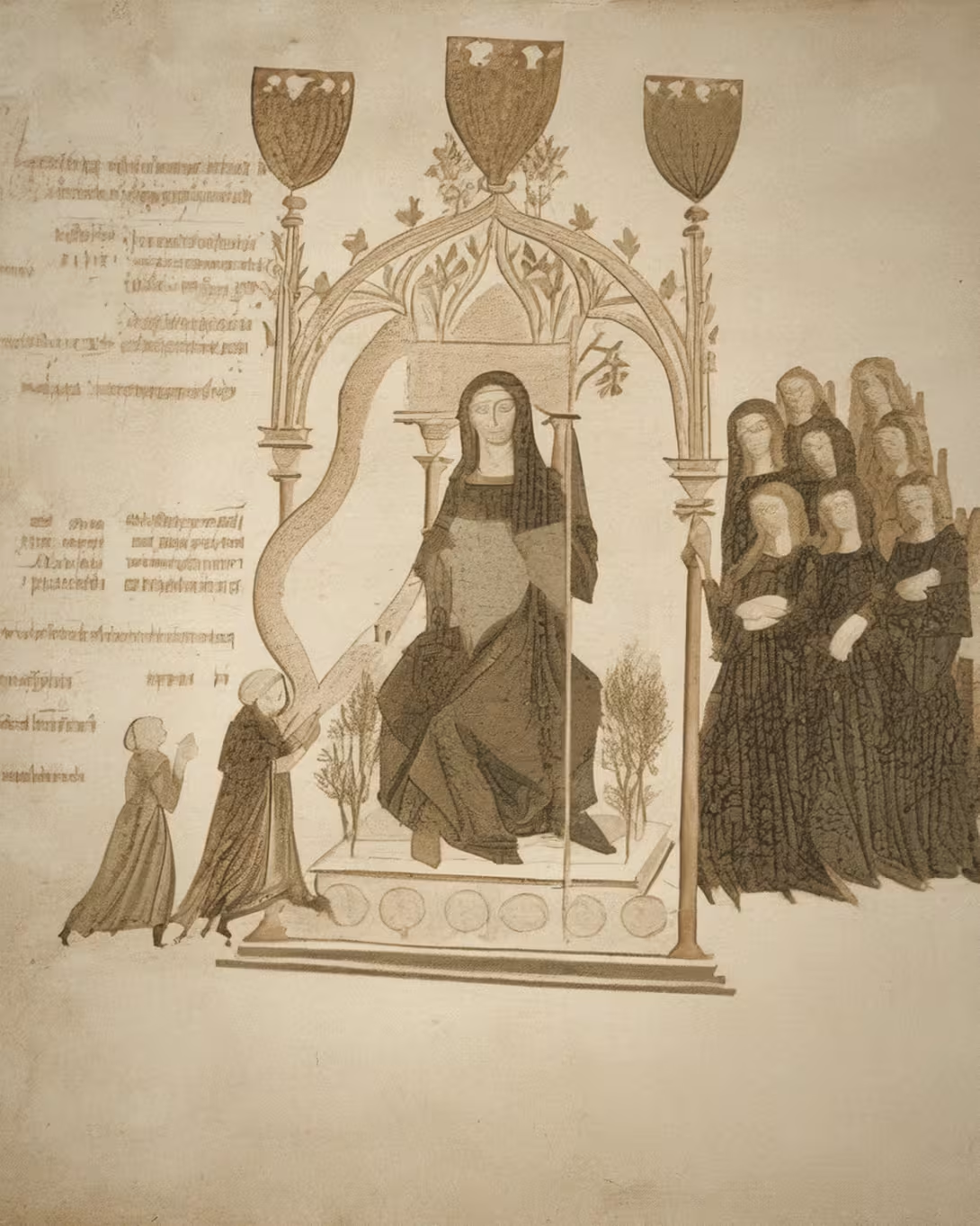
The historical appearance on the left is an AI-generated visualisation and serves as inspiration only.
Historical milestones
- kolem 1312
- Komise knihy Pasionál abatyše Kunhuty.
- kolem 1321
- Dokončení rukopisu Pasionálu.
- kolem 1321
- Smrt abatyše Kunhuty Přemyslovny.
- 2005
- Prohlášení za národní kulturní památku České republiky.
Architectural development
The manuscript features twenty-six illuminations by Beneš, who worked on the project alongside Kolda z Koldic. These illustrations include theatrical scenes performed at the St. George's Monastery during Easter and are complemented by Beneš's own verses.
Historical events
The Passionál was created around 1312, with completion by approximately 1321, coinciding with Kunhuta's death.
In 2005, it was declared a national cultural monument of the Czech Republic.
Points of interest
- The Passionál of Abbess Kunhuta includes one of the earliest known colored depictions of the heraldic emblem of Bohemia, which is now part of the Lesser coat of arms of the Czech Republic.
- This manuscript serves as a medieval orrery, with Christ represented as the Sun and his bride as Venus, showcasing complex allegorical elements that intertwine spiritual themes with celestial imagery.
- The two-page insert within the Passionál uniquely portrays Abbess Kunhuta both as a princess and as the Bride of Christ, symbolizing her dual role in the spiritual and temporal realms.
- Beneš, a Prague canon who served as a priest at St. George's Convent, not only authored but also possibly illuminated parts of the manuscript, highlighting his significant contribution to its creation.
- The Passionál was completed around 1321, coinciding with the death of Kunhuta Přemyslovna, marking an end to her influential role in Bohemian religious art and culture.
Guide
This guide is narrated by a synthetic voice generated by artificial intelligence.
Show guide text
This text was created by artificial intelligence and has not been editorially reviewed. It may contain inaccuracies.
The Passional of Abbess Kunhuta is a manuscript from the early fourteenth century. It was created at the prompting of Kunhuta Přemyslovna and contains a collection of five spiritual texts. The quality of its illuminations has significance that extends beyond the borders of Central Europe. In two thousand and five, it was declared a national cultural monument.
The first text was written around the year thirteen twelve, and the entire work was completed roughly in the year thirteen twenty-one, at the time of Kunhuta's death. Two men participated in its creation. The first was a prominent Dominican, Kolda from Koldice, a later inquisitor. The second was the canon Beneš, who illuminated the manuscript. His work is comparable in artistic merit to the works of the French royal court. There are twenty-six illustrations in total, and they depict theatrical scenes that were performed at Easter in the monastery of Saint George. Beneš supplemented them also with his own verses, which reveal exceptional talent.
The Passional is a metaphor for the suffering of the Church. It opens with Kolda's Parable of the Invincible Knight from thirteen twelve, illuminated a year later. The knight here is Jesus Christ, while the Virgin, the Bride of Christ, represents the human soul. At the end, they merge into one, and Beneš expressed this by merging their halos. There follow two medieval Easter poems about the Virgin Mary and a composition On the Heavenly Dwellings, which Kolda wrote in thirteen fourteen. The Passion sermon of Pope Leo and the Lamentation of Mary Magdalene apparently came into being only after Kunhuta's death.
The manuscript can also be read as a medieval astronomical clock. Christ in it appears as the Sun, and his bride as Venus. The angels are stars, and the devil in the form of a serpent is a demon of darkness and winter, or the constellation of the autumn serpent. Christ's cross here represents the crossing of the celestial equator and the ecliptic.
Inserted into the book is a bifolio on which Kunhuta is depicted as a princess crowned by two angels and as the Bride of Christ. Her portrait is blurred, perhaps because people kissed it as a precious relic.
At the latest in the baroque period, the manuscript was considered an extraordinary monument in the monastery. It was therefore not preserved among ordinary books, but together with the monastery's privileges. It remained in the monastery of Saint George until its dissolution in seventeen eighty-two. Then it was transferred to Prague's Clementinum, where it remains to this day as part of the manuscript collections of the National Library.
Frequently asked questions
Can the monument be visited?
We have not verified whether this monument is accessible. Please ask the owner or operator, or the local municipal office.
Where is the monument?
Location: Karlova 190/1, Staré Město, Praha. The map on this page shows the exact spot.
Why is the monument protected?
It is listed in the Central List of Cultural Monuments of the Czech Republic as a national cultural monument (register no. 300).
Businesses nearby
Do you run a restaurant, accommodation, shop, museum, rental, wellness or other visitor service near this monument? Show yourself directly to the people heading to it — this is how they will see you in the app and on the web:
Accommodation nearby
Themed route
Tematická výletní trasa: "Pasionál abatyše Kunhuty"
1. Hlavní cíl: Pasionál abatyše Kunhuty (rukopis) - Typ: Historický dokument - Proč stojí za návštěvu: Tento rukopis je jedinečným svědkem života a duchovního boje abatyše Kunhuty, české mystičky 14. století. Je to klíčový pramen pro pochopení jejího vlivu na křesťanskou spiritualitu a historii Čech.
2. Kaple svaté Kunhuty - Typ: Religiozní památka - Proč stojí za návštěvu: Kaple je považována za místo, kde abatyše Kunhuta strávila část svého života a kde se konaly její duchovní zkušenosti. Je to klidné a přemýšlivé místo, ideální pro pochopení kontextu jejího mystického života.
3. Památník abatyše Kunhuty - Typ: Památník - Proč stojí za návštěvu: Tento památník slouží jako úcta a vzpomínka na život a duchovní odkaz abatyše Kunhuty. Je to významné místo pro uctívání a pochopení jejího trvalého vlivu na českou kulturu.
4. Klášterní zahrada - Typ: Klášterní park - Proč stojí za návštěvu: Zahrada nabízí klidné prostory, které byly důležité pro meditaci a duchovní reflexi abatyše Kunhuty. Je to místo, kde mohou návštěvníci zaujmout si pohledy a zamyšlit se nad jejím životem v klidu a přírodě.
5. Expozice o historii kláštera - Typ: Historická expozice - Proč stojí za návštěvu: Tato expozice poskytuje kontext k životu abatyše Kunhuty a jejímu vlivu na klášter. Návštěvníci zde mohou objevit historické artefakty, dokumenty a informace o duchovním prostředí té doby.
Tato trasa nabízí komplexní pohled na život abatyše Kunhuty a její vliv na českou spiritualitu, zatímco návštěvníci prozkoumají klíčové místa spojená s jejím duchovním odkazem.
Seasonal recommendations
Spring: The arrival of spring brings a refreshing atmosphere to the historical site of Abbot Kunhuta's Passion, with blooming flowers and lush greenery enhancing the natural beauty surrounding the manuscript. This season offers softer light that beautifully illuminates the intricate details of the historic setting, creating an inviting ambiance for visitors. Spring is generally less crowded than summer, making it a pleasant time to explore at a leisurely pace. Practical advice includes wearing layers as temperatures can vary and planning your visit in the late morning or early afternoon when the weather is typically milder.
Summer: Summer offers vibrant energy with longer daylight hours, allowing for extended exploration of Abbot Kunhuta's Passion. The lush foliage and warm sunlight create a picturesque backdrop that enhances the historical charm of the site. However, this peak season can attract larger crowds, so arriving early in the day is recommended to enjoy a more tranquil experience. Comfortable walking shoes are advisable due to increased foot traffic, and light clothing with sun protection is essential to stay comfortable during your visit.
Autumn: Autumn transforms the landscape around Abbot Kunhuta's Passion into a tapestry of warm colors, providing a stunning visual complement to the historical site. The cooler temperatures and softer lighting create an atmospheric setting ideal for photography and reflection. This season tends to be less crowded than summer, offering a more serene experience. Visitors should dress in layers to accommodate fluctuating temperatures and consider bringing a light jacket as evenings can become quite cool.
Winter: Winter envelops the historical site of Abbot Kunhuta's Passion with a quiet, almost mystical atmosphere under a blanket of snow or frosty conditions. The shorter days mean that visits need to be planned around limited daylight hours, often requiring an earlier start to fully appreciate the site. Wearing warm clothing is essential due to the cold weather and potentially icy paths.
Visualizations and artistic views


The visualisations are generated by artificial intelligence and serve as inspiration.
Tips from visitors
No tips yet. Be the first!
Log in and add your tip.
Sources and literature
Photos: kanovník Beneš / Public domain — Wikimedia Commons. The author and licence also appear when you hover over the image.
Faktickým podkladem tohoto textu byl článek na Wikipedii, jehož autory jsou přispěvatelé Wikipedie. Článek je dostupný pod licencí CC BY-SA 4.0.
Příběhy a pověsti
Legendy, pověsti a příběhy spjaté s touto památkou
Fotografie návštěvníků
Zatím žádné fotografie. Buďte první, kdo přidá fotografii z návštěvy!
Log in a přidejte svou fotografii nebo hodnoťte.
Za ověřenou návštěvu v aplikaci získáte víc bodů — poznáme podle GPS, že jste na místě.
Reviews and comments