






Piaristická kolej (Nový Bor) Monastery
The Piaristická kolej in Nový Bor stands as a testament to the region's rich educational and industrial history, particularly within the glassmaking industry. Established in 1763, this historical monument served both as a monastery and an influential educational institution until its closure in 1870. Located in Nový Bor, which emerged as a significant center for glassmaking in Northern Bohemia during the mid-18th century, the Piaristická kolej played a pivotal role in nurturing expertise that contributed to the area's prominence in this craft.
The origins of the Piaristická kolej are deeply intertwined with the broader economic and educational advancements occurring under enlightened absolutism in Bohemia. The town of Nový Bor itself was founded in 1756 by Josef Jan Kinský, who envisioned it as a thriving industrial hub. By the second half of the 18th century, Nový Bor had become an important center for glassmaking, necessitating specialized education to support this industry. In response to these needs, the Piarist order was invited to establish a college in Nový Bor in 1761, aiming to provide both spiritual guidance and advanced educational opportunities. The first Piarist superior, Gregorius ab Angelis (Antonín Beutel), arrived in 1763, marking the beginning of this significant educational endeavor.
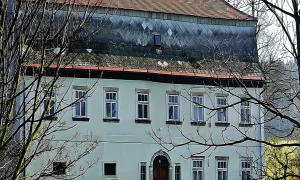
Architecturally, construction began modestly with temporary accommodations in a private citizen's house in 1763. By 1765, the main building was completed, reflecting its dual purpose as both a religious and educational institution. The design accommodated the Piarists' spiritual duties while providing space for specialized education to support the burgeoning glassmaking industry.
Throughout its history, the Piaristická kolej was administered by notable figures within the Piarist order. Key personalities included Gregorius ab Angelis, the first superior, and Zachariáš Ressel, a distinguished professor known later for his contributions as an inventor and engineer. The college's reputation grew due to its innovative teaching methods and specialized curriculum, which included subjects such as accounting, commerce, and languages like Spanish, French, and Italian.
The Piaristická kolej was renowned not only for its academic rigor but also for its vibrant cultural life. It hosted successful academic festivals that attracted up to 600 spectators, showcasing students' talents through theatrical performances. These events significantly contributed to the college's reputation across Europe.
Despite its initial success, the influence of the Piaristická kolej began to wane in the mid-19th century due to a decline in order members and changing educational demands. By 1870, the decision was made to close both the monastery and the school. The last rector and Piarist parish priest, Gotthard Kraus, oversaw this transition.
Today, the site of the former Piaristická kolej remains a point of historical interest in Nový Bor. While the original structures no longer exist, their legacy endures through the town's continued association with glassmaking excellence. Visitors to Nový Bor can explore other related sites and gain insight into the region's rich industrial heritage.
The Piaristická kolej is not just a monument but a symbol of the enduring connection between education and industry in Northern Bohemia. Its story invites reflection on how specialized knowledge can drive regional development, making it a worthwhile destination for those interested in history and cultural heritage.
Historical milestones
- 1761
- Foundation charter issued for establishing the Piarist college.
- 1763
- First Piarist superior Gregorius ab Angelis arrived in Nový Bor to begin educational activities.
- 1765
- Completion of the main building and commencement of specialized education.
- 1870
- Closure of the Piarist college due to declining influence.
Architectural development
The construction of the Piaristická kolej began with a temporary setup in a private citizen's house in 1763, followed by the completion of its main building in 1765. The college was designed to accommodate both religious and educational functions, reflecting the dual role of the Piarists as spiritual leaders and educators.
Historical events
Foundation of the Piarist college in Nový Bor in 1761 with a focus on glassmaking education.
Completion of the college building in 1765, marking the start of specialized education.
Closure of the Piarist institution in 1870 due to declining influence and lack of order members.
Owners
Piarist order (1763–1870)
Points of interest
- The Piaristická kolej was instrumental in fostering the glassmaking industry's growth by providing specialized education tailored to this craft, which significantly contributed to Nový Bor’s prominence as a key center for glass production.
- Despite its educational success, the college faced challenges due to the decline of the Piarist order and evolving educational needs, leading to its closure in 1870. This shift reflects broader changes in societal and academic structures during that period.
- The site hosted vibrant cultural events like theatrical performances at academic festivals, drawing up to 600 spectators and enhancing its reputation across Europe as a center for both education and culture.
- Gregorius ab Angelis, the first superior of the Piaristická kolej, played a crucial role in establishing the institution's dual focus on spiritual guidance and advanced learning, laying the groundwork for its future success.
- Zachariáš Ressel, a notable professor at the college, later gained fame as an inventor and engineer, highlighting the institution’s impact beyond education by contributing to technological advancements.
Guide
This guide is narrated by a synthetic voice generated by artificial intelligence.
Show guide text
This text was created by artificial intelligence and has not been editorially reviewed. It may contain inaccuracies.
The Piarist college in Nový Bor functioned for over a hundred years, from 1763 to 1870. Its school prepared specialists for glassmaking and the glass trade throughout that entire period.
The town itself was founded in 1756 according to an ambitious project championed by Josef Jan Kinský. Its beginnings do go back to the period just after the Thirty Years' War, but it gained significance only from the second half of the eighteenth century. It was then that it became a glassmaking center of northern Bohemia.
From 1749, a small church stood in Nový Bor and the town, together with Count Kinský, wanted its own parish with more clergy. At first the Capuchins were considered. In 1760, however, Count Pachta proposed that the Piarists come and take charge of education at the same time. Negotiations with the rector of the Piarist college in Kosmonosy turned out favorably. The Augustinians from Česká Lípa did lodge objections because they were concerned about their gymnasium, but the founding charter was already created on October twenty-second, seventeen sixty-one. The Piarists promised to care for the spiritual welfare of the parish and to establish a school that would not compete with neighboring Latin schools. That is why it was decided right away that besides basic subjects, the school would teach accounting, commodity science, and the languages Spanish, French, and Italian. This was precisely what the school's later renown was built on.
On May seventh, seventeen sixty-three, the first superior, Gregorius ab Angelis, whose real name was Antonín Beutel, arrived in the town with another Piarist. They took over the local church and soon construction began on the college of the Assumption of the Virgin Mary. Teaching at first took place in a private townhouse, and the college was completed in seventeen sixty-five. That same year the first of a series of successful school academies was held in the new building. At these academies and student theatrical performances there would be as many as six hundred spectators.
The college had a main school and a specialized lower realist school. From seventeen eighty-three, geometry, drawing, and geography were also taught there, from eighteen fourteen Czech, and from eighteen sixty-one a vocational school was added. Students came from distant regions and many young men from the surrounding area entered the order. Among distinguished teachers were Antonín Beutel, drawing teacher Marzellin Fromm, and especially Zachariáš Ressel, a priest, historian, and German-writing poet.
In the middle of the nineteenth century decline began and the number of monastic teachers decreased. The Piarists eventually closed the college and the school. The last rector and at the same time parish priest in the years eighteen sixty-seven to eighteen seventy was Gotthard Kraus.
Tips for visitors
The best time to visit the Piaristická kolej in Nový Bor is during late spring or early autumn, when the weather is pleasant for exploring both the historical site and its surrounding landscapes. These seasons offer mild temperatures and vibrant natural scenery, enhancing your experience as you walk through the picturesque forests and rolling hills typical of Northern Bohemia.
Alternatively, public transport is available, with buses connecting to Nový Bor from larger cities. Be sure to verify current routes and schedules using an online travel planner.
When visiting the Piaristická kolej, consider bringing comfortable walking shoes as you may want to explore both the site and its surroundings. A camera or smartphone for photography is recommended, especially if you wish to capture the historical architecture against the backdrop of Northern Bohemia's natural beauty. Don't forget a hat and sunscreen during sunny days, along with a light jacket in case of cooler weather.
For photography enthusiasts, some of the best spots around Piaristická kolej include areas where the monastery buildings are framed by lush greenery or set against the rolling hills. The soft morning light can create a serene atmosphere perfect for capturing the historical essence of the site. Later in the day, the golden hour provides warm lighting that beautifully highlights architectural details.
Nearby attractions within 30 minutes include other historical sites related to Nový Bor's rich glassmaking heritage. Visitors can explore local museums and workshops that showcase traditional glassblowing techniques. These nearby locations offer a deeper understanding of the town’s cultural history, making them ideal for those interested in both architecture and craftsmanship.
Frequently asked questions
Can the monument be visited?
Religious buildings are usually open mainly during services; at other times a visit is normally arranged with the parish or the operator. We have not verified specific times.
Where is the monument?
Location: Nový Bor, Liberecký kraj. The map on this page shows the exact spot.
Businesses nearby
Do you run a restaurant, accommodation, shop, museum, rental, wellness or other visitor service near this monument? Show yourself directly to the people heading to it — this is how they will see you in the app and on the web:
Nearby
Nový Bor is surrounded by picturesque landscapes typical of Northern Bohemia, including forests and rolling hills. The town itself has a rich history in glassmaking, with several other historical sites related to this industry nearby.
Accommodation nearby
Themed route
Thematic Walking Tour: The Glassmaking Heritage of Nový Bor
1. Piaristická Kolej (Nový Bor) - Historical Monastery Begin your journey at the heart of Nový Bor's cultural heritage, the Piaristická Kolej. This former monastery is a testament to the town’s rich historical tapestry and architectural beauty. Explore its well-preserved structures that offer insight into the monastic life once led here.
2. Glassmaking Museum - Cultural Insight A short walk from the Piaristická Kolej, visit the Glassmaking Museum to delve deeper into Nový Bor's renowned glassmaking tradition. This museum showcases a fascinating collection of glass artifacts and provides an educational experience on how this craft has shaped the town’s identity over centuries.
3. Historical Glassworks - Industrial Legacy Continue your exploration by visiting one of the nearby historical glassworks sites. These locations highlight the industrial prowess and innovation that have been central to Nový Bor's economy. Witness firsthand where artistry meets craftsmanship in these preserved workshops, offering a glimpse into the past production techniques.
4. Glassmaking Exhibition Hall - Artistic Showcase Conclude your tour at the Glassmaking Exhibition Hall, which features contemporary glass artworks by local and international artists. This venue celebrates the ongoing legacy of Nový Bor’s glassmaking heritage while inspiring new generations with its stunning displays and creative exhibitions.
This thematic route offers a comprehensive look into the historical and cultural significance of glassmaking in Nový Bor, providing both educational insights and aesthetic appreciation.
Seasonal recommendations
Spring: The arrival of spring at the Piarist Monastery in Nový Bor brings a gentle awakening, with nature slowly shedding its winter cloak. The blooming flowers and budding trees create a picturesque backdrop that enhances the historical charm of the site. During this time, the weather can be unpredictable, so visitors are advised to dress in layers. Early mornings or late afternoons are ideal for visiting when the light is soft and the crowds are fewer, allowing for a peaceful exploration.
Summer: Summer at the Piarist Monastery offers warm days perfect for leisurely strolls through its grounds. The lush greenery and vibrant flowers provide an idyllic setting for photography enthusiasts and nature lovers alike. Given that this is the peak tourist season, it's wise to arrive early in the morning or later in the afternoon to avoid large crowds. Comfortable walking shoes and light clothing are recommended, along with sunscreen and a hat to protect against the sun.
Autumn: Autumn transforms the Piarist Monastery into a stunning tapestry of reds, oranges, and yellows as the leaves change color. The cooler temperatures make it an ideal time for visitors seeking a more tranquil experience, away from the summer crowds. The soft autumn light adds to the serene atmosphere, making it perfect for photography or simply enjoying a quiet moment in nature. Layered clothing is advisable due to fluctuating temperatures throughout the day.
Winter: Winter cloaks the Piarist Monastery in a blanket of snow, offering a magical and serene landscape that contrasts beautifully with its historic architecture. The shorter days mean visiting hours are reduced, so it's best to plan your visit during daylight hours for maximum enjoyment. Dress warmly in layers and wear sturdy boots to navigate any icy paths comfortably. While the site may be quieter than other seasons, the cold weather can deter some visitors, providing a more intimate experience.
Visualizations and artistic views


The visualisations are generated by artificial intelligence and serve as inspiration.
Atmosphere of the place
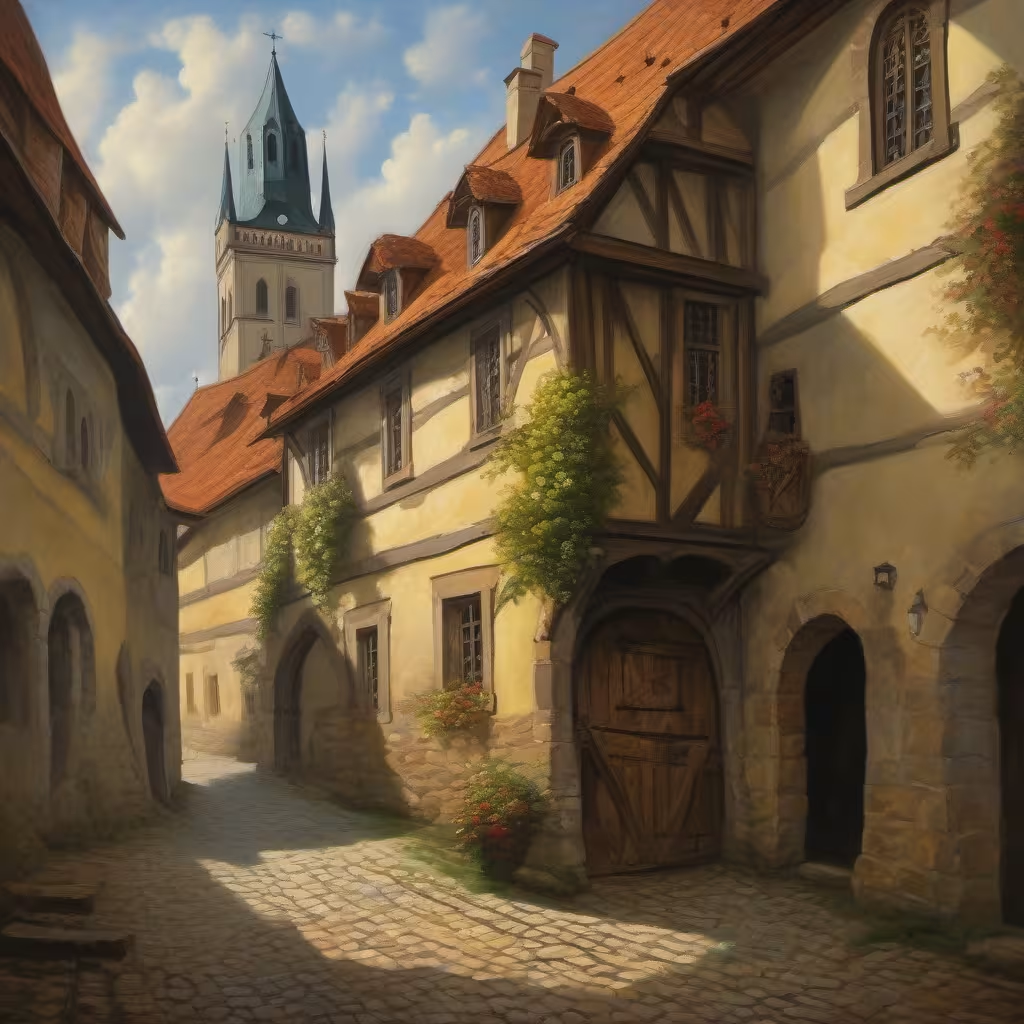
This atmospheric visualisation of the place and period was generated by artificial intelligence. It is not real footage of the location.
Tips from visitors
No tips yet. Be the first!
Log in and add your tip.
Sources and literature
Faktickým podkladem tohoto textu byl článek na Wikipedii, jehož autory jsou přispěvatelé Wikipedie. Článek je dostupný pod licencí CC BY-SA 4.0.
Příběhy a pověsti
Legendy, pověsti a příběhy spjaté s touto památkou
Fotografie návštěvníků
Zatím žádné fotografie. Buďte první, kdo přidá fotografii z návštěvy!
Log in a přidejte svou fotografii nebo hodnoťte.
Za ověřenou návštěvu v aplikaci získáte víc bodů — poznáme podle GPS, že jste na místě.
Reviews and comments