

Podmedlovský mlýn Water mill
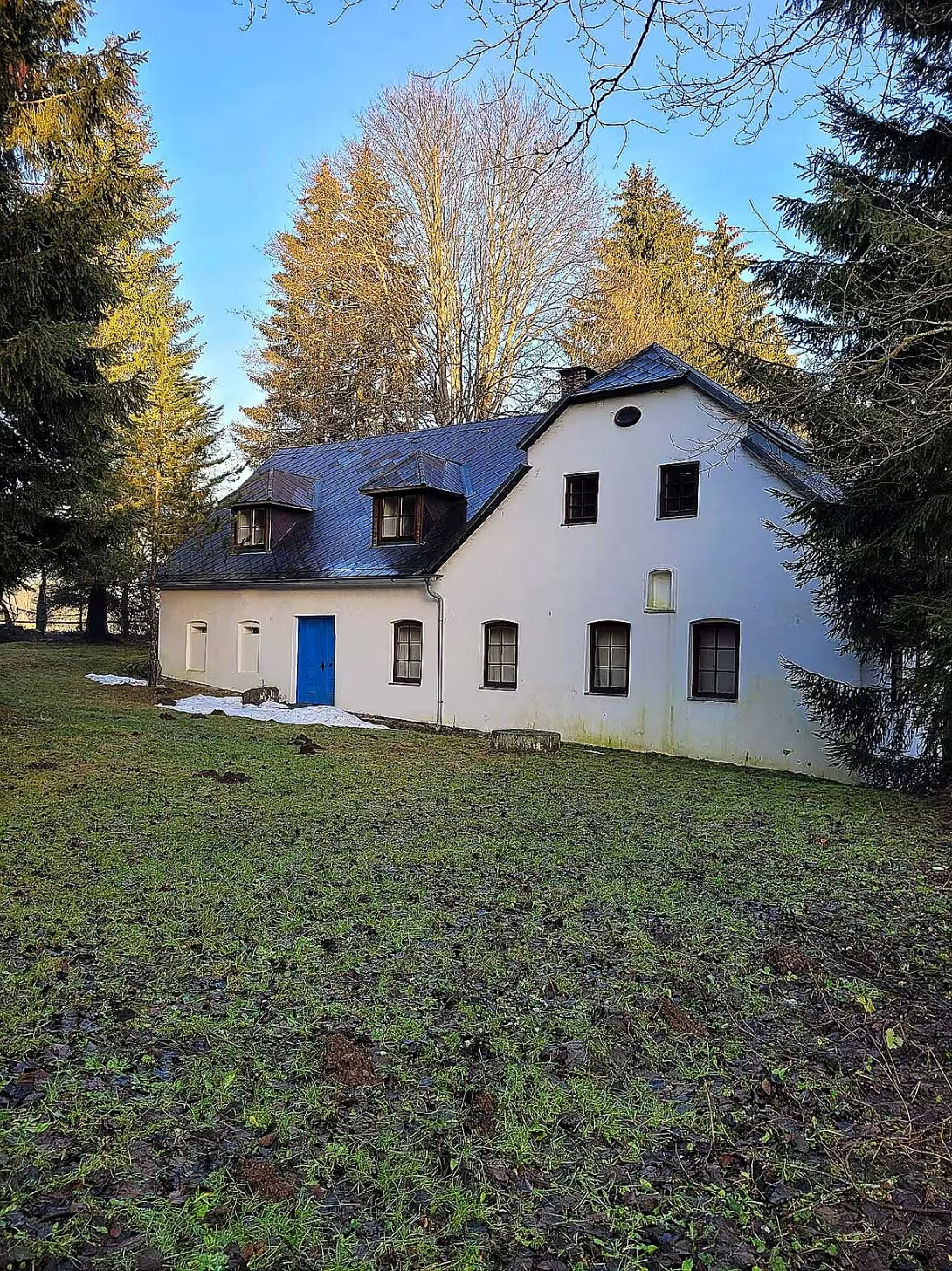
Podmedlovský mlýn in Kadova in Ždár nad Sázavou district is a baroque water mill from around 1720. It stands on the river Medlovka under the Medlovka pond. The building is protected as a real cultural monument of the Czech Republic. It represents a historical example of the combined operation of the mill and saw.
The construction was built around 1720. It is believed to have been created at the site of the former Kadovská new smelter. At the time of its creation, it was a mill that was rented by owners to miners for short-term three-year contracts.
The building stands on baroque foundations and has an L-shaped floor plan. The facade shows later classicist modifications, while the whole building is covered by a mansard roof with skylights. Technical equipment has undergone changes over the years. In 1755 he had one wheel for the top water, a mill composition, a sawed one with a vice to pull out the saw and four steps to make hail. The original saw was replaced in 1897 by a frame cathode.
In 1761, Joachym Jelinek, who was still a tenant and holder of the mill seal, went into inheritance. Currently, the building is owned by descendants of Czech sculptor Vincent Makovsky.
The operation was focused on grinding grain and sawn wood. In 1930 the mill wheel had a power of 9,84 to drop 5,05 metres and flow 0,15 m ³ / s The saw was then driven by its own wheel on top water with a drop of 5,05 meters and a flow rate of 0,075 m ³ / s The wheel water went through the drive.
Production operations have gradually ceased. Grain milling was stopped during World War II while the saw remained in operation until 1949. Since then, the building has been used for recreational purposes.
Podmedlovský mlýn is a valuable technical and architectural testimony about the water economy in the region. Visiting the building offers the possibility to see preserved Baroque and Classicist architecture in its original location near the Medlovka stream.
Then and now
Drag the slider to compare how the landmark may have looked when it was built with the view today.
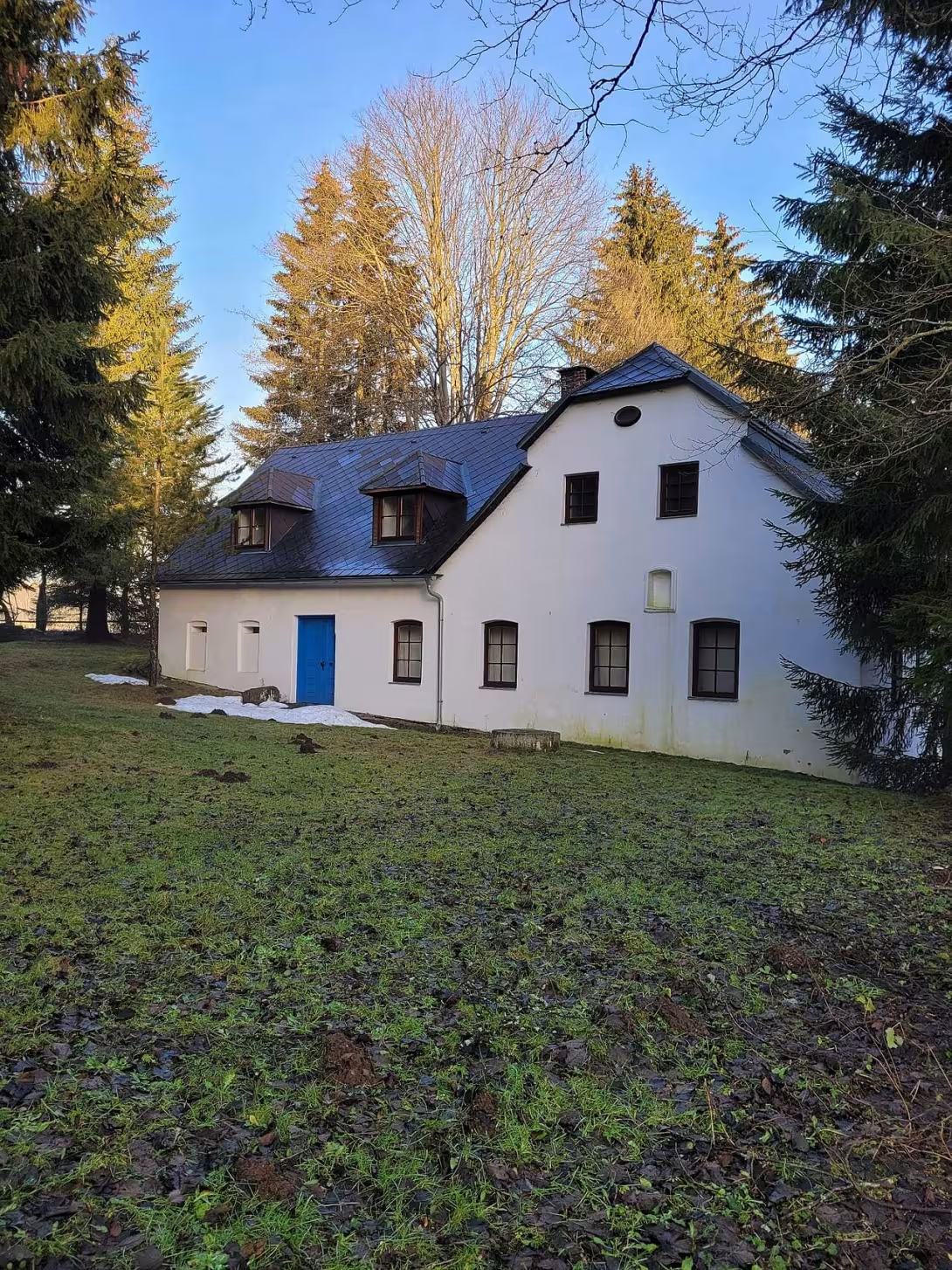
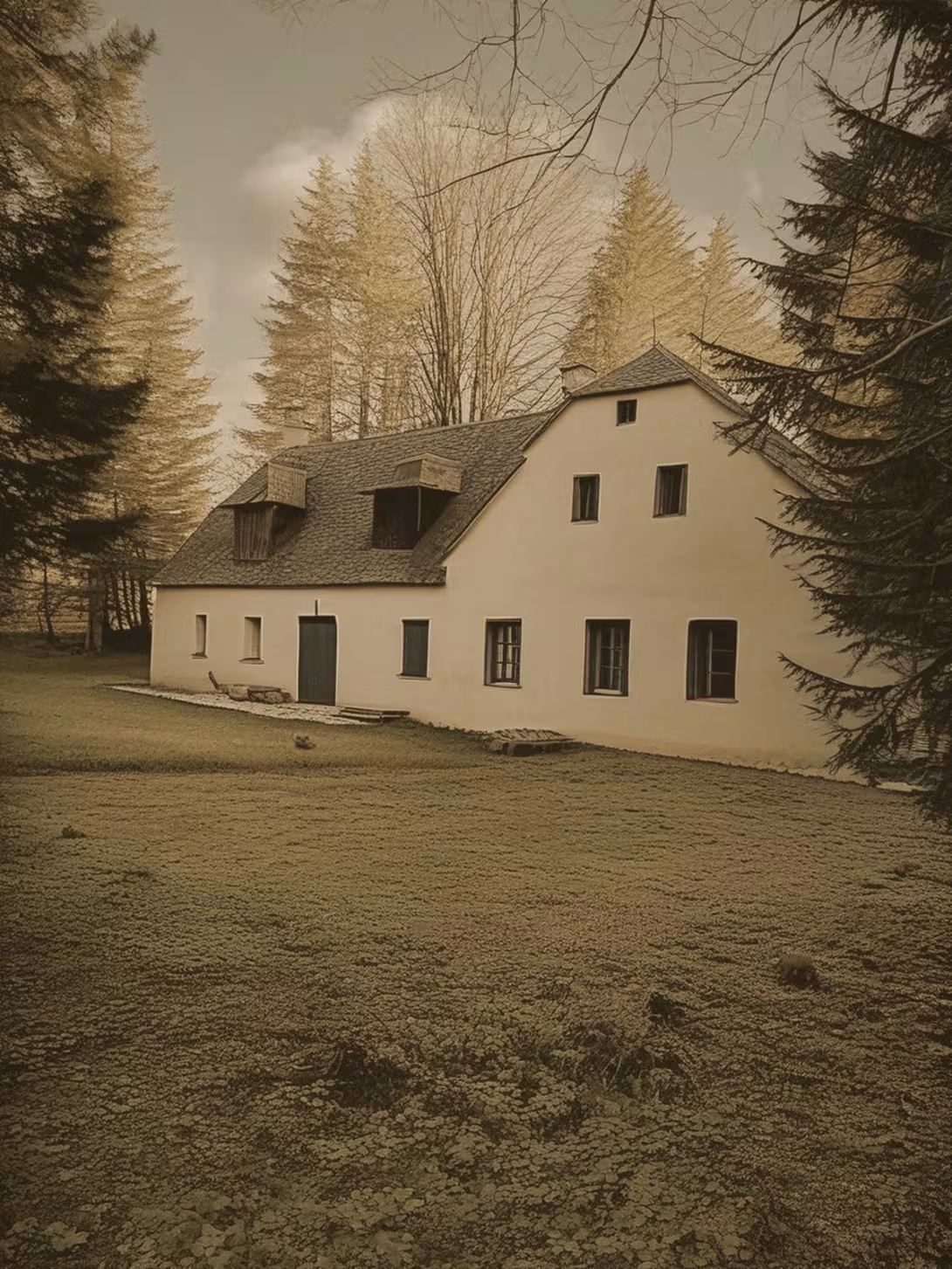
The historical appearance on the left is an AI-generated visualisation and serves as inspiration only.
Historical milestones
- 1720
- the formation of the mill probably in the place of Kadovská new huti
- 1755
- equipment around the top water, mill composition, sawed one and four steps
- 1761
- tenant Joachim Jelínek becomes owner of the mill
- 1897
- replacement of saw with frame cathode
Architectural development
The mill is built on Baroque foundations with a ground plan in the shape of the letter L. The building was later classicically modified and is covered with a mansard roof with skylights. In 1897, the original saw was replaced by a frame cathode.
Historical events
1761 - crossing the mill into the inheritance property of Joachy Jelinek. 1940s - the end of grinding grain during World War II. 1949 - end of operation of the saw.
Owners
Around 1720 the master mill (rented to miller), since 1761 Joachim Jelínek, currently descendants of sculptor Vincent Makovsky.
Points of interest
- It is a baroque water mill from around 1720, which served as an example of the combined operation of the mill and saw. - It is believed to have been built in the place of the former Kadovsky's new smelter. - The building has a floor plan in the shape of the letter L, a mansard roof with a skylight and a classical adjustment on the facade. - In 1755, the mill had one wheel for the top water, a saw and four steps for the production of hail. - Since 1949, when the operation of the saw ceased, the building has been used for recreational purposes.
Guide
This guide is narrated by a synthetic voice generated by artificial intelligence.
Show guide text
This text was created by artificial intelligence and has not been editorially reviewed. It may contain inaccuracies.
Welcome to the Podmedlovsky Mill in Kadov. You're standing in front of a building that carries a century of history and tells a story about human work, water and craft art. Now, if you look in front of you, you will see a structure that, by its appearance, fits into the surrounding landscape, but also hides an interesting architectural layer. It is a place where the power of the Medlovk stream has joined with the needs of the local people and the government's interests.
Let's stop at the beginning of this place together. It is assumed that the mill was built around the year seven hundred and twenty. It is very likely that it was not built in an empty place, but replaced an older structure, namely the Kadovsky new plant. So imagine that there was once traffic under the feet and around the area where metal was being processed rather than working with grain and wood. At that time it was a strategic point because the water from the creek was the most valuable source of energy that enabled heavy wheels and machines to be driven without the need for human or animal power.
Now pay attention to the very form of the building. If you look at the overall shape, you'll notice that the mill has an L-shaped ground plan. This was a practical choice which made it possible for an efficient layout of the space for production and housing. Please look up on the roof. You will see the so-called Mansard roof, which is a typical element that has produced more useful space from the space below. Also note the skylights that protrude from the roof surface and bring light to the upper subsides.
If you focus now on the facade, the facade of the building, you'll see traces of different periods. While the foundations themselves are baroque, which means they come from the beginning of the construction, the facade surface treatment shows later classicist elements. Classicism has brought more order and purity to architecture, which you can see in the details of the outer mantle of the building. It is a fascinating combination of two different epoch that shows how the mill has adapted over time to its period fashion and the needs of its owners.
Now let's move on to the people who left their trail. The mill has long served as a master mill, which means it belonged to a nobleman or a gentleman from the local estate. But the history of the mill is not only about the masters, but also about the ambitious people who worked here. One such person was Joachim Jelínek. In the year seven hundred and sixty one of the tenants became the full owner of the mill. Imagine what effort and courage he had to have to build and take over such an important operation. Vincenc Makovský is associated with this place. These men were not just administrators, but people who ensured that the mill thrived and performed its function in the heart of the community.
Here we come to one of the most interesting properties of this place. Podmedlovský mlýn was not just an ordinary flour mill. It was an example of combined operation. This means that there was a mill and saw at the same time. In this year seven hundred and fifty-five, the facility was equipped to use the top water. This was a more technically advanced solution because the water hit the wheel from a height, which made it more efficient. At that time there was a mill composition, a saw and four steps, which were equipment for crushing and grinding.
An interesting change in technology took place much later, only at the propensity of the nineteenth century. In the year of the thousand eight hundred ninety-seven, the old saw was replaced by a frame saw. This was a huge leap in productivity that made it possible to cut wood much faster and more accurately. Imagine the noise, the smell of freshly cut wood, and the constant noise of the Medlovka stream, which fueled all this. It's fascinating to think that one building has been able to meet changing technical requirements for so long.
Today the mill is no longer used to produce flour or cut boards, but its value is different. It is protected as a real cultural monument of the Czech Republic. This means that it is recognised as a valuable piece of our history that we must preserve for future generations. When you look at it, you see not only walls and roofs, but a monument to human effort, technical progress and the history of the entire region.
Imagine what this place looked like two years ago. People were probably boiling in the neighborhood, carriages full of grain and logs of wood trees were waiting for their processing, and water from the stream was constantly driving a huge wheel. The peace you feel here today is just a layer of time over the dynamic center of the then craft life.
Welcome to the moment when history becomes tangible. Podmedlovský mlýn is a silent witness to the transformation of the times, from baroque foundations to classical adjustments to industrial changes in saws. It's where water became the engine of progress.
Now we invite you to look at the surroundings in peace, perceive the atmosphere of this historic place, and perhaps try to figure out what other stories these walls contain. Walk slowly through the space around the building, look at the flow of the Medlovka stream and let yourself be carried away by the images of people who lived and worked here centuries ago.
Thank you for spending time with us at the Podmedlovsky Mill. We hope you are interested in this short trip to the past and that you are leaving with a new look at this beautiful memory. We wish you a pleasant further journey and many other discoveries in our beautiful region. Goodbye.
Tips for visitors
The best time to visit is late spring or autumn, when the colors of nature around the Medlovka stream are the most distinctive and the surrounding landscape is most picturesque. You travel to the area by car or public transport; Check the exact path in the maps.
To walk to the mill we recommend to take your shoes suitable for the field, because the path leads along the water and can be moist. For photo lovers, the best places are the banks of the stream and views of the Baroque foundations of the building, ideally under morning or late afternoon light, which highlight the texture of the old masonry.
If you are looking for other attractions in the nearby area, focus on the area under the Medlov pond and the surroundings of the village Kadov. For families with children this location is suitable for short educational walks focused on the history of water mills and observations of the flow of the stream.
Frequently asked questions
Can the monument be visited?
This is a technical monument. Some are open as exhibitions, others are out of use or on private land. We have not verified whether this one is accessible.
What are the opening hours and admission?
We have not verified the opening hours or admission. Current information is published by the operator.
Why is the monument protected?
It is listed in the Central List of Cultural Monuments of the Czech Republic as a cultural monument (register no. 1000128067).
Businesses nearby
Do you run a restaurant, accommodation, shop, museum, rental, wellness or other visitor service near this monument? Show yourself directly to the people heading to it — this is how they will see you in the app and on the web:
Events nearby
Zdroj akcí: otevřená data měst a obcí ČR (Národní katalog otevřených dat) a kalendář akcí Národního památkového ústavu.
Nearby
🏰 Historic sites (88)
- Studánka Vitulka 2.9 km
- Dům přírody Žďárských vrchů 3.5 km web
- partyzánský památník 4.9 km
- Památce padlých lesníků 5.0 km
- Železný sloup 5.0 km
- OPamátník Pavla Antoše 5.5 km
- Stopa Járy Cimrmana 5.8 km
- památník partyzánům 6.2 km
- J.A.Komenský 6.3 km
- Žákova hora 6.5 km
- Horácké muzeum 6.5 km 566 650 216 web
- František Palacký 6.6 km
- Milan Procházka +21.7.2012 6.6 km
- Památce milovských sklářů 7.3 km
- Galerie na Milovské huti 7.3 km České Milovy 32 +420 724 278 233 web
- Památník první světové války 7.3 km
- Pečeť obce Křižánky 7.5 km
- Pomník Broučků 7.5 km
- sv. Jan Nepomucký 7.9 km
- Vlčí kámen 7.9 km
🍽️ Restaurants and dining (161)
- Penzion Fryšava 1.6 km 566 522 173 web
- Hostinec U Janečků 1.9 km
- Klokočí 1.9 km +420 561 110 584 web
- Kiosek Kadov 2.0 km web
- Stanice lyžarů ve Fryšavě 2.0 km
- Hotel Pavla 2.1 km
- Krčma na náměstí - Tři studně 2.1 km +420 606 565 686 web
- Hotel u Loubů 2.1 km web
- Penzion Zátiší 2.4 km web
- U Tráfy 3.0 km
- U Kolouška 3.7 km web
- Penzion Kukla 4.0 km +420 566 664 714 web
- Tradiční Hostinec Vříšť 4.3 km web
- Maršovská rychta 4.6 km web
- Sun's caffé 4.6 km
- M&A Bu Cafe 4.7 km
- Kavárna Hofr 4.7 km
- Hostinec U Kosků 4.7 km
- Romantika 4.8 km web
- Lesní Bar 5.0 km
🏨 Accommodation (77)
- Hotel Medlov 0.7 km
- Tábořiště Medlov 0.9 km
- Penzion u Martina 1.4 km
- Autokemp Sykovec 2.0 km web
- Penzion Sykovec 2.0 km web
- Rekreační středisko Na Mýtince 2.0 km web
- Hotel Pavla 2.0 km +420 566 619 245 web
- Hotel u Loubů 2.1 km web
- Penzion Fryšavský ledovec 2.2 km web
- Rokytno 2.2 km
- Horácko 2.2 km
- Chata Duha 2.4 km web
- Horník 2.5 km
- Penzion Studnice 2.5 km web
- Apartmán Krátká 3.5 km web
- Wellness penzion Na Kuklíku 3.6 km
- Ubytování Henychovi 4.1 km +420728783830 web
- Turistická chata Sklené 4.1 km 566621515 web
- Chata VHS Brno 4.2 km web
- U Zvonečku 4.4 km Kuklík 89 web
🚲 Rentals and sport (20)
- Cyklo Aréna Vysočina 4.6 km
- Sporten 5.6 km
- Sportovní hala 5.9 km web
- Lázně NMNM 6.3 km Hornická 1495
- Ski Shop & Půjčovna lyží 6.3 km
- Cyklosport - Šlechta 6.5 km +420 566 616 080 web
- Cyklo Procházka 6.6 km Jánská 1280 +420 777 011 415
- Cyklo Chlubna 10.2 km web
- FC Žďas 10.3 km
- Bowling Sauna 10.3 km Jungmannova 2278/16
- Cyklo Moravec 10.4 km
- Sportovní hala Žďár nad Sázavou 10.4 km
- Active Club 10.7 km web
- Relaxační centrum 10.7 km
- Sportissimo 10.7 km
- Best Fitness Sport Club 10.8 km
- Fitness centrum Orlovna 11.1 km
- Kuda cykloservis 11.6 km +420 603 289 021
- Sportovní areál Řečice 11.9 km web
- Písečská zmole 13.3 km
🥾 Hiking and nature (166)
- Pasecká skála 1.3 km
- Kříby 1.9 km
- Kopeček 2.1 km
- Pramen říčky Bobrůvky 2.2 km web
- Studnická studánka 2.2 km web
- Barborka 2.9 km
- Vitulka 2.9 km
- Břímovka 3.1 km
- Pod Černou skálou 3.2 km web
- Bílá skála 3.4 km
- Teplá 3.4 km
- Na kopečku 3.5 km
- Hamplova studánka 3.5 km web
- U lyžaře 3.5 km web
- Brožova skalka 3.7 km
- Olšina u Skleného 3.7 km
- Sklenský vrch 3.8 km
- Pod Jelení skálou 3.8 km web
- Brožova skála 3.9 km
- Pernovka 4.0 km web
Accommodation nearby
Themed route
1. Municipality of Kadov (municipality) - The starting point of the trip, which serves as a gateway to the surrounding countryside. 2. Medlov pond (pond) - Water area above the mill, ideal for a short walk and water observation. 3. Podmedlovský mlýn (mill) - The main destination of the trip, where you can explore this historical monument. 4. Medlovka stream (stream) - Water flow at the mill, which forms the natural environment of the building and offers peace in nature.
Seasonal recommendations
Spring In spring, the surroundings of the mill awaken to life. The trees start to green, and the water in the stream flows through the melting snow. The mood is fresh, but often wet. We recommend taking waterproof shoes and laminated clothes because the morning cold may be persistent. The best time for observation is in the morning when the sun begins to shine through the young leaves.
Summer The summer season brings the most light and dense green landscape. The mill is surrounded by thick leaves that provide a pleasant shade. The days are long and the air is warm. It is advisable to wear light fabrics and not forget the protection from the sun. For best lights on the water surface, choose late afternoon hours.
Autumn Autumn turns the neighborhood into a colorful world full of yellow and brown shades. There is often fog around the water, which gives the place a mysterious mood. The leaves fall on the roof and the surrounding roads. It is necessary to prepare for colder and wetter weather, therefore a solid jacket and scarf are suitable. An ideal visit is when the sun is low and the colors are the most intense.
Winter Zimą operates the mill in the landscape very sparingly and calmly. If the snow falls, the whole place looks white and the silence deepens. Water can be under a layer of ice. It is necessary to have very warm clothes and shoes with good grip to avoid slipping on the frost. Given the short days, it is best to come around noon when the light is the most.
Visualizations and artistic views


The visualisations are generated by artificial intelligence and serve as inspiration.
Photos from the area
Real photos taken near the monument

Zdroj a licence jsou uvedeny u každého snímku.
Tips from visitors
No tips yet. Be the first!
Log in and add your tip.
Sources and literature
Photos: Tomino779 / CC BY-SA 4.0 — Wikimedia Commons. The author and licence also appear when you hover over the image.
Faktickým podkladem tohoto textu byl článek na Wikipedii, jehož autory jsou přispěvatelé Wikipedie. Článek je dostupný pod licencí CC BY-SA 4.0.
Location on the map
Příběhy a pověsti
Legendy, pověsti a příběhy spjaté s touto památkou
Fotografie návštěvníků
Přidat fotografiiZatím žádné fotografie. Buďte první, kdo přidá fotografii z návštěvy!
Máte k místu vzpomínku nebo zajímavý příběh?
Log in a přidejte svou fotografii nebo hodnoťte.
Za ověřenou návštěvu v aplikaci získáte víc bodů — poznáme podle GPS, že jste na místě.
Reviews and comments
⭐ Byli jste tu? Ohodnoťte památku a pomozte dalším. Přihlásit přes Google →