



pomník československých tankistů - kamenný hranol Monument
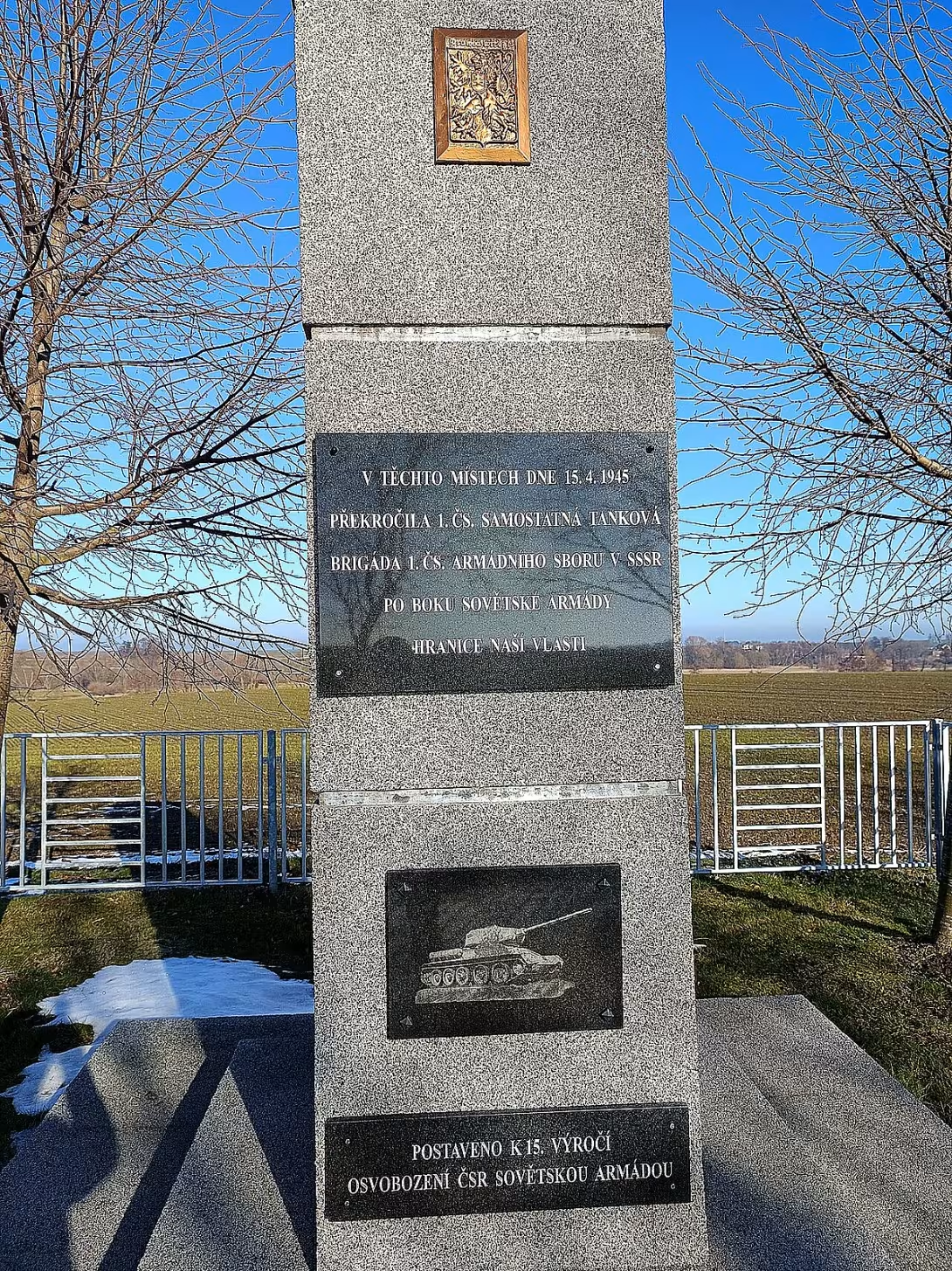
The monument of Czechoslovak tankers, located near the village Sudice in the Opava district on the route of the bicycle path southeast, is an important historical monument. This monument commemorates the key events of the end of World War II and is located on the mountains of Opava hill in the Moravian-Silesian region. Its remarkable feature is the arrival of the first Czechoslovak independent tank brigade to Sudic on 15 April 1945 and the liberation of the municipality on 28 March of the same year.
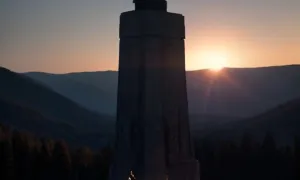
The monument was built in 1960 for the 15th anniversary of the liberation of the village, which corresponds to the socialist era in Czechoslovakia. Its simple and symbolic architecture includes a block of artificial stone built on a bottomed plinth. This monument not only reminds of the battles that took place in Sudice, but also serves as a monument to the first liberated village in Opava.
In the historical context, it should be stressed that Sudice was significantly affected during World War II. The struggle led to the village burning down almost two-thirds of the time. The arrival of the 1st Czechoslovak independent tank brigade meant an important milestone in liberating the territory from the Nazi occupation.
The monument is part of the nature path around the corner of Rohov, which allows visitors to know both the history and nature of the area. In the vicinity there is another memorial liberation with tank T 34, which further emphasizes the importance of the events of 1945.
Today, the monument of Czechoslovak tankers is protected as a cultural monument and is freely accessible throughout the year. Visiting this object is valuable not only for historical education, but also for understanding the importance of peace and freedom that was so seriously threatened at the time.
This monument commemorates the struggle for liberation and is an important place of memory for both residents and tourists. Visiting Sudice and its monuments is a valuable experience that reminds of important events of the past and their importance to the present.
Historical milestones
- 1960
- Status of the monument on the 15th anniversary of the liberation of the municipality
Architectural development
The memorial was built in 1960 for the piętna anniversary of the liberation. The construction consists of artificial stone and a deficit plinth.
Historical events
April 15, 1945: The arrival of the 1st Czechoslovak independent tank brigade to Sudic. 28 March 1945: Exemption of the municipality Sudice, which was the first in Opava district.
Points of interest
- The memorial commemorates the arrival of the first Czechoslovak independent tank brigade to Sudic on 15 April 1945 and the liberation of the municipality on 28 March 1945. - Built in 1960 for the 15th anniversary of the liberation of the village, which corresponds to the socialist era in Czechoslovakia. - It is part of the route of the natural path around the corner of Rohov, which allows you to know both the history and nature of this area. - Protected as a cultural monument and is freely accessible all year round. - Reminds of the struggle for liberation and is an important place of memory for residents and tourists.
Guide
Show guide text
This text was created by artificial intelligence and has not been editorially reviewed. It may contain inaccuracies.
Welcome to a place full of history and memories! You are standing in front of the monument of Czechoslovak tankers in Sudice, a stone prism that tells us the story of courage and liberation. Look up at the plastic rock block that's standing on a bottomed plinth. This monument is not just a beautiful architecture; It's a monument to the key moments of the end of World War II.
The monument was built in 1960 to commemorate the 15th anniversary of the liberation of the village. Although not known architects, their work links us to the important events of 1945. In April of that year, the first Czechoslovak independent tank brigade appeared and liberated Sudice on March 28. This monument is therefore not only a monument but also a witness to the historic arrival that changed the fate of the village.
Notice how a block of artificial stone creates a solid and permanent essence. Sokl and his stairs add nobility and dignity, a reminder of the heavy struggles that took place here. Although the specific personalities associated with this monument are not known, their spirit here is strong and sensitive.
The interesting thing is that this monument was built during the socialist era in Czechoslovakia. This tells us about cultural and historical contexts of the time when the monument became a symbol of courage and liberation.
Let's move on and explore the other attractions of this place. This monument is part of the route of the natural path around the corner of Rohova, which allows you not only to honor history, but also to learn more about the nature and landscape of Sudic. This path will lead you to other interesting places waiting to be discovered.
Thank you for your visit to this historic place. We hope you've learned a lot and feel inspired to explore the Sudic and its rich history. With God on your other exploration expeditions!
Tips for visitors
The best time to visit is in the spring or autumn season when vegetation is best visible in the surroundings and the weather usually favourable. This time of year also offers mild temperatures for a comfortable walk.
When visiting, remember clothes suitable for weather, such as shoes or camping sandals. It is also important to have a protective umbrella and water with you, especially on warmer days.
The best time for photography is in the morning or in the evening when light is lighter. The most attractive place for shots is the monument and its surroundings, which offers beautiful panoramic views of the Opava Mountains.
In the vicinity of the monument there is a educational trail Nature around the corner of Rohova, which you can explore. It is an ideal place for families with children to learn about the nature and history of the region.
Frequently asked questions
Can the monument be visited?
This is a structure in a public space that can usually be seen from outside free of charge. We have not verified that this particular one is freely accessible.
Where is the monument?
Location: Sudice, Moravskoslezský kraj. The map on this page shows the exact spot.
Why is the monument protected?
It is listed in the Central List of Cultural Monuments of the Czech Republic as a cultural monument (register no. 1000144727).
Businesses nearby
Do you run a restaurant, accommodation, shop, museum, rental, wellness or other visitor service near this monument? Show yourself directly to the people heading to it — this is how they will see you in the app and on the web:
Nearby
Pohoří Opavská pahorkatina, česko-polská hranice a naučná stezka Příroda za rohem Rohova.
Accommodation nearby
Themed route
Thematic cruise route from the village Sudice
1. Memorial of Czechoslovak Tankers - stone prism
Type: Historical monument
Why is it worth a visit: This monument serves as a memory of the bravery and sacrifice of Czechoslovak tankers. It's a place where you can get a deeper understanding of the history of the region.
2. Opava hill mountains
Type: Natural area
Why is it worth a visit: This place offers beautiful landscapes and opportunities for relaxation in nature. It is ideal for picnic or exploring local views.
3. Czech-Polish border
Type: Geographic point
Why is it worth visiting: Visit a place where two countries meet. It is a unique opportunity for understanding regional geography and the historical importance of borders.
4. Educational Path Nature around the corner of Rohova
Type: Educative trail
Why is it worth a visit: This trail offers interesting information about local fauna and flora. It's a great way to learn how to walk.
5. Municipality of Sudice
Type: Cultural Center
Why is worth visiting: The village offers the opportunity to explore local culture and history. It is a place where you can meet the locals and find out more about life in this part of Bohemia.
This route offers a combination of historical monuments and natural beauties, making it ideal for a day trip.
Seasonal recommendations
Spring: In spring, the surroundings of the monument awaken and the colors of vegetation are beginning to feel fresh. The light is soft and pleasant in this period. I recommend you take several layers of clothing because the weather can be variable. Visitors are not as much as in the season, so you will enjoy your peace.
Summer: The summer days are sunny and the stone prism is very visible in bright light. The atmosphere is warm, but I suggest you come early in the morning to avoid the hottest heat and humans. Dress lightly and don't forget to protect yourself from the sun.
Autumn: Autumn brings golden shades and occasional morning mists to the landscape, which give the place seriousness. It's the perfect time to observe because of the low sun. Get ready for cooler air and wind, so you can use a solid jacket and comfortable shoes.
Winter: Zimą is a monument in silence, especially when everything is covered with snow. The day is short, so plan to visit around noon when the most light is. It is necessary to have very warm clothes and shoes with good grip due to possible ice.
Visualizations and artistic views


The visualisations are generated by artificial intelligence and serve as inspiration.
Photos from the area
Real photos taken near the monument

Zdroj a licence jsou uvedeny u každého snímku.
Tips from visitors
No tips yet. Be the first!
Log in and add your tip.
Sources and literature
Photos: Fry72 / CC BY-SA 4.0 — Wikimedia Commons. The author and licence also appear when you hover over the image.
Faktickým podkladem tohoto textu byl článek na Wikipedii, jehož autory jsou přispěvatelé Wikipedie. Článek je dostupný pod licencí CC BY-SA 4.0.
Location on the map

Příběhy a pověsti
Legendy, pověsti a příběhy spjaté s touto památkou
Fotografie návštěvníků
Zatím žádné fotografie. Buďte první, kdo přidá fotografii z návštěvy!
Log in a přidejte svou fotografii nebo hodnoťte.
Za ověřenou návštěvu v aplikaci získáte víc bodů — poznáme podle GPS, že jste na místě.
Reviews and comments