



Salzerova reduta Other
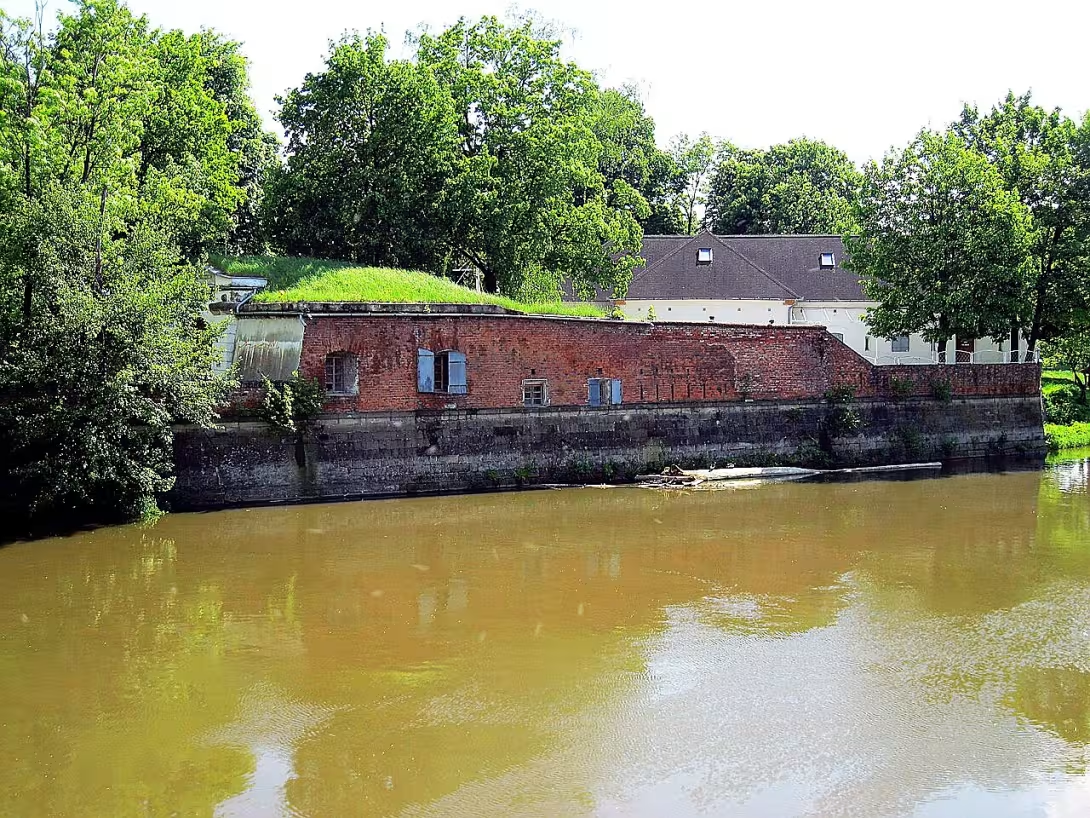
Salzerova reduta is a historic Baroque water fortress located in the Olomouc part of Hodolany. It originated in the 1950s as part of the fortification fortification of the fortress Olomouc. This object secured an access route from the south to the city and protected the floodgates for heating the forefront. Today it is protected as a cultural monument of the Czech Republic. At present, this building is on an island that was created by building a bypass canal on the Morava River in 2007.
The construction of the Baroque fortification fortification began in the 1950s according to the project of Colonel Pierre Philippe Bechade de Rochepine, a member of the Habsburg Engineering Corps. At the time of the reduction, the construction of large-scale fortification systems within the seven-year war took place in Europe. The Czech countries, under the rule of Habsburg, then faced the power efforts of Prussia under the leadership of King Fridrich II. The name of the reduction is derived from the extinct village of Salzergut, which had to give way to the construction of a new Olomouc fortress.
The area consists of a triangular reduction itself and a central ground floor object. Access to it leads through a gate with a valed segment vault. The central object stands on the original courtyard of the reduction. It is covered by a saddle roof and has one central space with a vaulted vault, two side wings and on the left side later a completed patrols with flat ceilings. In the individual rooms, the original artillery firing grounds were preserved in the form of rectangular windows with segment enchantments. There are narrow rectangular infantry firing sites on their sides. The three-sided reduction is instilled from the outside with red burnt bricks. The crown ends with a round ledge covered with clay sod. The inner part consists of an outdoor wall covered with a massive, gradually balancing bead, inside which is a built-in shooting gallery with casemats, well and entrance from the yard. The reduction used to enter the wooden bridge on the stone foundations into the passage with a compressed vaulted vault. The painted portal made of burnt bricks is decorated with two broad canned columns finished with a head with a roof and a stone ball. There is also a triangular shield with two plates and FERDINANDUS inscription. IMP. AUST. /. MDCCCXXXV. Significant reconstruction and expansion took place between 1834 and 1835. That's when the barracks were built for eighty soldiers and the mentioned portal with Empire elements.
After the end of World War I, the fortress belonged to Olomouc, which rented it to Olomouc Scouts in 1919. During World War II, she went into the hands of the German army and after the war she served as a warehouse of Civil Defense. After 1990, the devastated building was sold into private hands and repaired. In short, there was a restaurant called Terezka, which served as a centre of entertainment, discos and concerts. Since 2016, this monument belongs to new owners.
In 1758, in the siege of Olomouc by the Prussian king Fridrich II, the fortress took side fire along with other forts. This caused considerable loss of life and material to the Prussian Siege Corps and slowed down its work. From 1834 to 1835 the reduction underwent the said reconstruction and further modifications were made in 1866. At the end of the 19th century it was intended to accommodate two and a half squadron of the 4th Hunan Regiment. During World War I, part of the military epidemic hospital for typhus and cholera patients was located in the fortress.
Today, this valuable cultural monument after modern reconstruction is in private hands. Located in the Olomouc part of Hodolany in the vicinity of the river Moravia and the newly built bypass canal. Visiting this place offers a unique view of the history of baroque fortification construction and reminds of the important moments of the military history of Olomouc. Discover this remarkable water fortress and recognize closely preserved traces of the past.
Historical milestones
- 1758
- The fortress caused considerable losses to the Prussian Siege Corps during the siege of Olomouc.
- 1835
- Completion of reconstruction and extension of reduction including new barracks building.
- 1919
- The city has rented a desolate fortress to Olomouc scouts.
- 2007
- Salzerova reduta found itself on the island by building a bypass canal on the river Moravia.
Architectural development
The construction began in the 1950s according to Baron Rochepin's design as a baroque fortification. Significant reconstruction took place between 1834 and 1835, when a barracks building was built for eighty soldiers and a portal with Empire elements. The outside consists of a brick wall with a wall and built-in shooting gallery with casemats.
Historical events
In 1758, the fortress successfully opposed the Prussian Siege Corps. Between 1834 and 1835 it underwent a significant reconstruction and expansion. During the First World War, she served as part of a military epidemic hospital.
Owners
The city of Olomouc since the end of World War I, subsequently private persons after 1990 and new owners since 2016.
Points of interest
- Salzerova reduta was founded in the 1950s as part of the fortification fortification of the fortress Olomouc and today stands on the island, which was created in 2007 by building a bypass canal on the river Moravia. - The name of the fortress is derived from the extinct village of Salzergut, which had to give way to the construction of a new Olomouc fortress. - Significant reconstruction and expansion took place between 1834 and 1835, when the barracks were built for eighty soldiers and a portal with Empire elements. - After the end of World War I, the Fortress fell to the town of Olomouc, which rented it to the Olomouc Scouts in 1919, went into the hands of the German army during World War II and served as a warehouse of Civil Defense after the war. - In 1758, the fortress took side fire at the siege of Olomouc by Prussian king Friedrich II, causing significant loss of life and material to the Prussian Siege Corps and slowing down his work.
Guide
Show guide text
This text was created by artificial intelligence and has not been editorially reviewed. It may contain inaccuracies.
Welcome to the Olomouc part of Hodolany. Right now, you're facing Salzer's reduction, a place where history meets the calm of water and the greenery of its surroundings. If you look in front of you, you'll see a remarkable structure that immediately draws attention to its appearance. They dominate you with thick red bricks, from which the whole firmament is plucked up, and the feeling that you're in a space that was once designed with a single, very strict purpose, and that was defense. Feel the atmosphere of this place where the water surrounds the masonry and creates such an impression that the building from the surface of the earth arises as an impenetrable obstacle.
Let us now return together in time more than two centuries back to the fifties of the eighteenth century. It was at this time that Salzerova reduta was created as an important element of the extensive fortification fortification of the fortress Olomouc. At the time, it was not just an ordinary building, but a strategic point to protect the city from hostile attacks. The author of this project was the architect Pierre Philippe Bechade de Rochepine, who had to solve the complex military requirements of his time. The main task of this fortress was to secure an access route from the south so that no enemy army could easily penetrate the city. But the reduction had one more, very clever and dangerous purpose. It was used to protect the floodgates, which were able to control water levels and flood the whole forecast if necessary. Imagine it from the point of view of an invading army that would suddenly find itself in deep mud and water, while defensemen from the red walls observe their movement and can intervene effectively.
Now pay attention to the architecture itself before your eyes. Note that the reduction has a specific triangular shape. This shape was not chosen by chance, but it was meant to be used for a better overview of the terrain and for the masonry to be better defended from different angles. Look at the surface of the walls, where you see red bricks that give the construction its distinctive appearance. In the centre of the complex there is a ground floor which formed the core of the whole building. If you look around, remember that what you see today is the result of several stages of construction. In the year one thousand eight hundred thirty-five there was a significant reconstruction and expansion. At that time the reduction was modernised and a new barracks building was added to it, where soldiers could stay and be ready for action. The whole area thus obtained a more complex form which combined combat functions with the accommodation of the army.
If you stand by these walls like this, you may also feel the echoes of ancient conflicts. One of the most important moments in the history of this place was the year of the thousand seven hundred fifty-eight. At that time Olomouc besieged the Prussian congregation under the leadership of the famous Fridrich the other. The Prussians were one of the strongest military forces in Europe at the time, but it was Salzerova reduta that became a nightmare for them. Thanks to its strategic position and strong image, it has caused considerable losses to Prussian troops. Imagine the noise, the smoke of muskets and the tension that existed in this space at that time. The second Fridrich had to count on points such as this reduction to make progress difficult and require enormous effort and sacrifice. It was this event that showed how effectively the system of fortifications designed by Bechade de Rochepine worked.
But time passed and the military significance of the reduction gradually declined. After centuries of serving as an opaque wall, the fortress began to pluck. In the year of a thousand and nine hundred nineteen, the city decided to rent a decrepit building to the Olomouc Scouts. It was a fascinating twist in the fate of this place. Instead of military drills and weapons sounds, the voices of young people who have been here seeking adventure, learning to live in nature and helping to maintain this historic place in life. Reduta has thus changed from a symbol of war to a place of education and friendship.
Now I want to impress you with one fact that is absolutely unique to Salzer's reduction. Look at the water around you. Today, this fortress stands on an island. You may think it was like this from the beginning, but the truth is different. The reduction became an island only relatively recently, namely in the year two thousand seven. It happened by building a bypass canal on the river Moravia. This modern development of the river has completely changed the landscape and Salzerova reduta has basically broken away from the mainland. It is a strange and poetic picture, when the historic military structure that was meant to defend the country is now finely surrounded by water and separated from the outside world, as if it were in some kind of isolation that gives it peace.
One more interesting thing that may interest you is the very name of this monument. The word Salzer refers to something you won't find in the landscape today. The name of the fortress is derived from the extinct village of Salzergut. This village once existed here, in this area, but it had to give way to the construction of the fortifications. In order for Olomouc to be safely protected and for deep trenches and water barriers to be built, the whole village had to disappear from the map. So Salzerova reduta is basically the only tangible reminder of the people and houses that once lived here before this place became part of the military system.
Now that you know the story of this place, I suggest you take a slow walk around the red walls and perceive the contrast between their mass and the fluid that surrounds them. Stop for a moment and imagine how the priorities of the people who worked here have changed over the centuries, from architects and soldiers to Prussian besieges and today's visitors. Salzerova reduta is now a silent witness to history, which reminds us of how our needs change and how even a strictly military object can become a place of peace and reflection.
Take a look at the rest of the area, see the texture of the bricks and observe how it is reflected in the surrounding water. I hope you were interested in this short trip to history and that you felt the spirit of this extraordinary place in the Hodolans. Thank you for your attention and I wish you a pleasant continuation in discovering the beauty and mystery of Olomouc. Goodbye.
Tips for visitors
To visit Salzer's reduction in Hodolany, it is best to choose the morning clock in sunny weather, when the sun picturestively illuminates old brick walls and water moats, creating an ideal atmosphere for a peaceful walk without crowds. Be sure to bring with you fixed shoes suitable for natural terrain, insect repellent because of the proximity of water and snacks with drinking, because you will not find shops or refreshments in the immediate vicinity of the monument. For the best photographic footage, head to the banks of the newly built bypass canal, where a great view of the entire Baroque water fortress and its fortification in ideal lateral light is opened. In the vicinity of the monument you can admire the natural scenery around the river Moravia and the newly built bypass canal or explore the surrounding urban development of the Olomouc part Hodolany. Families with children will appreciate a peaceful environment in nature by the water, where they can safely discover the history of the 18th century fortifications, but it is necessary to take greater care in the vicinity of watercourses and ditches.
Frequently asked questions
Can the monument be visited?
We have not verified whether this monument is accessible. Please ask the owner or operator, or the local municipal office.
Where is the monument?
Location: Hodolany, Olomoucký kraj. The map on this page shows the exact spot.
Why is the monument protected?
It is listed in the Central List of Cultural Monuments of the Czech Republic as a cultural monument (register no. 1465804319).
Businesses nearby
Do you run a restaurant, accommodation, shop, museum, rental, wellness or other visitor service near this monument? Show yourself directly to the people heading to it — this is how they will see you in the app and on the web:
Events nearby

Zdroj akcí: otevřená data měst a obcí ČR (Národní katalog otevřených dat) a kalendář akcí Národního památkového ústavu.
Nearby
Okolí tvoří řeka Morava, nově vybudovaný obtokový kanál a městská zástavba olomoucké části Hodolany.
Accommodation nearby
Trips and activities nearby
Guided tours, tickets and activities nearby from GetYourGuide
Affiliate link: if you buy from the partner, we may receive a commission. The price for you does not change.
Search tours and activities →Themed route
I propose a thematic tour focused on military history and water structures in the Olomouc part of Hodolany.
1.Salzerova reduta Type: Other (historical military construction) Why is it worth a visit: This historic fortification structure represents a significant remnant of the former fortress system. Visitors can admire the old defensive walls in the original environment.
2. Morava River Type: Natural flow Why is worth a visit: Water flows in the surroundings form a natural scenery complementary to the landscape in Hodolany. The surroundings of the flow offer peaceful walks along the shore.
3. Newly built bypass channel Type: Water work Why is worth a visit: Modern technical construction serves to regulate water and protect the territory. Its immediate surroundings show a link between modern engineering and nature by the river.
4. Urban development of Olomouc part Hodolany Type: Urban area Why is it worth a visit: The route leads through the houses and streets that form the typical character of this city area. Walk through the pavement connects all points of interest in this location.
Seasonal recommendations
Spring - In March and April, green meadows flourish around Salzer's reduction, and trees begin to burst. Sun rays penetrate the leaves and create fine light games on the stone walls that underline the historic atmosphere. We recommend coming early in the morning when there are still few visitors and the light is soft. Dress up in a light jacket or vest because the evening cold can be surprisingly cold, and don't forget comfortable shoes on uneven terrain.
Summer - In the summer months Salzerova reduta is surrounded by full flowering nature and long sunny days. The direct sun highlights architectural details and creates contrast between bright and shady parts of the building. In the main summer season there are more visitors, which is why it is convenient to arrive right after opening, preferably between eight and ten in the morning. Dress in light clothes, but carry a hat or a sun cap and a bottle of water, because the temperature may be high.
Autumn - In September and October, the surroundings of Salzer's reduction are covered in golden and red shades of leaves, which gives the place a romantic and peaceful atmosphere. Mild light underevening highlights historical stones and creates pleasant warm tones. We recommend planning a visit for late afternoon when the crowds gradually disperse and you can enjoy the peace. The layered clothes are ideal - a thin sweater or scarf will protect you from a colder autumn breeze.
Winter - In winter Salzerova reduta is surrounded by snow-covered landscape, which underlines its strength and historical character. Come during the morning, when there is still enough light, and avoid late afternoon hours, when the cold may be the most intense. Dress in warm coat, hat, gloves and tight shoes with anti-slip sole so that the snow does not deceive you.
Visualizations and artistic views


The visualisations are generated by artificial intelligence and serve as inspiration.
Photos from the area
Real photos taken near the monument

Zdroj a licence jsou uvedeny u každého snímku.
Tips from visitors
No tips yet. Be the first!
Log in and add your tip.
Sources and literature
Photos: Lehotsky / CC BY-SA 3.0 — Wikimedia Commons. The author and licence also appear when you hover over the image.
Faktickým podkladem tohoto textu byl článek na Wikipedii, jehož autory jsou přispěvatelé Wikipedie. Článek je dostupný pod licencí CC BY-SA 4.0.
Location on the map
Příběhy a pověsti
Legendy, pověsti a příběhy spjaté s touto památkou
Fotografie návštěvníků
Zatím žádné fotografie. Buďte první, kdo přidá fotografii z návštěvy!
Log in a přidejte svou fotografii nebo hodnoťte.
Za ověřenou návštěvu v aplikaci získáte víc bodů — poznáme podle GPS, že jste na místě.
Reviews and comments