






Schwarzenberský plavební kanál Vodní dílo
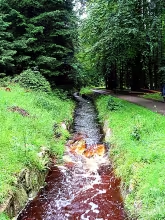
The Schwarzenberg Canal, also known as the Schwarzenberský plavební kanál, is a historic waterway located in the Šumava region of the Czech Republic. Constructed between 1789 and 1822, it connected tributaries of the Vltava River with the Große Mühl River, linking the North Sea and Black Sea basins. Recognized as a national cultural monument, it played a crucial role in timber transportation from inaccessible areas to Vienna for nearly two centuries until its decline during the communist era. Today, parts of this canal have been restored as technical monuments, offering visitors insight into its historical significance.
The Schwarzenberg Canal was built under engineer Josef Rosenauer at the behest of Jan Nepomuk I. ze Schwarzenbergu. Construction began in 1789 and concluded in 1822 during the reign of Josef II. ze Schwarzenbergu. This period saw significant political and economic changes across Europe, including the Enlightenment and early industrialization. The canal was part of an ambitious plan initially proposed by Emperor Charles IV to connect two European basins. Its creation under Schwarzenberg patronage highlights broader trends in infrastructure development and resource exploitation during that era.
Architecturally, the canal spans 44 km with a notable tunnel near Jelení village measuring approximately 400 meters. Designed for timber transport, it facilitated the movement of logs from inaccessible regions on the northern slopes of Šumava to Vienna via the Große Mühl River and ultimately to the Danube. The structure's technical parameters include a local gradient ranging from 2 to 7 promille, a width between 3.5 and 4 meters, and a depth around one meter, allowing for planks up to 24 meters in length.
Ownership of the canal transitioned over time, initially under the control of the Schwarzenberg family from its inception until 1962. Following this period, it came under Czechoslovak state administration post-1948. The canal's operational history is marked by significant events such as its commencement in 1789 and completion in 1822, with timber transport beginning in 1793 and continuing until 1962.
One key curiosity associated with the Schwarzenberg Canal is Plešné jezero, a reservoir created to regulate water flow. Construction modifications increased its height by three meters, allowing for controlled release into the canal. Historical accounts suggest that adjustments in the sluice gate could significantly impact the duration of timber floating, illustrating the engineering ingenuity behind this waterway.
Today, approximately 15 km of the Schwarzenberg Canal have been restored as technical monuments, preserving its historical essence while offering modern accessibility to visitors. The canal's picturesque setting in the Šumava region, surrounded by forests and mountains, enhances its appeal as a site of cultural heritage. Its restoration underscores the importance of maintaining such historic structures for educational and tourism purposes.
The Schwarzenberg Canal stands as a testament to historical engineering prowess and economic strategy, reflecting broader European trends during its time. Visitors are invited to explore this remarkable waterway, appreciating both its technical achievements and cultural significance in the context of Czech history.
Historical milestones
- 1789
- Construction began under Jan Nepomuk I. ze Schwarzenbergu.
- 1822
- Completion during Josef II. ze Schwarzenbergu's reign.
- 1793
- Became operational for timber transport.
- 1962
- Ceased operation as a timber transport route.
Architectural development
The canal was constructed in two phases between 1789 and 1822, designed by engineer Josef Rosenauer. It originally spanned 44 km with a tunnel near Jelení village. The structure facilitated timber transport for nearly 170 years until its decline during the communist era. Currently, approximately 15 km of the canal have been restored as technical monuments.
Historical events
Construction began in 1789 under Jan Nepomuk I. ze Schwarzenbergu.
Completed in 1822 during the reign of Josef II. ze Schwarzenbergu.
Operational for timber transport from 1793 to 1962.
Owners
Knížata ze Schwarzenbergu (1789-1962)
Czechoslovak state (post-1948)
Points of interest
- The Schwarzenberg Canal was part of a grand vision initially proposed by Emperor Charles IV to connect two major European river basins, showcasing early ambitions for continental integration.
- A unique feature of the canal is Plešné jezero, a reservoir whose water level could be adjusted by three meters. This engineering feat allowed precise control over timber floating times, demonstrating advanced hydrological management techniques of the era.
Guide
Show guide text
This text was created by artificial intelligence and has not been editorially reviewed. It may contain inaccuracies.
Welcome to the Schwarzenberský plavební kanál, a remarkable piece of engineering nestled in the Šumava region's lush landscapes. As you stand here, imagine yourself at the intersection of history and nature, where water has carved paths through time. The canal stretches before you, its serene waters reflecting the surrounding greenery—a testament to human ingenuity harmonizing with nature.
The story of this historic waterway begins in 1789, under the visionary leadership of Jan Nepomuk I. ze Schwarzenbergu. It was a period marked by ambition and innovation as engineers sought to connect Europe's major river basins. The canal, completed in 1822 during Josef II. ze Schwarzenbergu's reign, became operational for timber transport by 1793. Designed by the skilled engineer Josef Rosenauer, it linked tributaries of the Vltava River with the Große Mühl River, creating a vital link between the North Sea and Black Sea basins.
As you explore further, take in the architectural marvel that is the canal's design. While specific architects remain unknown, the ingenuity behind its construction speaks volumes. Observe how the waterway seamlessly integrates into the landscape—its banks gently curving, guiding your eyes along its length. Notice Plešné jezero, a reservoir whose adjustable water level exemplifies the engineering prowess of its creators.
This site is steeped in stories and personalities that shaped its history. Jan Nepomuk I. ze Schwarzenbergu's vision set this grand project into motion, while Josef II. saw it to completion. Engineer Josef Rosenauer played a pivotal role, his expertise ensuring the canal fulfilled its purpose as a vital transport route until 1962.
One of the most intriguing aspects of the Schwarzenberg Canal is its connection to Emperor Charles IV's ambitious vision for continental integration—a dream that predated its construction by centuries. This historical aspiration highlights the enduring human quest to overcome natural barriers and unite distant lands.
As you conclude your visit, let the tranquility of this waterway inspire further exploration. Each step along its path offers a glimpse into a past where ambition met nature's challenges head-on. Thank you for joining us on this journey through history; we hope it has enriched your understanding and appreciation of this remarkable site.
Tips for visitors
The best time to visit the Schwarzenberský plavební kanál is during late spring to early autumn, from May to September. During these months, the weather is typically pleasant for outdoor activities, and you can enjoy the lush landscapes of the Šumava region in full bloom. The water levels are also more stable, making it easier to appreciate the canal's historical features.
Parking and transportation options are available both by car and public transport. There are parking facilities near the site that accommodate visitors driving their own vehicles. For those preferring public transport, local buses can be used to reach nearby areas, but it is advisable to check current routes and schedules online prior to your visit to ensure a smooth journey.
When visiting the Schwarzenberský plavební kanál, consider bringing comfortable walking shoes as there are several trails around the area. A camera or smartphone for photography, along with water and snacks, will enhance your experience. Since the region is known for its natural beauty, sun protection such as hats and sunscreen is also recommended.
For photography enthusiasts, some of the best spots to capture the essence of the Schwarzenberský plavební kanál are near the canal's locks and along the waterway where the surrounding Šumava landscape provides a stunning backdrop. Early morning or late afternoon light offers soft shadows and warm hues that enhance the scenic views.
Nearby attractions within 30 minutes include the Vchynicko-tetovský kanál, another historical canal offering picturesque scenery and opportunities for leisurely walks. The area is also rich in natural attractions such as forests and mountains, perfect for hiking or simply enjoying nature's tranquility.
Businesses nearby
Do you run a restaurant, accommodation, shop, museum, rental, wellness or other visitor service near this monument? Show yourself directly to the people heading to it — this is how they will see you in the app and on the web:
Nearby
Located in the Šumava region, the canal is surrounded by picturesque landscapes and other historical sites like the Vchynicko-tetovský kanál. The area features diverse natural attractions including forests and mountains.
Accommodation nearby
Trips and activities nearby
Guided tours, tickets and activities nearby from GetYourGuide
Affiliate link: if you buy from the partner, we may receive a commission. The price for you does not change.
Search tours and activities →Themed route
Thematic Tour Itinerary: Schwarzenberg Canal and Surroundings
1. Schwarzenberg Canal (Waterwork) - Type: Historical Waterway - Why Visit: The Schwarzenberg Canal is a remarkable example of 19th-century engineering, designed to facilitate timber rafting in the Šumava region. Visitors can explore its historical significance and enjoy scenic views along the waterway.
2. Vchynicko-Tetovský Canal (Waterwork) - Type: Historical Waterway - Why Visit: Located nearby, this canal complements the Schwarzenberg Canal with its own rich history of timber transport. It offers a glimpse into the past and provides picturesque landscapes for nature enthusiasts.
3. Šumava Forests (Natural Attraction) - Type: Natural Landscape - Why Visit: The surrounding forests are part of the Šumava National Park, offering diverse flora and fauna. Hikers and nature lovers can explore trails that showcase the region's lush greenery and mountainous terrain.
4. Šumava Mountains (Natural Attraction) - Type: Mountain Range - Why Visit: The mountains provide stunning vistas and opportunities for outdoor activities such as hiking, bird watching, and photography. Their rugged beauty is a highlight of the Šumava region.
5. Local Village of Okres Rohrbach (Cultural Site) - Type: Cultural Locale - Why Visit: The village offers insights into local life and traditions in the heart of the Šumava region. Visitors can experience authentic Czech culture, enjoy local cuisine, and interact with residents.
This itinerary provides a comprehensive exploration of the Schwarzenberg Canal's historical significance while immersing visitors in the natural beauty and cultural richness of its surroundings.
Seasonal recommendations
Spring: Visiting the Schwarzenberg Canal during spring offers a unique experience as nature awakens with vibrant colors and fresh scents. The blooming flora along the canal banks creates a picturesque setting, perfect for leisurely walks or photography enthusiasts. In this season, the water levels are typically moderate, providing clear views of the canal's historical structures. Visitors should consider wearing comfortable walking shoes and layers to accommodate fluctuating temperatures. Early morning visits are recommended as they tend to be quieter before larger crowds gather later in the day.
Summer: The Schwarzenberg Canal is particularly enchanting during summer, when long daylight hours allow for extended exploration of its scenic routes. The lush greenery and abundant wildlife create a lively atmosphere, ideal for picnics or boat rides along the waterway. Summer attracts more visitors due to favorable weather conditions, so it's advisable to arrive early in the day to avoid crowds. Sun protection is essential; wear hats, sunglasses, and apply sunscreen regularly. Hydration is crucial, so carrying a refillable water bottle can enhance your experience.
Autumn: Autumn brings a magical transformation to the Schwarzenberg Canal, with vibrant foliage turning the landscape into an artist's palette of reds, oranges, and yellows. The cooler temperatures make it a comfortable time for outdoor activities such as cycling or hiking along the canal paths. This season offers a more serene atmosphere compared to summer, with fewer visitors enjoying the tranquil beauty. Layered clothing is recommended due to variable weather conditions, and carrying an umbrella might be wise in case of sudden rain showers.
Winter: The Schwarzenberg Canal takes on a quiet, almost mystical charm during winter, when snow blankets its surroundings, creating a serene and picturesque landscape. The waterway's historical features are highlighted against the snowy backdrop, offering unique photo opportunities for visitors. Due to shorter daylight hours and potential closures of certain areas for maintenance or safety reasons, planning ahead is crucial. Dress warmly in insulated clothing, and be prepared for icy paths. Winter mornings can be particularly peaceful, providing a rare opportunity to enjoy the canal's beauty with minimal disturbance from other tourists.
Visualizations and artistic views


Vizualizace jsou generovány umělou inteligencí a slouží jako inspirace.

Tips from visitors
No tips yet. Be the first!
Log in and add your tip.
Sources and literature
Fotografie: Siegfried H. at German Wikipedia / CC BY-SA 3.0 — Wikimedia Commons. Autor a licence se zobrazí i po najetí na snímek.
Faktickým podkladem tohoto textu byl článek na Wikipedii, jehož autory jsou přispěvatelé Wikipedie. Článek je dostupný pod licencí CC BY-SA 4.0.
Location on the map
Příběhy a pověsti
Legendy, pověsti a příběhy spjaté s touto památkou
Za ověřenou návštěvu v aplikaci získáte víc bodů — poznáme podle GPS, že jste na místě.
Reviews and comments