



Srbská stezka Road
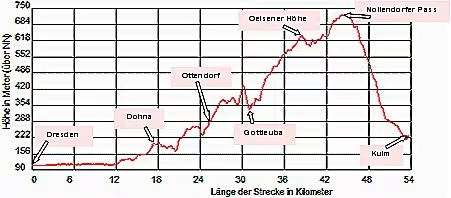
The Kulmer Steig, also known as the Srbská stezka, is an ancient road system that connected the Elbe valley to Bohemia, specifically the town of Chlumec u Chabařovic. This historic trade route, spanning over 30 kilometers, was a crucial passage for merchants and armies throughout the Middle Ages. Its strategic importance lay in its safety and ease of traversing the Eastern Ore Mountains, making it a vital trade and military artery between Dresden, Meissen, and Prague.
The Kulmer Steig's origins date back to prehistoric times, with archaeological finds indicating trade routes and human activity in the region from the Bronze and Iron Ages. The route was used as a trading and military road, with records of its use by armies in the 7th to 12th centuries, including those of Dagobert I, Charlemagne, and Ota the Great. It played a significant role in the great wars of the Middle Ages, with armies crossing the Ore Mountains and devastating the region.
The Kulmer Steig's architecture and artistic form are not well-documented, as it was primarily a network of roads and pathways. However, it was upgraded with post roads in the 18th century and modern roads in the 19th and 20th centuries. The modern road network is based on the described routes of the Kulmer Steig.
The route's ownership and administration are not well-documented, but it was used by various armies and traders throughout history. Several battles took place along the route, including three at Chlumec in the 11th and 12th centuries.
The Kulmer Steig was a significant route for trade and military movements, and its importance is reflected in its use by various armies and traders. Today, the route is followed by the D8 highway, which passes through two tunnels. Visitors can still experience the remnants of this historic route, offering a glimpse into the region's rich history and cultural heritage.
The Kulmer Steig is a testament to the region's strategic importance in the Middle Ages and its continued significance today. Its well-preserved route and historical significance make it an attractive destination for history enthusiasts and those interested in the region's cultural heritage. Visitors can walk or drive along the route, taking in the scenic views and imagining the history that unfolded along this ancient trade route.
Historical milestones
- 7th century
- Dagobert I led his army through the route.
- 805
- Charlemagne's army invaded the route and defeated the Saxons.
- 950
- Ota the Great invaded the route.
- 1040
- The first battle at Chlumec took place.
- 1126
- The second battle at Chlumec took place.
- 1813
- The third battle at Chlumec took place.
Historical events
Dagobert I led his army through the route in the 7th century.
Charlemagne's army invaded the route in 805 and defeated the Saxons.
Ota the Great invaded the route in 950.
The route was the site of three battles at Chlumec in 1040, 1126, and 1813.
Points of interest
– The Kulmer Steig is not only a historical trade route but also a testament to the region's strategic importance in the Middle Ages. Its continued significance is reflected in its use by various armies and traders.
– Archaeological finds indicate that the route was used as early as the Bronze and Iron Ages, making it one of the oldest known trade routes in the region.
– Several battles took place along the route, including three at Chlumec in the 11th and 12th centuries, showcasing the route's importance in the great wars of the Middle Ages.
– The modern road network is based on the described routes of the Kulmer Steig, with the D8 highway passing through two tunnels and following the ancient route.
– The Kulmer Steig's origins date back to prehistoric times, with trade routes and human activity in the region dating back thousands of years.
Guide
This guide is narrated by a synthetic voice generated by artificial intelligence.
Show guide text
This text was created by artificial intelligence and has not been editorially reviewed. It may contain inaccuracies.
Welcome! You are standing before one of the most significant historical landmarks in the region. The Sorbian Trail, also known as Kulmer Steig, lies before you. It is a medieval trade route that connected Prague with Meissen and Dresden. The trail passed through the Ore Mountains and was an important path for both commerce and military movements. Over the centuries, it became the site of many battles, including three battles at Chlumec in the 11th and 12th centuries.
Let's delve into history. The first mentions of this route date back to the 7th century when Dagobert I led his army along this path. In 805, he clashed with Charlemagne's army on this trail, who defeated the Saxons. Otto the Great also used this route in 950. The first Battle of Chlumec took place in 1040, the second in 1126, and the third in 1813.
Notice that the trail is not just a historical path but also a witness to the strategic importance of this area during the Middle Ages. Its significance is reflected in its use by various armies and merchants. Archaeological findings suggest that this route was used as far back as the Bronze Age.
Take a look at the facade of this landmark and feel the atmosphere. The Sorbian Trail is a living testament to the history of this region. Its importance and significance are still evident. An invitation to further explore this historical trail awaits you here. We hope that the Sorbian Trail will invite you to continue discovering and uncovering the secrets of the past.
Tips for visitors
The best time to visit Srbská stezka is during spring and autumn when the weather is mild and the landscape is particularly beautiful. The route offers stunning views of the Krušné hory mountains and the surrounding hills and forests.
It is recommended to bring comfortable hiking shoes, as the route can be steep and uneven in some places. It's also a good idea to bring a map and compass, as the route can be easy to get lost on.
The best spots for photography are at the top of the hills, where you can take in the stunning views of the surrounding landscape. The light is best during the golden hour, just before sunset.
In the area, you can visit the nearby town, which offers a range of shops, restaurants, and cafes. You can also explore the nearby forests and hills, which offer many hiking trails and scenic views.
Frequently asked questions
Can the monument be visited?
We have not verified whether this monument is accessible. Please ask the owner or operator, or the local municipal office.
Where is the monument?
Location: Ústecký kraj. The map on this page shows the exact spot.
Businesses nearby
Do you run a restaurant, accommodation, shop, museum, rental, wellness or other visitor service near this monument? Show yourself directly to the people heading to it — this is how they will see you in the app and on the web:
Nearby
The route passes through the Krušné hory mountains and the surrounding landscape is characterized by hills and forests.
Accommodation nearby
Themed route
1. Srbská stezka (Main Attraction) The Srbská stezka is a historic road that offers breathtaking views of the Krušné hory mountains. It's a must-visit for history buffs and nature lovers alike. The road is lined with picturesque villages and offers a glimpse into the region's rich cultural heritage.
2. Žalov (Hill) The village of Žalov is situated near the Srbská stezka and offers a charming atmosphere and traditional Czech architecture. Visitors can explore the village's narrow streets, visit the local church, and enjoy the surrounding countryside.
3. Krušné hory Mountains (Mountain Range) The Krušné hory mountains offer a range of hiking trails and scenic views of the surrounding landscape. Visitors can hike to the top of the mountains for panoramic views of the region or explore the forests and hills below.
4. Žatec (Town) The town of Žatec is located near the Srbská stezka and is known for its historic center and traditional architecture. Visitors can explore the town's narrow streets, visit the local church, and enjoy the surrounding countryside.
5. Rabí (Village) The village of Rabí is situated near the Srbská stezka and offers a charming atmosphere and traditional Czech architecture. Visitors can explore the village's narrow streets, visit the local church, and enjoy the surrounding countryside.
Seasonal recommendations
Jaro
In the spring months, the Šumava Trail is surrounded by blooming trees and flowers, creating a pleasant atmosphere for walking. The lighting is mild, and nature is in full bloom. We recommend visiting the Šumava Trail during the spring season to enjoy stunning flower and tree photography. The best time to visit is in April and May when the weather is mild and not too warm.
Summer
In the summer months, the Šumava Trail is full of life and energy. Visitor numbers are highest in July and August, so we recommend coming earlier to avoid crowds. The lighting is more intense, and nature is in full bloom. The best time to visit is in June and September when the weather is pleasant and not too hot.
Autumn
In the autumn months, the Šumava Trail is surrounded by colorful leaves and shrubs, creating a wonderful atmosphere. The lighting is mild, and nature is at peace. We recommend visiting the Šumava Trail in the autumn months to enjoy stunning leaf photography. The best time to visit is in October and November when the weather is mild and not too cold.
Winter
In the winter months, the Šumava Trail is peaceful and quiet. The lighting is mild, and nature is at peace. We recommend visiting the Šumava Trail during the winter months to enjoy stunning snow and tranquil nature photography. The best time to visit is in December and January when the weather is cold and not too sunny.
Tips from visitors
No tips yet. Be the first!
Log in and add your tip.
Sources and literature
Faktickým podkladem tohoto textu byl článek na Wikipedii, jehož autory jsou přispěvatelé Wikipedie. Článek je dostupný pod licencí CC BY-SA 4.0.
Příběhy a pověsti
Legendy, pověsti a příběhy spjaté s touto památkou
Fotografie návštěvníků
Zatím žádné fotografie. Buďte první, kdo přidá fotografii z návštěvy!
Log in a přidejte svou fotografii nebo hodnoťte.
Za ověřenou návštěvu v aplikaci získáte víc bodů — poznáme podle GPS, že jste na místě.
Reviews and comments