



Stará radnice v Jindřichově Hradci Town hall
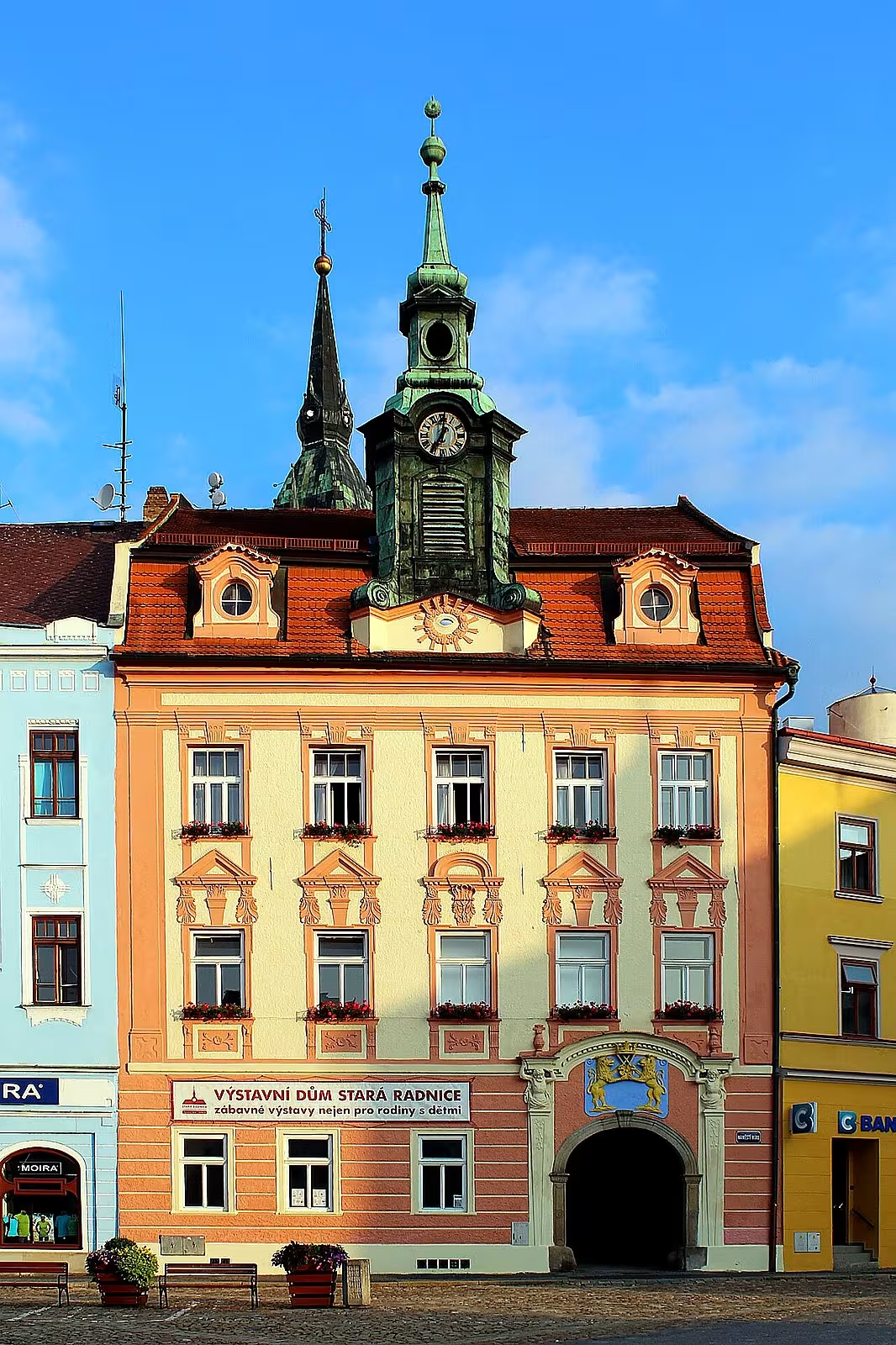
Stará radnice v Jindřichově Hradci is a former 15th century city council, which today serves as a museum and gallery. The building is located on Peace Square in the historical part of the city Jindřichův Hradec I in the South Bohemia Region and is protected as a cultural monument. Its importance lies in architecture and history, which reflects the development of the city.
The oldest mention of the building dates back to 1493 in connection with the installation of the tower. In 1483, King Vladislav Jagellonský granted privileges to the city, including the right to another annual market and a new city emblem which was subsequently placed above the entrance to the town hall. No detailed records of the construction process itself are available.
The building has undergone numerous modifications over the centuries. After the fire in 1607, the town hall was expanded and overarched the street of Bread Town, which originally led to the Church of the Virgin Mary and hosted bakery shops. In 1801 City Hall completely destroyed the biggest fire in the history of the city, where two-thirds of the city buildings burned down. As part of the subsequent reconstruction, the building was rebuilt in neoclassical style between 1801 and 1807. The project was completed by Josef Schaffer.
The property is owned by the town of Henry Hradec. From 1848 to 1905, the office of the district supervisor was located here. In the same year, a new meeting hall was set up. The reconstruction of the festive hall on the first floor was designed and realized by architect Jan Kotěra. In recent times, the building served as the headquarters of the construction and planning department and the city police office.
In the back of the town hall there was a shaft and there was a stone duster with chains, which was removed in the middle of the 18th century. According to legend, the clock maker of the Prague clock clock clock was supposed to be installed on the tower by Master Hanush of Rose, but this did not happen in reality.
After the reconstruction started in 2014, the building serves as the Old Town Hall Exhibition House. Currently there is a museum and city gallery, with permanent exhibition dedicated to the history of the city. The ceremonial hall from 1905 is still used for the wedding and reception of important guests by the mayor of the city.
The Old Town Hall presents a valuable architectural and historical testimony of the town of Henry Hradec. Her visit offers a deeper insight into the site history through museum exhibitions.
Historical milestones
- 1493
- The oldest mention of the construction in connection with the installation of the tower.
- 1807
- Completion of the reconstruction of the building in the neoclassical style by Josef Schaffer.
- 1905
- The reconstruction of the festive hall by architect Jan Koterou.
- 2014
- Opening of the reconstruction before reopening for the public.
Architectural development
The original building from the 15th century was expanded after the fire in 1607 and the alley Běbnice bridged. In 1801-1807, the building was reexhibited in a neoclassical style. In 1905, the architect Jan Kotěra implemented a reconstruction of the ceremonial hall on the first floor.
Historical events
In 1483, King Vladislav Jagellonský granted the city privileges and a new city emblem. In 1801, the building was completely destroyed by fire. In 1905 a new meeting hall of the City Council was established.
Owners
City of Henry's Hradec
Points of interest
- The oldest mention of the building dates back to 1493 in connection with the installation of the tower. - In 1801 City Hall completely destroyed the biggest fire in the history of the city, where two-thirds of the city buildings burned down. - There was a stone duster outside the entrance with chains that were removed in the middle of the 18th century. According to legend, the clock maker of the Prague clock clock clock was supposed to be installed on the tower by Hanuš of Rose, but this did not happen in reality. - The ceremonial hall from 1905 is still used for the wedding and reception of distinguished guests by the mayor of the city.
Guide
Show guide text
This text was created by artificial intelligence and has not been editorially reviewed. It may contain inaccuracies.
Welcome to Henry's Hradec. Please stop for a moment and feel the atmosphere of this place. You are standing in front of the Old Town Hall building, which is one of the most important symbols of power, administration and history throughout the city. Look at her facade. Even though they seem calm and noble today, the walls of this house retain the memory of centuries, full of great hopes, but also deep tragedies. This building is not just an ordinary office, it is a silent witness to Henry's Hradec changing, growing and being reborn from the ashes.
Let us now return together in time far beyond your sight. The roots of this building range back to the fifth century, namely the year of the thousand four hundred ninety-three. It is this year that the oldest references to the building are linked to the installation of the Town Hall Tower. Imagine the time when the tower was the highest point in the area and served not only for decoration, but above all for babysitting the city. From there, we were looking at whether the enemy was approaching the gates, or if there was a dangerous spark on the streets. At that time, the town hall was the heart of urban life, a place where the fate of craftsmen, merchants and residents were decided.
However, the history of this building is not just a story of gradual growth. In the year one thousand eight hundred and one of the darkest chapters of the city's history took place here. The fire, which was the largest in Henry Hradec's entire history at that time, was ignited. The flames were so devastating that they completely destroyed City Hall and swallowed up two-thirds of all the city houses. Imagine the chaos, dust and despair of the people who lost their homes and their administration. The city basically ceased to exist in the form it knew. But it was in this tragedy that the incredible strength and determination of the local people showed up. Instead of giving up, they decided to rebuild the city in the spirit of the modern era.
Now pay attention to the appearance of the building that you are currently facing. What you see is the result of this great recovery. The town hall was rebuilt in a neoclassical style, which was a style that returned to the principles of the ancients, to balance, purity of lines and nobility. The reconstruction was led by the architect Josef Schaffer and the whole building was completed in the year one thousand eight hundred and seven. Notice the harmony and order that this style brings. The building was not only supposed to be a practical residence, but it was meant to emit stability and dignity.
But if you look deeper into the history of the building, you'll find that her face didn't end in the nineteenth century. At the beginning of the twentieth century, namely in the year one thousand and nine hundred and five, another significant intervention came. The ceremonial hall, which is located in the building, was rebuilt by the famous architect Jan Kotěra. Kotěra was the master of his craft and was able to bring new energy and modern feeling into space without disturbing the overall character of the building. It is fascinating to think that on one building there were such various creators as Václav Fiedler, Josef Schaffer and Jan Kotěra, and each of them put a piece of their time into it.
The city hall is also associated with the names of prominent personalities. Among them is King Vladislav Jagellonský, whose influence and presence in the region have left a trail throughout the city. There is also a memory of Master Hanuš of Rose, a figure that has influenced the surroundings by its activities. These people were not just names in chronicles, but the real creators of history, who probably walked in these spaces, discussed and decided on the future of the region.
Now, I want to take you to one interesting thing that might surprise you. Look at the space right outside the entrance to the building. Today there is peace and space to walk, but in the past it looked completely different. Until the middle of the eighteenth century, there was a stone duster. It was a chain column that was used for public punishment. People who have broken laws or urban regulations have been exposed here to the ridicule and contempt of other people. It was a harsh way of maintaining order, which today seemed terrifying, but was a normal part of urban life. Imagine the contrast between the noble architecture of the town hall and the harsh reality of the duster standing right at her door.
But the City Hall building is constantly undergoing changes to serve generations to come. The last year, two thousand fourteen, a major reconstruction began, which was aimed at modernising the building and preparing it for the public in its new role. Today, the City Hall is no longer the administrative center of power, but the Old Town Hall Exhibition House. It's a meeting point with art and history. Inside it is a museum and galleries that are open to anyone who wants to understand who Henry's people were and where they're going.
When you enter, I suggest you pay attention to permanent exposure. It is dedicated to the entire history of the city, from its earliest beginnings to the present. You will be able to see objects, documents and images here, which will help you connect everything you've just heard into one big picture. Feel how the medieval past intersects with neoclassical elegance and modern elements of the twentieth century.
The whole house is today protected as a cultural monument, which means it is our joint task to ensure that its beauty and importance are not lost in time. So you're standing in front of a building that survived fires, wars and regime changes. It's a symbol of endurance and the ability to start again, even though everything seems to be lost.
Now, let's invite you to take a closer look at City Hall. Come in, get carried away by stories from the museum and discover the beauty of art in the gallery. Go through the halls that once hosted the city council and the festival, and try to imagine what kind of conversations we had here hundreds of years ago. I hope this short trip to history helped you see the Old Town Hall not only as a building of stone and mortar, but as a living organism that breathes the history of Henry Hradec.
I wish you a pleasant tour and inspiring moments in the premises of the Old Town Hall Exhibition House. When you continue your journey through the city, don't forget to stop and look at the details of the surrounding houses, because each of them can hide their own unique story. Goodbye and enjoy your stay in our beautiful city.
Tips for visitors
Best time to visit The Old Town Hall is a late afternoon or the beginning of the evening when the city calms down and the historic building excels beautifully in soft light. Since this is a monument in the centre, there are often more tourists and traders in the morning, which can limit the space for quiet tours. If you are planning to take pictures, avoid sharp midday sun, which creates hard shadows on the facade.
Access to the monument is very easy because it is located directly on the Square of Peace in the historical centre. I recommend you use public transport or walk if you have accommodation in the vicinity of the historical core.
Take your comfortable shoes with you, because the surrounding area of the monument consists of paving blocks and historic tiles that can be uneven. Even if the building is in excellent condition, the inner spaces may have older floors. I recommend having a small bottle of water with you, because in summer it can be hot in the center and there is not always easy access to the background. If you are planning a longer walk around the Square of Peace, don't forget the sun protection.
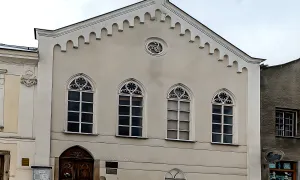
It is ideal for photography to capture the Old Town Hall in the context of the entire square. The best angles are from the opposite side of the Square of Peace, where you can capture the symmetry of the building and surrounding historical houses. Light is the most appropriate morning or late afternoon when the sun shines at an angle and highlights architectural details. Avoid shooting directly in the face of the sun, so that the facade details are not dissected.
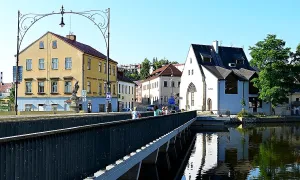
In the vicinity of the monument, just a few minutes on foot, there is the Church of the Virgin Mary, which is another significant dominant of the historical centre. For families with children, the surroundings of the Square of Peace are safe and suitable for walking. Children can enjoy the atmosphere of the historic city and observe architectural elements of buildings. I recommend planning a visit so that it can be connected with a short walk around the Church of the Virgin Mary, which will give children an interesting experience of history.
Frequently asked questions
Can the monument be visited?
Some buildings of this kind are open for guided tours, others serve another purpose or are privately owned. We have not verified whether and when this monument is open – please ask the operator.
What are the opening hours and admission?
We have not verified the opening hours or admission. Current information is published by the operator. Official website: https://stararadnice.jh.cz/
Where is the monument?
Location: Jindřichův Hradec I, Jihočeský kraj. The map on this page shows the exact spot.
Why is the monument protected?
It is listed in the Central List of Cultural Monuments of the Czech Republic as a cultural monument (register no. 1000132423).
Businesses nearby
Do you run a restaurant, accommodation, shop, museum, rental, wellness or other visitor service near this monument? Show yourself directly to the people heading to it — this is how they will see you in the app and on the web:
Events nearby
Zdroj akcí: otevřená data měst a obcí ČR (Národní katalog otevřených dat) a kalendář akcí Národního památkového ústavu.
Nearby
Náměstí Míru, historické centrum Jindřichova Hradce, kostel Panny Marie.
Accommodation nearby
Themed route
The Square of Peace Type: Historical Square Why is worth a visit: The entrance point of the route, where there is a Baroque fountain and a number of historic houses with richly decorated facades. Here you can make the first impression of the city's atmosphere and orient yourself around it.
Stará radnice v Jindřichově Hradci Type: Historical building Why is it worth a visit: The main destination of the trip, which boasts a unique Renaissance tower and beautiful interior. Visitors can admire the details of architecture and learn about the history of the city's self-government.
Church of the Virgin Mary Type: Sacral monument Why is it worth a visit: An impressive Gothic building that dominates the panorama of the historical centre. Inside it offers a peaceful atmosphere and the possibility of admiring the sacral arts and historical interiors.
The historical centre of Jindřichov Hradec Type: Built-in territory Why is worth a visit: The area around the square and church, full of narrow streets and old houses. An ideal place for a walk, during which you can discover smaller architectural details and feel the spirit of the old town.
The route is designed to be as short and clear as possible because all of the above points lie close to each other. You start at the Square of Peace, where the entrance to the Old Town Hall in Henry's Hradec is also located. After a tour of the town hall, you can go a little further to the Church of the Virgin Mary, which is just a few minutes' walk away. You can then return to the historical center of Jindřichov Hradec, where you can end the route by relaxing or taking a short walk around the rest of the square. The entire route is suitable for walking and does not require any physical fitness as it moves in the flat terrain of the historical core. It recommends that you take with you enough water and comfortable shoes because the tiles can be uneven at times. This compact route allows for the most important cultural and architectural dominance of this city in a short time without the need to travel to the farthest parts of the location.
Seasonal recommendations
Spring in Henry's Hradec brings gradual warming and awakening nature around the historical centre. The sunlight hits the facade of the old town hall under a changing angle, creating dynamic shadows on stone elements. The branches of trees in the area are still without leaves or only fresh shoots, so the monument is fully visible and photogenic. This period is ideal for visitors thanks to a lower number of tourists compared to summer months. It is recommended to wear layered clothes because the morning cold alternates with warmer afternoon weather. The best time for a tour is in the late morning when the sun reaches the top and radiates the details of architecture without sharp shadows.
Summer is the main season when the city is full of life and visitors. The town hall shines in bright sunlight, which highlights the colours of plaster and gold elements. The surrounding parks and gardens are in full bloom, which complements the historic atmosphere. Due to the high number of tourists, longer fronts and a more busy environment must be envisaged. It is recommended to come as early as possible in the morning to avoid crowds and noise. Clothing should be light and breathable, suitable for higher temperatures, and it is essential to have enough drinking mode and goggles. The afternoon heat can be challenging, therefore it is better to plan a tour for the morning hours or in the evening when temperatures are slightly reduced.
Autumn brings the city to warm, golden and red tones that contradict the stone building of the town hall. Leaves on trees in the surrounding area create a color framework for photos and walks. The light is softer and longer, which allows longer stay outside even late in the afternoon. The atmosphere is quieter and more intimate, because the summer rush is over. It is recommended to wear warm sweaters and umbrellas because autumn weather is usually variable and rainy. The best time to visit is a cloudy afternoon when soft light softens the shapes of the building and underlines its historical nature. To avoid them in the morning when the pavement can be slippery from dew and falling leaves.
Winter in Henry's Hradec offers a unique view of the town hall, often surrounded by snow, which highlights its contours and architectural details. Short days and low sun create dramatic, long shadows and cold, blue tones in the snow. The atmosphere is quiet and quiet, except for the advent period, when the city decorates Christmas lighting and there is a special holiday mood. Visitors must count on very low temperatures and short time of day. Clothes must be laminated, with a warm jacket, gloves and hat. The tour is suitable for short afternoon hours, when it is the hottest and the sun is the highest. Due to winter conditions, outdoor movement is limited, so it is recommended to combine the tour with a visit to indoor areas or cafés nearby.
Visualizations and artistic views


The visualisations are generated by artificial intelligence and serve as inspiration.
Photos from the area
Real photos taken near the monument

Zdroj a licence jsou uvedeny u každého snímku.
Tips from visitors
No tips yet. Be the first!
Log in and add your tip.
Sources and literature
Photos: Matěj "Dědek" Baťha / CC BY-SA 4.0 — Wikimedia Commons. The author and licence also appear when you hover over the image.
Faktickým podkladem tohoto textu byl článek na Wikipedii, jehož autory jsou přispěvatelé Wikipedie. Článek je dostupný pod licencí CC BY-SA 4.0.
Location on the map
More monuments – Jindřichův Hradec I
Show all in the municipality

Příběhy a pověsti
Legendy, pověsti a příběhy spjaté s touto památkou
Fotografie návštěvníků
Zatím žádné fotografie. Buďte první, kdo přidá fotografii z návštěvy!
Log in a přidejte svou fotografii nebo hodnoťte.
Za ověřenou návštěvu v aplikaci získáte víc bodů — poznáme podle GPS, že jste na místě.
Reviews and comments