






Štola sv. Josefa - Dolní Studené Other
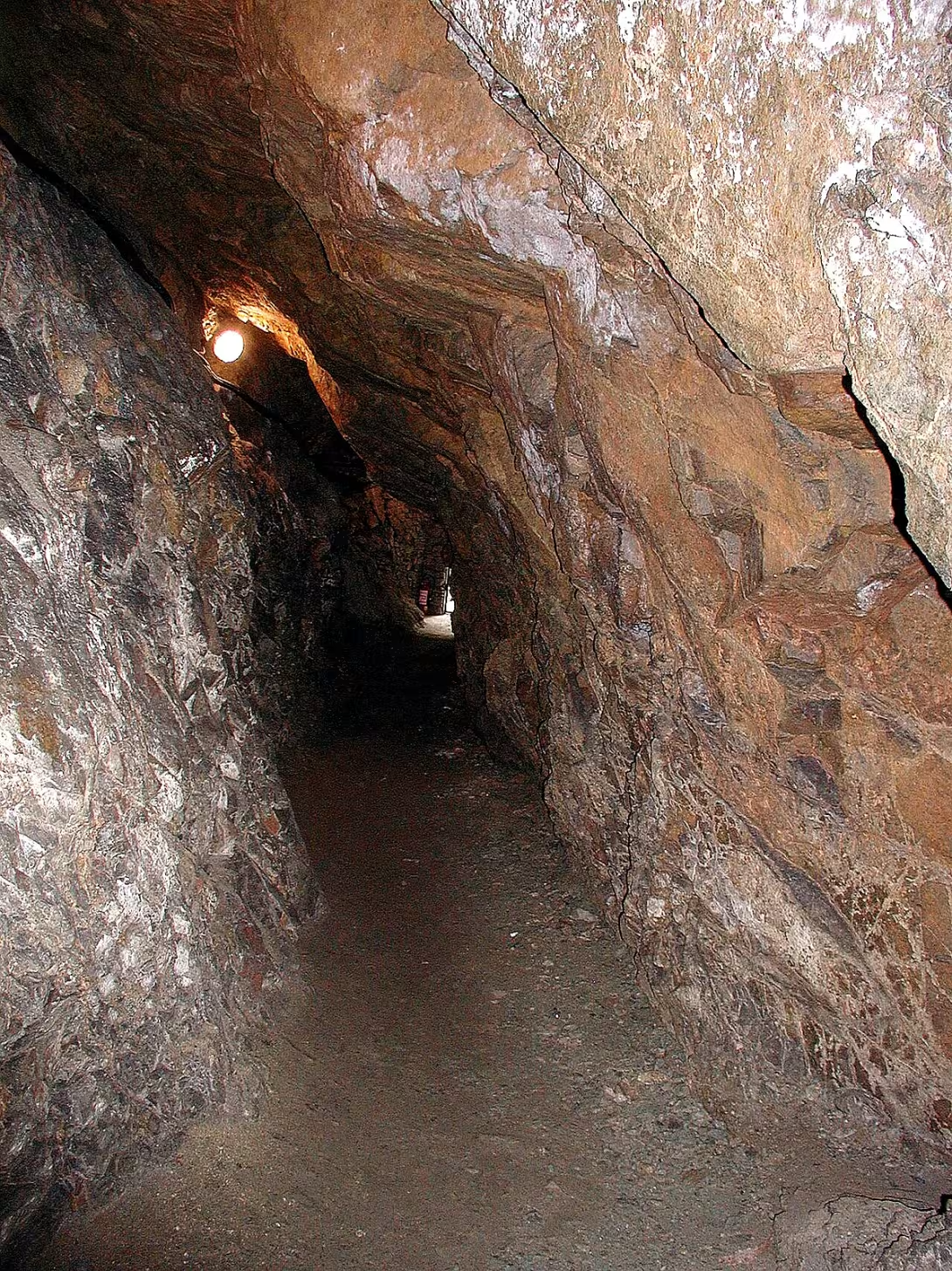
St. Joseph's Hall is an important historical mining work in the valley of the creek, which is the right-hand presence of Sazava near Jílová near Prague in Praha- west district. This monument is located in the Kocour Vile Zone of the Hýlové Zlatonné Region and represents the remnant of medieval and modern ore mining. Its roots are deep in the past, with the greatest boom in gold mining in the 14th century.
This work was created in the context of the intensive expansion of mining works in the fourteenth century, when the Czech Kingdom, under the rule of Luxembourg, experienced great economic development associated with the mining of precious metals. At that time, demand for gold grew throughout Europe, leading to the development of areas such as the clay region. The original medieval corridor gradually expanded into a larger complex whose exact scope and complete history are not known in detail. In older literature, this monument is reliably listed under the name of St. Joseph.
The material and the construction of the mantelpiece corresponds to the traditional mining of precious metals in the region. The original premises grew gradually and the mining companies continued to operate in the eighteenth century. It probably followed an older tradition dating back to the pre-Hussite era.
The most famous period with a large range of work took place in the 14th century. The year 1730 is an important documented milestone in the history of the building, when the stol of St. Joseph was drawn on one of the oldest preserved maps of the Yalov region.
Today there is the city of Jílové u Prahy, the valley of the creek and the river Sazava with other remains of historical gold mining. Saint Joseph's hill remains a valuable reminder of the glory of former mining. Visit this location and discover historical traces of medieval mining of precious metals in an authentic environment near Jílová near Prague.
Historical milestones
- 1730
- St. Joseph's Hall was drawn on one of the oldest preserved maps in the region.
Architectural development
The original medieval hill gradually expanded into a larger mining work. Mining companies continued to operate here in the eighteenth century, probably following the older tradition of the pre-Hussite era. The material and construction is consistent with the traditional underground mining of precious metals in the region.
Historical events
In the fourteenth century, the most famous mining period with a large range of mining work took place. In 1730, the mound was drawn on one of the oldest preserved maps in the region.
Points of interest
- St. Joseph's Hall is an important historical mining work in the valley of the creek, which is the right-hand presence of Sazava near Jílová near Prague. - The monument is located in the Kocour Vile Zone of the Hýlové Zlatonné Region and represents the remnant of medieval and modern Russian mining. - The greatest boom in gold mining took place here in the 14th century under the rule of Luxembourg. - The exact extent and complete history of this complex are not known in detail and in the older literature the monument is mentioned exclusively under the name of St. Joseph. - The important documented milestone in the history of the building is the year 1730, when the stol was drawn on one of the oldest preserved maps in the region.
Guide
Show guide text
This text was created by artificial intelligence and has not been editorially reviewed. It may contain inaccuracies.
Welcome to the place where history meets the silent whisper of nature. You're standing in front of one of the most important mining works in this region, in front of St. Joseph's Hall. Before you go any further, stop for a moment and feel this atmosphere. You are in a valley that is quiet and quiet, but beneath your feet and around you is a story full of toil, deep shafts and searching for precious metal. Feel this space where the stream flows, the right-hand tributary of the river Sazava, and imagine how this water stream has shaped this landscape and the life of the people who lived and worked here for ever. Look around you at this green environment near Jílová near Prague. It is quiet here today, but this country was once the heart of a huge rush.
This monument that you now see before you is not just an ordinary piece in the country. It's proof of incredible human endurance. The roots of this mound go deep into a dark and fascinating past. If you look at the surrounding rocks, realize that you are in the Kocour Vial Zone, an area that has been known for centuries for its wealth. The greatest boom in gold mining in this region occurred in the 14th century. More than 600 years ago, there was an intense mining work. Imagine the times when this area was a key place to extract precious metals. At that time, there were no modern machines, all of which took place by hand, torches and incredible courage of people who were not afraid to descend into the darkness of the earth.
Now pay attention to the very nature of this place. St. Joseph's Hall represents an important historical mining work, which is a remnant of medieval and modern ore mining. Even though time is relentlessly leaning into the rock and nature is trying to bring it all back, we can still see the imprint of human activity here. Feel this work being inserted into the structure of the country. It is a work that has been carried out in various epochs, from the Middle Ages to the New Testament, when methods of mining have gradually changed, but the goal remains the same. Even though we do not see today the same tools used by the old miners, the presence of their work is felt in every piece of rock and in every profile of this mining work.
You may now be wondering who created this place. Who were those people who spent long hours and days here? Although historical records have not taken away the names of the particular architects who designed this castle, nor the names of the individuals who would direct it, their presence here is constant. Names were lost in the abyss of time, but their work remained. Each metre of this chute is the result of human will and knowledge. Even if we don't know their faces, their legacy is to engrave the very essence of this place. You are faced with the result of the work of thousands of unknown hands that were building here, mining and searching for treasures hidden in the Kocour Vial Zone.
I want to tell you now one interesting thing that will help you better understand the importance of this place. This stol was so important and so well known that it was drawn on one of the oldest preserved maps of this clay region in the year one thousand seven hundred thirty. Almost 300 years ago, this chute was already such a fixed point in the memory of map artists that they had to record it as an important element of the landscape. This shows us how much mining in this area had an impact on the development of the whole area and how much it was linked to the economic power of the time. It's a fascinating idea that when you look at this memory, you look at a place that was mapped and documented centuries ago.
Now, I beg you, allow yourself to drift through the atmosphere of this valley. Do you feel the connection between water, rock and human effort? The wall of St. Joseph is not just a dead object, it is a living witness to history, telling us about golden times, hard work and constant searching. Now let's slowly move on the way. Explore the surrounding terrain, perceive the silence of this place and try to imagine what this valley looked like at the time of its greatest bloom. Thank you for coming to take a look at this historic monument and for taking the liberty of stopping for a moment and listening to the story that is taking place here. We wish you a beautiful and inspiring walk around Jílová near Prague.
Tips for visitors
To visit this historic place we recommend choosing a dry period of the year, when the terrain in the valley of the creek is best viable and underground areas are not affected by spring snow melting or heavy rain. The location is available by car and by public transport; Check the current connection in the search engine and park the car in a suitable location in the village Jílové u Prahy, where you will walk along the stream. Take with you fixed waterproof shoes suitable for wet terrain, warmer clothing, because it is cold in every season underground, and a reliable light for safe movement. Photographing in a narrow valley and at the entrance to the boardwalk requires good portable lighting, the best light conditions are in the morning, when the sun rays penetrate through the trees' crowns into the valley of the creek. In the wider area within 30 minutes of the journey you can visit the city of Jílové u Prahy or the picturesque valley of the river Sazavu with other remains of historical gold mining in the region.
Frequently asked questions
Can the monument be visited?
We have not verified whether this monument is accessible. Please ask the owner or operator, or the local municipal office.
Where is the monument?
Location: Jílové u Prahy. The map on this page shows the exact spot.
Why is the monument protected?
It is listed in the Central List of Cultural Monuments of the Czech Republic as a cultural monument (register no. 1624198918).
Businesses nearby
Do you run a restaurant, accommodation, shop, museum, rental, wellness or other visitor service near this monument? Show yourself directly to the people heading to it — this is how they will see you in the app and on the web:
Events nearby
Zdroj akcí: otevřená data měst a obcí ČR (Národní katalog otevřených dat) a kalendář akcí Národního památkového ústavu.
Nearby
V okolí se nachází město Jílové u Prahy, údolí potoka a řeka Sázava s dalšími pozůstatky po historické těžbě zlata v regionu.
Accommodation nearby
Trips and activities nearby
Guided tours, tickets and activities nearby from GetYourGuide
Affiliate link: if you buy from the partner, we may receive a commission. The price for you does not change.
Search tours and activities →Themed route
I propose a thematic cruise route focused on the history of gold mining in the region.
1. City of Jílové u Prahy Type: Historical residence Why is it worth a visit: This mansion serves as a starting point for discovering the golden history of the entire region. It is located in the immediate vicinity of all the following goals.
2. Valley of the creek Type: Natural and historical location Why it stands behind the attractions: In this picturesque valley of the creek you can admire the numerous remains of historical gold mining in the region. The site offers a peaceful walk along the water stream with period tracks of mining activity.
3.Štola sv. Josefa - Dolní Studené Type: Main destination, underground monument Why is it worth a visit: This historic hill represents the main destination of the whole trip. It offers a unique insight into the depths where our ancestors conquered precious metal.
4. Sazava River Type: Water flow and surrounding landscape Why is it worth a visit: The surrounding area of this river will complete the characteristic character of the countryside. Other remains of historical gold mining in the region are also found along its shores.
Seasonal recommendations
Spring brings awakening nature in the vicinity of Jílová near Prague, when the trees in the valleys are only just beginning to green and the melting snow and spring rains increase water flow into the old underground corridors. The moisture inside the historic mine is very high in this period, the water drops fall from the ceiling and the atmosphere is raw and mysterious, underlined by dampened artificial lighting that reflects the shine of wet rock walls. Visitors should count on a minimum crowd of people, which allows for a peaceful tour without pushing. Suitable clothing includes waterproof jacket, fixed non-slip shoes suitable for muddy terrain before entry and warmer sweater, as the temperature below the ground holds low below the outside diameter. The best time to arrive is around 10:00 in the morning, when the air outside is the most freshly fragmented forest.
Summer opens the main visiting season, where the dense forest above the hill provides a welcome shade and a pleasant chill in front of the hot sunlight prevailing on the surface. Underground is a constant low temperature, which is a perfect shelter from summer heat, with artificial lighting contrasting with bright daylight outside. Due to the holiday season, the largest number of people are coming, so more tourists must be expected, especially on weekends. The practical council is in charge of arriving early in the morning after opening to avoid the biggest groups. In spite of summer outdoor temperatures, clothing should contain long pants, fixed shoes and, above all, warm flea hoodie or jacket, without which in underground cold, where only weaker lamps shine, you will quickly cool.
Autumn turns the surrounding landscape into a colorful mosaic of red and yellow leaves, which fall on a journey leading to a historic monument and create a romantic but somewhat melancholic mood. The moisture inside the mast remains high, but the dripping and foggy weather outside gives the whole tour a deeper dimension associated with the history of strenuous gold mining. Tourists are shrinking, you will find few people here on business days, which guarantees deep calm and the possibility of undisturbed water dripping and your own steps. For this period, choose layered clothes, waterproof shoes into deeper fallen leaves and mud and don't forget the hat and gloves, because the cold from underground after a long time begins to manifest itself throughout the body. The ideal time for visiting is afternoon hours, when the low sun lights out the colored forest.
Winter covers the whole area in silence, often under the snow cover, and the road to Jílový near Prague may be more difficult to handle because of the slippery surface, which requires maximum caution while walking. In the underground, the atmosphere is quietest throughout the year, artificial lighting radiates the ice formations that sometimes form in close proximity to the entrance portal, where the freezing air penetrates in. Take the tour in the afternoon, when there is the best chance of at least a weak daylight. Dress very warm, ideally in thermo-liners, winter feather jackets on the surface and don't forget to wear warm socks and hat, because underground cold combines in winter with freezing outside.
Visualizations and artistic views

The visualisations are generated by artificial intelligence and serve as inspiration.
Photos from the area
Real photos taken near the monument

Zdroj a licence jsou uvedeny u každého snímku.
Tips from visitors
No tips yet. Be the first!
Log in and add your tip.
Sources and literature
Photos: Posázaví / CC BY-SA 3.0 — Wikimedia Commons. The author and licence also appear when you hover over the image.
Faktickým podkladem tohoto textu byl článek na Wikipedii, jehož autory jsou přispěvatelé Wikipedie. Článek je dostupný pod licencí CC BY-SA 4.0.
Location on the map
More monuments – Jílové u Prahy
Show all in the municipality
Příběhy a pověsti
Legendy, pověsti a příběhy spjaté s touto památkou

Fotografie návštěvníků
Zatím žádné fotografie. Buďte první, kdo přidá fotografii z návštěvy!
Log in a přidejte svou fotografii nebo hodnoťte.
Za ověřenou návštěvu v aplikaci získáte víc bodů — poznáme podle GPS, že jste na místě.
Reviews and comments