



Střední pedagogická škola School building
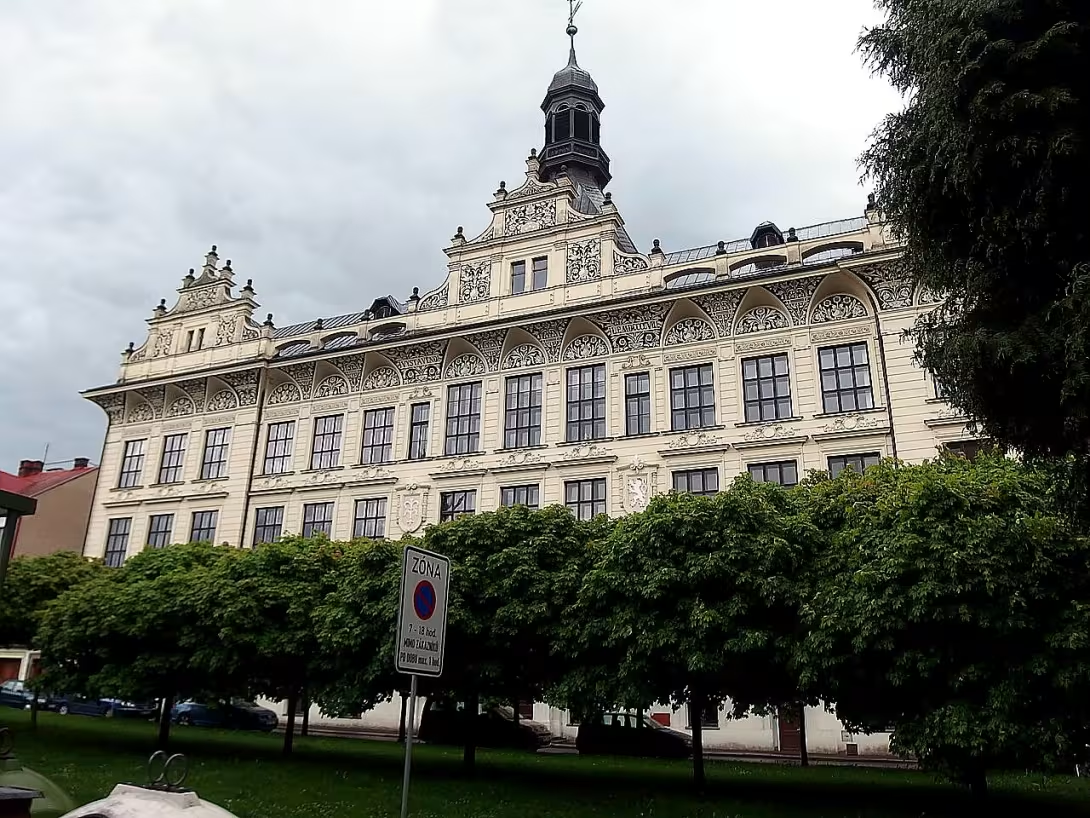
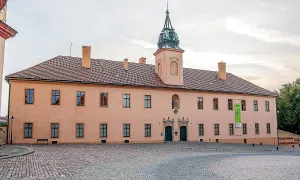
The Higher Professional School and Střední pedagogická škola in Litomyšl are located in a historicist building on Komenský Square, built between 1905 and 1907. The building is listed as a cultural monument. It represents a significant example of early 20th-century architecture, whose appearance draws on the Renaissance tradition of the Litomyšl castle.
The building was constructed on the site of the former Panský Mill, which had to be demolished to make way for the school. The building dates back to the late Austro-Hungarian period, a time when emphasis was placed on modernizing education and strengthening national identity through architecture in the Czech lands. Together with the nearby Smetana's House, the building was intended to form the core of a modernly conceived part of the town, although this was not fully realized.
The design, which won a competition among 37 projects, was created by the architect Dobroslav Hnídek. The building is constructed in a historicist style with prominent elements of the Czech Renaissance. The facade is decorated with lunettes and other details intended to ensure visual harmony with the nearby castle. Upon completion, the grandeur of the facade was criticized in the local press as being too costly.
The building originally served as a girls' school and the Private Municipal Institute for the Education of Female Teachers. In 1921, the institute was nationalized and renamed the Co-educational Teachers' Institute, which operated on the premises until the Second World War. Operations were suspended between 1948 and 1952. After resuming its activities, the school was named after Zdeněk Nejedlý for a period of time. The institution acquired its current form and name in 1996.
At the beginning of the 21st century, the building underwent a complete renovation that sensitively preserved its historical character. Today, the building serves its original educational purpose and, as a cultural monument, is part of a valuable area near the town center.
This building represents an interesting testament to the efforts to architecturally cultivate public space at the beginning of the 20th century. A visit to the area around Komenský Square offers the opportunity to view this historicist building within the context of other Litomyšl architecture.
Historical milestones
- 1907
- Completion of construction work on the school building.
- 1921
- Nationalization of the private institution and the establishment of the Coeducational Teachers' Institute.
- 1996
- The school acquired its current name and appearance.
Architectural development
The building was constructed in a historicist style with Renaissance elements on the facade. At the beginning of the 21st century, it underwent a complete renovation that preserved its historical character.
Historical events
1907: Completion of the school building. 1921: Establishment of the institute and renaming to the Coeducational Teacher Training Institute. 1948–1952: Suspension of the school's operations.
Points of interest
– The building was constructed between 1905 and 1907 on the site of the former Panský mlýn, which had to be demolished to make way for the construction. – Architect Dobroslav Hnídek won the design competition, which saw a total of thirty-seven entries. – The building's appearance draws on the Renaissance tradition of the Litomyšl Castle, and the facade is adorned with lunettes. – At the time of completion, the grandeur of the facade was criticized in the local press as being too costly. – The building originally served as a girls' school and a teacher training institute, and was nationalized in 1921.
Guide
Show guide text
This text was created by artificial intelligence and has not been editorially reviewed. It may contain inaccuracies.
Welcome! You are standing before a significant historical monument – the building of the Vyšší odborná škola and Střední pedagogická škola, which is a truly important part of the cityscape of Litomyšl. Before you is an elegant building with distinctive elements of the Czech Renaissance, which naturally corresponds with the nearby Litomyšl Castle.
Let's dive into history. This building was constructed between 1905 and 1907 on the site of the former Panský mlýn, which had to be demolished for the construction. Architect Dobroslav Hnídek won with his design in a competition that saw a total of thirty-seven entries. His design was intended as part of the modern city center around Komenského Square.
Look up and notice the architectural details that enchant you. Visual elements of the Czech Renaissance are clearly visible here – for example, the lunettes on the building's facade, which draw upon the traditions of the Litomyšl Castle and bring a magnificent view to the town.
Interesting historical stories also unfold within this building. Following its completion in 1907, pedagogical work developed here for years, until 1921 when the private institute was nationalized and the Coeducational Teacher Institute was established. In 1996, the Střední pedagogická škola began operating here, retaining its name to this day.
Interestingly, architect Dobroslav Hnídek not only designed this building but also other significant structures in the region. His work here represents a perfect synthesis of historical traditions and modern thinking.
Now that you have learned about this fascinating building, we invite you to explore more of the interesting sights of the town of Litomyšl. It can truly be a reward for anyone who immerses themselves in the history and architecture here. Thank you for your visit, and we wish you many more useful and enlightening moments!
Tips for visitors
Best time to visit is during the morning hours on weekdays, when you can calmly view the building’s exteriors without much bustle. We recommend bringing a camera to capture the details of the façade, which bears the characteristics of historicist architecture. The best light for photographing the building is in the afternoon, when the sun illuminates the front side of the structure. In the immediate vicinity we recommend visiting the castle in Litomyšl, Smetanův dům and strolling through the entire historic centre of the city, all reachable by a short walk.
Frequently asked questions
Can the monument be visited?
The building is in use (offices, a school, shops and the like). The interior is generally accessible only during operating hours and tours are not usually offered; we have not verified the details. You can see the exterior from the street.
Where is the monument?
Location: Litomyšl-Město, Pardubický kraj. The map on this page shows the exact spot.
Why is the monument protected?
It is listed in the Central List of Cultural Monuments of the Czech Republic as a cultural monument (register no. 1000137005).
Businesses nearby
Do you run a restaurant, accommodation, shop, museum, rental, wellness or other visitor service near this monument? Show yourself directly to the people heading to it — this is how they will see you in the app and on the web:
Events nearby
Zdroj akcí: otevřená data měst a obcí ČR (Národní katalog otevřených dat) a kalendář akcí Národního památkového ústavu.
Nearby
Smetanův dům, zámek v Litomyšli, historické centrum města.
Accommodation nearby
Themed route
Smetana's house - a landmark house. This climate house represents the home of the poet Jan Neruda, whose creation and personal life are projected here in exhibitions and archives. Important for the literary heritage of the Czech Republic.
Castle in Litomyšl - Gothic-Renaissance castle. A unique architectural monument with a vast area, which served as the residence of King George of Poděbrad and King George of Hradčan. It describes the history of the Czech Kingdom and unique interior design.
Historical city centre - historical center. The preserved Baroque and Renaissance buildings, alleys and dome complexes represent a lively picture of the cultural flourishing of Litomyjl. The centre offers space for educational events, tours and meetings with local tradition.
The route is suitable for school trips that combine culture, history and art. The distances between the points are comfortable for a pedestrian pass and therefore the route can be supplemented by short breaks in cafes or on a market inside the centre.
Seasonal recommendations
In spring, the surroundings of the school wake up and the colors are fresh. The sun shines gently and the landscape around Litomyjlo begins to green. It's an ideal time to observe the details of a building in soft light. I recommend wearing layered clothes because the wounds are usually cold, but the afternoon can be warm. Visit the site in the morning, when the air is the cleanest and the people are not enough yet.
The summer season brings the longest days and intense sunlight, which beautifully highlights the shapes of the building. The atmosphere is alive and warm, but in the heat of the building it can be too stuffy. For the best experience come right after opening to avoid the biggest crowds and high temperatures. Dress lightly and don't forget to drink and protect yourself from the sun.
Autumn moons offer a magical atmosphere thanks to golden leaves and morning fog that encapsulates the city. The light is low in this period and very interesting for capturing the images, which gives the monument a nostalgic touch. Prepare a waterproof jacket and comfortable shoes because the roads can be damp. The best time for a tour is in the afternoon, when the colors of autumn nature most excel.
Zimą is calmer in Litomyšl and the air is sharp and clean. A short day and weak sun create a quiet, melancholy mood around historical walls. Due to the cold and previous shear, I recommend a visit in the afternoon when the light is most. The need is very warm clothes, including gloves and hats, to make you uncomfortable while staying out longer.
Visualizations and artistic views


The visualisations are generated by artificial intelligence and serve as inspiration.
Photos from the area
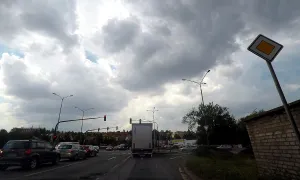
Real photos taken near the monument


Zdroj a licence jsou uvedeny u každého snímku.
Tips from visitors
No tips yet. Be the first!
Log in and add your tip.
Sources and literature
Photos: Palickap / CC BY-SA 4.0 — Wikimedia Commons. The author and licence also appear when you hover over the image.
Faktickým podkladem tohoto textu byl článek na Wikipedii, jehož autory jsou přispěvatelé Wikipedie. Článek je dostupný pod licencí CC BY-SA 4.0.
Location on the map

Příběhy a pověsti
Legendy, pověsti a příběhy spjaté s touto památkou
Fotografie návštěvníků
Zatím žádné fotografie. Buďte první, kdo přidá fotografii z návštěvy!
Log in a přidejte svou fotografii nebo hodnoťte.
Za ověřenou návštěvu v aplikaci získáte víc bodů — poznáme podle GPS, že jste na místě.
Reviews and comments