



Sudkův Důl Granary
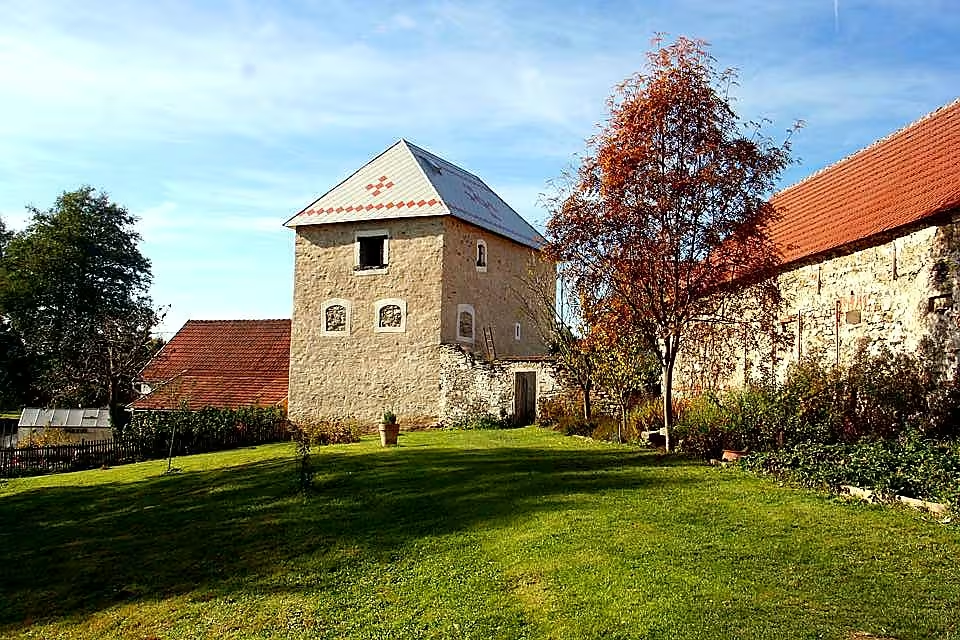
Sudkův Důl, originally a fortress of late goth, is located in the village Obrataň, Pelhrimov district. This cultural monument is today protected as a granary and represents a unique example of historical architecture, which has preserved its original character despite changes over the centuries. It attracts attention not only by its history and construction, but also by being one of the few cases in the Czech Republic where prints of wooden construction have been preserved, which explain the original construction and its use.
The history of Sudek's Mine dates back to the 15th century, when the fort was probably founded by Jan Sudek of the Mine around 1500. This historical context is a period of political change, foreign wars and cultural development of Gothic architecture in Bohemia. The first written references to the owners of the noble estate in the village of Dol dates back to 1408, followed by another mention of Jan Sudek from Dol in 1475. The claim was mentioned in writing as a seat with the Court until 1535.
The architecture of the Sudkova Mine is characteristic of the late Gothic style, which is particularly apparent on a simple rectangular plan of the building with internal dimensions of 5 × 10 m in three floors. The construction was built from quarry stone on lime mortar, which is typical of Gothic architecture. During the 30-year war, the former fort was converted into a farmhouse and later converted into a granary, the original Gothic building being preserved. The reconstruction was relatively considerate, which enabled many historical elements to be preserved.
The ownership and administration of the Sudko Mine have undergone several changes. After centuries as a noble residence, the fortress in the 17th century was part of a farmhouse held by the Dvořák family from 1650 to 1998. This family has remained owner for over 350 years.
The key events in the history of Sudkov Mine are its transformation from fortress to farmhouse and then into granary. An interesting feature is the preserved prints of the wooden structure which explain the original structure and its use. These prints provide a unique insight into the life and technology of the building from that time.
Today Sudkův Důl is protected as a cultural monument and represents an important historical value. Its unique architecture and preserved elements of the Gothic era make this object important for understanding the history of the region. Although the original function of the fort has been changed, its historical value remains unchanged.
Sudkův Důl is now accessible for visiting and offers a unique opportunity to become acquainted with the history and architecture of the late Gothic era. It's a place worth contemplating the variability of time and preserving cultural heritage. Visit Sudkův Důl is an opportunity to explore a unique piece of Czech history and appreciate its importance for regional historical care.
Then and now
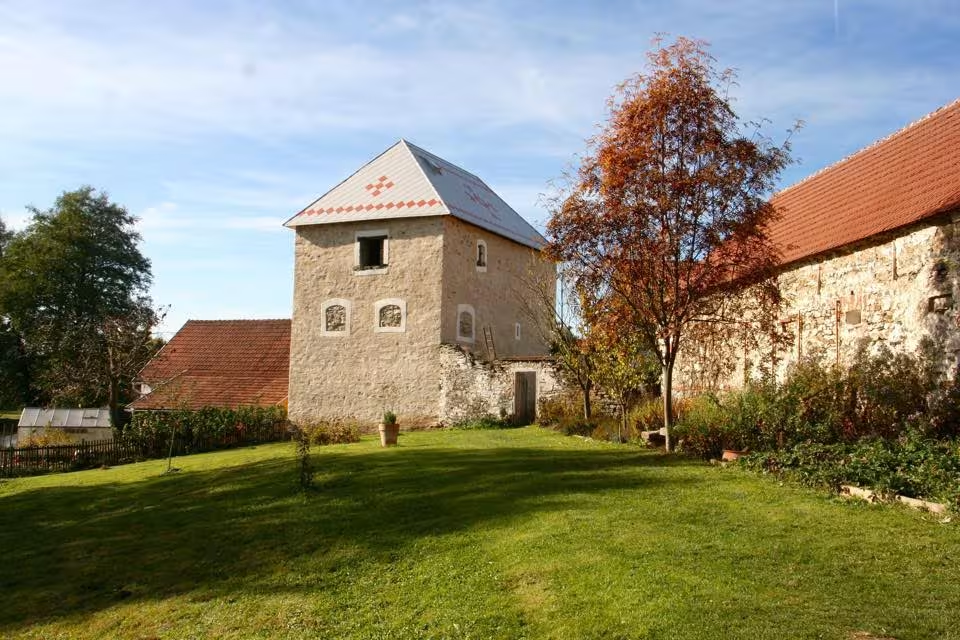
Drag the slider to compare how the landmark may have looked when it was built with the view today.
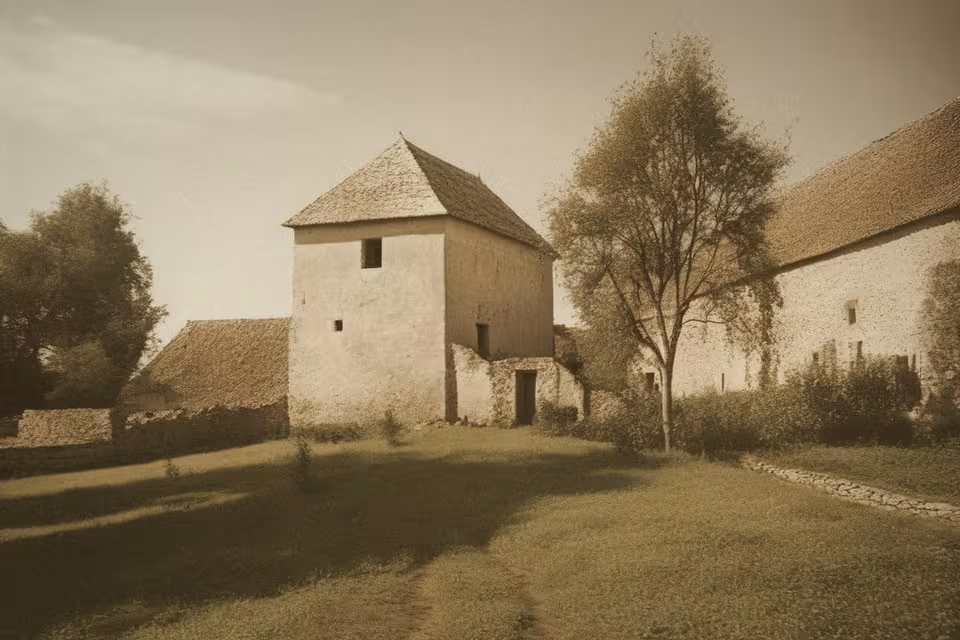
The historical appearance on the left is an AI-generated visualisation and serves as inspiration only.
Historical milestones
- 1408
- First written mention of the holders of the nobility.
- 1475
- The mention of Jan Sudek from the mine.
Architectural development
During the 30-year war, the fortress was converted into a farmhouse and later converted into a granary. The original Gothic structure was preserved, although some elements were removed or changed.
Historical events
- 1408
- First written mention of the holders of the nobility.
- 1475
- The mention of Jan Sudek from the mine.
- 1535
- Written mention of the mansion with the court.
Points of interest
- It is one of the few cases in the Czech Republic where prints of wooden construction were preserved. These prints explain the original construction and its use. - The construction has a simple rectangular plan with internal dimensions of 5 × 10 m in three floors. It was built from quarry stone on lime mortar. - During the Thirty Years' War, the former fort was converted into a farmhouse and later converted into a granary. - Rod Dvořák held this estate for more than 350 years, from 1650 to 1998. The fort was probably founded by Jan Sudek of the mine around 1500.
Guide
Show guide text
This text was created by artificial intelligence and has not been editorially reviewed. It may contain inaccuracies.
Welcome to the village Obrataň. You just stopped in front of one of the most important historical points in this area. You're standing right in front of a building called Sudkův Důl. At first glance, it may seem to you that it is only a solid, sublimate structure that fits quietly into the surrounding landscape, but pay attention to it for a while. Feel the quiet, almost tangible presence of history that radiates from these walls. This building is not just a simple cluster of stones and mortar; He is a living witness for centuries who has endured countless changes, transformations and human destinies, and yet he still stands here to tell us his story. Feel the weight of time floating around this monument, and let yourself drift through the atmosphere of the place where the past meets the present.
Let us now go back together deep into the past to understand why this place is standing right here and how it has become what it is today. The roots of this site go much further than they might seem. Already in 1408, the first references to the holders of this aristocratic residence appear in the period of written records. This clearly tells us that the place you are standing on was strategically important and significant over 600 years ago. But the very building that you are now observing has its own very specific story that evolved in the rhythm of medieval society. In the middle of the fifteenth century, namely around 1475, the name of Jan Sudek from the Doll is beginning to appear in connection with this place. It is he who is considered the key figure, which probably founded the original late Gothic fortress around 1500. Imagine the time when security, defensibility, and strength of the mansion were absolutely necessary for every nobleman. What you see today as a granary was originally a defense, a fixed point in the landscape that was meant to protect the owner, his family and his property. Over the centuries, the construction has undergone many changes. Its original military and defensive character gradually gave way to more practical needs until the building was converted into a granary. This transformation from fortress to storage space is a fascinating example of how architecture adapts to the changing needs of mankind.
Now pay attention to the architecture itself and to what you can see right in front of you. Look at the material this building is hovering from. See those rough, unworked stones? These are quarry stones that were extracted in the surrounding area and then connected with calcium mortar. This combination added its unmistakable strength and incredible resistance to all elements. Despite the passing of hundreds of years, this structure is still held together and seems extremely robust. The building has a very simple but functional rectangular plan. Its internal dimensions are approximately five meters to ten meters, making it a relatively compact but very stable object. If you could look inside her, you would find that the building is spread out to three floors. This vertical organisation of space was crucial for its future use, especially when it served as a granary. Feel the weight and stability that this architecture brings to the environment. Every stone, every link in mortar, and every edge of this rectangular body is indicative of the craftsmanship of the people who took this building from plans to reality centuries ago.
Speaking of the history of this place, we can't forget the people who left their trail. Jan Sudek z Dolu is not just a name in the history book, it is a man who has built his power in this area and his future. Now, when you look at these walls, you can try to imagine his decisions, his efforts to secure his mansion and his family. He and the other holders of this place formed the face of Oretane as we know it today. Each layer of mortar and each laid stone bears the legacy of the people who lived here, worked and decided on the fate of the surrounding villages. This monument is a monument to their striving for stability and boom at a time that was often restless and full of uncertainties.
And now I want to invite you to something truly extraordinary, which makes this place absolutely unique within the whole Czech Republic. You may not see it at first sight, but it's a thing that fascinates historians and lovers of the past all over the country. Sudkův Důl is one of the very few cases where it was possible to preserve something absolutely incredible - prints of the original wooden structure. Imagine: the wood that was part of the building hundreds of years ago had long since died, but it had left its eternal mark in the stone. These prints are like the invisible fingerprint of the past. They are an indispensable key which enables us to understand exactly how the original construction was built and how space was used in it. Thanks to these tracks, we can reconstruct the face of a building you'll never find anywhere else. It's a fascinating combination of soft wood and hard stone that speaks to us through centuries and allows us to see through time. It's a secret that's right before your eyes, hidden in the texture of stone.
Now that you know much more about Sudek's Mine and think of its rich history, I suggest you continue your search and be carried away by the atmosphere of this place. Take a look at the details of the stone, feel the calm that radiates this place, and try to imagine life in spirit in the time of John Sudek. Let yourself be inspired by the power of this place and its ability to survive for centuries. Thank you for choosing to visit this historic monument and devote your time to it. We wish you a pleasant continuation on your journey history and beautiful rest of the day in the village Obrataň.
Tips for visitors
The best time to visit is late afternoon when the sun hits the Gothic wall and highlights its historical texture. It is an ideal time for a quiet viewing of architecture without large crowds.
The monument can be reached by car or public transport.
We recommend to bring comfortable shoes suitable for uneven terrain and drinking water. For families with children, a tour of the historical building is an interesting lesson in history in the field that develops an imagination about life in the past.
For photography are the best places near the entrance portal where you can capture details of the original Gothic building. The best light is during the so-called gold watch before sunset.
There are no other specific places to visit in the area, so it is recommended to pay attention to the granary itself.
Frequently asked questions
Can the monument be visited?
This is a residential or farm building, not a museum with opening hours. Please view it from public space and respect the owners' privacy. We have no information about access to the interior.
Where is the monument?
Location: Obrataň. The map on this page shows the exact spot.
Why is the monument protected?
It is listed in the Central List of Cultural Monuments of the Czech Republic as a cultural monument (register no. 1000157700).
Businesses nearby
Do you run a restaurant, accommodation, shop, museum, rental, wellness or other visitor service near this monument? Show yourself directly to the people heading to it — this is how they will see you in the app and on the web:
Nearby
🏰 Historic sites (21)
- Museum of isolators and lightning jiteste 4.3 km
- Marian Columns 4.4 km
- Museum isolatory 4.4 km
- Memorial to the fallen in World War I 4.6 km
- Castle 4.9 km
- Birojovice 5.2 km
- Agricultural machinery 6.7 km
- Castle Chýnov 8.3 km
- _ 8.4 km
- Vishnevice 9.0 km web
- TAXI - vemsitaxi. cz 9.1 km
- Patriotic poem 9.2 km
- Castle Dec 9.6 km
- Ruins Choustník 9.9 km
- Slavic Brotherhood Memorial 11.7 km
- Stráz Munich 12.3 km
- Castle Ratibořský Hory 13.0 km
- _ 13.3 km
- Memorial to victims of World War I 13.3 km
- sv Jan Nepomucký 14.3 km
🍽️ Restaurants and dining (29)
- Bistro Mark 2.6 km
- Bistro u viaduktu 2.7 km
- Café Wake up 4.2 km Táborská 116
- Beer bar 4.3 km Tábor 95
- Chernovická publika 4.4 km
- Dao Asian Restaurant 4.4 km web
- U Cross 5.9 km
- Guesthouse Pacovka 7.8 km
- na Křive 8.3 km
- Bowle 8.4 km
- na Radnici 8.4 km
- U Calivods 9.0 km Antonín Owls 383 602 421 412
- Racing Dining Room on Rose 9.1 km Malovcova 293 565 442 129; 731 440 968 web
- Restaurant On Rose 9.1 km
- Asia bistro - Giang Nguyen Truong 9.2 km Jana Autengruber 167 + 420 608 148 293
- Restaurants and pizzeria on the square 9.2 km nami. Liberties 170 web
- Na Pansk 9.3 km nami. Freedom 77
- Retro Creams 9.7 km
- Old management 10.2 km
- Hossovka Na Hřiště 10.5 km Choustník 168 + 420720619100
🏨 Accommodation (5)
- Mlyn 4.1 km
- Tábor Chabrovice 10.2 km
- Guesthouse U str. 12.4 km
- Angel Dvór 14.7 km web
- U Cock 14.9 km
🚲 Rentals and sport (1)
- Pool Chýnov 8.6 km
🥾 Hiking and nature (71)
- _ 1.4 km
- Svidník 2.7 km
- Jewish Party 3.1 km
- Raseliniště u Vintířova 4.2 km
- Kejtov meadows 4.5 km
- Hroby 5.3 km
- Blanick 5.9 km
- Kladrub Hora 6.0 km
- Kladrub Hora 6.2 km
- Cetoraz 6.8 km
- Hires 7.0 km
- Chynov Cave 7.3 km
- Paco hora 7.4 km
- Na Lipici 7.5 km
- Spudna 7.7 km
- Hájez 7.9 km
- Jirkova rocky 8.2 km
- Castle Park 8.2 km
- Study 8.3 km
- Castle Park 8.3 km
Accommodation nearby
Themed route
1. Sudkův Důl (granary), historical object, you will see the architecture of this important building. 2. Pond of granaries, area, explore the area directly at the wall of the monument. 3. Internal exposition, museum space, look at historical details and exhibited objects inside the building.
Seasonal recommendations
Spring: In spring nature wakes up around the granary and the surrounding landscape gets fresh green color. The morning sun gently illuminates the stone walls, creating a very calm and optimistic atmosphere. We recommend taking layered clothes because the weather can be variable, and best to visit the place in the morning when there is the most calm.
Summer: In the summer months the granary is heated by the sun and the surrounding area is full of life. Strong light highlights the texture of the historical building and extends the time for the tour. Because of the warmth and possible increased interest of visitors, it is advisable to come first thing in the morning so that the sun does not burn you. Don't forget light substances and plenty of fluids.
Autumn: Autumn season brings golden shades of leaves to Obrataň and often morning fog, which provide a mysterious atmosphere to the memory. The low sun creates long shadows and highlights the historical character of the building. It is good to have firmer shoes on hand because of wet terrain and warmer sweater, ideal time to visit is afternoon for beautiful colors.
Winter: Zimą works Sudkův Důl very hard and monumentally, especially when its walls are covered with frost or snow. The atmosphere is quiet and lonely, allowing deep perception of history. Due to the short days plan to visit during the time of the greatest light and do not forget the very warm clothes and quality shoes against the cold.
Visualizations and artistic views


The visualisations are generated by artificial intelligence and serve as inspiration.
Photos from the area
Real photos taken near the monument

Zdroj a licence jsou uvedeny u každého snímku.
Tips from visitors
No tips yet. Be the first!
Log in and add your tip.
Sources and literature
Photos: Yslcz / CC BY-SA 4.0 — Wikimedia Commons. The author and licence also appear when you hover over the image.
Faktickým podkladem tohoto textu byl článek na Wikipedii, jehož autory jsou přispěvatelé Wikipedie. Článek je dostupný pod licencí CC BY-SA 4.0.
Location on the map
Příběhy a pověsti
Legendy, pověsti a příběhy spjaté s touto památkou
Fotografie návštěvníků
Zatím žádné fotografie. Buďte první, kdo přidá fotografii z návštěvy!
Log in a přidejte svou fotografii nebo hodnoťte.
Za ověřenou návštěvu v aplikaci získáte víc bodů — poznáme podle GPS, že jste na místě.
Reviews and comments