



Svatováclavský meč Mosque
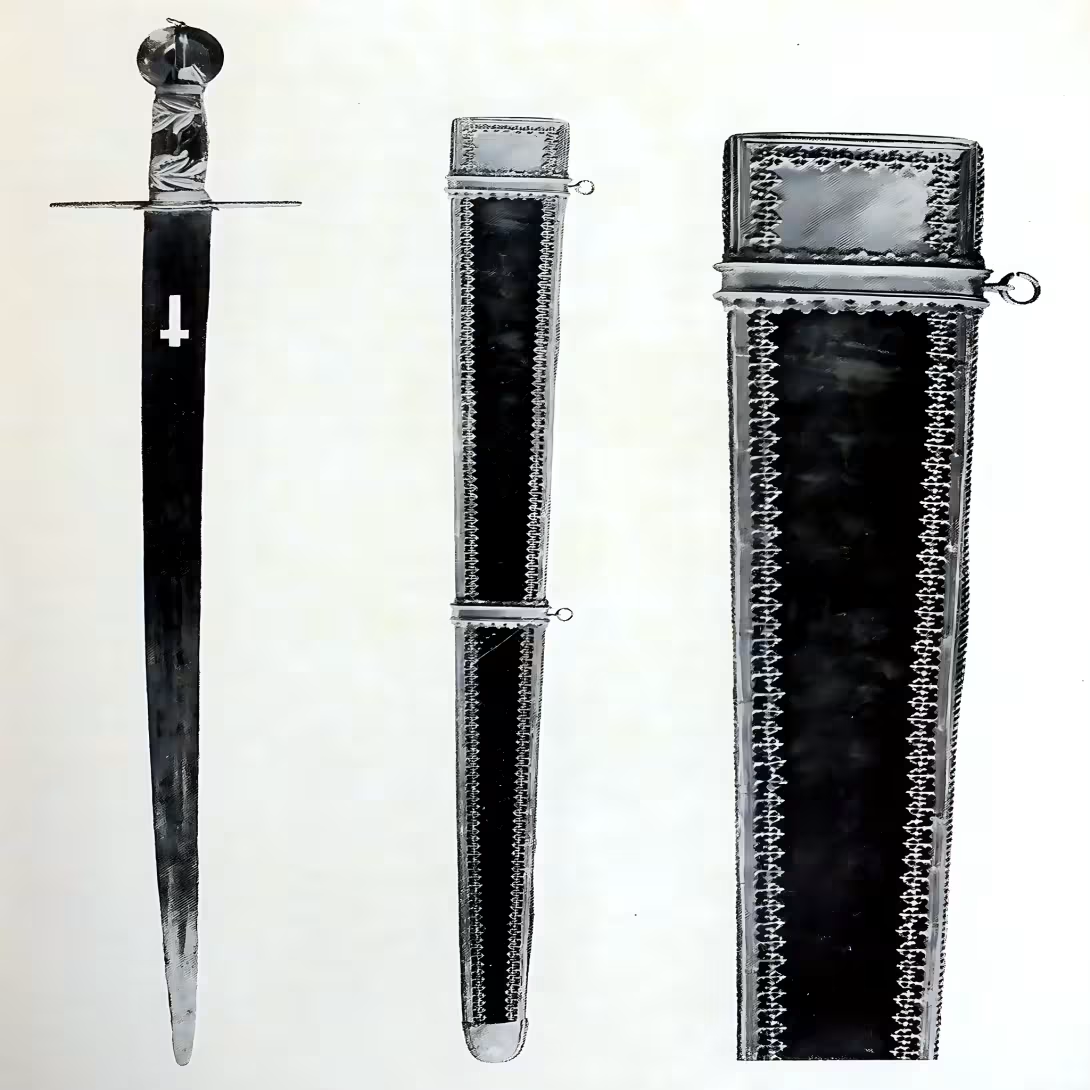
Svatováclavský meč is one of the most valuable artifacts associated with the Czech royal ceremony. Since time immemorial, he's been part of the Saint's treasure, and in the coronation ceremonies, he's played a key role in the engraving that legitimizes royal power.
The origin of the sword is traditionally attributed to the Prince of St. Wenceslas. The first documented mention in historical sources dates back to 1333, but the sword was already part of a rooted tradition at that time. The individual parts of the sword were created gradually: the iron blade dates back to the tenth century, the decorated cladding was made in the thirteenth century and the textile decoration is expected from the time of Charles IV.
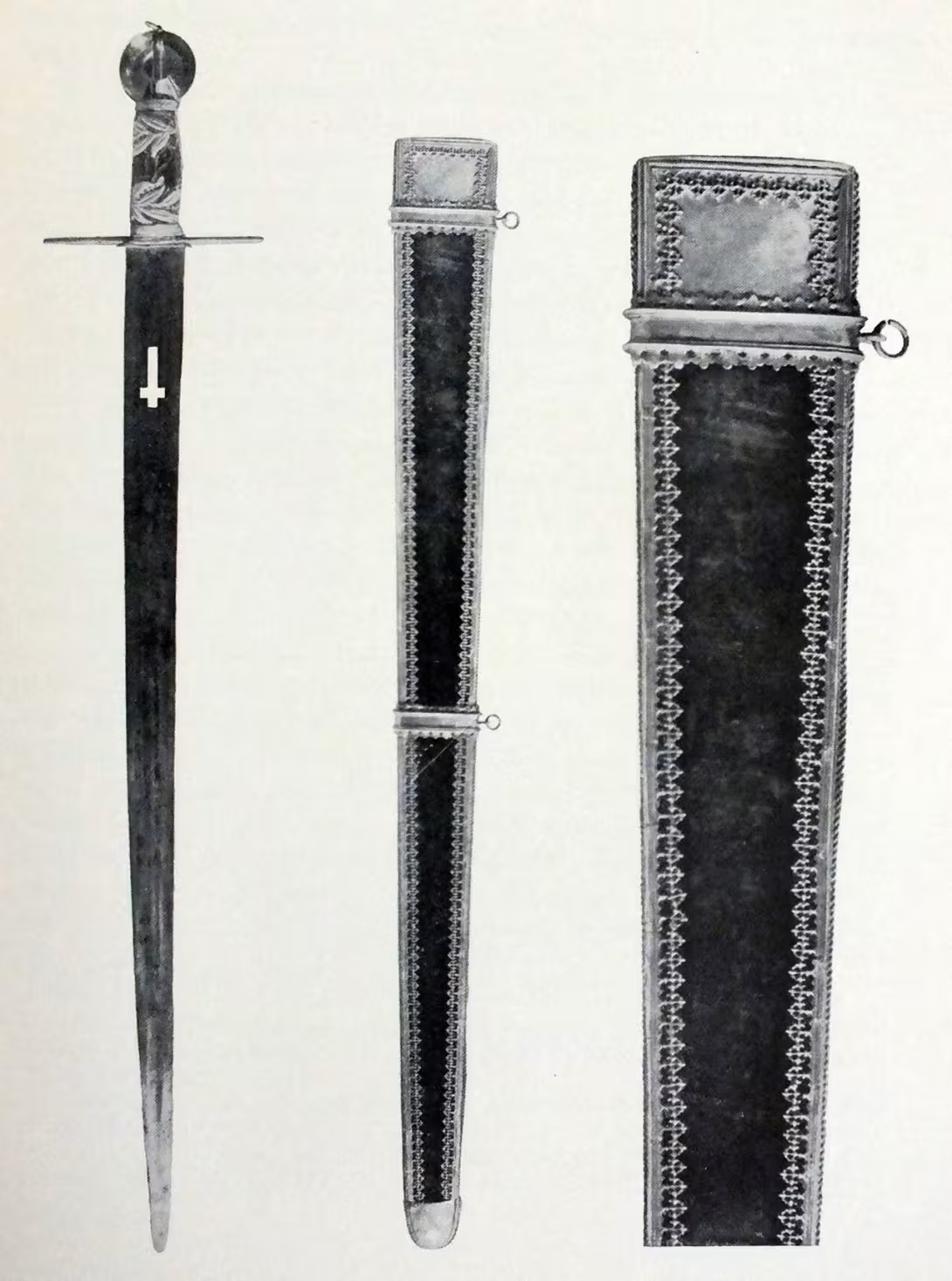
The sword is a craft masterpiece. The iron blade measures 72 centimeters in length, 45 millimeters in the widest place. The characteristic element is a cut-out cross-shaped opening (forty-five millimeters × twenty millimeters). The wooden handle is covered with yellow-brown fabric and the velvet is decorated with an ornament of laurel branches made of thick silver threads. These details show that the sword was not only a practical tool, but a highly representative object.
During the coronation ceremony, the sword had a precise function. The bishop's sanctified sword was fortified by a new-born ruler, then put him back on the altar. At the end of the coronation, the sword belonged to the knight St. Wenceslas. In this way, the sword became the central element of the legitimacy of the royal power and the stylowhide moment for the knights of the order.
The interesting thing is that the sword has never been stored in the royal jeweler above the St. John's Chapel where the crown, apple and scepter were traditionally kept. Instead, he remained in the temple treasure of the saints. This difference had a profound reason: the sword was considered primarily a sacramento relic connected with St. Wenceslas, only in the second place as part of the official coronation shelves. By this position, the sword was different from the rest of the Insigies in the awareness of Czech rulers and priests and highlighted its connection to the Czech political and spiritual identity.
Then and now
Drag the slider to compare how the landmark may have looked when it was built with the view today.
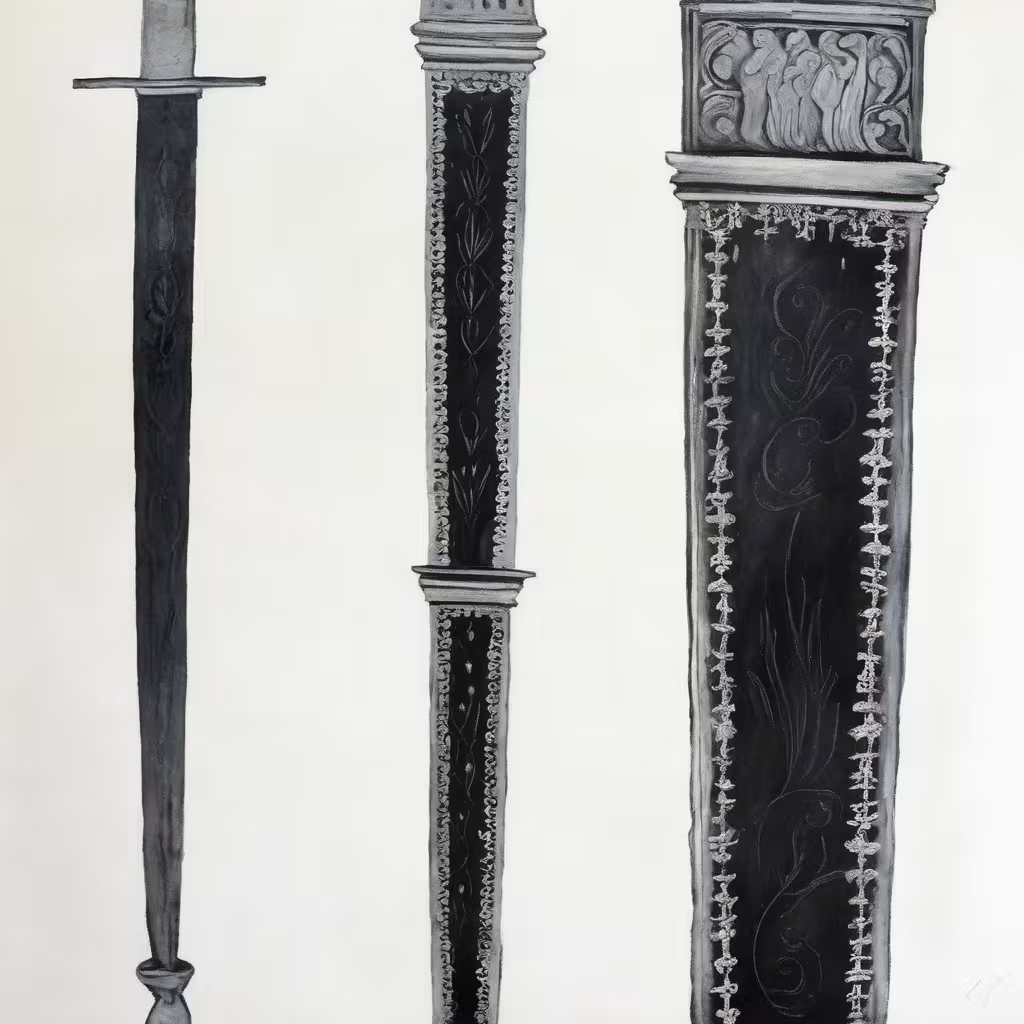
The historical appearance on the left is an AI-generated visualisation and serves as inspiration only.
Historical milestones
- 1333
- First mention of the sword in historical sources
Architectural development
The sword is made up of an iron blade of probably 10th century and 13th century wood. The handle is coated with a yellow-brown fabric and velvet with an ornament of laurel branches made of silver thread, which is probably from the time of Charles IV. The blade has a specific cut hole in the shape of a cross.
Historical events
- 1327
- The mosque has been consecrated
- 1420
- The mosque was damaged during the Hussite Wars
Owners
St. Vitus Monastery
Points of interest
- Svatováclavský meč is one of the most valuable artifacts associated with the Czech royal ceremony. - The origin of the sword is traditionally attributed to the prince St. Wenceslas, the first documented mention in historical sources dates back to 1333. - The sword is a craftsmanship masterpiece with an iron blade measuring seventy-six centimeters and a characteristic sawed-off cross-shaped hole. - During the coronation ceremony, the new-born monarch waxed the sword, put it back on the altar and then fit the knight of St. Wenceslas. - The sword has never been stored in the royal gem above the holy chapel, but remained in the holy temple treasure as a relic associated with St. Wenceslas.
Guide
This guide is narrated by a synthetic voice generated by artificial intelligence.
Show guide text
This text was created by artificial intelligence and has not been editorially reviewed. It may contain inaccuracies.
The Wenceslas Sword, also known as the coronation sword, is a medieval sword that was used at the coronations of Czech kings. It has belonged to the St. Vitus treasure since ancient times.
It got its name from the fact that it allegedly originally belonged to Prince Saint Wenceslas. It first appears in historical sources in the year 1333. However, the individual parts are from different periods. The blade apparently dates from as far back as the tenth century, the hilt from the thirteenth century, and the textiles probably from the time of Charles the Fourth.
The iron blade is 76 centimeters long and at its widest point measures 45 millimeters. It has a cross-shaped hole filed into it measuring 45 by 20 millimeters. The wooden handle is covered with yellowish-brown fabric and velvet. Laurel branch ornaments are embroidered on it with strong silver threads.
The sword had a fixed place during the coronation. Bishops blessed it and the ruler girded it on. Then he laid it back on the altar. At the end of the coronation mass, the newly crowned king used it to knight the knights of Saint Wenceslas.
For centuries the sword was a full-fledged coronation symbol. Yet it never lay in the royal treasury above the Saint Wenceslas Chapel together with the crown, orb, and scepter. It was kept in the cathedral treasure of St. Vitus. At least in earlier times, people regarded the sword primarily as a Saint Wenceslas relic, and not exclusively as part of the coronation jewels.
Tips for visitors
Best time to visit The Saint Clave sword is in the spring or autumn season when the weather is pleasant and fewer people. This time of year is ideal for exploring historical monuments without unpleasant temperature extremes.
When visiting, remember comfortable shoes and clothes suitable for walking on stone tiles. Also remember to bring a camera or a mobile phone, because the St Vitus Cathedral offers many photographs of worthy details and architectural gems.
The best time for a photograph is in the morning or in the evening, when the sunlight lights up the Cathedral with a special light. The best places for photos are especially from high towers or from nearby alleys where you can capture a general view of the memory.
In the vicinity of St. Vitus Cathedral there are several interesting locations. You can visit Prague Castle, which is just a few minutes walk from the Cathedral, or explore the historic streets of Old Town. For families with children it is advisable to visit the Museum of the City of Prague, where there is an interactive exhibition.
Frequently asked questions
Can the monument be visited?
We have not verified whether this monument is accessible. Please ask the owner or operator, or the local municipal office.
Why is the monument protected?
It is listed in the Central List of Cultural Monuments of the Czech Republic as a national cultural monument. It is protected as part of a larger listed ensemble.
For kids
Imagine going back to the past, when the world was still full of mysterious horrors and wonderful discoveries. And now we are heading straight for the heart of Prague, where you will find Svatováclavský meč - one of the most beautiful Gothic mixtures in the city.
How did it look here? Who lived here? What happened here? Imagine you're a little knight who comes to Prague looking for refuge in the St. Clave monastery. The mosque was young then, but it already had a secret. It was like a big, gray lady telling you an amazing story about the king and his love.
Businesses nearby
Do you run a restaurant, accommodation, shop, museum, rental, wellness or other visitor service near this monument? Show yourself directly to the people heading to it — this is how they will see you in the app and on the web:
Nearby
St. Vitus Cathedral in Prague
Accommodation nearby
Themed route
Thematic cruise route around the Svatoclav sword
1. St Vitus Cathedral - Type: Church, monument of architecture - Why it is worth a visit: This Gothic cathedral is not only one of the most important spiritual and historical places in Prague, but also home to the Svatoclav Sword. Its impressive architecture, rich reliefs and interior with the chapel of St. Wenceslas offer visitors a profound impression of the course of Czech history.
2. St. Wenceslas Chapel - Type: Chapel, part of the cathedral - Why is it worth visiting: Located in the north wall of the main ship of the cathedral, the chapel of St. Wenceslas is the place of the original location of the Svatoclav sword. Its historical and spiritual importance combines visitors with the memory of the first Czech prince.
3. The Tower of Saint Vitus - Type: Tower, part of the cathedral - Why is it worth visiting: The highest tower in Prague Castle offers a unique view of the whole Prague. Its peak is attainable by stairs, allowing visitors to gain new views of the city and cathedral.
4. Castle tank - Type: Historical courtyard - Why is it worth a visit: The Castle Station is the centre of Prague Castle, where history and the present meet. It is a place for relaxation between exploring monuments and a wonderful view of Prague from its positions.
This route offers visitors a comprehensive impression of the historical and cultural importance of the Prague Castle, especially through the Svatoclav Sword and its surroundings.
Seasonal recommendations
Spring: During the spring season, Svatováclavský meč is particularly lit by sunlight, which revives historical architecture and creates attractive shading. Nature is awakening from winter, with flowering shrubs and trees that give the landscape a life. The atmosphere is full of recovery and hope, making the visit peaceful and pleasant. For optimal experience we recommend visiting the memory in early afternoons, where there are fewer people, and clothing suitable for mild temperatures with the possibility to add or remove layers as needed.
Summer: In summer, Svatováclavský meč becomes a popular destination thanks to ideal temperatures and long days that allow you to explore the memory even in the late afternoon. The sunlight amplifies the colour of architectural details, but it can also be intense, making face protection important. In the main summer season, it is recommended to arrive early in the morning or late in the afternoon to avoid peak hours and crowds. Hot clothes with short gloves and a protective cap are ideal for long tours.
Autumn: In the autumn months, Svatováclavský meč offers a unique atmosphere when tree leaves color and fall, creating gold and red rugs under their feet. The sunlight is less intense, which brings a calm and mild atmosphere to explore the sights. This time of year is ideal for visiting between hours when the crowd is shrinking. Clothes should be adapted to mild temperatures with the possibility of adding layers if the weather is colder.
Winter: The winter visit to the Svatoclav Sword offers unique experiences, where historical architecture shines in warm colour shades and is often covered with snow. The atmosphere is calm and quiet, which allows you to enjoy the memory without many people. Hot clothes with waterproof top piece and protective shoes are essential for comfortable walks, especially when snow is in place.
Visualizations and artistic views


The visualisations are generated by artificial intelligence and serve as inspiration.
Tips from visitors
No tips yet. Be the first!
Log in and add your tip.
Sources and literature
Photos: Josef Schránil / Public domain, rozlišení zvýšeno umělou inteligencí — Wikimedia Commons. The author and licence also appear when you hover over the image.
Faktickým podkladem tohoto textu byl článek na Wikipedii, jehož autory jsou přispěvatelé Wikipedie. Článek je dostupný pod licencí CC BY-SA 4.0.
Příběhy a pověsti
Legendy, pověsti a příběhy spjaté s touto památkou

Fotografie návštěvníků
Zatím žádné fotografie. Buďte první, kdo přidá fotografii z návštěvy!
Log in a přidejte svou fotografii nebo hodnoťte.
Za ověřenou návštěvu v aplikaci získáte víc bodů — poznáme podle GPS, že jste na místě.
Reviews and comments