






Trstenická stezka Business trip
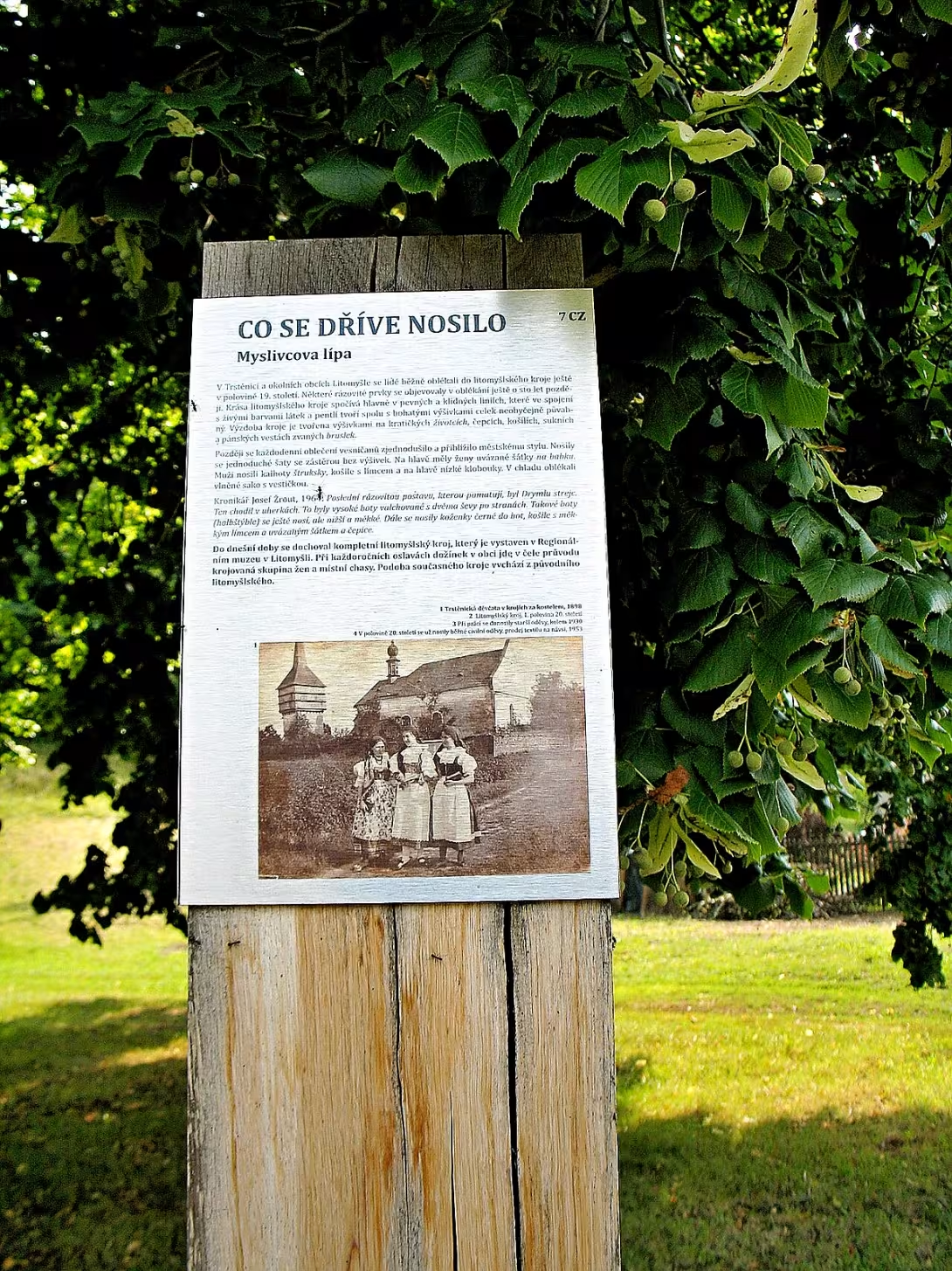
Trstenická stezka, also known as the Czech or Royal Route, is a historic trade route that once connected Bohemia with Moravia and potentially Hungary. This ancient pathway stands out as one of Europe's most significant east-west routes, facilitating commerce from Western Europe to regions like the Baltic Sea and the Orient. Its importance lies not only in its role as a major artery for transporting goods such as bread, salt, fish, linen, flax, grain, iron, wine, wood, and more across Central Europe but also in its contribution to cultural exchanges during its time of use.
The origins of Trstenická stezka are shrouded in mystery due to the scarcity of written records. However, it is assumed that this route has been significant since ancient times, serving as a vital link for trade and communication across Central Europe. The name "Trstenická" was attributed to the route in the 19th century by Hermenegild Jireček, who named it after the so-called zemská brána (land gate) at Tršnice, marking its passage from Bohemia to Moravia.
The exact path of Trstenická stezka remains a subject of scholarly debate. Historical sources suggest that while some key points along the route are agreed upon by historians—such as Litomyšl and the hradiště Vratislav (now Vraclav near Vysoký Mýt)—the precise course is uncertain, with multiple theories proposed for its trajectory. This uncertainty extends to various sections of the route, including the passage through dense forests on the border between Bohemia and Moravia, where more than ten different versions of the path have been suggested.
Despite these uncertainties, Trstenická stezka's role as a major trade artery is undisputed. During its time of use, Central Europe was a vibrant hub for trade and cultural exchange, with this route playing a crucial part in connecting Western Europe with Eastern regions. The movement of goods along the route facilitated not only economic transactions but also the exchange of ideas and cultures across the continent.
Today, Trstenická stezka remains an intriguing subject for historians and tourists alike. While its exact path may be debated, the historical significance of this ancient trade route is undeniable. Visitors interested in exploring the rich tapestry of Central European history will find Trstenická stezka a fascinating testament to the region's past as a crossroads of commerce and culture.
The enduring legacy of Trstenická stezka invites modern explorers to delve into its mysteries and appreciate its historical importance. As you walk along what is believed to be part of this ancient route, imagine the countless travelers who once traversed these paths, carrying goods and stories across Europe. This monument stands as a silent witness to centuries of history, offering a unique glimpse into the past for those willing to explore it.
Historical milestones
- prehistoricky
- Předpokládané používání jako obchodní cesta.
- 19. století
- Jméno 'Trstenická stezka' přiděleno Hermenegildem Jirečkem.
Historical events
In the 19th century, Hermenegild Jireček named the route 'Trstenická' after the so-called zemská brána (land gate) at Tršnice, which marked its passage from Bohemia to Moravia.
The significance of the route as a major trade artery has been recognized since ancient times, although specific historical events are not well-documented.
Points of interest
– Despite its historical significance, Trstenická stezka was named in the 19th century by Hermenegild Jireček, long after it had been used as a trade route. This highlights how some aspects of history are reconstructed or reinterpreted generations later.
– The exact path of Trstenická stezka is still debated among historians, with more than ten different versions proposed for its course through the dense forests on the border between Bohemia and Moravia. This uncertainty adds an element of mystery to the route's historical narrative.
– While it was a major trade artery connecting Western Europe to Eastern regions, Trstenická stezka also facilitated cultural exchanges, serving as a conduit not just for goods but for ideas and traditions across Central Europe.
– The name "Trstenická" is derived from the zemská brána (land gate) at Tršnice, marking its passage from Bohemia to Moravia. This specific geographical feature underscores how natural landmarks often played crucial roles in historical trade routes.
– Today, despite uncertainties about its precise path, Trstenická stezka remains a popular subject for historians and tourists, offering an intriguing glimpse into the vibrant history of Central European commerce and culture.
Guide
This guide is narrated by a synthetic voice generated by artificial intelligence.
Show guide text
This text was created by artificial intelligence and has not been editorially reviewed. It may contain inaccuracies.
Welcome to the historic Trstenická stezka, a remarkable testament to the vibrant trade routes that once connected Bohemia with Moravia and possibly Hungary. As you stand here, imagine yourself traversing this ancient path where merchants and travelers exchanged goods and stories from distant lands.
The Trstenická stezka, also known as the Czech or Royal Route, was one of Europe's most significant east-west trade routes. It facilitated commerce between Western Europe and regions as far-flung as the Baltic Sea and the Orient. Goods such as bread, salt, fish, linen, and flax journeyed along this route, weaving a tapestry of cultural and economic exchange that shaped the history of Central Europe.
Though its exact path has been lost to time, the importance of Trstenická stezka is undeniable. Its origins trace back to prehistoric times when it was likely used as an early trade route, long before it gained recognition in historical records. By the 19th century, this ancient pathway had been named 'Trstenická stezka' by Hermenegild Jireček, a historian who sought to document and preserve the rich tapestry of Czech history.
As you explore this area, take a moment to soak in the atmosphere surrounding you. The landscape tells stories of countless journeys made over centuries, where traders navigated through forests and across rivers, connecting communities and cultures along their way.
A key figure associated with Trstenickka stezka is Hermenegild Jireček himself. His work in naming and documenting this route highlights how history is often reconstructed or reinterpreted generations later. It reminds us that our understanding of the past is continually evolving as new insights emerge from the shadows of time.
One intriguing aspect of Trstenická stezka is its mysterious nature; despite its historical significance, much about its exact path remains unknown. This enigma adds a layer of intrigue to your visit, inviting you to ponder the countless untold stories that have traversed this route over millennia.
As we conclude our journey here, I invite you to continue exploring and discovering more about Trstenická stezka. Let your curiosity guide you as you delve deeper into the history and mysteries of this ancient trade route. Thank you for joining me on this exploration, and may your adventures be filled with discovery and wonder.
Tips for visitors
The best time to visit Trstenická stezka is during the late spring through early autumn months, specifically from May to September. During this period, the weather is generally mild and pleasant, making it ideal for walking along the historic route. The surrounding landscapes are lush and vibrant, offering a picturesque backdrop that enhances the experience of exploring this ancient trade path.
Parking and transportation options near Trstenická stezka include both private vehicle access and public transport. Visitors can drive to nearby areas and find parking facilities; however, it's advisable to check local resources for specific details. Public transportation is available and can be a convenient way to reach the vicinity of the route. For the most current information on routes and schedules, consult a travel or transit app.
When planning your visit to Trstenická stezka, consider bringing comfortable walking shoes, as you'll likely spend time exploring the path on foot. A hat, sunscreen, and water are also recommended, especially during warmer months, to ensure comfort throughout your journey. Additionally, a camera or smartphone is useful for capturing the scenic views along the route.
For photography enthusiasts, some of the best spots along Trstenická stezka include areas where the path intersects with natural landscapes, such as wooded sections and open fields. Early morning or late afternoon light can provide beautiful lighting conditions for photos. Be mindful of the changing light throughout the day to capture the route's unique charm.
Nearby attractions within a 30-minute drive from Trstenická stezka include various historical sites that offer additional cultural insights into the region’s past. Exploring these nearby locations can enrich your visit and provide more context about the area's history. For families with children, consider planning activities or stops at local parks or museums to keep young visitors engaged.
Businesses nearby
Do you run a restaurant, accommodation, shop, museum, rental, wellness or other visitor service near this monument? Show yourself directly to the people heading to it — this is how they will see you in the app and on the web:
Accommodation nearby
Themed route
Thematic Walking Tour: Trstenická Stezka and Surroundings
1. Trstenická Stezka (Obchodní cesta) Type: Historical Trail Why Visit: Begin your journey on the Trstenická stezka, a historic trade route that once connected various regions of Europe. This trail offers insights into medieval commerce and cultural exchanges. Explore its scenic paths and learn about its historical significance through informational plaques along the way.
2. Local Craftsmen’s Workshop Type: Cultural Site Why Visit: Just a short walk from Trstenická stezka, this workshop showcases traditional crafts that have been preserved over generations. Witness artisans at work, creating unique pieces using age-old techniques, providing a tangible connection to the region's cultural heritage.
3. Historical Market Square Type: Urban Landmark Why Visit: A few minutes’ walk from the craftsmen’s workshop, this square was once a bustling hub for traders and locals alike. Today, it offers a charming glimpse into the past with its preserved architecture and occasional local markets, where you can experience traditional goods and lively community interactions.
4. Traditional Inn Type: Culinary Experience Why Visit: Located near the market square, this inn has been serving travelers for centuries. Enjoy a meal featuring regional specialties that have been passed down through generations. The cozy atmosphere and authentic recipes make it an ideal spot to relax and reflect on your journey.
5. Local Art Gallery Type: Cultural Venue Why Visit: Conclude your tour at this gallery, which is just a short stroll from the inn. It features works by local artists inspired by the region’s history and landscapes. The exhibits offer a modern perspective on traditional themes, providing a fitting end to your exploration of Trstenická stezka and its surroundings.
This thematic walking tour offers a blend of historical insight, cultural appreciation, and culinary delights, all within easy reach of each other, ensuring an enriching experience.
Seasonal recommendations
Spring: Spring at Trstenická stezka is a time when nature awakens, offering lush greenery and vibrant wildflowers along the historic trade route. The path becomes alive with the sounds of chirping birds and rustling leaves as daylight extends into the evening hours. This season provides a serene atmosphere for walking or cycling through the picturesque landscapes. Visitors should dress in layers to accommodate the mild but sometimes unpredictable weather, and early mornings are ideal to avoid any potential spring showers.
Summer: Summer at Trstenická stezka is characterized by warm sunshine and long days that make it perfect for exploring the outdoor beauty of this historic path. The lush greenery is at its peak, creating a picturesque backdrop for leisurely walks or cycling trips. This season attracts more visitors due to favorable weather conditions, so arriving early in the morning can help avoid crowds. Sun protection such as hats and sunscreen are essential, along with comfortable walking shoes and light clothing suitable for warm temperatures.
Autumn: Autumn transforms Trstenická stezka into a tapestry of rich colors, with foliage ranging from golden yellows to deep reds creating an enchanting atmosphere. The cooler weather makes it ideal for longer walks or bike rides without the summer heat. This season is less crowded compared to summer, providing a more tranquil experience. Visitors should wear layers to adjust to fluctuating temperatures and consider bringing a light jacket as evenings can be chilly.
Winter: Winter at Trstenická stezka offers a unique charm with its serene, snow-covered landscapes that create a magical setting for those who enjoy the quiet beauty of the season. The shorter daylight hours mean planning visits during midday to make the most of natural lighting. It's essential to wear warm clothing, including thermal layers and waterproof outerwear, as well as sturdy boots for potentially icy paths. While some sections might be less accessible due to snow, winter provides a peaceful escape from more crowded times of the year.
Visualizations and artistic views


The visualisations are generated by artificial intelligence and serve as inspiration.
Tips from visitors
No tips yet. Be the first!
Log in and add your tip.
Sources and literature
Faktickým podkladem tohoto textu byl článek na Wikipedii, jehož autory jsou přispěvatelé Wikipedie. Článek je dostupný pod licencí CC BY-SA 4.0.
Příběhy a pověsti
Legendy, pověsti a příběhy spjaté s touto památkou
Fotografie návštěvníků
Zatím žádné fotografie. Buďte první, kdo přidá fotografii z návštěvy!
Přihlaste se a přidejte svou fotografii nebo hodnoťte.
Za ověřenou návštěvu v aplikaci získáte víc bodů — poznáme podle GPS, že jste na místě.
Reviews and comments