






Tvrz (1000133737) Fortress
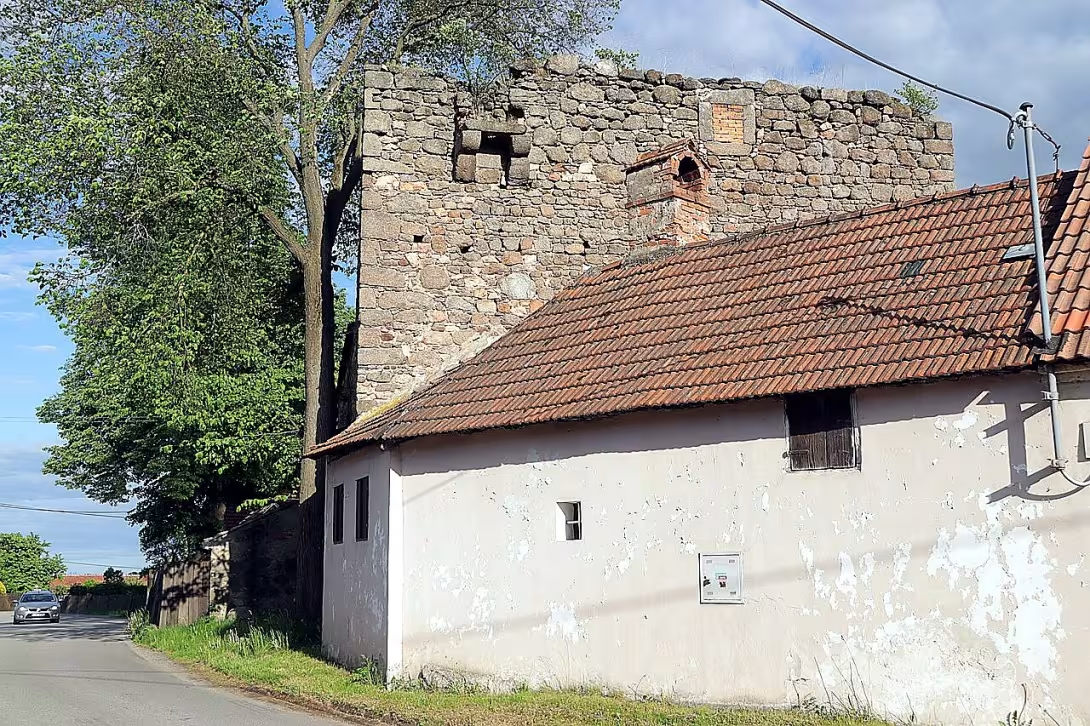
The Třebíč district is located on the road II / 390 and is one of the important cultural monuments of the Czech Republic. Its main preserved element is the residential stone tower, which attracts visitors with its architecture and history. This medieval quarry stone object with a massive plinth of plinth bears witness to a rich past. The construction was adapted to residential purposes by successive modifications.
The first written mention of Naramč dates back to 1104. In 1349 the village belonged to Mikuláš and Přáček from Náamče, while in 1373 the fort and settlement were sold to Bohuj from Vanče. In 1379, the building became the property of Bushka of Naramč. Subsequently, in 1410, it was acquired by the Stichovice brothers who held it until 1466 when Jan Konšelský z Jinošova took it over. In 1490, the Jan a Petr Mrakšové brothers won the fort. In 1561, it is recorded as desolate, suggesting abandonment or impairment. However, in 1690, it was purchased by the family of Tům, who modified it for residential purposes.
Architectural is a characteristic stone tower with a rectangular ground plan. The used quarry stone ensured strength and resistance. The tower is kept to the first floor; The remains of the second floor consist of the remains of the masonry above the roofed part. The massive plinth of the building gives the building a majestic appearance. The entrance to the tower is part of the adjacent residential building, which confirms gradual adaptation for housing. On the south side of the first floor there are cross and shooting windows, while on the second floor there are stone consoles, prevet and square window. The north side contains a modern window from around 1910.
The interior of the tower includes black kitchen and narrow stone staircase leading to the floor and cellar. The ground floor is divided into two rooms, one of which served as a larger living space. The upper floor has a roof and support columns of the next floor. These elements demonstrate the gradual adaptation of the fortress to the needs of its owners.
Today, the fortress of the Nárabek is protected as a cultural monument of the Czech Republic. Its history and architecture attract people interested in medieval times and local heritage. The construction reminds of the rich history of the region and of the important personalities who lived here. The fortress is worth visiting not only because of its historical value, but also as living proof of the past that has been preserved in local monuments.
The Fortress of the Rifle is not only an architectural relic but also a testament to the lives of people who once lived here. Its history reflects changes in the region over the centuries. The visit offers a unique opportunity to get acquainted with the past and appreciate its influence on the current picture of the local heritage.
Then and now
Drag the slider to compare how the landmark may have looked when it was built with the view today.
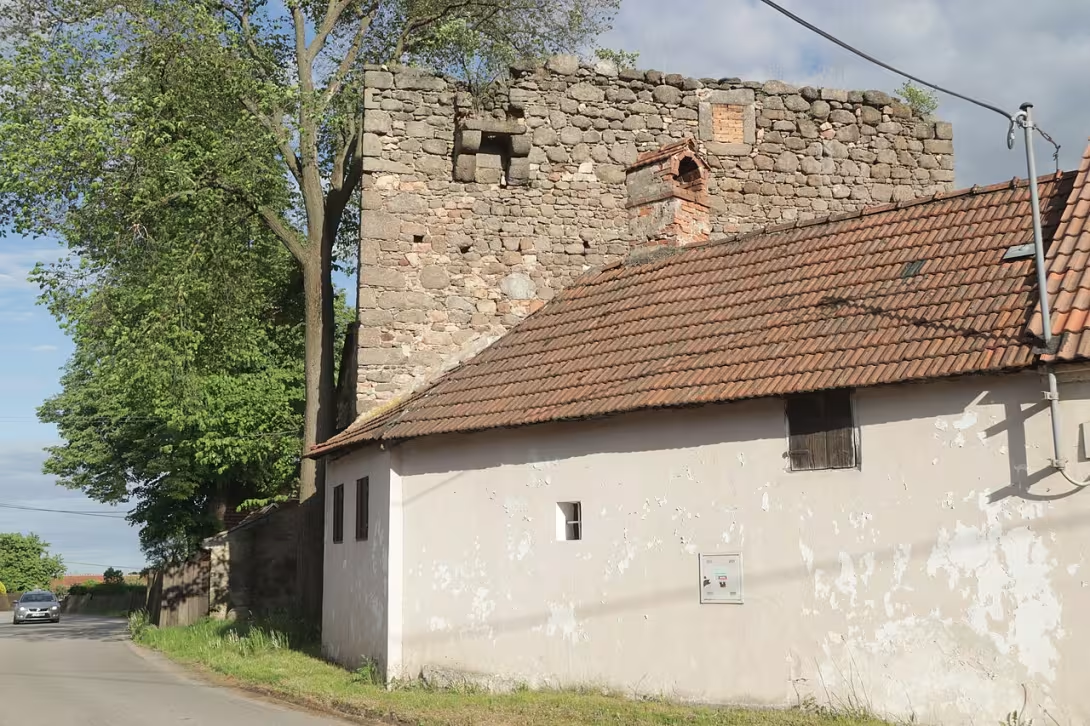
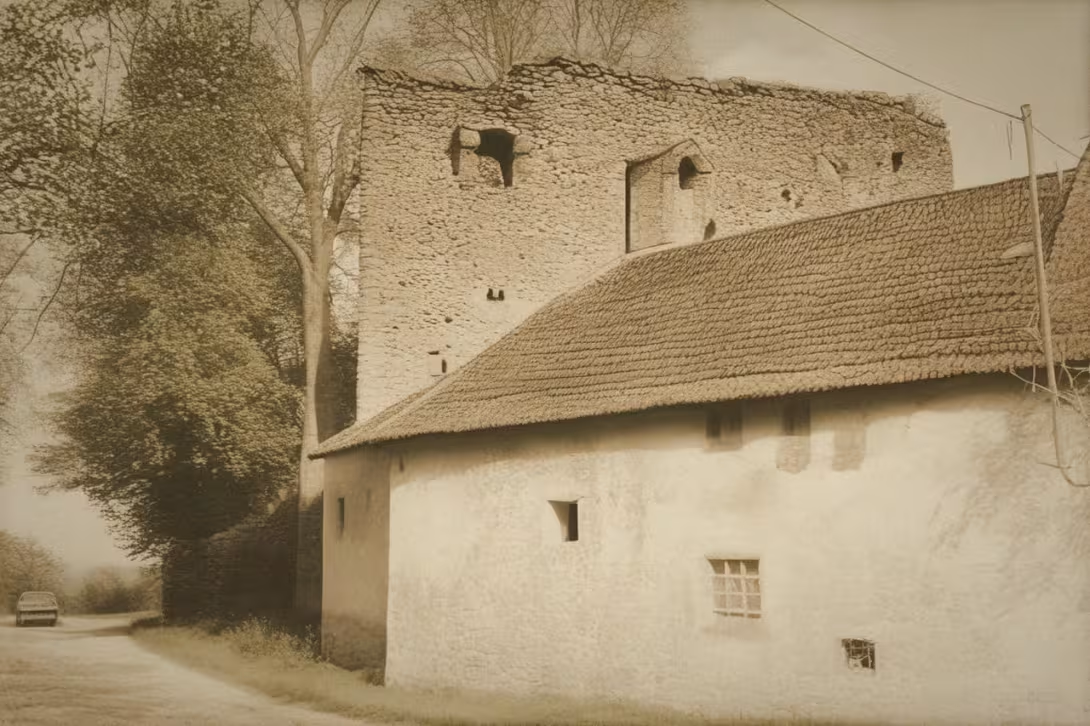
The historical appearance on the left is an AI-generated visualisation and serves as inspiration only.
Historical milestones
- 1379
- The fort belongs to Bushka of Nariamče.
- 1561
- The fortress is listed as desolate in historical records.
- 1690
- The family of Toom buying the fort and adapting it for residential purposes.
Architectural development
Originally a stone tower made of quarry stone with circumferential walls about two metres thick. Over the centuries, the building was modified, especially in the 17th century for residential purposes. The interior and exterior are visible elements from various periods, including modern window from 1910.
Historical events
1379: Patrimony of the fortress of Bushka of Naramče; 1561: Mention of the fort as a desolate building; 1690: Purchase of the Tům family's fortress and its adaptation for living.
Owners
1349: Nicholas and Přeček z Náramče; Bohuš z Vanče; Bušek z Náramče; 1410: brothers from Stichovice; Jan Konšelský z Jinošova; Jan a Petr Mrakšové; 1690: the Toom family.
Points of interest
- The first written mention of Naramč dates back to 1104. - The main preserved element is a residential stone tower made of quarry stone with a massive plinth. - In 1561, it was listed as desolate. - The tower has a rectangular plan and is preserved to the first floor. - The interior of the tower includes black kitchen and narrow stone staircase leading to the floor and cellar.
Guide
Show guide text
This text was created by artificial intelligence and has not been editorially reviewed. It may contain inaccuracies.
Welcome to the Fortress of the Rifle. You are standing in front of one of the most prominent and oldest witnesses to the history of this region. In front of your eyes is a massive stone tower, which, with its presence, dominates the surrounding landscape and immediately attracts the attention of every visitor with its raw power. Although this building may seem peaceful and harmonious today, its walls contain traces of centuries, a period of great prosperity and a moment of deep decline. Feel this atmosphere where there was once a need for security, the power of noble generations, and the everyday life of the people who lived here, worked and decided on the fate of their surroundings.
Let's move further into the past together and understand how this place came to be. Although this particular structure, which you are now observing, has its solid roots in the Middle Ages, the very existence of the place of the Narabec extends far further into the dark ages. The first written mention of this place dates back to one thousand hundred and four. This means that people have been running and living here for almost a thousand years before this tower was built in the form you see it now. If we look at the chronology of the fortress itself, the historical records clearly tell us that in the year one thousand and three hundred seventy-nine, this building was already a fixed residence, which belonged to the House of Bushky of Nariamče. At that time, it was not just a habitable place, but a symbol of power and a safe haven.
Now pay attention to the architecture itself and to what is right in front of you right now. Look at the construction of this tower. The main and most significant element you can observe is this residential stone tower with a rectangular plan. Notice the material from which it was built. It is a quarry stone that gives the building its authentic and rugged appearance. Every stone here has its place and together they form a massive entity that resists the trials of time. If you look towards the base of the tower, notice the massive plinth. This elevated part at the base of the building is not only an aesthetic detail, but it was used to strengthen the stability of the whole structure and to protect the lower parts of the tower from moisture and unintentional damage. It's fascinating to see architecture change over the centuries. Originally, the building was designed to defend and survive, but gradually, as the conditions were in the world and in the area, the tower was modified for various residential purposes. It is these later changes that are still visible at the construction site and show that they are constantly adapting to new needs.
But the history of this place is not only about stones and mortar, but above all about the people who left their trail. In the history of the fortress, names appear that were of great importance at the time of their existence. We can talk about, for example, Nicholas from Nárače or Náraček from Nárače. These people were part of a noble society that shaped the fate of this region. In addition, names such as Bohuš z Vanče, Bušek z Náramče or Zbyněk ze Stichovic appear in historical records. Each of these names represents one chapter in the long story of this mansion. In later times, for example, Jan Konšelský z Jinošova or the Mrakšova family, Jan a Petr Mrakšové, wrote into the history of the fortress. Each of these families brought new customs, new needs and changed the way in which these walls lived and how the building was used.
However, there are periods in the history of the Impostor, as well as periods that may seem mysterious and raise questions. Imagine the year one thousand five hundred sixty-one. The records at the time say it was desolate. What happened to her at the time? Why was she abandoned? Was it caused by wars, economic decline, or did people just find a better place to live? This emptiness, this silent decline, took some time before the fate of the fortress turned to happiness again. In the year a thousand six hundred nades, the family of the Toom bought the fort. It was they who began to fundamentally modify it for residential purposes, making it a more comfortable and friendly residence for noble families. If you had the opportunity to look inside, you would have come across, for example, the black kitchen, which is a typical element of the interior at the time, which gives us insight into how food was prepared in these areas and what everyday household has looked like in the past centuries.
A sword is not just a pile of stone and a small building in the landscape. It's a living story that's been going on for centuries, and it's still waiting for you to fully understand it. You are standing at a monument that is protected as a cultural heritage of our country, precisely because there is a history in it that cannot be replaced by anything else. Now that you've gone through the basic view of this tower and understood its origin, I suggest you continue your search and see the details that its surface and its surroundings offer. Let yourself be carried away by imagination and try to imagine what sounds and voices sounded like here hundreds of years ago when the tower was full of life. Thank you for choosing to make this journey in time with us. We wish you a pleasant further discovery and joy of exploring history.
Tips for visitors
Best time to visit the fort The handsword is in the spring or autumn season, where vegetation is full of beauty while avoiding an extremely warm summer day. Sunrise or dusk offer ideal conditions for shooting a massive stone tower when the lighting is mild and dramatic.
Parking can be found by road II / 390, which lies near the fort. For those travelling by public transport, it is advisable to use the current connection by bus or car to the district town of Třebíč and leave on the basis of the map 30 minutes to the fortress.
When visiting, it is advisable to take with you protective sunglasses, shoes suitable for walking on stone paths and plenty of drinking water. If you are planning to take pictures, a monopod or tripod may be useful.
For families with children, the fortress of the Náraměr is an interesting opportunity for close encounters with Czech history. Children can be interested in architecture and play in the surrounding environment, where there is plenty of space for leisure time.
Around the fort You can visit the historic town square Trember or look at the brilliance of St. Prokop's Church. These places are available as part of a short drive or public transport and offer additional views of the region's rich history.
Businesses nearby
Do you run a restaurant, accommodation, shop, museum, rental, wellness or other visitor service near this monument? Show yourself directly to the people heading to it — this is how they will see you in the app and on the web:
Events nearby
Zdroj akcí: otevřená data měst a obcí ČR (Národní katalog otevřených dat) a kalendář akcí Národního památkového ústavu.
Nearby
It is located in the eastern part of the village of Nárabek off road II / 390.
Accommodation nearby
Themed route
1. The fortress, a historical monument, represents the main destination of the trip and the center of the entire route. 2. The fort tank, the immediate area, offers the possibility to observe the details of the building directly at the building. 3. The eastern part of the village of Narakměd, the local part, forms the surroundings of the monument near the road II / 390.
Seasonal recommendations
In spring, the fortress wakes up with nature. The trees are beginning to bloom around the walls and the surrounding landscape is getting a fresh green color. The light is fine and does not shine in this period, which is ideal for shooting details of architecture. It is advisable for visitors to choose layered clothes because the morning cold can be accompanied by afternoon heat. Due to a lower number of people than in the summer months, you can enjoy a quieter tour especially in the morning.
The summer months bring the most life and intense sunlight to the surroundings. Vegetation is in full bloom and air smells of herbs. Due to the high temperatures and the high season, most people are at the sights, so we recommend arriving as early as possible in the morning or choosing late afternoon hours when the sun is no longer spreading so sharply. Don't forget light clothes, headgear and plenty of fluids to enjoy the tour even during the biggest heat.
Autumn season offers a unique atmosphere where the surroundings are colored in golden and red shades. The morning fog surrounding the walls of the fort gives the place a mysterious and nostalgic touch. The light is low at this time and very interesting to capture the shadows. Practically, it is advisable to carry waterproof shoes and a warmer layer of clothing, because humidity and cooler winds can be known. It is the perfect time for those who seek peace without large groups of visitors.
In winter, the fortress is very raw and majestic, especially when the landscape is covered with snow. A short day and a soon-to-come shadow create a quiet, even harsh atmosphere that underlines the historical character of the building. It is necessary to take into account shorter opening times and possible restrictions on access to certain parts. For a comfortable visit it is necessary to wear very warm and wind-resistant clothes, because in the open areas around the monument can be very cold.
Visualizations and artistic views


The visualisations are generated by artificial intelligence and serve as inspiration.
Photos from the area
Real photos taken near the monument


Zdroj a licence jsou uvedeny u každého snímku.
Tips from visitors
No tips yet. Be the first!
Log in and add your tip.
Sources and literature
Fotografie: Jiří Sedláček / CC BY-SA 4.0 — Wikimedia Commons. The author and licence also appear when you hover over the image.
Faktickým podkladem tohoto textu byl článek na Wikipedii, jehož autory jsou přispěvatelé Wikipedie. Článek je dostupný pod licencí CC BY-SA 4.0.
Location on the map
Příběhy a pověsti
Legendy, pověsti a příběhy spjaté s touto památkou
Fotografie návštěvníků
Zatím žádné fotografie. Buďte první, kdo přidá fotografii z návštěvy!
Přihlaste se a přidejte svou fotografii nebo hodnoťte.
Za ověřenou návštěvu v aplikaci získáte víc bodů — poznáme podle GPS, že jste na místě.
Reviews and comments