



Tvrziště Závada Motte
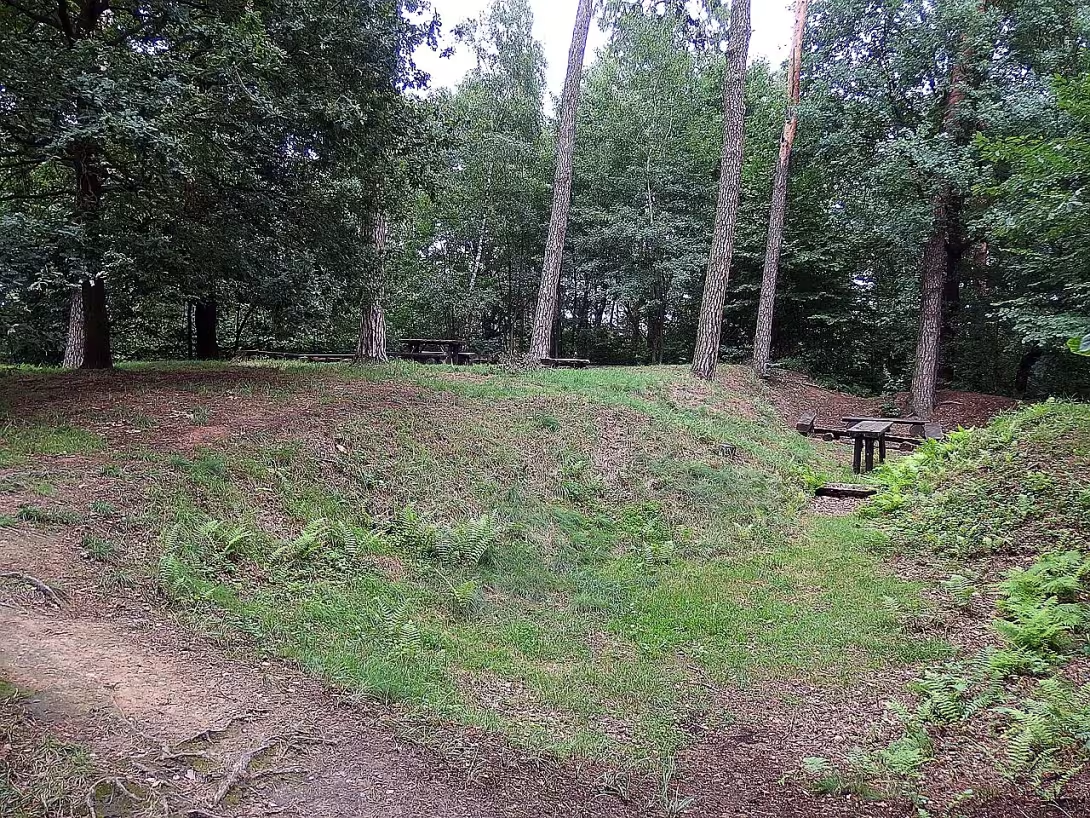
The fortress Závada is a medieval fortified fort situated in the Pansky Forest, west of the village Závada in the Opava district of the Moravian-Silesian Region. This object comes from the last quarter of the 13th century and is distinguished mainly by clear trench and wave systems.
The creation of the castle falls into the same period. There was a formation of medieval mansions in the territory of Moravia and Silesia.
The architecture of the building is based on an oval plan. The central part is surrounded by two focused deep moats and walls.
Originally the fort belonged to the Benešovice, later became the masters of Drahotus. The fate of the castle was closely linked to political and religious conflicts. In 1318 the castle was conquered by Prince Nicholas II of Opava. Later, during the Hussite wars, the object was retaken because of its belonging to the Hussites. The suburban Závada is first mentioned in written records in 1349.
During archaeological research carried out in the years 1953, 1979- 1980 and 2005 medieval ceramic shards, metal objects and skull of the dog dating from the period from the 13th to the 15th century were found. Interesting findings include a shard coming from an older landfill culture.
The site is open all year round. In 1999 the tourist attraction of the building was ensured, thanks to which there is a educational trail, information board, benches, tourist shelter and wooden buildings.
The castle Závada represents an important historical point within the Opava hill. It is suitable for visiting all interests of medieval history and archaeology.
Then and now
Drag the slider to compare how the landmark may have looked when it was built with the view today.
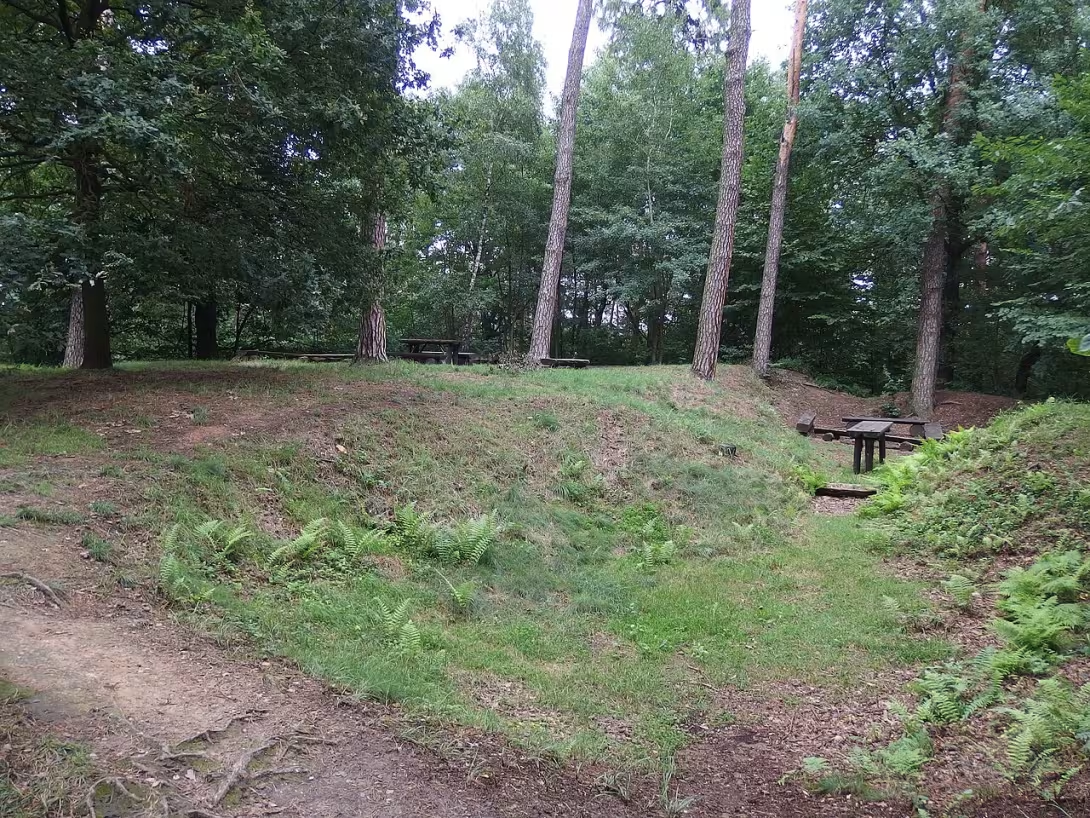

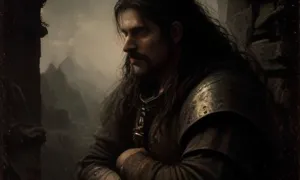
The historical appearance on the left is an AI-generated visualisation and serves as inspiration only.
Historical milestones
- 1318
- Conquest of the castle by Prince Nicholas II of Opava.
- 1349
- The first written mention of the underground village Závada.
- 1999
- Tourist attraction of the castle including the educational path.
Architectural development
The castle was built in the last quarter of the 13th century as a fortified fortress. The construction was based on an oval plan with a double system of moats and waves.
Historical events
1318: Conquest of the castle by the prince Nicholas II of Opava; Hussite Wars: Conquering the castle for belonging to the Hussite.
Owners
Benešovci and later gentlemen of the Drahotus.
Points of interest
- The building dates from the last quarter of the 13th century and has an oval plan with two concentrated deep moats and walls. The fort belonged originally to the Benešovics and later to the masters of Drahotus. - In 1318 the castle was conquered by Prince Nicholas II of Opava and later reconquered during the Hussite wars. - Archaeologists here found medieval ceramic shards, metal objects, the skull of the dog and shard from the Austrian culture of the garbage fields. - The place is open all year round and offers a educational path, information boards and tourist shelter.
Guide
Show guide text
This text was created by artificial intelligence and has not been editorially reviewed. It may contain inaccuracies.
Welcome to Castle Závada. You are standing in front of a silent witness to medieval history, which is hidden in the depths of the Pansky Forest. Now, if you look around you, at first glance, you may see only an oddly shaped terrain, deeper cuts in the ground, and mild elevations covered with greenery. But in these lines, in this quiet landscape unit, a fascinating story is encoded from the days of knights, castle disputes and restless centuries. Feel the atmosphere of this place, where once the borders between the security of the fortified walls and the danger that came from dense forests were wiped out. It is a place where peace today reigns, but it was once the centre of power and the strategic point in the landscape.
Let us now go back a few centuries together to understand why this fortress was built here. It dates back to the last quarter of the 13th century. At that time, the landscape of the Pansky Forest was densely wooded and was an ideal place for the then nobility to control the surroundings and ensure safety. The first owners of this place were Benes, a family that founded its power center here. Later, however, ownership changed and the fortress went into the hands of the lords of Drahotus. Imagine how this place worked at the time. It was not just a dwelling, but above all a fortified point that was meant to protect the property and demonstrate the status of its owner. At a time when there were no modern maps or communications, such a fortress was a beacon of stability, as well as a warning to anyone who tried to disrupt order in this area.
Now pay full attention to the very arrangement of the space that surrounds you right now. Note that the entire object has a characteristic oval plan. This was not an aesthetic choice of architect, but a purely practical solution for defence. Look at the deep trenches that surround the central part. There are two concentrated lines of deep ditches and valleys. These were the main defence systems of the fortress. Try to reconstruct in your mind how this obstacle worked in practice. The assailant had to overcome the first deep cliff in order to reach the outer wall, and then again face another deep obstacle before it could penetrate the very core of the fortress. Notice how strategically these walls are deployed to maximize defensemen 'advantage. Try to imagine how difficult it was at that time to move up a steep, sprinkled cliff, while you were looked up by armed men. In the thirteenth century, this entire system of Earth fortifications was a very effective way to secure space without the need to build huge stone walls.
But the history of Glitch is not only about earth and clay, but above all about people, ambitions and conflicts. One of the most prominent names associated with this place is the Pávský Prince Nicholas the Second. It was he in the year three hundred and eighteen conquests of this castle. Imagine yourself as the people of the fort at that time and imagine the unrest, the noise of the weapons and the tension that must have existed at that time. Conquest of the fort was not only a military victory, but a fundamental change in power throughout the region. Nicholas the Second was an ambitious ruler, and controlling such strategic points was the key to maintaining the stability of his reign. But the fate of Glitch did not end here. Later, during the Hussite wars, the fort became once again the target of the attacks and was retaken. It was a period of bloody clashes, ideological disputes and total chaos that left its mark in these woods. Each one of these attacks meant another layer of destruction to the fortress, but it also entered it into the great history of Czech countries.
You may now be interested in what happened to the place after the stormy era of medieval wars calmed down. It's fascinating to see how the function of this space changed over time. While the fort itself gradually lost its military significance and its masonry slowly wrinkled into the ground, civilian life developed in its immediate vicinity. In the year three hundred forty-nine, the first written mention of the underground village Závada appears. It's a very interesting contrast. On the one hand, we have a fortified castle for noblemen, a symbol of power and defence, and on the other hand, an emerging village with craftsmen and farmers who were economically and securely dependent on the fort. This symbiosis between the master and the subjects formed the basis of the then society. Today we no longer see masonry that stands high above trees, but it is these emptiness and silence that are part of the secrets of this place. Who lived here, what talks were made at the fires in winter evenings and what plans were made here at a time when the Pansky Forest was an impenetrable wilderness?
In the year one thousand nine hundred ninety-nine, the castle went through a process of tourist attraction to make its history available to us today's visitors. It is because of this that you can walk here today on an educational path and discover details that would otherwise remain hidden in the grass and leaves. It's a reminder that even though time wipes out the walls and breaks down the gates, the memory of the place remains. Tvrziště Závada today reminds us of how fleeting human power is, but how persistent nature is, which slowly returns its territory.
I ask you to examine the entire area in peace. Walk along the valleys, stop at the deep trenches and try to reconstruct the image of the medieval world in your mind. Let yourself be guided by the path and feel the silence of the Pansky Forest, which today pays instead of the ancient fighting and shouting of soldiers. Take a look at the surrounding trees and imagine that once upon a time there were guards out of these heights who watched every movement in the forest. This walk is not only the way of the countryside, but the way through the layers of time. Thank you for accompanying me on this short journey through the history of the Závada Fortress. I wish you a pleasant rest of the walks and many new discoveries in this fascinating corner of the world.
Tips for visitors
For the best visual experience we recommend a visit in late afternoon. At this time, sunlight will best highlight the depth of ditches and shapes of the central part of the castle, which is ideal for photographing historical structures.
You can reach the location by car and public transport; Please check the current connection in the search engine.
For comfortable movement around the fort, take quality hiking shoes and plenty of drinking water. For families with children this place is a great opportunity to explore history as part of fun walks in the forest.
After exploring the remains of the castle you can continue to discover the beautiful landscape Opava hills or go on a long journey to the Pansky Forest that surrounds the area.
Frequently asked questions
Can the monument be visited?
This is an archaeological site. Often there is little to see on the ground and the land may be private. We have not verified access.
Where is the monument?
Location: Závada, Moravskoslezský kraj. The map on this page shows the exact spot.
Why is the monument protected?
It is listed in the Central List of Cultural Monuments of the Czech Republic as a cultural monument (register no. 1000001415).
Businesses nearby
Do you run a restaurant, accommodation, shop, museum, rental, wellness or other visitor service near this monument? Show yourself directly to the people heading to it — this is how they will see you in the app and on the web:
Events nearby
Zdroj akcí: otevřená data měst a obcí ČR (Národní katalog otevřených dat) a kalendář akcí Národního památkového ústavu.
Nearby
The men's forest and surrounding landscape of the Opava hill.
Accommodation nearby
Themed route
Thematic cruise route Tvrziště Závada
1. Tvrziště Závada (fortress) Type: Historical monument Why is it worth a visit: Visit this fascinating fortress to uncover the rich history of the village of Glasses. When walking you can enjoy the views of the surrounding landscape and find out more about the past of this place.
2. Pan Les Type: Forest area Why is it worth a visit: Imagine comfortable walks between trees where you can enjoy quiet moments in nature. The Pansky Forest offers a beautiful landscape and is an ideal place to relax and relax after visiting the fortress.
3. Type: Landscape section Why is it worth visiting: This area will enchant you with its natural beauty and mild terrain changes. It is a great way to immerse yourself in the peaceful landscape of the Opava region and enjoy the views of surrounding forests and semi-mountains.
This route offers a combination of historical and natural experiences that can reach any traveler.
Seasonal recommendations
In the spring, life wakes up around the ruins. The young green covers old stone walls and the light is soft and pleasant in this period. It's the perfect time to observe nature in its bloom. We recommend wearing shoes suitable for wet terrain, because the road to the fort can be muddy after winter. The best is to arrive in the morning, when the air is the cleanest and the surroundings are the most lively.
The summer visit offers full sun and a warm atmosphere that highlights the face of historical remains. High grass and rich colors of the surrounding forest create a beautiful contrast with grey stones. Due to higher temperatures and a possible rush of people, we recommend that you come as early as possible in the morning to enjoy your peace and avoid the greatest heat. Don't forget enough water and headgear.
Autumn brings a melancholy and mysterious mood to the fortress. The morning fog is often lazily rolled over debris and golden leaves give the place a magical look. The sun is already lower, which creates interesting shadows between the stones. A waterproof jacket and solid shoes are necessary for a comfortable inspection, as moisture can cause slippery surfaces on the road.
In winter, the ruin is crude and relentless. The bare branches of trees and the grey sky highlight the loneliness of this historic place. The atmosphere is quiet and calm, without any excitement. Due to the low sun and shorter day it is necessary to plan a visit in clear hours around noon. The need is very warm clothes and high-quality shoes with anti-slip soles to avoid slipping on freezing stones.
Visualizations and artistic views


The visualisations are generated by artificial intelligence and serve as inspiration.
Photos from the area
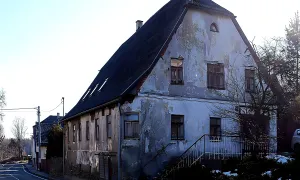
Real photos taken near the monument


Zdroj a licence jsou uvedeny u každého snímku.
Tips from visitors
No tips yet. Be the first!
Log in and add your tip.
Sources and literature
Photos: Palickap / CC BY-SA 4.0 — Wikimedia Commons. The author and licence also appear when you hover over the image.
Faktickým podkladem tohoto textu byl článek na Wikipedii, jehož autory jsou přispěvatelé Wikipedie. Článek je dostupný pod licencí CC BY-SA 4.0.
Location on the map
Příběhy a pověsti
Legendy, pověsti a příběhy spjaté s touto památkou
Fotografie návštěvníků
Zatím žádné fotografie. Buďte první, kdo přidá fotografii z návštěvy!
Log in a přidejte svou fotografii nebo hodnoťte.
Za ověřenou návštěvu v aplikaci získáte víc bodů — poznáme podle GPS, že jste na místě.
Reviews and comments