

Úpravna vody Podhradí u Vítkova Waterworks
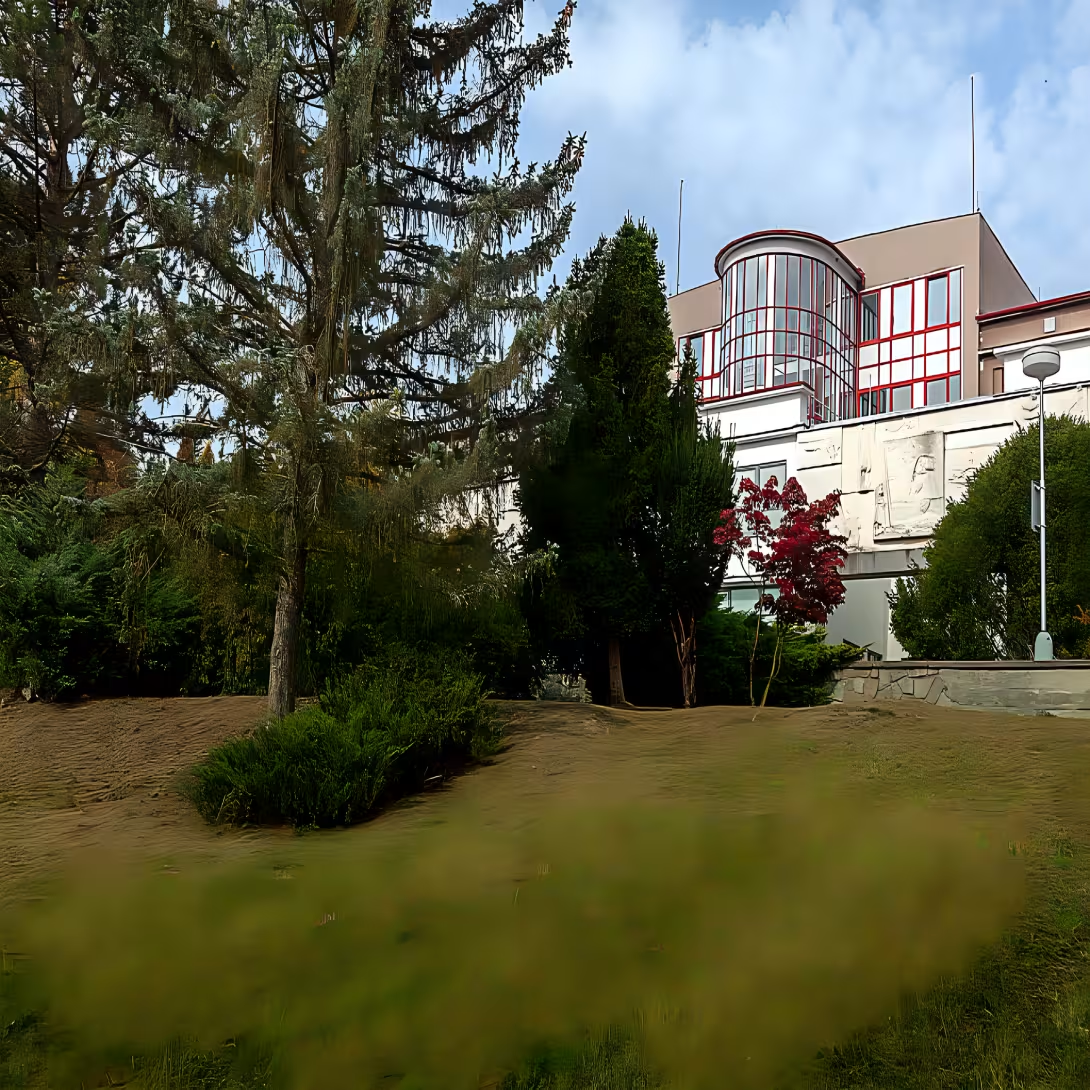
Úpravna vody Podhradí u Vítkova is an important historical monument located in the village of Vítkov in the Moravian-Silesian Region. This switchboard was built between 1954 and 1962 as part of the Ostrava regional water pipeline. Its main task is to transform the raw water from the Kružberk valley to the drinking room supplied by Moravskoslezský kraj and part of the Olomouc Region, as well as the border region of Poland. Architecturally, this is an example of the industrial technical architecture of the workshop Cyril Kajnar, with the dominant artistic relief of Vincent Makovsky.
The establishment of the plant was linked to the increased need for drinking water for rapidly growing populations and industry after World War II. In 1954, the Government of Czechoslovakia approved a project which was intended to address insufficient underground water sources. The plant was part of a wider plan to build a group water pipeline from the dam at the village of Kružberk, which enabled more efficient management and distribution of drinking water.
The architecture of the theatre is characteristic of industrial technical architecture. The construction consists mainly of a reinforced concrete skeleton with brick linings, which was typical of this period. Above the entrance part is the extensive relief of Vincent Makovský from the cycle "Water in Our Life" which added artistic value to the whole part. This relief was completed between 1961 and 1964.
The plant is managed by the company North Moravian water ducts and sewerage Ostrava, which ensures its operation since the start of operation. Over the years, several renovations and modernization have taken place which have enabled the inspection to increase capacity and efficiency. For example, in 1967 it became the largest water treatment plant in Czechoslovakia with a capacity of 2000 litres per second, which was further increased to 2700 l / s in the 1970s.
Key events include the launch of the supply of water to Ostrava on 20 December 1958 and the gradual increase in the capacity of the plant to cover the growing demand for drinking water. By 2019, the lab produced a total of 2.4 billion m ³ of drinking water.
Today Úpravna vody Podhradí u Vítkova is not only a technical work but also a cultural and historical monument. Its architecture and artistic elements attract people interested in industrial history and art. This is an opportunity for visitors to explore an important construction work, which plays a key role in supplying drinking water to the region.
Úpravna vody Podhradí u Vítkova is not only a technical success but also a testament to the history and culture of the area. Her visit offers a unique opportunity to explore an important construction work, which plays a key role in supplying drinking water to the region.
Then and now
Drag the slider to compare how the landmark may have looked when it was built with the view today.
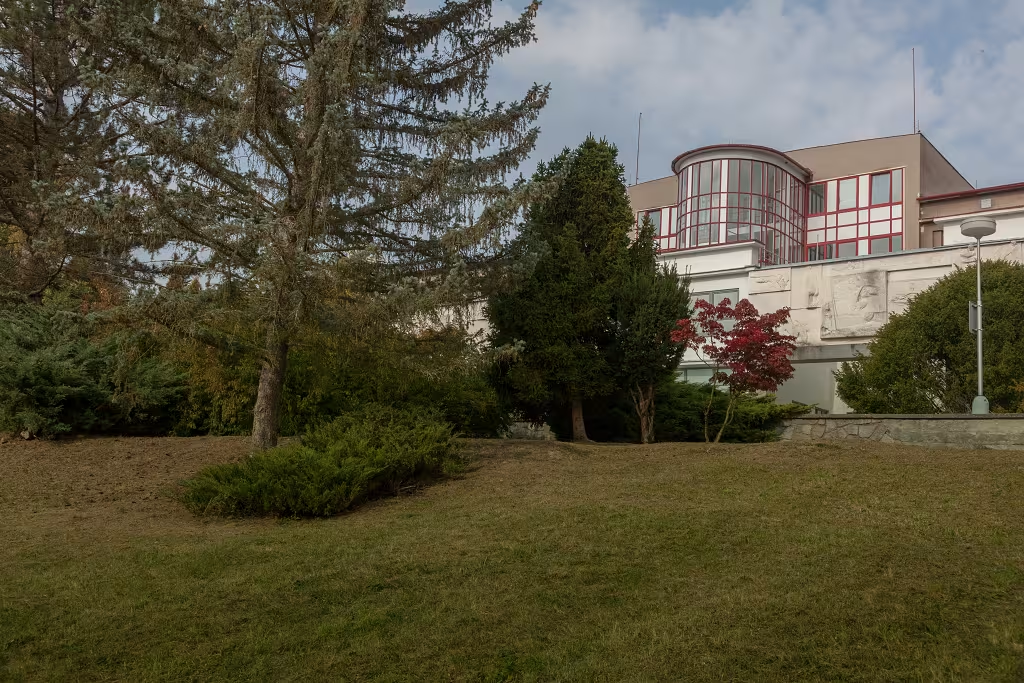
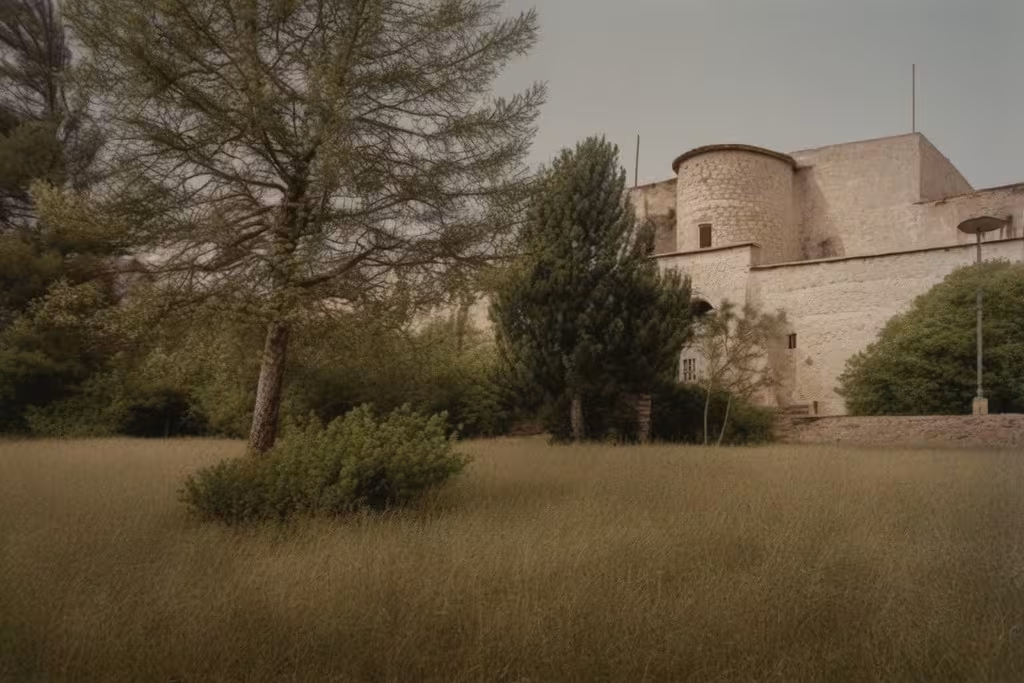
The historical appearance on the left is an AI-generated visualisation and serves as inspiration only.
Historical milestones
- 1954
- Approval of the Government of the Czech Republic on the construction of a group water pipeline from the dam near the village of Kružberk.
- 1958
- Opening of the supply of water from the plant in Podkraj to Ostrava.
- 1962
- Termination of the first stage of construction and capacity increase to 1000 l / s.
- 1967
- Capacity increase to 2000 l / s, making it the largest water treatment plant in Czechoslovakia.
Architectural development
The construction consists mainly of a reinforced concrete skeleton with brick linings. In 1961- 1964 an artistic relief was created over the entrance part. In the 1970s, new filtration units were added, which increased maximum output to 2700 litres per second.
Historical events
Start of the supply of water to Ostrava on 20 December 1958; achieving the status of the largest water treatment plant in Czechoslovakia in 1967.
Owners
North Moravian water pipelines and sewerage Ostrava
Points of interest
- Úpravna vody Podhradí u Vítkova is built between 1954 and 1962 as part of the Ostrava regional water pipeline.
- Its main task is to transform raw water from the Kružberk valley tank into a drinking place supplied by Moravskoslezský kraj and part of the Olomouc Region, as well as the border region of Poland.
- The architecture of the theatre is characteristic of the industrial technical architecture of the workshop Cyril Kajnar with artistic relief of Vincent Makovsky.
- In 1954, the Government of Czechoslovakia approved a project which was intended to address insufficient underground water sources.
- By 2019, the plant produced a total of 2.4 billion m ³ of drinking water.
Guide
This guide is narrated by a synthetic voice generated by artificial intelligence.
Show guide text
This text was created by artificial intelligence and has not been editorially reviewed. It may contain inaccuracies.
Welcome. You just stopped in front of one of the most important technical objects in our region. You are standing right in front of the monumental water treatment facility Podzdrava u Vítkova. If you're looking around right now, you're likely to be immediately struck by its extraordinary size and the feeling of unwavering force. This building is not just an ordinary building, it is a monumental industrial work that dominates the surrounding landscape by its presence and reminds us of the huge engineering performance that was carried out here in the last century. Feel the atmosphere of strength and stability that this architecture radiates.
In order to understand why this place looks just like this and why it even needs to be here, we need to go back deep into the past, namely the mid-1950s. In 1954 there was a decisive moment when the Government of the Czechoslovak Socialist Republic approved a resolution on the construction of a large group water pipeline. The main aim was to ensure a stable and quality water supply for rapidly developing industrial areas, especially for the Ostrava district water pipeline. The key source was the Kružberk Valley Tank. The whole construction process was challenging and lasted several years. It was here, in Podřad u Vítkova, that the infrastructure that was supposed to stand on the walls of health and development of the whole region began to form.
Now pay attention to the very form of this object. If you look at his body, notice the mass. This is an excellent example of industrial technical architecture, which was characteristic at the time. The whole structure is made of reinforced concrete, which gives it the unmistakable, crude and very dignified appearance. This architecture was designed not only to fulfil its function, but to express the importance and importance of the water works. The architect behind this visual and technical concept was Cyril Kajnar. His work here embodies the link between pure functionality and monumental expression of technical progress. When you look at the individual parts of the construction, you should remember how iron concrete allows you to create such large and durable spaces that must face enormous pressure and constant operation.
But there are other names and stories attached to this place. In addition to the architects and engineers who materialized the construction, the name Vincenc Makovský is also associated in the context of the period and this type of monumental buildings. Although his name may be intertwined in this technical work with various aspects of the culture and history at the time, his presence in memory of this period recalls that even such technical places are part of the wider historical and cultural context of our country.
Let's now look at what's really happening in these walls, even if you don't have to see it at first sight. This camera performs an absolutely fundamental miracle of transformation. It takes raw, unclean water from the Kružberk tank and turns it into clean drinking water through complex processes. It's a heart that pumps life all around. And the volume is really overwhelming. In 1958, water was supplied to Ostrava thanks to this construction, which was a huge leap forward for the whole area. The first stage of construction was completed in 1962 and at that time the capacity was set at 1000 litres per second. But that was only the beginning.
Here we come to one of the greatest attractions that should really impress you when you look at this monumental object. There was another significant increase in capacity in 1967, when the camera increased to 2,000 litres per second. This became the largest water treatment plant in Czechoslovakia at that time. Imagine the incredible force flowing through these concrete structures. This capacity is not just a number, it is a guarantee of stability for millions of people. This water does not only serve the Moravian-Silesian Region or part of the Olomouc Region, but thanks to the precise system it also interferes in border areas of Poland. It is therefore a work that goes beyond the borders of the states and connects the neighbours through one of the fundamental pillars of civilization - access to drinking water.
Now, if you look around again, try to realize that everything you see is part of a huge, constantly working machine. Every concrete element, every line of this architecture, serves to make this process go perfectly and without interruption. This water treatment plant in Podřad u Vítkova is not just a monument to the past, it is a living part of our present life, which, thanks to its monumentality and technical precision, is still astonishing.
I hope this view of the history and importance of this place has helped you better understand its unmistakable value. Please continue to explore the surroundings and perceive the power of this technical splendor that has been standing here for decades. Thank you for your attention and I wish you a pleasant continuation in discovering the secrets of our region.
Tips for visitors
Best time to visit the water treatment plant Substation at Vítkova is during the summer months, especially from May to September. During these months the nature of the area manifests itself in its most beautiful shade and is ideal for walking in the surrounding park.
When planning a visit, remember shoes suitable for walking on lawns or paths, as well as protective clothing and sun umbrellas. If you have an intention to photograph a monument, we also recommend bringing a camera with a slightly higher angle lens to capture a wider view of the monumental structure.
Photographs excellently record the light conditions of the afternoon when the sun illuminates the memory from the side.
In the surrounding area is located the Údní pátka Kružberk, which is an ideal place for relaxation and various activities for leisure. For families with children, the foothills of Jeseníky offers opportunities for picnics and short trips.
Frequently asked questions
Can the monument be visited?
The building is in use (offices, a school, shops and the like). The interior is generally accessible only during operating hours and tours are not usually offered; we have not verified the details. You can see the exterior from the street.
Where is the monument?
Location: Vítkov, Moravskoslezský kraj. The map on this page shows the exact spot.
Why is the monument protected?
It is listed in the Central List of Cultural Monuments of the Czech Republic as a cultural monument (register no. 1000146476).
Businesses nearby
Do you run a restaurant, accommodation, shop, museum, rental, wellness or other visitor service near this monument? Show yourself directly to the people heading to it — this is how they will see you in the app and on the web:
Events nearby
Zdroj akcí: otevřená data měst a obcí ČR (Národní katalog otevřených dat) a kalendář akcí Národního památkového ústavu.
Nearby
🏰 Historic sites (89)
- Vikštejn 0.7 km
- Vikštejn - údolí řeky Moravice 0.7 km
- Vikštejn - Plán hradu 0.7 km
- Zámek Dubová 1.2 km
- J. H. Pestalozzi 3.1 km
- sv. Marek 3.5 km
- Sv. Florián 3.5 km
- Ruiny kaple 3.6 km
- Strom republiky 1918 - 2018 3.8 km
- Pomník letecké havarie u Vitkova 3.9 km
- Rozsochacký, Lesní mlýn 4.3 km
- Pomníček rodákům padlým ve 2. sv. válce 4.4 km
- Imaginárium břidlice 4.5 km
- Zámek Melč 4.7 km
- Svatý Jan Nepomucký 4.8 km
- Pomníček 5.9 km
- Památník padlým v 1.sv válce 6.5 km
- Památník obětem 1. Sv. války 6.8 km
- Zřícenina hradu Kružberk 7.3 km
- Pametni Misto 7.7 km
🍽️ Restaurants and dining (67)
- Mototaverna Podhradí 0.6 km web
- Občerstveni 13 Vikštejn 0.6 km web
- Bar u Vody 0.6 km +420 733 708 929
- Koliba 0.9 km
- Hostinec U Kastanku 0.9 km
- Růže 3.2 km +420 732 833 811
- Kavárna & Pizzerie Na staré lékárně 3.3 km
- Uzeniny - bufet 3.3 km
- Pivnice 3.3 km
- Čiči bar 3.3 km
- Jídelna - Bufet 3.3 km
- SAI-GON 3.4 km
- U Rožků 3.6 km
- U Bernharda 4.0 km web
- Bistro U Bernharda 4.0 km
- Bílá holubice 4.5 km web
- Víkendový bar 4.5 km
- Parůžek 5.3 km web
- Občerstvení u čápa 6.2 km
- Vážka 6.4 km
🏨 Accommodation (34)
- Ubytování - Česká pošta 0.6 km +420 556 300 211
- Autocamp Podhradí 0.9 km web
- Růže 3.2 km
- U Bernharda 4.0 km +420 725 115 026 web
- Rekreační středisko U Brodu 4.5 km +420 731 092 604 web
- Údolí černého čápa 6.3 km web
- Penzion 6.3 km
- Agility kemp 6.3 km web
- Davidův mlýn 6.4 km +420 552 308 389 web
- Chalupa U Kaštana 6.5 km +420 608 911 777 web
- Penzion Velké sedlo 7.1 km
- Ubytování Klokočov 7.2 km +420 603 874 741 web
- Růžový dvůr 7.5 km +420728374095 web
- Sportovně Turistické Centrum Hadinka 8.8 km +420 739 119 704 web
- Ranch Modrá laguna 9.1 km
- Autokemp Budišov n.B. 9.3 km
- bezKempu 9.6 km web
- Kemp Kajlovec 9.6 km Opavská 386 +420 605 310 616 web
- Penzion Salaš 9.6 km Opavská 386 +420 732 999 989 web
- Spálovský mlýn 9.7 km +420 777 666 430 web
🚲 Rentals and sport (8)
- Sportservis 3.3 km
- Hotel Belaria Resort 9.8 km
- Sportovní hala 9.8 km
- Sportovní centrum Jakubčovice nad odrou 12.2 km
- SSK Hradec nad Moravicí 13.2 km web
- Sokolovna 14.1 km
- TJ Romo Fulnek 14.2 km
- Ski Areál Horní Guntramovice 14.8 km web
🥾 Hiking and nature (175)
- Ondřejova studánka 0.6 km
- Leopoldova studánka 0.6 km
- Hradní věž 0.7 km
- U hradu 0.7 km
- Vyhlídková věž "Vikšejn" 0.7 km
- Skalní ostroh 0.8 km
- Andreasova studánka 0.8 km
- Studánka 0.9 km
- Park Zámek Dubová 1.3 km
- Zámecký kopec 1.4 km
- Studánka u Schelbendorfu 1.6 km
- Lhotka u Vítkova - štola 1.8 km
- Na terase 2.2 km
- Studánka u Vetřkovského mostku 2.5 km web
- Radkovské prameniště 2.5 km
- Stavisko 2.5 km
- Radovanka 2.7 km
- Ve Skalce 2.9 km
- Jan Zajíc 3.6 km
- Kamenný vrch 3.7 km
Accommodation nearby
Themed route
Thematic cruise route: Úpravna vody Podhradí u Vítkova and surroundings
1. Úpravna vody Podhradí u Vítkova (Water Works) Type: Historical water work Why it is worth a visit: This laboratory is a fascinating example of technology from the 20th century, which was used to regulate the flow of the river Moravice. It is an ideal place for those who are interested in the history of water management and technical monuments.
2. Kružberk Valley Tank Type: Water surface Why is worth a visit: The tank is not only a key element in the water regulation system, but also provides beautiful opportunities for relaxation and nature observation. It is an ideal place for a picnic or a classic walk along the shore.
3. The River Moravice Type: Rivers Why is worth a visit: This river is a vital element of the valley and offers opportunities for various activities such as classic hunting or water tourism. It is also a place where you can enjoy quiet moments with nature.
4. The foothills of the Jesenians Type: Landscape area Why is it worth a visit: This foothills offers a beautiful view of the Jesen landscapes and is an ideal place for tramps or just for relaxation in nature. It is also a great base for further adventures in the Jesenice region.
This route offers a combination of technical attractions and natural beauties, making it ideal for the whole family.
Seasonal recommendations
Spring: During the spring season, the water treatment plant Podzrava u Vítkova will turn into a special place where nature is reviving and the sun's rays illuminate the water work. Flowers begin to bloom around the canals, which gives the landscape a wonderful color shine. In addition, the first visitors are starting to gather at this time, so it is better to avoid weekends when planning the trip.
Summer: The water treatment room is taking over the summer. The sun's day shines over the water channels, which is the perfect time to photograph and relax on the surrounding pavement. More visitors may show up this season, so it is recommended to arrive in the early afternoon or at the end of the day to avoid peak hours. Do not forget the protective sunglasses and the short glove for UV protection.
Podzim: Podzim přináší úpravně vody Podhradí u Vítkova melancholickou atmosféru, když se listy stromů barví do živých odstínů. Slunce je méně intenzivní a dlouhé večery nabízejí příležitost pro klidné procházky kolem vodního díla. V této sezóně se doporučuje nosit teplejší oblečení, protože teploty klesají, zejména večerem. Navíc je podzim ideálním časem pro návštěvu, jelikož se snižuje počet turistů a můžete si užít místa bez překážky davu.
Winter: During the winter season, the water station Underground at Vítkova has a unique mysterious charm. The sun's rays are reflected in freezing water and the trees are without leaves, giving the landscape a different character. Visit her when it's noon to make enough sunlight for warm feelings.
Visualizations and artistic views


The visualisations are generated by artificial intelligence and serve as inspiration.
Tips from visitors
No tips yet. Be the first!
Log in and add your tip.
Sources and literature
Photos: Magdon / CC BY-SA 4.0, rozlišení zvýšeno umělou inteligencí — Wikimedia Commons. The author and licence also appear when you hover over the image.
Faktickým podkladem tohoto textu byl článek na Wikipedii, jehož autory jsou přispěvatelé Wikipedie. Článek je dostupný pod licencí CC BY-SA 4.0.
Location on the map
Příběhy a pověsti
Legendy, pověsti a příběhy spjaté s touto památkou

Fotografie návštěvníků
Přidat fotografiiZatím žádné fotografie. Buďte první, kdo přidá fotografii z návštěvy!
Máte k místu vzpomínku nebo zajímavý příběh?
Log in a přidejte svou fotografii nebo hodnoťte.
Za ověřenou návštěvu v aplikaci získáte víc bodů — poznáme podle GPS, že jste na místě.
Reviews and comments